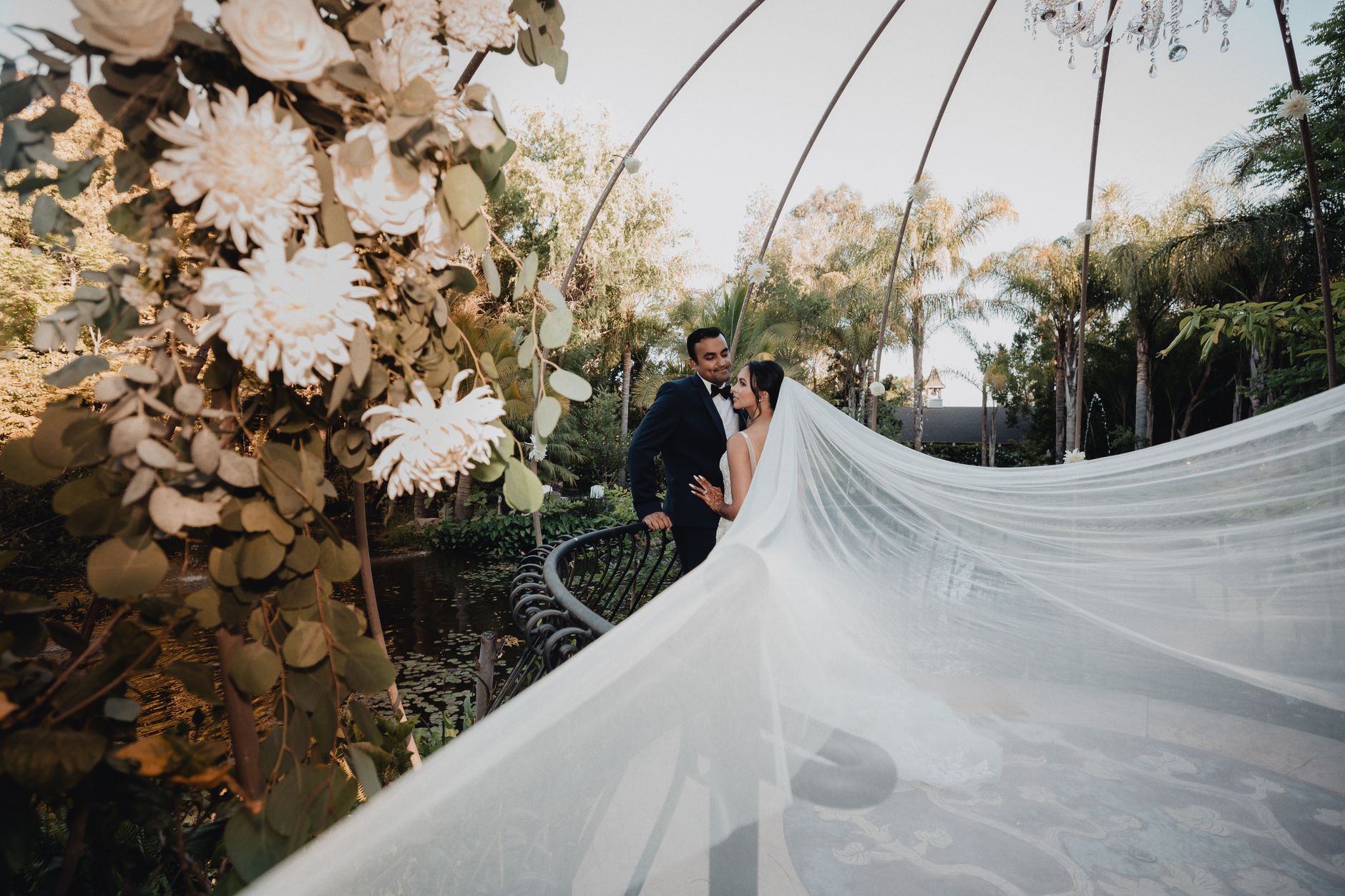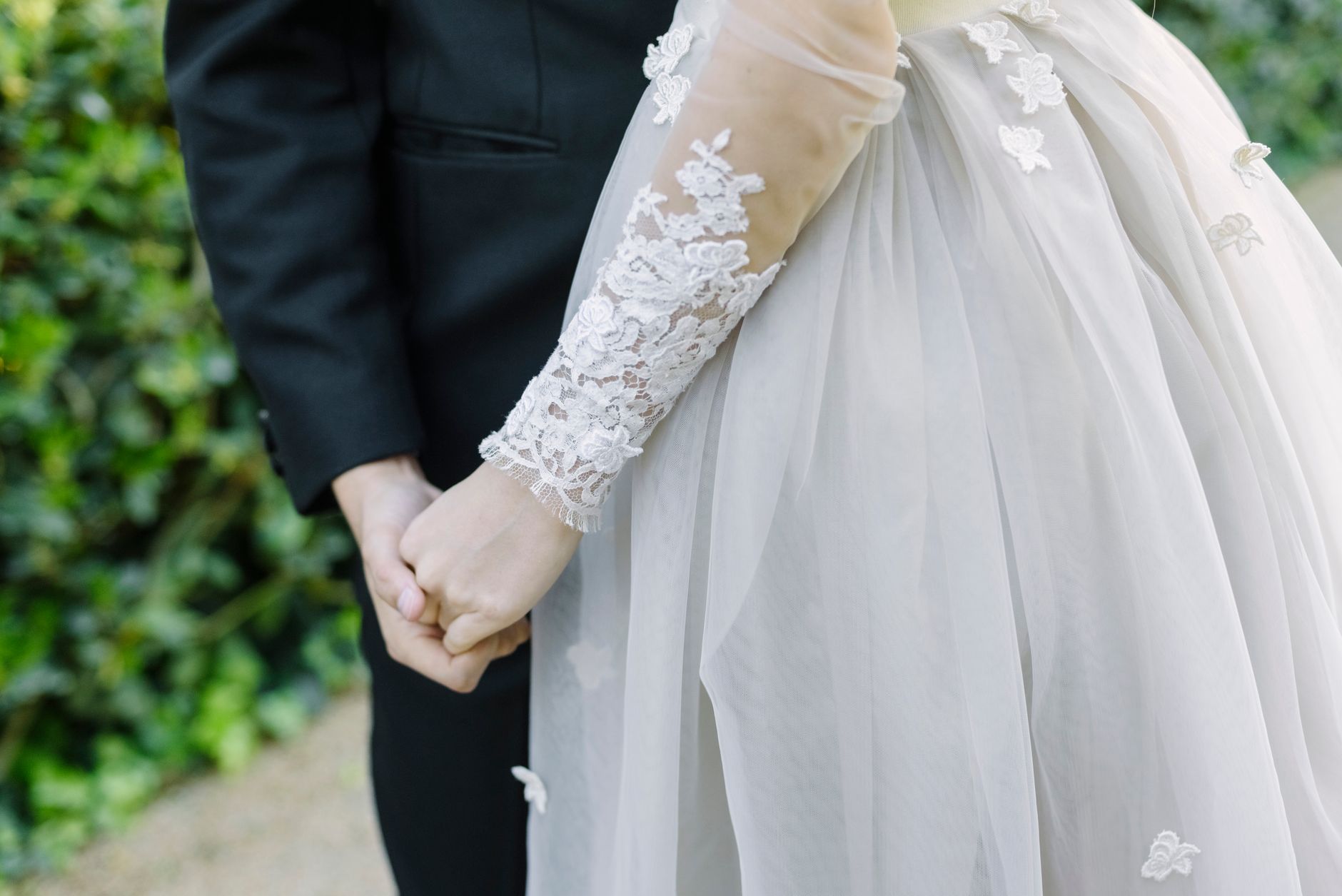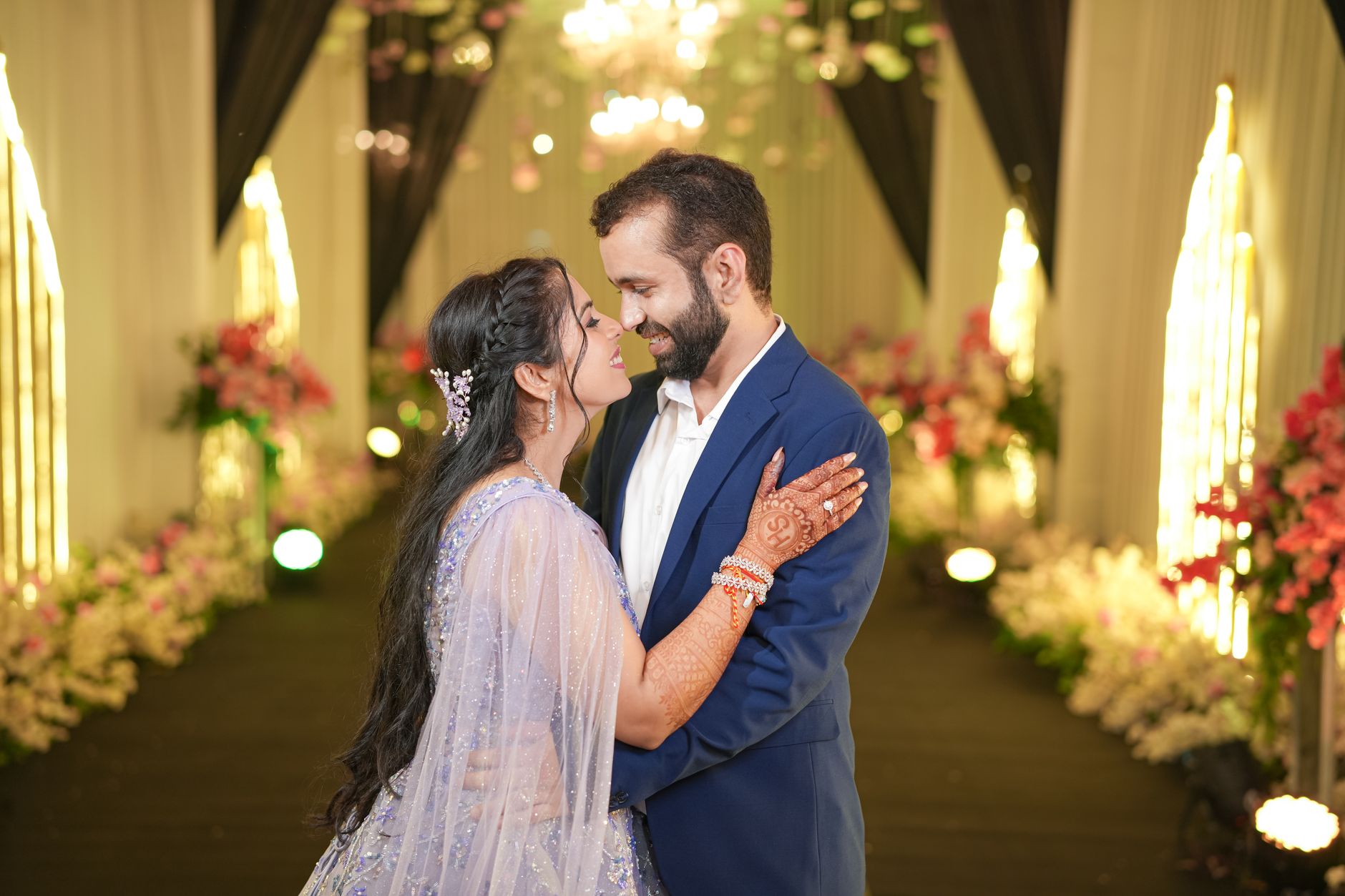
The best wedding videography package in California is the one calibrated to your venue's geography and timeline — not the one with the longest highlight reel or the most cameras. A 6-hour package captures a Bel-Air Bay Club terrace ceremony and cocktail reception completely; the same 6 hours at Calamigos Ranch misses the oak-grove portraits and the barn reception entrance because the property spreads across 3 distinct zones that each require their own coverage window.
Wedding videography packages in California start at $2,499 for ceremony-and-vows coverage, with multi-day and destination films quoted individually. The tier that works depends on 4 variables: venue scale, event timeline, the number of shooters required to cover simultaneous scenes, and whether you're pairing video with documentary photography. This guide walks through how each variable maps to a package tier, using real venues and real coverage scenarios.
Why Venue Scale Determines Package Tier More Than Guest Count
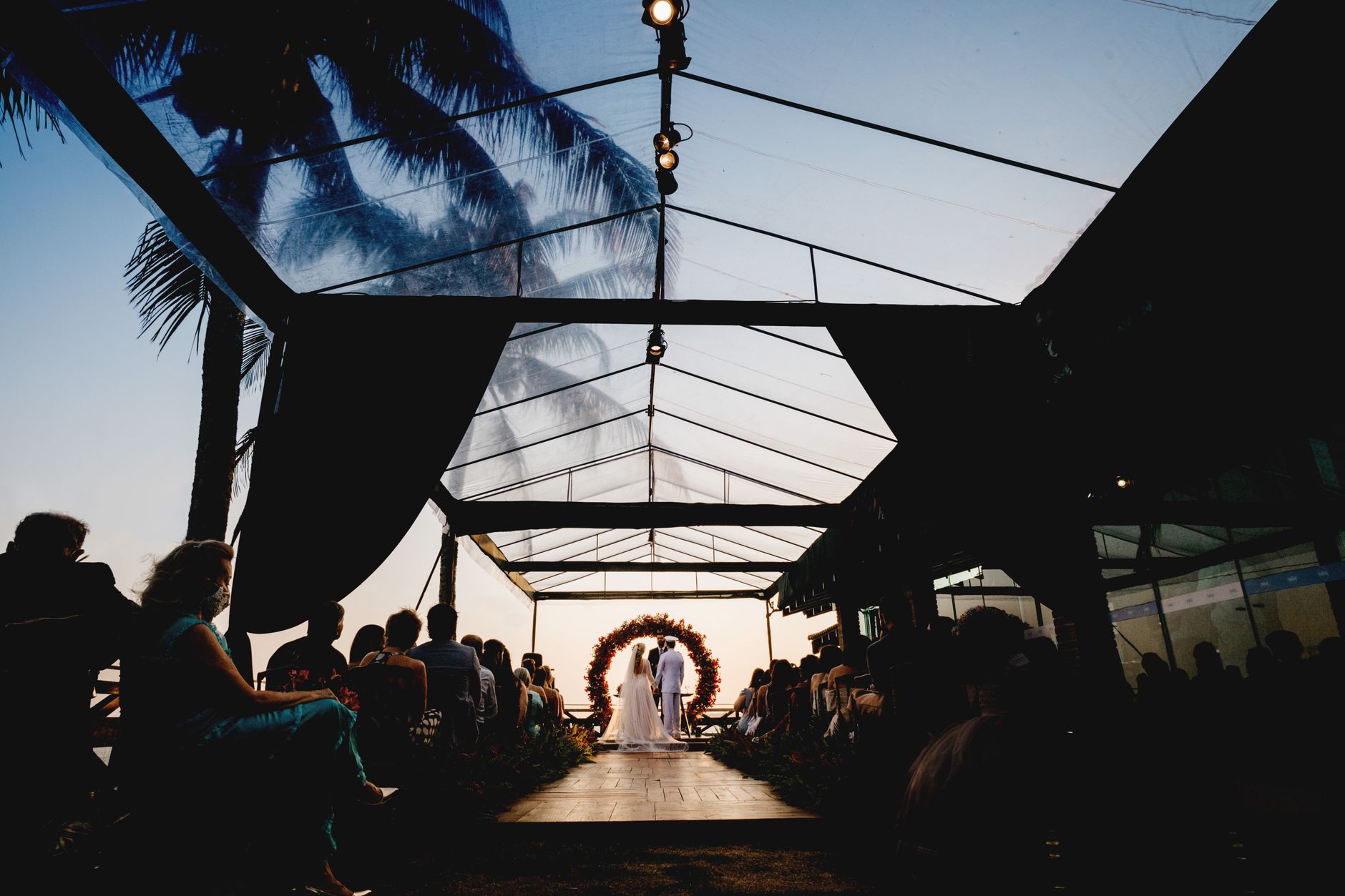
Photo by Jonathan Borba on Pexels
A 150-guest wedding at Hotel Bel-Air fits into a single garden courtyard; a 150-guest wedding at Hummingbird Nest Ranch spans a hilltop ceremony site, a midway cocktail lawn, and a cliffside reception pavilion separated by 10-minute shuttles. The guest count is identical. The videography package is not.
Compact urban venues — Bel-Air Bay Club, Beverly Hills Hotel, Hotel Bel-Air — concentrate all scenes within a 5-minute walk. A 2-shooter video team covers ceremony, cocktail hour, and reception from a single base. These weddings book 6-hour or 8-hour packages.
Estate and vineyard venues — Calamigos Ranch, Saddlerock Ranch, Ojai Valley Inn, Triunfo Creek Vineyards, Auberge du Soleil, Meadowood — require zone-to-zone repositioning. Ceremony at the oak grove, cocktails at the courtyard, reception in the barn. Or ceremony at the vineyard rows, dinner on the lawn, dancing under the olive grove. A 10-hour package accounts for the travel time between zones and the portrait windows that happen during cocktail hour when the couple walks the property with their photographer.
Destination resorts with overnight timelines — San Ysidro Ranch, Resort at Pelican Hill, Rancho Valencia, Montage Laguna Beach — layer a rehearsal dinner, a morning-after brunch, or a welcome reception across 2 or 3 days. Multi-day packages start at 16 hours of total coverage and include a short rehearsal-dinner film in addition to the wedding film.
The coverage hour count in your package should match the venue's footprint and event span, not an arbitrary "premium tier" list.
6-Hour vs 10-Hour Packages — What Each Timeline Captures
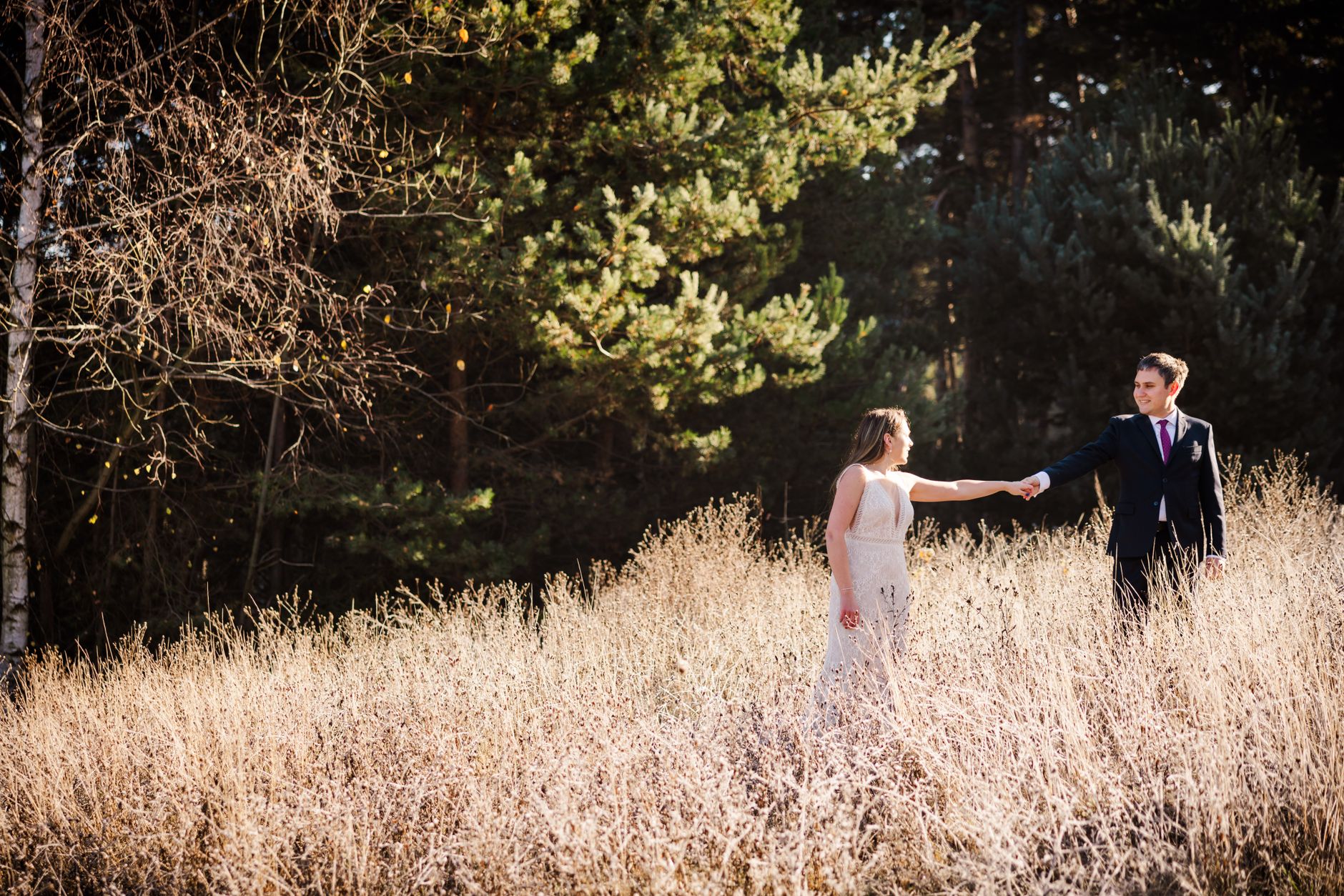
Photo by Marius Pavel on Pexels
A 6-hour wedding videography package typically covers:
- Final 30 minutes of getting ready (bride's suite, detail shots of the dress and rings)
- First look or pre-ceremony portraits
- Full ceremony coverage
- Family formals and couple portraits during cocktail hour
- Reception entrance, first dance, toasts
- Cake cutting or a few open-dancing songs
Coverage ends before the last dance. The package delivers a 4–6 minute highlight reel and full ceremony footage. Turnaround is 8–10 weeks. This tier works for single-location weddings with a 4 PM ceremony and a 9 PM reception end — common at Bel-Air Bay Club, Terranea Resort's oceanfront lawn, or an intimate Carmel Valley Ranch wedding.
A 10-hour package adds:
- Extended getting-ready coverage (both suites, parent moments, the walk to the ceremony site)
- Full cocktail-hour ambient coverage
- All reception formalities — cake, bouquet toss, grand exit if scheduled
- The last dance and send-off
The final film runs 6–10 minutes and includes a richer narrative arc because the videographer captured the transitions between scenes — the quiet moment when the bride's mother fastens the necklace, the 20-minute portrait walk through Calamigos Ranch's eucalyptus grove at sunset, the unscripted toasts that run long. Turnaround is 10–12 weeks.
Estate weddings at Hummingbird Nest Ranch, Saddlerock Ranch, Ojai Valley Inn, and Northern California vineyard properties (Auberge du Soleil, Meadowood, Beaulieu Garden) almost always require 10-hour packages because the property's scale adds 90 minutes of transit and repositioning across the day.
Documentary vs Cinematic Wedding Films — Which Package Style Fits Your Aesthetic
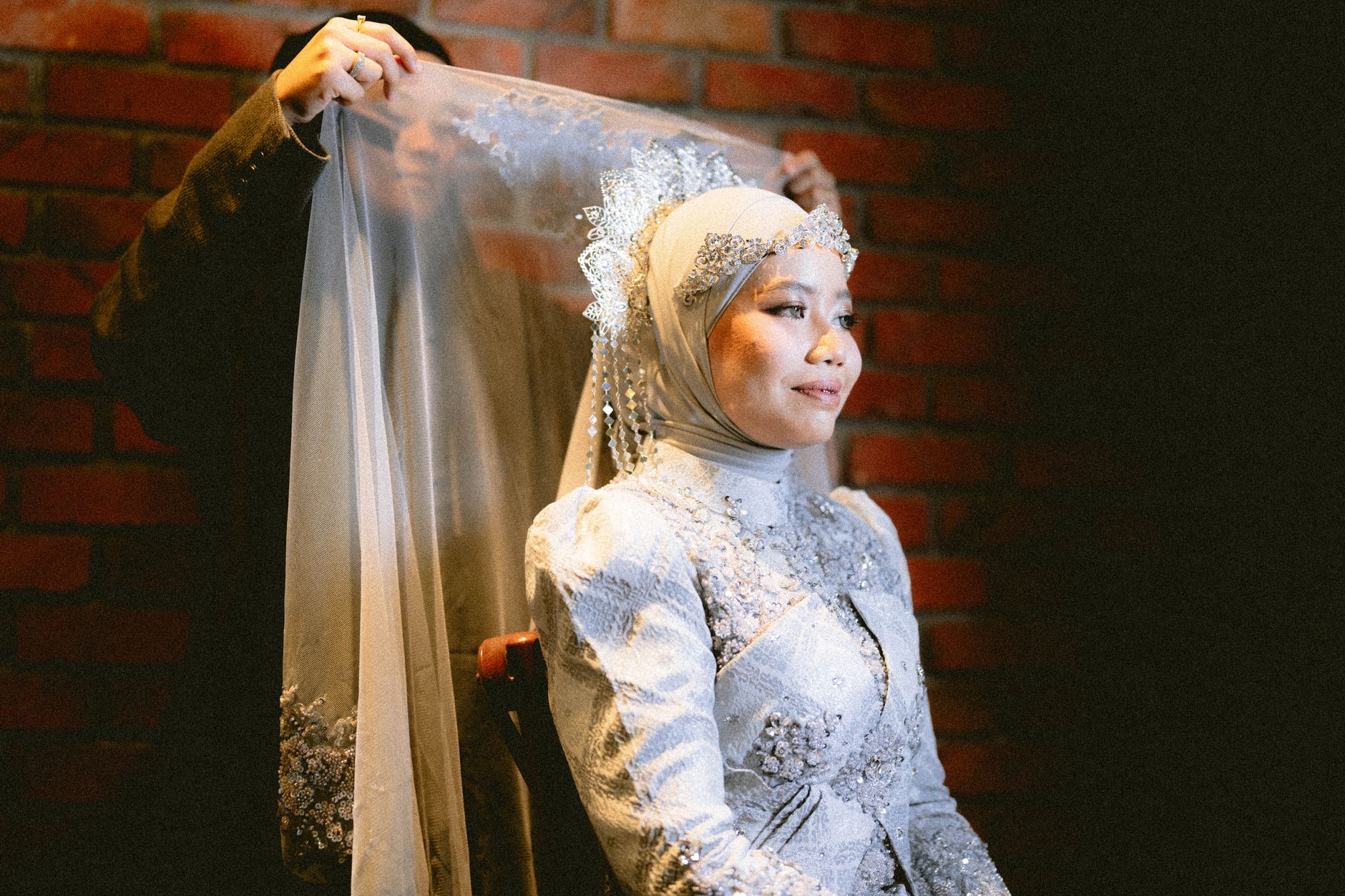
Photo by Qodak. stx on Pexels
California wedding videography falls into two editorial approaches: documentary and cinematic. The package tier (6-hour, 10-hour, multi-day) stays the same; the filming and editing style diverges.
Documentary wedding films prioritize real audio — vows, toasts, parent reactions, the couple's unscripted laughter during portraits. The edit is chronological. Music underscores but does not replace speech. Clients who book documentary packages typically also hire a documentary photographer and want the film to feel like a visual complement to the photo story. Common at garden and vineyard weddings where the ceremony and toasts carry emotional weight.
Cinematic wedding films layer original music, voiceover from vows or letters, and non-linear editing that builds around emotional peaks rather than event sequence. The couple's vows might play over the getting-ready montage; the first dance might open the film. Cinematic packages require the same coverage hours as documentary — the difference is post-production approach, not shoot time. Clients who book cinematic packages tend to favor architectural venues (Hotel Bel-Air's Swan Lake, Resort at Pelican Hill's rotunda, Montage Laguna Beach's coastal ceremony site) where the setting itself becomes a character in the film.
Both styles deliver full ceremony coverage as a separate file. The question is whether your wedding's story is told through what was said or through how the day felt when the scenes are reordered into a narrative arc.
Photo + Video Combined Packages — Why Coverage Coordination Matters More Than Bundling
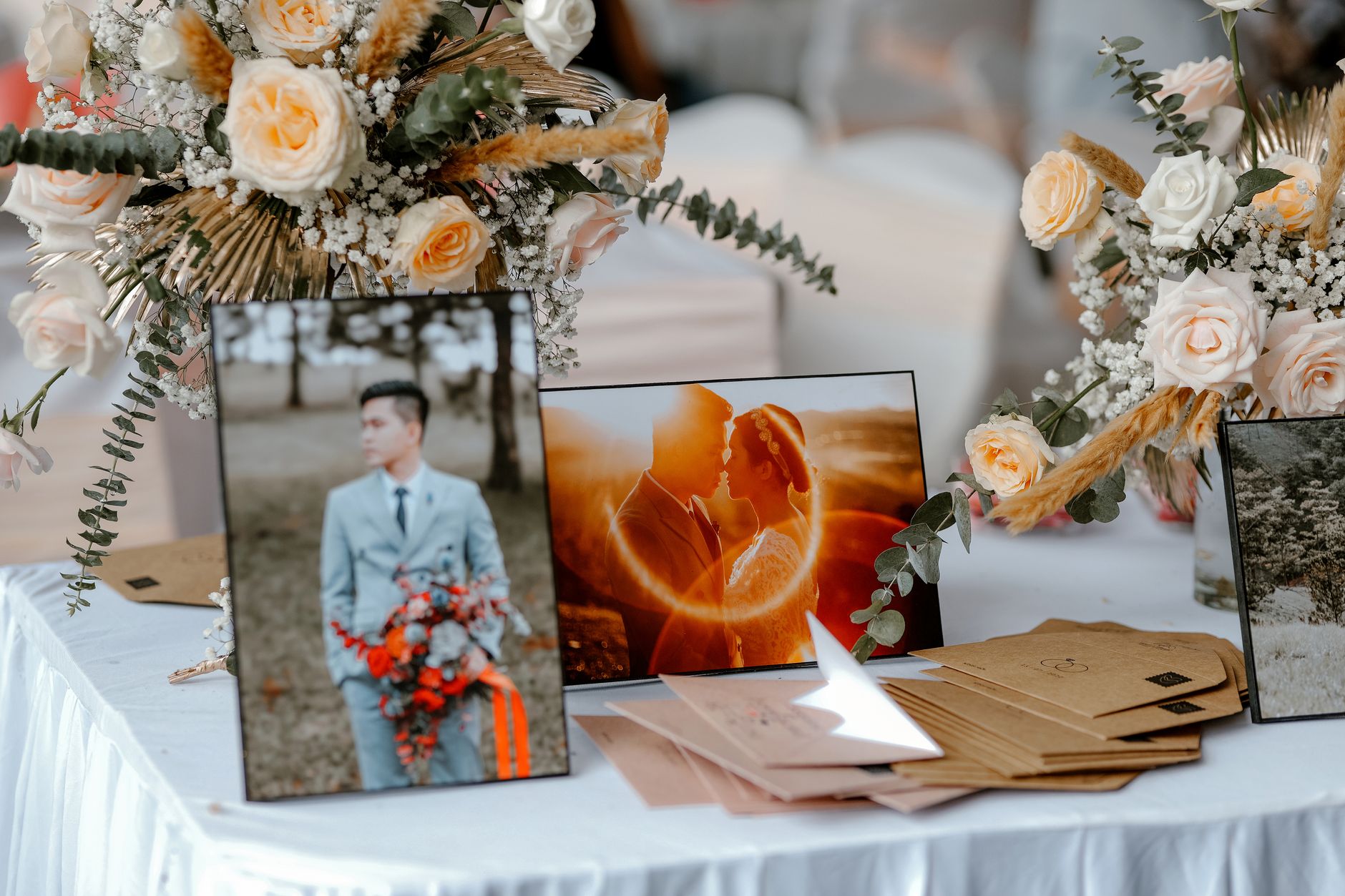
Photo by Trung Nguyen on Pexels
A photo + video combined package means the photography team and videography team share the same timeline, scout the venue together before the wedding day, and coordinate during portraits so neither crew crowds the frame. The package does not mean you receive a discount for booking both — it means the two teams operate as a unified production rather than as separate vendors competing for the same moments.
Combined coverage is standard at destination weddings (San Ysidro Ranch, Borgo Egnazia, Le Sirenuse, Belmond Hotel Caruso, Villa Cetinale) where travel logistics require a single point of contact. It is increasingly common at California estate weddings where the portrait window is constrained — Calamigos Ranch's golden hour lasts 45 minutes, and uncoordinated photo and video teams each want the couple for 30 of those minutes. A combined package assigns one team to direct the couple while the other captures ambient angles.
The deliverables remain separate: a wedding film (4–10 minutes depending on package tier), full ceremony footage, and 400–800 edited images from the photography team. Turnaround for combined packages is 10–12 weeks for video, 6–8 weeks for photography, because the edit workflows are independent.
If your venue has limited portrait zones or your timeline is tight — common at Ojai Valley Inn, Triunfo Creek Vineyards, and Calistoga Ranch — a combined package prevents the logistical friction that stalls coverage when two crews arrive with conflicting shot lists.
Destination Wedding Film Packages — What Changes When You Leave California
A destination wedding film package includes the same coverage tiers (6-hour, 10-hour, multi-day) but adds travel days, location scouting, and international logistics. Pricing starts at $8,500 for a single-day European or Asian wedding and scales with the destination's complexity.
Destination packages for Italy — Borgo Egnazia in Puglia, Le Sirenuse in Positano, Belmond Hotel Caruso in Ravello, Villa Cetinale in Tuscany — typically span 2 or 3 days: a welcome dinner the night before, the wedding day, and a morning-after brunch or pool gathering. The final deliverables include a 90-second welcome-dinner film and a 10-minute wedding film. Turnaround is 12–14 weeks because international footage requires additional color grading to match the Mediterranean light.
France destination packages (Hotel du Cap-Eden-Roc in Antibes, estates in Provence) follow the same structure. Japan weddings (Aman Tokyo, intimate shrines in Kyoto) require bilingual coordination with the venue and an extra day for travel and time-zone adjustment; the package includes a cultural ceremony film if the couple books both a Shinto ceremony and a Western reception.
The key planning difference: destination packages require a signed contract and 50% deposit 9–12 months before the wedding date to secure travel arrangements. California weddings book 6–9 months out.
How to Choose Between Highlight Reel, Full Ceremony Coverage, and Feature-Length Film Packages
Every California wedding videography package includes two deliverables: a highlight reel (the edited wedding film) and full ceremony coverage (unedited, full-length footage of the vows and processional). The package tier determines the highlight reel's length and production depth.
Highlight reel packages (4–6 minutes) — best for couples who want a short, shareable film that plays well on social media and captures the day's arc without lingering on any single moment. These reels include 8–12 scenes: getting ready, first look, ceremony entrance and vows (abbreviated), a portrait sequence, reception entrance, first dance, toasts (excerpts), and a final montage. Delivered as a single MP4 file, web-optimized. Common with 6-hour and 8-hour packages.
Feature-length wedding films (10–20 minutes) — include extended coverage of toasts (full speeches, not excerpts), the entire first dance, parent dances, and a longer portrait sequence that shows the couple moving through multiple zones of the venue. These films require 10-hour packages because the material needs to be captured in full. Delivered as a Vimeo or private-link file; length makes social sharing less common, but the film becomes the couple's primary keepsake.
Full ceremony coverage — always included, always unedited. The videographer positions 2 cameras at the ceremony site (one wide, one close on the couple) and records from processional through recessional without cuts. Delivered as a 20–40 minute file depending on ceremony length. Couples share this file with family members who could not attend or who want to rewatch the vows.
If your ceremony is the emotional center of the day — you wrote personal vows, a parent officiated, or the setting (Calamigos Ranch's oak grove, San Ysidro Ranch's eucalyptus-lined aisle, Auberge du Soleil's vineyard overlook) carries significance — prioritize a package that includes full ceremony coverage as a separate, archival-quality deliverable.
Real Coverage Scenarios — How 4 California Couples Chose Their Packages
Scenario 1: Bel-Air Bay Club, 6-hour package
120 guests. Ceremony on the oceanfront terrace at 4:30 PM, cocktails on the lawn, reception in the ballroom. Single-level property; all zones within a 3-minute walk. The couple booked a 6-hour package starting at 3 PM (final getting-ready coverage and detail shots) through 9 PM (first dance and toasts). The videographer never moved more than 100 feet between scenes. The final 5-minute highlight reel captured every formal event. No extended portrait session because the terrace's sunset was the backdrop for both ceremony and portraits. Delivered in 9 weeks.
Scenario 2: Calamigos Ranch, 10-hour package
180 guests. Ceremony in the oak grove at 5 PM, cocktails at the redwood courtyard, reception in the birchwood barn. Three distinct property zones, each requiring repositioning. The couple booked a 10-hour package starting at 2 PM (getting-ready coverage at the bridal suite, a first look near the oak grove) through midnight (last dance and sparkler exit). The portrait session lasted 45 minutes and moved through 4 locations across the ranch. The final 8-minute film included a richer narrative arc because the videographer captured the couple's walk between zones — a sequence impossible to stage or recreate. Delivered in 11 weeks.
Scenario 3: Auberge du Soleil, 10-hour package + documentary photography
100 guests. Ceremony at the sculpture garden overlook, reception on the main terrace. The couple hired documentary photography and cinematic video as a combined package. Both teams scouted the property 2 weeks before the wedding and coordinated the portrait timeline so the photographer directed the couple while the videographer captured wide ambient footage of the Napa Valley hills at golden hour. The 9-minute wedding film and 600 edited images arrived 10 weeks after the wedding. The couple noted that coordinated coverage meant they spent 30 minutes on portraits instead of the 60 minutes originally planned — and preferred the shorter, less-posed session.
Scenario 4: Le Sirenuse (Positano, Italy), multi-day destination package
80 guests. Welcome dinner at a cliffside restaurant Thursday evening, wedding ceremony and reception at Le Sirenuse on Friday, morning-after brunch on the hotel terrace Saturday. The couple booked a 20-hour destination package covering all 3 events. Deliverables: a 90-second welcome-dinner film, a 12-minute wedding film, and full ceremony coverage. The videography team traveled from Los Angeles, arrived 2 days early to scout Positano's light and coordinate with the Italian venue staff, and stayed through Saturday brunch. Final films delivered in 14 weeks. The couple cited coordination simplicity — one team, one contract, one invoice — as the primary value of the destination package structure.
When to Add Engagement Films or Save-the-Date Films to Your Wedding Package
Engagement films and save-the-date films are optional add-ons to wedding videography packages, not standalone services. Both are short (60–90 seconds), shot on location in a setting meaningful to the couple, and delivered 4–6 weeks after the shoot.
An engagement film works as a pre-wedding keepsake and plays well at the rehearsal dinner or on a loop during cocktail hour. Couples who book engagement films typically shoot at the location where they got engaged (a beach, a hiking trail, a city rooftop) or at a secondary California venue that contrasts with the wedding venue — a Los Angeles Arts District session before a Napa wedding, or a Big Sur coastal shoot before a Calamigos Ranch ceremony.
A save-the-date film is designed for social sharing and embedding in the wedding website. It includes the wedding date, location, and a short visual sequence of the couple in a setting that gestures toward the wedding's aesthetic. Save-the-date films are common with destination weddings (Italy, France, Japan) because they communicate formality and help guests understand the event's scale before the invitation arrives.
Both add-ons can be bundled into the wedding videography package at the time of booking. The shoot typically happens 3–6 months before the wedding and requires 1–2 hours on location. The footage workflow is independent of the wedding film, so the engagement or save-the-date film delivers on its own timeline.
What to Ask Before You Book a California Wedding Videography Package
Before signing a wedding videography contract in California, confirm these 6 production and logistics details:
How many shooters are included in the package? Most 6-hour and 8-hour packages include 1 videographer. Ten-hour and multi-day packages typically include 2 shooters so one can cover the ceremony while the other captures guest reactions or ambient venue footage. Combined photo + video packages may include 2 video shooters and 2 photographers (4 total crew).
What is the edit turnaround time? Standard turnaround for wedding films in California is 8–12 weeks. Destination weddings and multi-day packages add 2 weeks. If you need the film sooner — for an anniversary or a screening event — ask whether rush delivery (4–6 weeks) is available and what the fee is.
Does the package include full ceremony coverage as a separate file? It should. Full ceremony footage is an unedited, start-to-finish recording of the vows and processional, delivered as a standalone video file in addition to the highlight reel. Confirm it is included.
Are travel fees included or itemized separately? For California weddings outside Los Angeles and Orange County, ask whether travel to venues in Ojai, Santa Barbara, Napa, or Carmel is included in the package price or billed separately. Destination packages to Italy, France, or Japan itemize travel as a line item; domestic California travel is sometimes absorbed into the package rate.
Can you add hours on the wedding day if the timeline runs long? Most contracts allow you to extend coverage on the day itself for an hourly overtime rate (typically $400–$600/hour). Confirm the rate and the process for requesting extra hours (usually communicated to the videographer 30 minutes before the contracted end time).
Do you provide raw footage? Most cinematic and documentary wedding videographers do not provide raw footage as part of the package. The deliverables are the edited highlight reel and full ceremony coverage. If you want access to all unedited material, ask whether that option exists and what the additional fee is (often $800–$1,500 for a hard drive of raw files).
How Package Pricing Scales by Region — Southern California vs Northern California vs Destination
Wedding videography packages in Southern California (Los Angeles, Orange County, Santa Barbara, Ojai, Palm Springs, San Diego) range from $3,959 for a 6-hour single-videographer package to $10,500 for a 10-hour two-shooter package with combined photo coverage. Travel within the region is typically included.
Northern California packages (Napa, Sonoma, Carmel, Big Sur, Bay Area) cover 6-hour to multi-day vineyard weddings with extended portrait sessions and rehearsal-dinner films, quoted individually. Travel from Los Angeles to Northern California is added to the package rate when the videography team is based in Southern California.
Destination packages for Italy, France, Japan, Mexico, and the Caribbean cover single-day to 3-day productions and are quoted individually with welcome dinners, wedding-day coverage, and morning-after brunch films. Travel, accommodation, and international logistics are itemized separately or included as a flat destination fee depending on the contract structure.
The pricing difference reflects not just geography but also the venue's infrastructure. A Montage Laguna Beach wedding requires less advance scouting than a private villa wedding in Tuscany, where the videography team coordinates with international vendors, navigates language differences, and adjusts for unfamiliar light and logistics.
Begin a Conversation About Your Wedding Videography Package
Choosing the right wedding videography package starts with your venue's footprint and your event timeline — not with a feature checklist. If your wedding unfolds at Calamigos Ranch across three property zones, or at San Ysidro Ranch over two days, or at a coastal venue where golden hour determines the portrait window, the package tier that captures the day completely is the one built around how the venue shapes the story.
Reach out to discuss wedding film coverage, photo + video combined packages, or destination wedding film logistics for your California or international wedding.