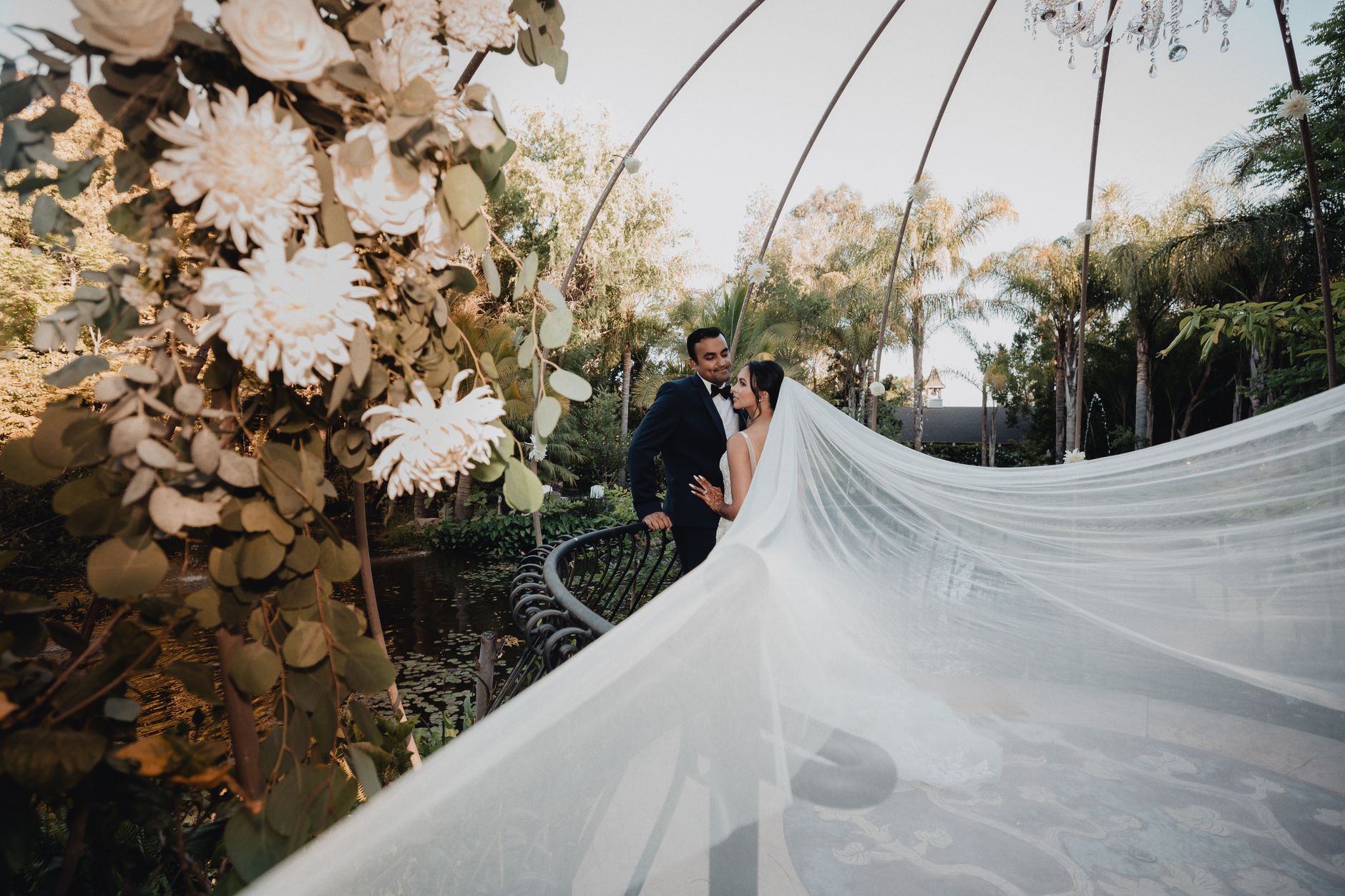
A wedding videographer at Hotel Bel-Air plans coverage around two scenes — the Swan Lake ceremony in late-afternoon light, and the Stone Canyon Terrace reception after dark. The property sits in its own microclimate of eucalyptus shade and reflected water light, which means a 10-hour coverage plan built for this venue looks different than one designed for Calamigos Ranch or Bel-Air Bay Club. The ceremony happens on the lawn beside the swan lake, where the tree canopy filters the afternoon sun into soft green-gold by 4 PM. The reception moves to the Stone Canyon Terrace, where string lights and candles create the warm glow that defines the second half of every Hotel Bel-Air wedding film.
Why Hotel Bel-Air Coverage Starts with the Swan Lake Lawn
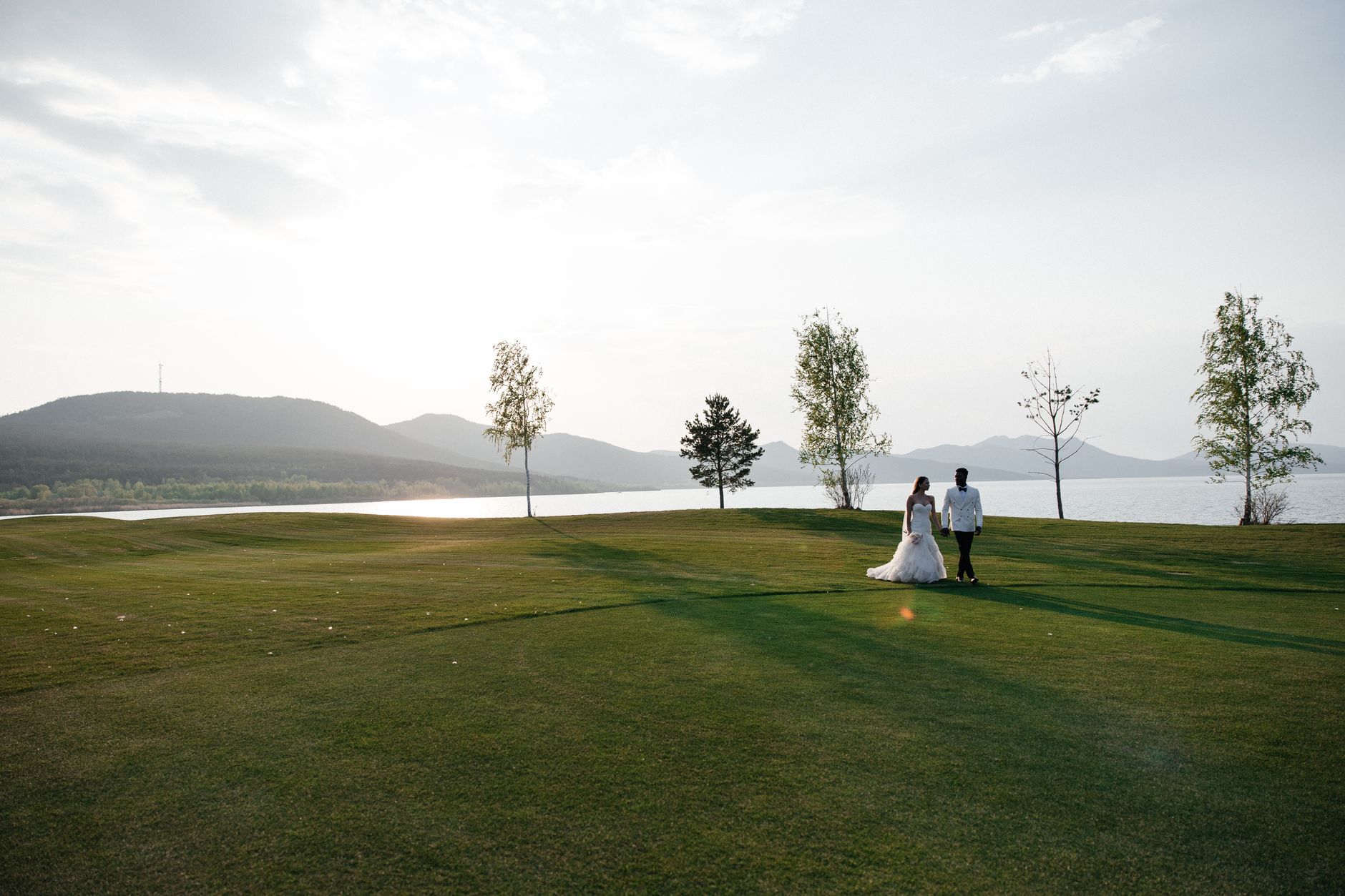
Photo by Gaidar Iskakov on Pexels
The Swan Lake ceremony lawn is framed by mature sycamores and oaks that create a natural scrim — direct sun at 3 PM is too harsh, but by 4 PM the canopy filters it into flattering fill light. A 2-shooter video team typically positions one camera at the back of the aisle for the processional and vows, and a second on a slider at the lakeside for profile and reaction shots during the ceremony. The swans themselves move unpredictably, so the second shooter frames wide enough to include them when they drift into the shot, but never relies on them as a scripted element.
The first look usually happens in the hotel courtyard or along the garden path near the Wolfgang Puck restaurant entrance, 60 to 90 minutes before the ceremony. This timing allows the videographer to capture the moment in open shade, then transition to portraits in the garden before guests arrive. Couples planning an urban modern or editorial black-tie wedding often choose the stone bridge over the swan lake as a portrait location — it reads clean and architectural in the frame, with the water and greenery providing natural depth.
Stone Canyon Terrace Reception and After-Dark Coverage
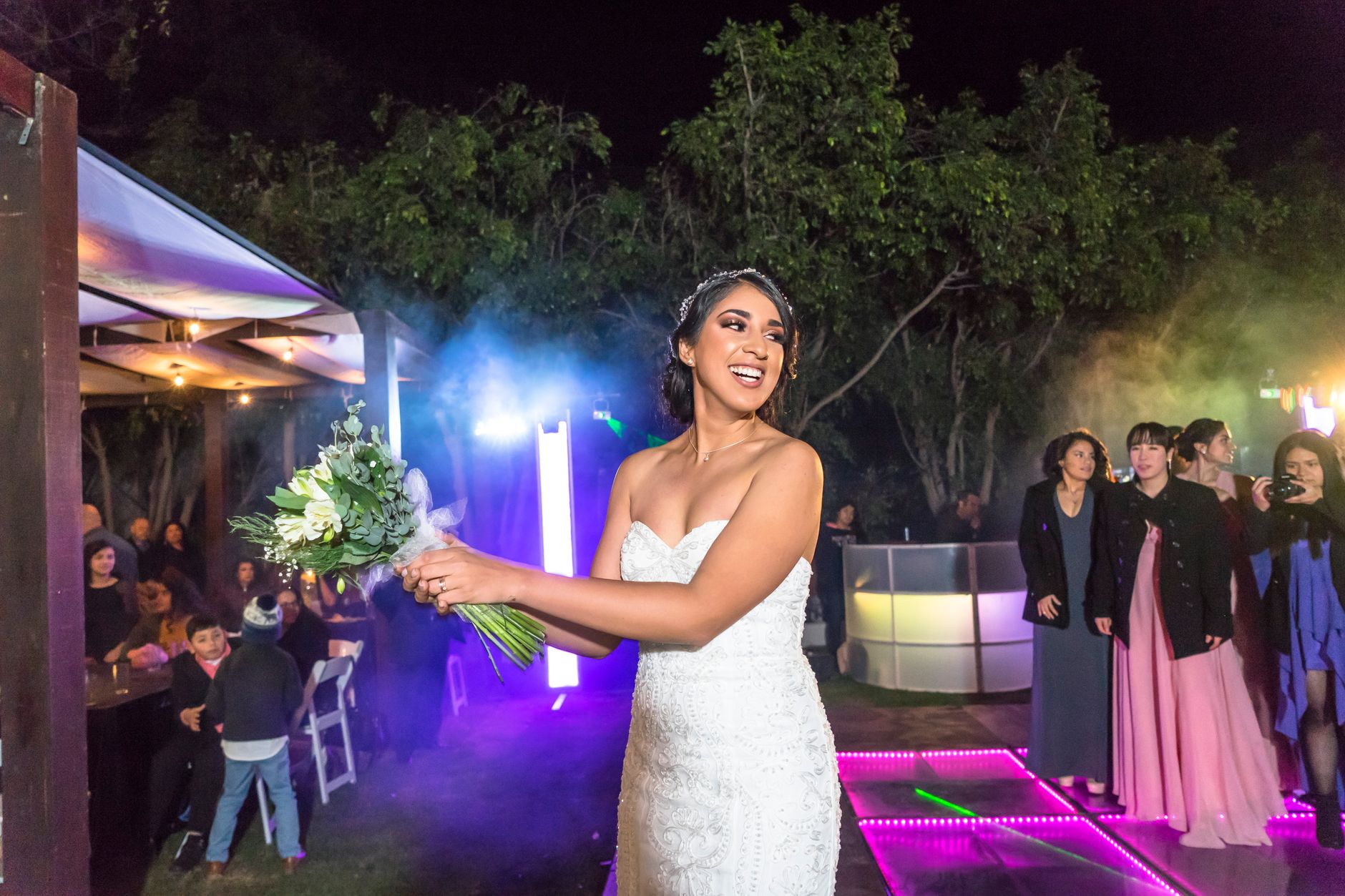
Photo by Luis Becerra Fotógrafo on Pexels
The Stone Canyon Terrace is an open-air courtyard surrounded by the hotel's Spanish colonial architecture, lit by string lights overhead and pillar candles on each table. After sunset, the ambient light drops to near-dark, which means the videographer shifts to a fast prime lens (typically f/1.4 or f/1.8) and raises ISO to 3200 or 6400 to preserve the warm candlelight without adding video lights that flatten the mood.
The first dance, toasts, and cake cutting all happen under these string lights. A 2-shooter team splits coverage — one locks down on a tripod for wide master shots of the dance floor, while the second operates handheld for close-ups of the couple, parents, and guests during toasts. The terrace has no dance-floor uplighting by default, so the videographer exposes for the faces and allows the background to fall into soft shadow.
Dinner service at Hotel Bel-Air is typically plated and served by the hotel's event team, which means there is no buffet line or family-style moment to film. The videographer uses the dinner hour to capture table details (floral centerpieces, place cards, menu cards) and roaming guest reactions. Audio capture during toasts is straightforward — the hotel's in-house AV team provides a mixer feed, so the videographer taps directly into the PA system with a line-in cable rather than relying on on-camera mics.
Photo + Video Coordination and Timeline Strategy

Photo by Francesco Paggiaro on Pexels
Hotel Bel-Air weddings typically follow a 6-hour or 10-hour coverage structure. A 6-hour package covers ceremony prep (last 60 minutes), the ceremony itself (30 minutes), cocktail hour on the Swan Lake lawn (60 minutes), and the reception through toasts and first dance (3 hours). A 10-hour package adds morning getting-ready coverage in the hotel suites, an engagement-style couple session in the garden after the ceremony, and extended reception coverage through the last dance and sendoff.
When the couple books both documentary photography and wedding film as a combined package, the photo and video teams coordinate on three key moments: the first look, the ceremony processional, and the couple portraits after the ceremony. The photographer leads the first look, cueing the couple when to turn; the videographer positions 15 feet back with a stabilizer to capture the approach and reaction in motion. During the ceremony, the photographer works the aisle and sides while the videographer holds fixed positions to avoid crossing frames. After the ceremony, the teams alternate — 10 minutes of stills, then 5 minutes of video movement, repeating until the shot list is complete.
Hotel Bel-Air allows 90 minutes for post-ceremony portraits before cocktail hour ends, which is enough time for both teams to work the garden, the stone bridge, and the swan lake perimeter without rushing. Couples who prioritize the highlight reel over the full ceremony edit often skip the 90-minute portrait block and move directly into cocktail hour, which frees the videographer to capture more candid guest moments and fewer posed sequences.
Scene-Specific Coverage Notes for the Swan Lake and Garden
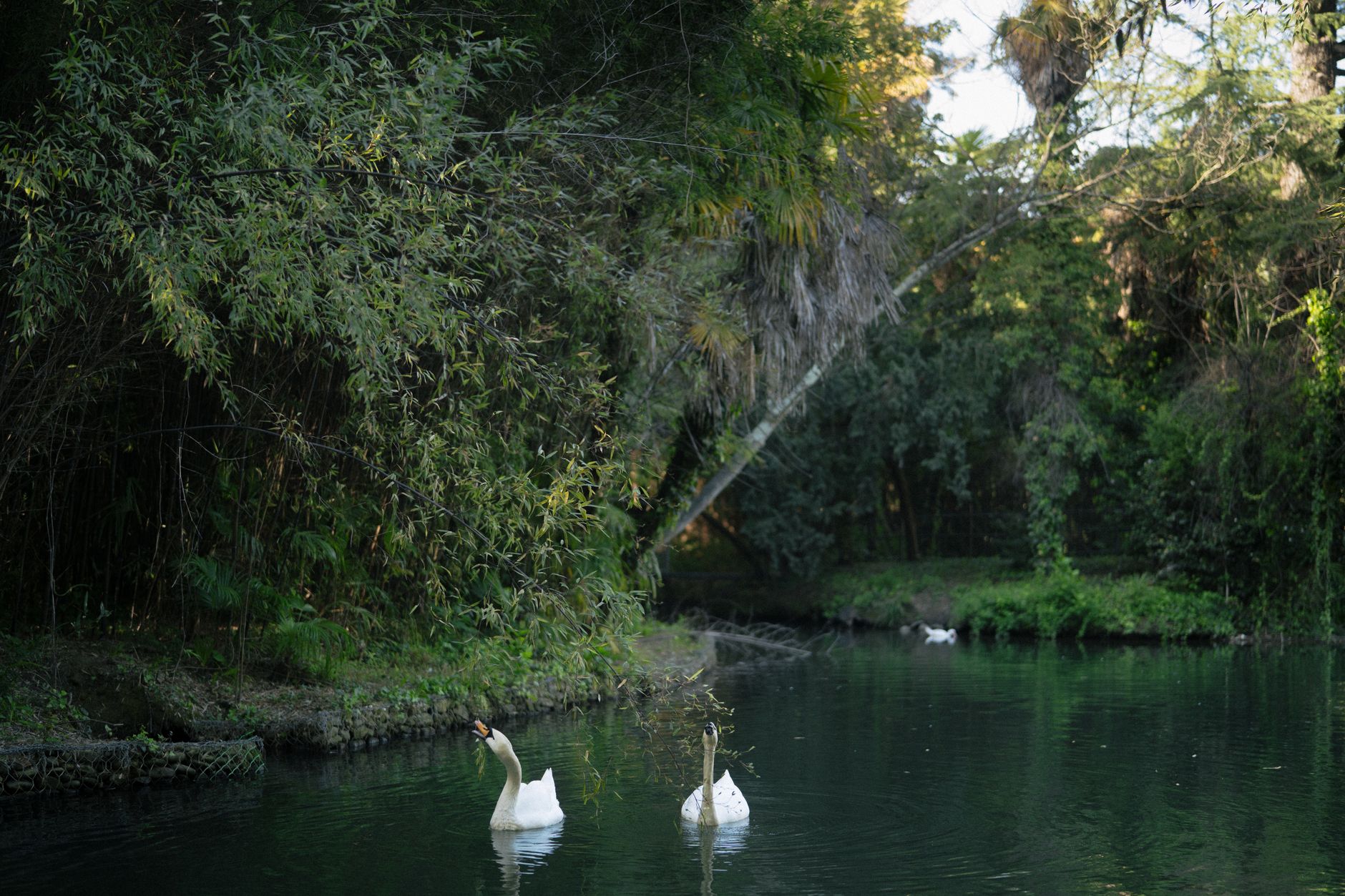
Photo by Yaroslav Shuraev on Pexels
The Swan Lake itself presents two challenges: wind and swans. The lake sits in a natural bowl, so wind gusts are rare, but when they occur they create ripples that disrupt the mirror reflection the videographer relies on for wide establishing shots. The swans are permanent residents but not trained — they drift in and out of frame, and occasionally honk during the vows. A skilled videographer frames wide enough to include them when present but does not rely on them as a guaranteed story element.
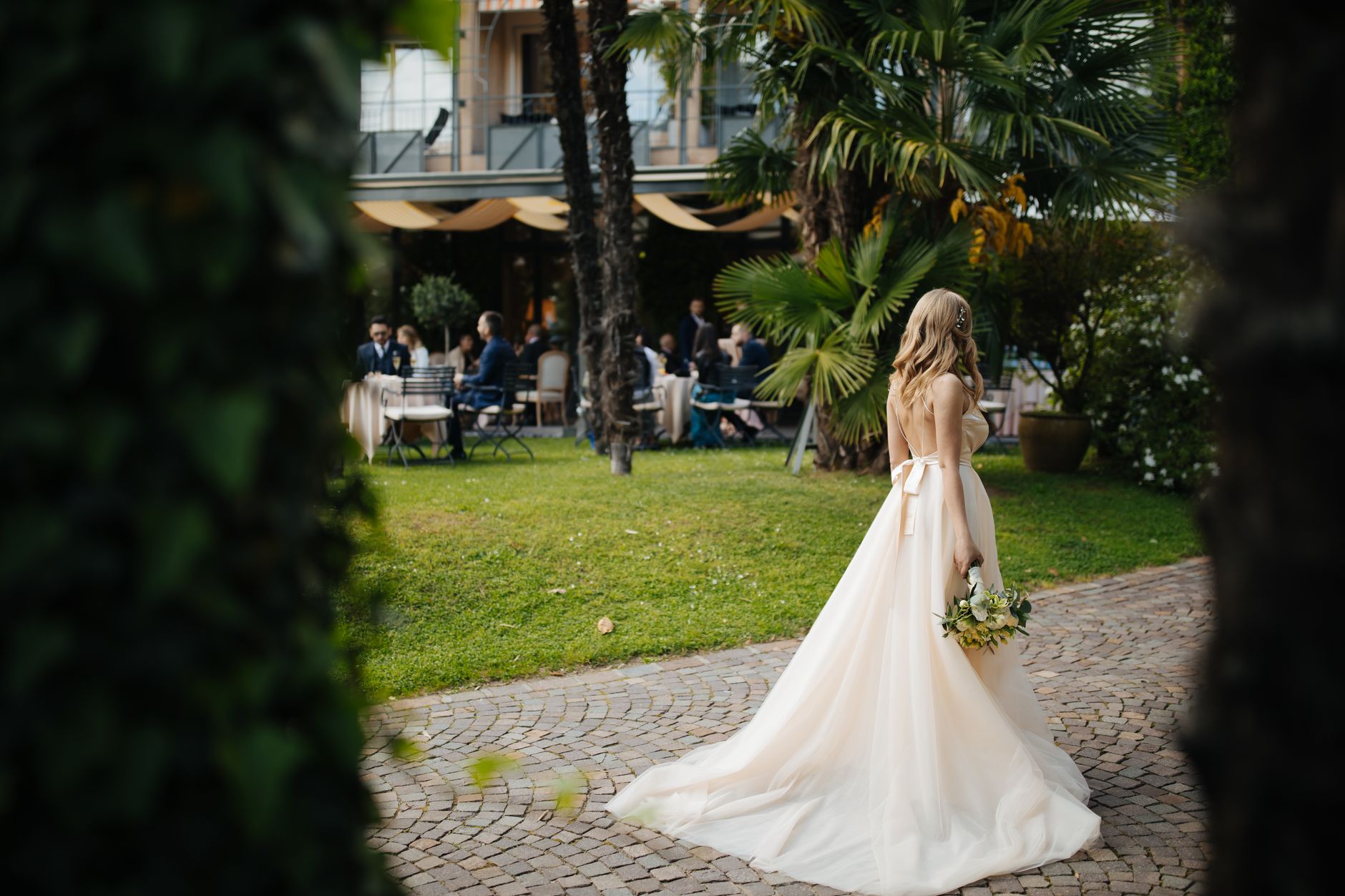
The garden path from the hotel lobby to the ceremony lawn is lined with flowering vines and potted olive trees. This path is where the processional happens — guests walk from cocktail hour (held on the Swan Lake lawn before the ceremony, or in the private garden courtyard) to their seats, and the wedding party processes down the same route. The videographer typically positions a third angle here (if shooting with a 3-person crew) to capture the processional approach, or alternately uses a gimbal to follow the bride from behind as she walks toward the ceremony site.
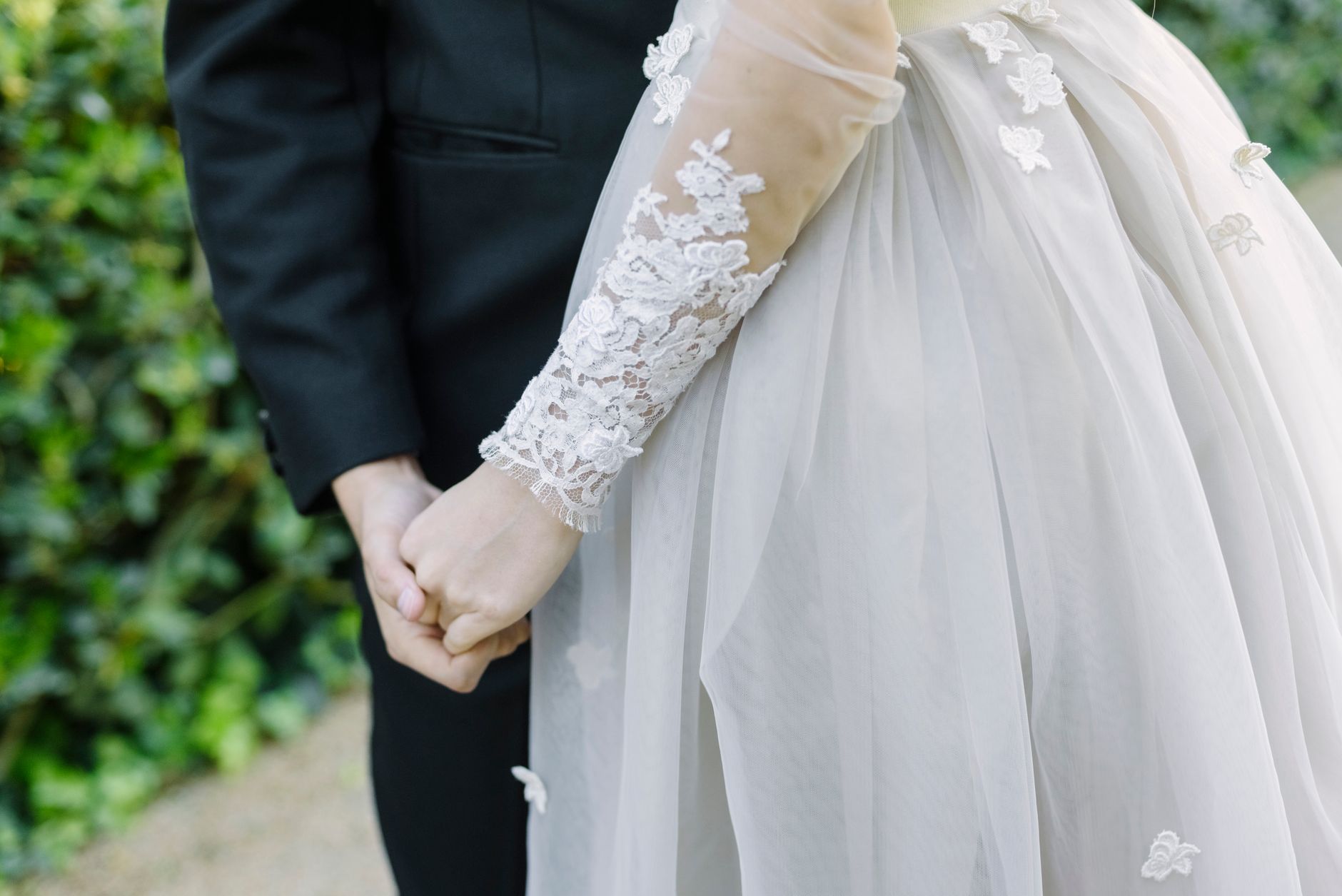
The hotel's interior — specifically the stone archways and Spanish tile — can be used for a pre-ceremony "getting ready" sequence if the couple books a suite. The suites have large windows that overlook the garden, which provides natural north-facing light in the morning. The videographer will shoot B-roll of the bride's details (dress, shoes, jewelry, invitation suite) on the windowsill or the upholstered bench near the window, using the garden as a soft-focus background.
Audio Strategy for the Ceremony and Toasts
Hotel Bel-Air ceremonies are typically officiated with a wireless microphone provided by the hotel's AV vendor. The videographer asks the couple to request a mixer feed from the AV team 2 weeks before the wedding — this allows a direct line-in from the PA system to the video recorder, which captures the officiant, vows, and readings at broadcast quality without relying on a shotgun mic 40 feet away.
For the toasts, the same wireless mic is passed among the speakers. The videographer's audio recorder stays connected to the mixer throughout the reception, so all speeches are captured at the same gain level without adjustment. Ambient audio — guest laughter, applause, the string quartet during cocktail hour — is recorded on a second track using a stereo shotgun mic mounted on the primary camera. In the edit, the mixer feed provides the clean dialogue track, and the ambient mic provides the room tone and reaction layer.
The first-dance song is usually played by a live band or DJ. The videographer asks the band leader for a setlist and song title 1 hour before the first dance so the editing team can later license the same track from a commercial sync library (MusicBed, Artlist, Soundstripe) for the final film. Hotel Bel-Air does not allow direct audio recording from the band's mixer without advance approval, so the videographer records the live performance as a reference track and replaces it in post-production with the licensed studio version.
Couple Aesthetics and Venue Fit
Hotel Bel-Air attracts three couple types in roughly equal measure: garden romantic (soft, organic, muted florals), editorial black-tie (clean, minimal, high-contrast), and coastal classic (navy, ivory, greenery, brass candlesticks). The garden romantic aesthetic leans into the property's natural beauty — eucalyptus garlands, blush roses, silk ribbon, low centerpieces that allow sightlines across the terrace. The editorial black-tie couple treats the venue as a neutral canvas — black tuxedos, white florals, acrylic ghost chairs, no additional draping or fabric beyond what the venue provides.
A videographer working at Hotel Bel-Air should recognize which aesthetic the couple has chosen by examining the floral and linen choices, because that determines how the film is framed. A garden romantic wedding is shot with a shallow depth of field (f/1.4 to f/2.8), warm color grade, and slow camera movements that emphasize texture and softness. An editorial black-tie wedding is shot at f/4 to f/5.6, cooler color grade, and static or slider-based movements that emphasize geometry and symmetry.
The coastal classic couple falls between the two — natural light, moderate depth of field, warm but not golden color grade. This is the most common aesthetic at Hotel Bel-Air, and the one that aligns most closely with the venue's inherent look.
Edit Turnaround and Deliverables
A full wedding film edit from a Hotel Bel-Air wedding typically takes 10 to 12 weeks from the wedding date to final delivery. The editing process includes color grading to match the eucalyptus and stone tones of the venue, audio mixing to balance the ceremony vows with the ambient garden sounds, and licensed music selection that complements the couple's aesthetic.
The primary deliverable is a 12- to 18-minute feature film that includes the ceremony in full, selected moments from getting ready and portraits, toasts, first dance, and a montage of candid reception moments. The secondary deliverable is a 3- to 5-minute highlight reel designed for social sharing — shorter, faster-paced, and set to a single licensed music track.
Some couples also request full ceremony coverage as a standalone product — a locked-down, unedited recording of the entire ceremony from processional to recessional, delivered as a separate file for archival purposes or for family members who could not attend. This is captured simultaneously with the cinematic footage using a second camera locked on a tripod, and requires no additional crew.
Editing a Hotel Bel-Air wedding film is different from editing a Calamigos Ranch or Ojai Valley Inn film because the light is softer and the color palette is narrower — green, cream, gold. The colorist works to preserve the natural warmth without pushing the greens into yellow or the skin tones into orange. The Swan Lake itself provides a consistent visual anchor, so the editor uses wide lakeside shots as transitional beats between ceremony, portraits, and reception.
Travel and Destination Context
Hotel Bel-Air is located in the Bel-Air neighborhood of Los Angeles, 20 minutes from LAX and 25 minutes from downtown LA. The hotel provides valet parking for vendors, and the load-in entrance is separate from the guest entrance. A videographer traveling from Northern California or out of state typically flies into LAX the morning of the wedding (if the ceremony is evening) or the night before (if the ceremony is afternoon). The hotel does not provide vendor accommodations, so overnight lodging is booked separately.
Because Hotel Bel-Air is within the Los Angeles service area, the standard travel fee is zero for couples booking from LA, Orange County, or Pasadena. For couples booking the venue as a destination wedding from outside California, the videographer's travel expenses (airfare, hotel, ground transport, meals) are itemized separately and added to the package price. LifeStory.Film also offers destination wedding film packages designed for couples planning weddings in Europe, Japan, or Mexico who want an LA-based crew they've worked with for their engagement film or save-the-date.
Hotel Bel-Air weddings are frequently referred by Los Angeles-based wedding planners who specialize in luxury hotel and estate weddings. These planners often coordinate multi-vendor teams (florist, rental company, band, photographer, videographer, hair and makeup) and manage the timeline to ensure that each team has adequate coverage windows. A videographer working with a planner-referred Hotel Bel-Air wedding should expect a detailed timeline delivered 2 weeks before the event, a day-of coordinator who manages vendor load-in and positioning, and a post-wedding debrief for future referrals.
How to Begin a Conversation About Your Hotel Bel-Air Wedding
If you are planning a wedding at Hotel Bel-Air and want a wedding film that reflects the specific light, architecture, and garden setting of the venue — not a template applied to every location — review the wedding videography portfolio to see how Swan Lake ceremonies and Stone Canyon Terrace receptions are covered. Reach out 9 to 14 months before your wedding date to discuss your timeline, aesthetic, and whether you want to combine the video coverage with editorial photography as a single-crew package. All package details and pricing are available on the packages and pricing page, and the FAQ answers most questions about edit turnaround, deliverable formats, and travel logistics.