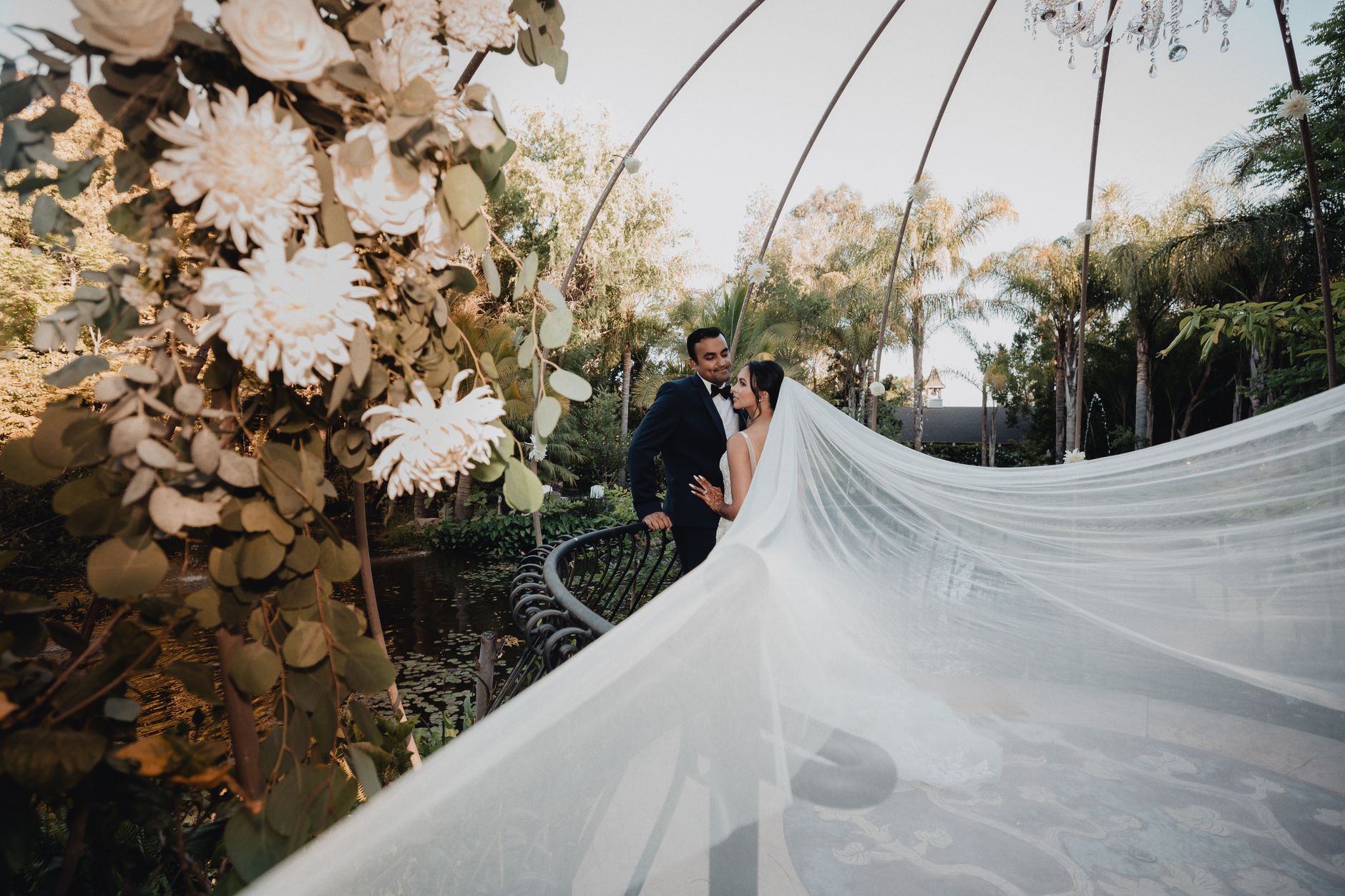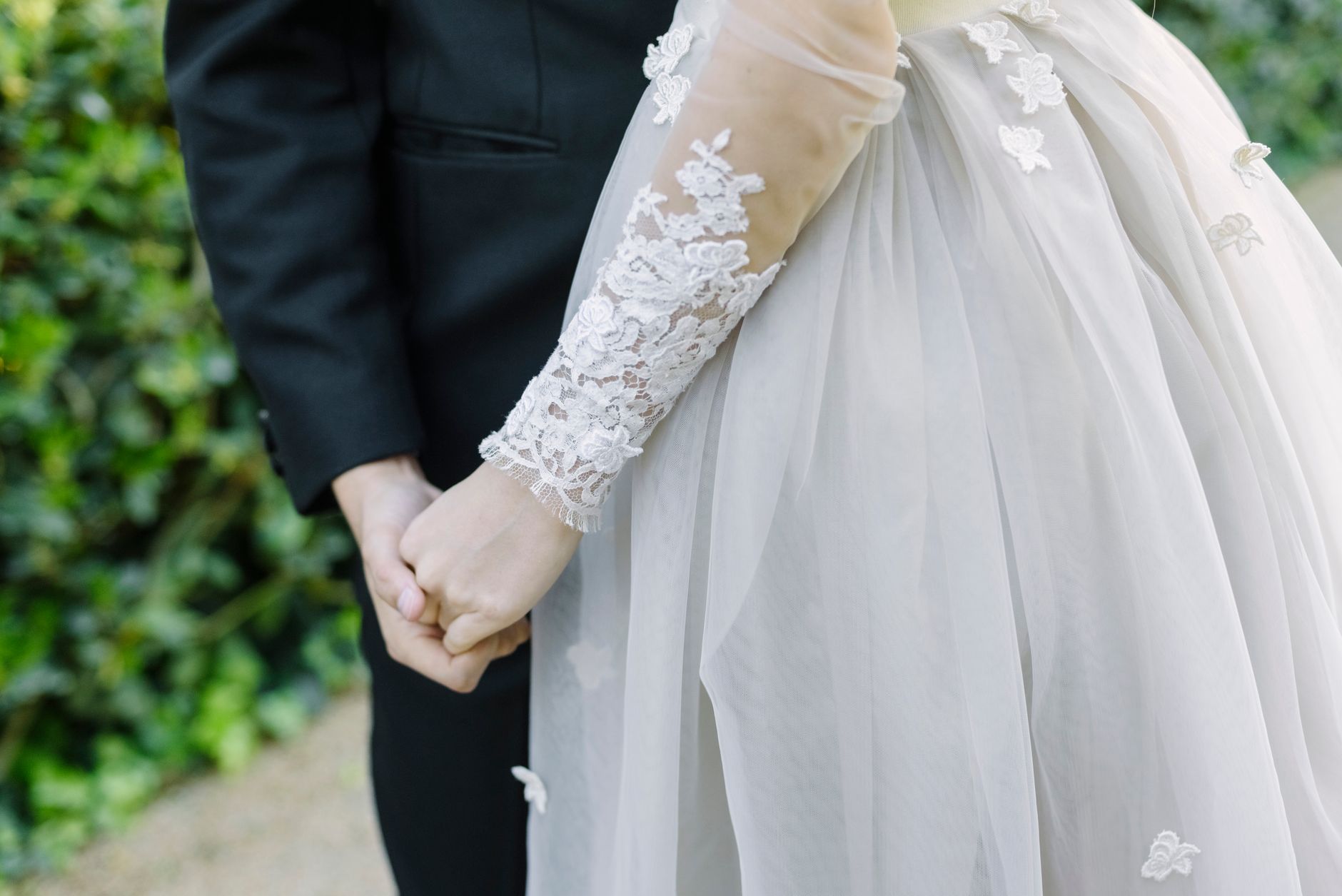
The videographer needs the first look to happen in a space with natural light and room to move. The photographer needs time for posed portraits without a second crew underfoot. Both need the ceremony processional timed to the same golden-hour window at 4:30 PM. A wedding timeline coordinating photo and video coverage starts with identifying which moments require both teams present — and which benefit from solo coverage.
Which Moments Require Both Photo and Video
Photo by Md Iftekhar Uddin Emon on Pexels
Three moments in a wedding day demand synchronized coverage: the first look, the ceremony, and the couple's portrait window immediately after. At Calamigos Ranch, a 2-shooter video team and a 2-shooter photo team position around the oak grove for the ceremony — video captures the processional wide from the back row, while photo moves between aisle and altar for close frames of the parent's hand finding the bride's shoulder during the vows. Both teams are present, but their spatial choreography is planned in advance so neither blocks the other's sightline.
The first look typically happens 90 minutes before the ceremony. For a 5 PM ceremony, the first look is scheduled at 3:30 PM. Video arrives at 3 PM to stage the location — usually a courtyard, garden terrace, or shaded pathway — and confirm the light direction. Photo arrives at 3:20 PM to position the couple. The actual first look takes 8–12 minutes of coverage; afterward, photo takes the couple for formal portraits while video captures detail shots of the ceremony space, guest arrival, and candid pre-ceremony moments with the wedding party.
Coordination between the two teams happens through a shared timeline document — typically managed by the wedding planner or day-of coordinator — that specifies not just the time but the location, the light conditions, and the handoff sequence. At Hotel Bel-Air, the timeline for a recent garden romantic wedding noted: "3:30 PM first look at Swan Lake terrace (video stages 3:00, photo joins 3:20); 3:45 PM couple portraits at Stone Canyon courtyard (photo solo, video moves to ceremony setup); 5:00 PM ceremony at Swan Lake lawn (both teams)."
How to Schedule the First Look with Both Teams Present
Photo by Đậu Photograph on Pexels
Book the first look 90–120 minutes before the ceremony. This window allows time for the moment itself, followed by separate portrait blocks for photo and video without rushing either.
Assign the video team to stage the location first. Video needs 15–20 minutes to assess the light, clear any distracting background elements, and decide on camera angles. At Ojai Valley Inn, the video team stages the first look at the eucalyptus grove 30 minutes early to confirm the sun angle won't backlight the couple into silhouette.
Have the photo team position the couple. The photographer directs the couple into the frame — where to stand, which direction to face, when to turn. Video observes and captures the moment as it unfolds, documentary-style, without directing.
Plan a 10-minute handoff. After the first look, photo takes the couple for 20–30 minutes of formal portraits (family groupings, bridal party, couple-only frames). Video does not shadow this block; instead, they move to capture arrival details, ceremony setup, or guest candids.
Reunite both teams for the ceremony processional. Ceremony coverage is the second synchronized moment. Both teams position 10 minutes before the processional begins, with video typically anchored at the back or side aisle and photo moving fluidly between ceremony entrance and altar.
Photo-Only vs Video-Only Coverage Windows
Photo by Arto Suraj on Pexels
Not every moment benefits from dual coverage. The getting-ready window — hair, makeup, dress details — is often handled by the photo team alone, especially if the wedding film package does not include a getting-ready montage. A documentary photography team will capture the bride's mother fastening the dress clasp, the bridesmaids laughing over champagne, the groom adjusting his boutonnière in the mirror. Video may arrive later, 60–90 minutes before the ceremony, unless the couple has specifically requested a full-day wedding film that includes pre-ceremony preparation.
Conversely, the couple's sunset portrait session — sometimes called the "golden hour shoot" — works better as a photo-solo block. This session typically happens during cocktail hour, while guests are occupied. The photographer takes the couple to a scenic overlook, vineyard row, or coastal bluff for 15–20 minutes of editorial frames. Video does not join this block because the session involves heavy posing and repeated takes, which do not translate well to documentary film coverage. Instead, the video team remains at the reception site, capturing guest interactions, toasts setup, and detail shots of the tablescape.
Reception coverage, by contrast, is fully dual. Both teams document the first dance, parent dances, toasts, cake cutting, and the last dance. The video team prioritizes audio — capturing toast dialogue, the couple's vows if they wrote their own, the parent's speech — while the photo team prioritizes the faces, the gestures, the moment the bride's hand finds the groom's during the first dance.
How Planners Structure the Combined Timeline
Photo by Matheus Bertelli on Pexels
Wedding planners who regularly coordinate photo and video teams — particularly at venues like San Ysidro Ranch, Auberge du Soleil, and Montage Laguna Beach — build the timeline backward from the ceremony start time. If the ceremony is scheduled for 5 PM to catch the golden-hour light, the planner maps the preceding blocks in reverse:
- 5:00 PM: Ceremony begins (both teams present)
- 4:50 PM: Video and photo position for processional
- 4:30 PM: Guests seated, live music begins
- 3:45 PM: Couple portraits at vineyard terrace (photo solo, 20 minutes)
- 3:30 PM: First look at oak grove (both teams, 10–12 minutes)
- 3:00 PM: Video stages first look location
- 2:30 PM: Hair and makeup final touches (photo solo)
- 2:00 PM: Bride in dress, detail shots (photo solo)
- 1:30 PM: Video team arrives, captures groom getting ready and venue walk-through
This reverse-build method ensures that the ceremony — the immovable anchor of the day — happens at the correct light window, and all preceding moments are scheduled to support it. If the couple wants an earlier ceremony (3 PM instead of 5 PM), the first look shifts to 1:30 PM, and the getting-ready coverage starts earlier to accommodate.
At Bel-Air Bay Club, where the Pacific terrace ceremony is timed to the 4 PM light, planners add a buffer block called "photo contingency" — an extra 15 minutes between the couple portraits and the ceremony processional. This buffer absorbs delays (a zipper malfunction, a missing boutonnière, a parent running late) without pushing the ceremony into harsh overhead sun.
Venue-Specific Coordination at Calamigos Ranch and Hotel Bel-Air
Calamigos Ranch weddings present a unique coordination challenge: the oak grove ceremony and the barn reception are a 3-minute walk apart, connected by a gravel path. The video team typically sends one shooter to the ceremony grove and one to the barn, so both spaces are covered simultaneously during cocktail hour. The photo team stays with the couple during their golden-hour portrait session on the vineyard hill, then rejoins the reception just before the first dance. The timeline for a recent Calamigos wedding specified: "6:00 PM ceremony ends, couple exits to vineyard for portraits (photo solo, 20 min); 6:00–6:30 PM guests walk to barn for cocktails (video captures both the walk and the barn arrival); 6:30 PM couple enters reception (both teams present for entrance, first dance, toasts)."
Hotel Bel-Air requires a different cadence because the ceremony, cocktail hour, and reception all happen in adjacent garden spaces within a 2-minute walk. The compressed geography means the photo and video teams can move fluidly between coverage zones without losing any moment. A typical Hotel Bel-Air timeline consolidates the first look, ceremony, and couple portraits into a 90-minute block: first look at 4:00 PM on the Swan Lake terrace, ceremony at 4:30 PM on the garden lawn, couple portraits at 5:00 PM in the Stone Canyon courtyard while guests begin cocktails. Both teams are present for all three beats, then split during cocktail hour — video captures guest mingling and detail shots, photo takes the couple for one final editorial portrait series under the sycamore canopy.
Common Timeline Mistakes and How to Avoid Them
The most frequent mistake is scheduling the first look too close to the ceremony, leaving no buffer for portraits or for the couple to compose themselves before walking the aisle. A first look scheduled at 4:45 PM for a 5:00 PM ceremony creates a rushed, stressful transition. The couple finishes the first look at 4:55 PM, has no time for portraits, and walks straight into the processional still catching their breath. The correct gap is 60–90 minutes.
The second mistake is double-booking the couple's attention during a single-coverage window. If the timeline specifies "3:30–4:00 PM couple portraits with photo" and also lists "3:30 PM video interview with couple," both teams arrive expecting the couple's full focus. The conflict either delays the ceremony or forces one team to skip their planned coverage. The solution is to assign video interviews to a separate block — typically during getting-ready coverage or immediately after the ceremony, when the couple has a private moment before joining cocktail hour.
The third mistake is failing to communicate the timeline to both teams in advance. If the photographer assumes the first look happens at 3:30 PM but the videographer was told 4:00 PM, one team is staged in the wrong location or missing entirely when the moment begins. The planner or couple should distribute a final timeline to all vendors — photo, video, florist, band, caterer — at least 72 hours before the wedding day, with a second confirmation sent the morning of.
Why Combined Photo + Video Packages Simplify Coordination
Booking photo and video as a combined package eliminates the coordination burden entirely. A single production team — typically 2 shooters for photo and 2 shooters for video, all from the same company — operates from one shared timeline, one shared shot list, and one pre-wedding planning meeting. The team has already worked together on dozens of weddings, knows each other's spatial choreography, and does not require a planner to mediate their coverage windows.
The combined package also ensures stylistic consistency. A documentary photography approach pairs naturally with a cinematic wedding film; both prioritize real moments over posed tableaux, both move fluidly through the day without interrupting it, both deliver a final edit that feels authored rather than assembled. When photo and video come from separate vendors, the couple sometimes receives editorial black-and-white stills alongside a highlight reel cut like a music video — two aesthetics that do not cohere.
From a timeline perspective, the combined package shortens the total coverage window. Instead of a photo team arriving at 1 PM and a separate video team arriving at 3 PM, a single combined crew arrives at 2 PM and handles both mediums simultaneously. The couple spends less time being directed, less time posing, and more time experiencing the day while the crew documents it.
Real Timeline Example: Full-Day Coverage at Rancho Valencia
A garden romantic wedding at Rancho Valencia in June 2025 illustrates how a coordinated photo + video timeline runs in practice:
- 1:00 PM: Combined crew arrives. Photo captures bride getting ready (hair, makeup, dress details). Video captures groom getting ready and venue walk-through.
- 2:30 PM: Bride is dressed. Photo takes detail shots of the dress, shoes, invitation suite, rings. Video captures the olive grove ceremony setup and guest arrival beginning.
- 3:00 PM: Video stages first look at the croquet lawn. Photo joins at 3:15 PM.
- 3:20 PM: First look begins. Both teams present. Video captures audio and movement; photo captures faces and gestures. Moment lasts 10 minutes.
- 3:30 PM: Couple portraits at the olive grove (photo solo, 20 minutes). Video moves to ceremony space to capture early guest arrivals and family seating.
- 4:00 PM: Ceremony begins on the croquet lawn. Both teams present. Video captures processional from the back; photo moves between aisle and altar.
- 4:30 PM: Ceremony ends. Couple recesses. Photo follows the couple for immediate post-ceremony portraits in the courtyard garden. Video captures guests moving to cocktail hour at the tennis pavilion.
- 5:00 PM: Cocktail hour. Video documents guest interactions, signature cocktails, live jazz trio. Photo takes couple for golden-hour editorial portraits at the vineyard edge (solo, 15 minutes).
- 5:30 PM: Couple enters reception. Both teams present for entrance, first dance, parent dances, toasts.
- 7:00 PM: Dinner service. Photo captures table candids; video captures ambient sound and detail shots of the tablescape.
- 8:30 PM: Cake cutting, last dance, exit under sparklers. Both teams present.
- 9:00 PM: Coverage ends.
The timeline uses dual coverage for the five key moments (first look, ceremony, reception entrance, toasts, exit) and solo coverage for everything else. The couple is never directed by two teams at once. The planner distributed this timeline to all vendors 72 hours in advance, and the combined photo-video crew confirmed it in a phone call the morning of the wedding.
Begin a Conversation About Your Wedding Timeline
Coordinating a wedding videography and photography timeline is less about rigid schedules and more about understanding which moments benefit from dual coverage, which need solo focus, and how to build buffer time so the ceremony happens at the correct light. Whether you are planning a Calamigos Ranch oak-grove ceremony or a Hotel Bel-Air garden wedding, the timeline should serve the couple's experience first and the coverage teams second. If you are considering a photo + video combined package for your wedding, begin a conversation about your day at the pricing page.