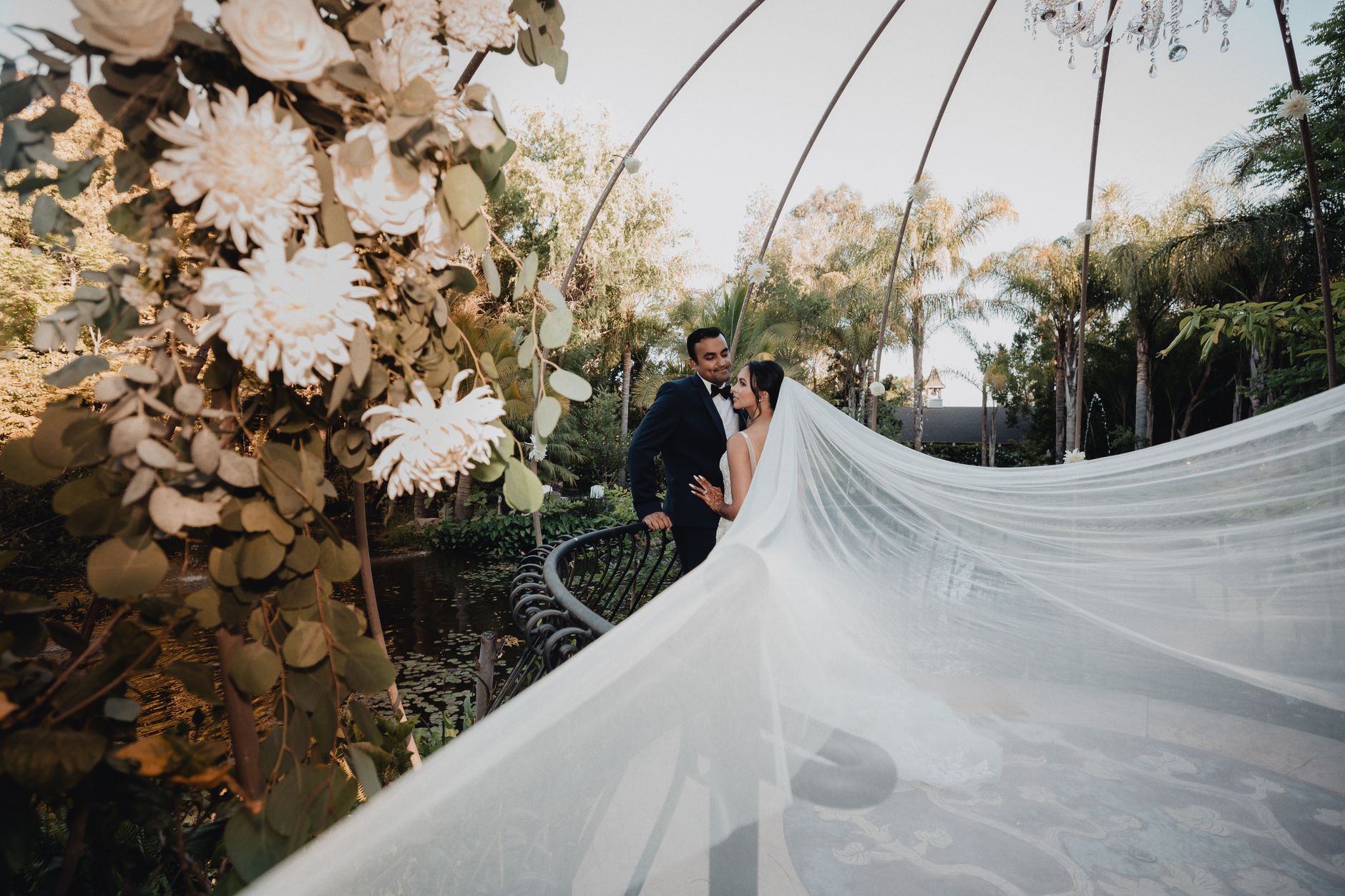
A wedding film at Hummingbird Nest Ranch is shaped by the property's ridge-top topography—the ceremony knoll catches the last hour of clean west light, and the glass pavilion requires a second audio and lighting strategy entirely. The venue sits 1,400 feet above Simi Valley on 123 acres of oak-studded Santa Susana hillside, which means the videographer's coverage plan accounts for wind, wide sky, and the fact that sunset here happens fifteen minutes later than it does at sea level. Couples booking Hummingbird Nest Ranch typically allocate 10 hours of wedding film coverage with a 2-shooter video team to document both the outdoor ceremony and the pavilion reception without missing the transition between the two.
The first thing a wedding videographer notices when walking the property is that Hummingbird Nest Ranch does not film like a garden venue—it films like a canyon venue with a 270-degree horizon line. The ceremony site on the oak knoll is exposed, which flatters skin tones and renders clean background separation in the 4–6 PM window, but punishes poorly timed coverage. The glass pavilion, by contrast, is a controlled environment where the videographer has to manage reflections, DJ audio bleed, and the fact that the structure's transparency makes every camera position visible to every guest. A full-day wedding film here is not one continuous shoot—it is two distinct location shoots with a thirty-minute buffer in between.
Why Hummingbird Nest Ranch Films Differently Than a Coastal Venue
Photo by Agung Pandit Wiguna on Pexels
Hummingbird Nest Ranch sits inland, elevated, and unshaded. The light is harder and whiter than at Terranea Resort or Resort at Pelican Hill, which means the videographer schedules the ceremony for the hour before sunset rather than at sunset itself. A 5 PM ceremony in July gives the videographer clean directional light without the magenta color cast that arrives ten minutes before the sun drops. A 6 PM ceremony in the same month risks losing that separation—the sky stays bright, but the knoll falls into open shade, and the film loses contrast.
The second difference is wind. The ridge-top location channels afternoon thermals across the ceremony site, which affects both veil shots and audio capture. A wedding videographer working Hummingbird Nest Ranch brings deadcat windscreens for the lapel mics and plans the processional coverage so the camera operator is downwind of the officiant during the vows. A coastal venue like Bel-Air Bay Club has wind, but it is consistent and offshore. Here, the wind shifts every twenty minutes, and the videographer adjusts mic positioning twice during the ceremony if necessary.
The third difference is scale. The property reads as intimate in photos—oak canopy, stone pathways, private estate—but it is 123 acres, and the distance between the bridal suite and the ceremony knoll is a six-minute walk. The videographer's timeline accounts for that transit and stages the first-look coverage either at the suite or on the knoll itself, not halfway between. A bride in a long train and heels cannot traverse decomposed granite paths quickly, and the videographer does not ask her to.
Scene Coverage at Hummingbird Nest Ranch — Knoll Ceremony, Pavilion Reception
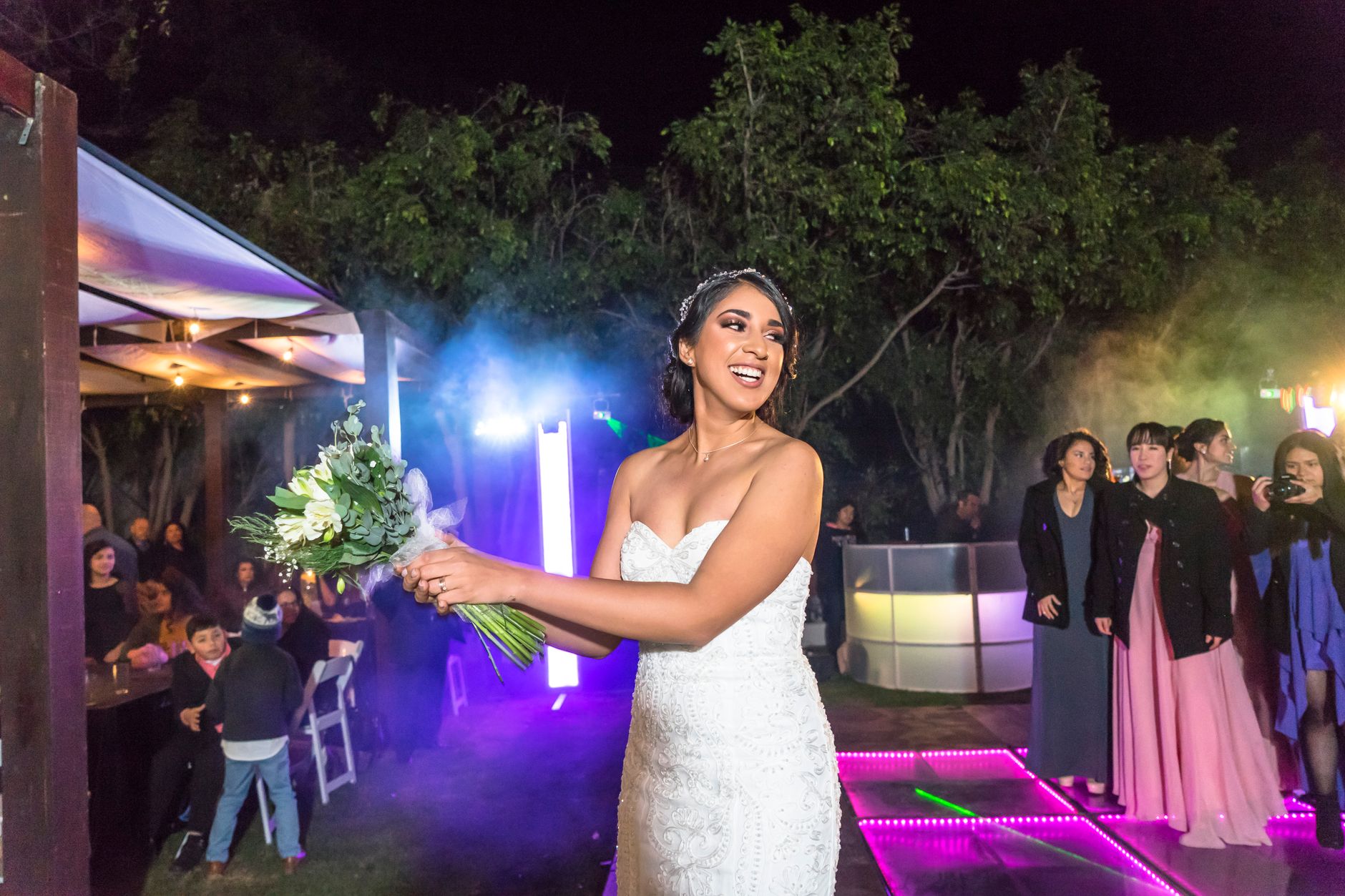
Photo by Luis Becerra Fotógrafo on Pexels
A wedding film at Hummingbird Nest Ranch divides into two primary scenes: the outdoor ceremony on the oak knoll and the glass-pavilion reception. The videographer's shot list reflects that division.
Ceremony on the Oak Knoll
The ceremony site is a natural amphitheater with oak canopy overhead and canyon views to the west. Guests sit on white folding chairs arranged in a semi-circle around the couple, which gives the videographer a clear sightline from the back center position but limits side-angle options. The 2-shooter configuration places one camera on a tripod at the rear for wide establishing shots and vow coverage, and a second handheld operator on the left flank for close-ups of the couple, the officiant, and parent reactions during the processional.
The processional itself is the film's opening sequence. The bridal party walks down a stone pathway flanked by lavender and rosemary, which gives the handheld operator a slow dolly-style tracking opportunity if the path is wide enough. The bride's entrance is backlit by the western horizon, which requires the videographer to expose for her face and let the sky blow out slightly, or to use a variable ND filter to retain sky detail without underexposing the subject. Most editorial wedding films at Hummingbird Nest Ranch favor the first approach—the bride in clean light, the sky as a bright backdrop, no middle ground.
The vows are recorded with dual lapel mics—one on the groom, one on the officiant—plus a backup recorder hidden under the ceremony arbor. Wind is the primary audio risk. If the wind picks up during the ceremony, the videographer cannot stop to reposition the mics, so the backup recorder becomes the primary source in post. A wedding film at Calamigos Ranch or Ojai Valley Inn typically uses lapel mics alone; Hummingbird Nest Ranch requires redundancy.
The recessional is filmed from the rear tripod position as the couple walks back down the stone path toward the pavilion. The handheld operator moves to the front to capture guest reactions—applause, tears, the moment when the mother of the bride exhales and smiles at the father of the bride. These cutaways are the emotional pivot of the ceremony film, and the videographer shoots them in the thirty seconds immediately after the couple exits, before guests stand and the moment dissolves.
Glass Pavilion Reception
The glass pavilion is a 6,000-square-foot transparent structure with 20-foot ceilings, chandelier lighting, and views of the canyon and city lights below. It films beautifully at dusk when the interior lighting balances with the exterior ambient light, and it films poorly after full dark when the glass reflects every camera, every guest, and every moving object inside. The videographer's coverage timeline accounts for this: cocktail hour and the couple's entrance are filmed during the dusk window (7–7:45 PM in summer), and the toasts, first dance, and parent dances are filmed after dark when the reflections no longer matter because the focus is interior.
The couple's entrance into the pavilion is the reception film's opening shot. The videographer stages one camera inside the pavilion facing the entrance doors, and a second camera outside on the stone terrace filming the couple as they walk in. The interior camera captures the guests' reaction—standing ovation, applause, the DJ's announcement—and the exterior camera captures the couple's silhouette against the backlit pavilion glass. The two angles cut together in the final wedding film as a single continuous moment.
The first dance is filmed from three positions: a locked-off tripod at the edge of the dance floor for the wide master shot, a handheld operator circling the couple for close-ups and over-the-shoulder angles, and a third static position from the pavilion's mezzanine level for an elevated perspective. The mezzanine shot is specific to Hummingbird Nest Ranch—most venues do not have a second-story vantage point inside the reception space, and the elevated angle compresses the couple, the guests, and the chandelier lighting into a single layered frame that reads as cinematic in the final edit.
Parent dances and toasts are covered with two cameras. One stays locked on the subject (father-daughter dance, maid of honor toast), and the second roams for reaction shots—the mother wiping her eyes, the groom laughing, the best man nodding. The reaction shots are the narrative glue of the reception film. A wedding videographer at Hummingbird Nest Ranch shoots twice as many reaction cutaways as at a smaller venue because the glass pavilion's transparency makes every guest visible, and the film's editorial rhythm depends on intercutting the primary action with the room's response.
Photo-Video Coordination at Hummingbird Nest Ranch
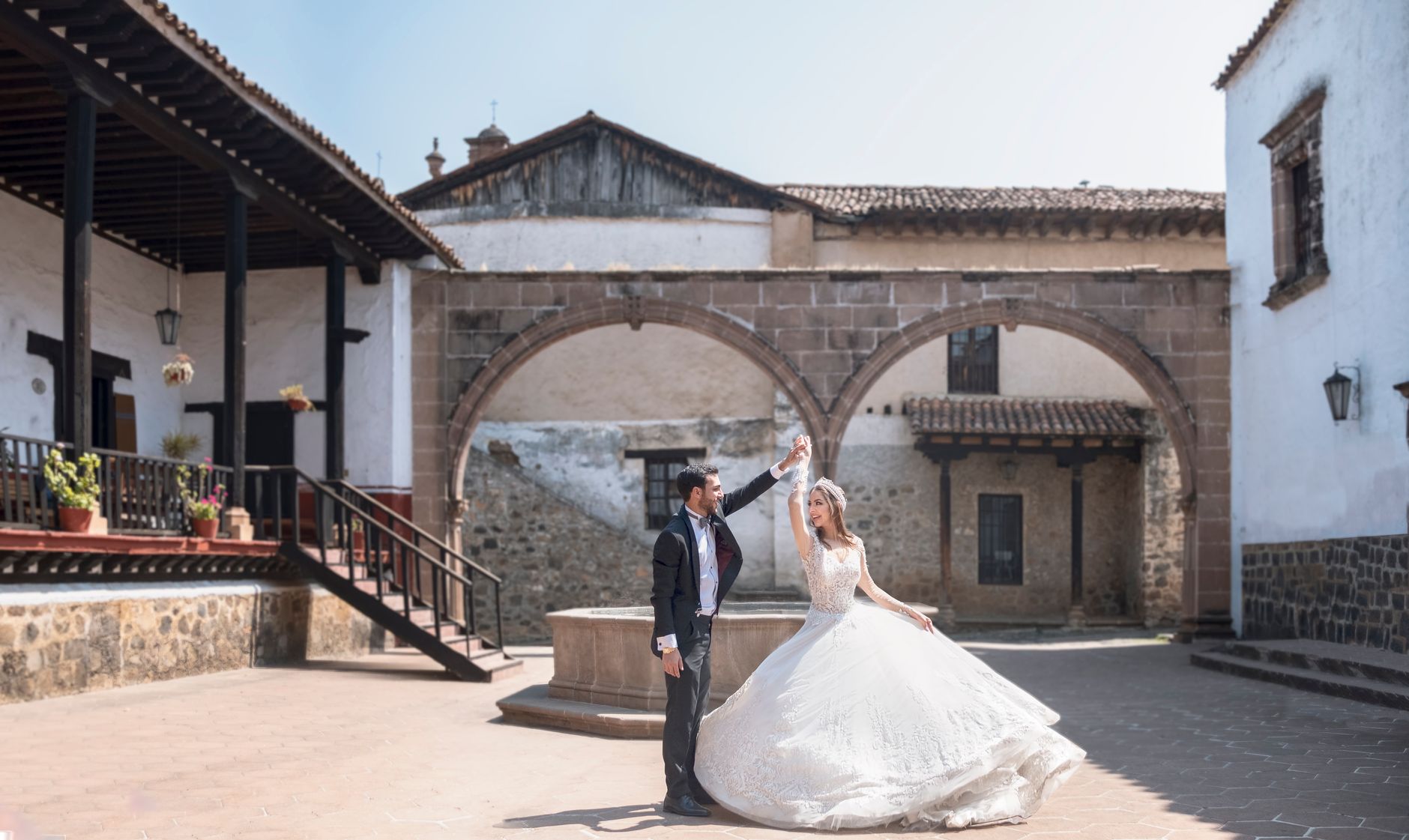
Photo by Asdrubal Luna on Pexels
Hummingbird Nest Ranch is a high-coordination venue. The timeline is tight—cocktail hour is sixty minutes, the ceremony-to-reception transit is thirty minutes, and the window for couple portraits on the knoll is twenty minutes—which means the wedding videographer and the wedding photographer share the same coverage slots and cannot work independently.
The first-look sequence is the first coordination point. If the couple chooses to do a first look before the ceremony, the videographer and photographer stage it together on the oak knoll or near the bridal suite. The videographer films from a distance with a long lens to capture the moment without intruding, and the photographer moves in for close-ups after the initial reaction. The two teams communicate via radio so the photographer does not step into the videographer's wide shot, and the videographer does not cast a shadow into the photographer's frame.
The couple portrait session happens immediately after the ceremony, during the thirty-minute cocktail hour buffer. The knoll at sunset is the preferred location—open sky, oak canopy, canyon views—and both the videographer and photographer work this location simultaneously. The photographer directs the couple's poses and expressions, and the videographer captures the session as behind-the-scenes footage, intercutting posed portraits with candid moments between setups. The final wedding film includes 10–15 seconds of this portrait session, not as a standalone sequence but as a montage bridge between the ceremony and reception.
The key coordination rule at Hummingbird Nest Ranch: the videographer does not ask the couple to repeat moments. If the photographer needs the couple to walk down the stone path again for a second angle, the videographer films that walk as B-roll, not as a scripted re-creation. The wedding film reflects what actually happened, in the order it happened, with the portrait session and reception prep woven in as parallel timelines.
Edit Turnaround and Deliverables for Hummingbird Nest Ranch Weddings
Photo by Chris F on Pexels
A full-day wedding film at Hummingbird Nest Ranch typically delivers in 8–12 weeks. The edit is a 12–18 minute cinematic short film that includes the ceremony vows in full, toasts, first dance, parent dances, and a curated selection of getting-ready and portrait moments. The film is color-graded to match the venue's natural palette—warm oak tones, golden hillside light, soft evening blues in the pavilion—and the audio mix balances the officiant's voice, the couple's vows, the DJ's music, and the ambient wind and canyon silence that defines the location.
The deliverables package includes:
- Feature wedding film (12–18 minutes) — the primary edit, delivered as a high-resolution download and a private Vimeo link.
- Highlight reel (3–4 minutes) — a shorter, music-driven edit suitable for social media, delivered two weeks before the feature film.
- Full ceremony coverage (25–40 minutes) — uninterrupted footage of the ceremony from processional to recessional, delivered as a separate file for couples who want the complete record.
- Toast and speech files (5–10 minutes each) — individual files of the maid of honor toast, best man toast, and parent toasts, delivered as standalone clips.
Raw footage is not included in the standard wedding film package. Couples who want the raw files can add that option at the time of booking for an additional fee, but most couples at Hummingbird Nest Ranch book the Photo + Video Combined Package and receive a shared gallery of film stills and photography instead.
Timeline Considerations for Videographers at Hummingbird Nest Ranch
Hummingbird Nest Ranch enforces a strict event end time—10 PM for most events, 11 PM with an extension request filed 60 days in advance—which means the wedding videographer's timeline works backward from that hard stop. A typical 10-hour coverage day at Hummingbird Nest Ranch runs 1 PM to 11 PM and includes:
- 1:00–3:00 PM: Getting-ready coverage in the bridal suite and groom's quarters. The videographer captures detail shots of the dress, shoes, rings, invitations, and candid moments of the bride with her bridesmaids and the groom with his groomsmen.
- 3:00–4:00 PM: First look and couple portraits (optional). If the couple skips the first look, this hour is used for venue B-roll—oak grove, stone pathways, canyon views, pavilion exterior.
- 4:00–4:30 PM: Pre-ceremony staging. The videographer sets up the tripod at the rear of the ceremony site, hides the backup audio recorder, and mics the groom and officiant.
- 4:30–5:00 PM: Guest arrival and pre-ceremony moments. The videographer films guests finding their seats, the groom greeting family members, and the bridal party lining up for the processional.
- 5:00–5:30 PM: Ceremony. Processional, vows, ring exchange, kiss, recessional.
- 5:30–6:00 PM: Family formal photos and couple portraits on the knoll. The videographer films this session as behind-the-scenes footage while the photographer directs.
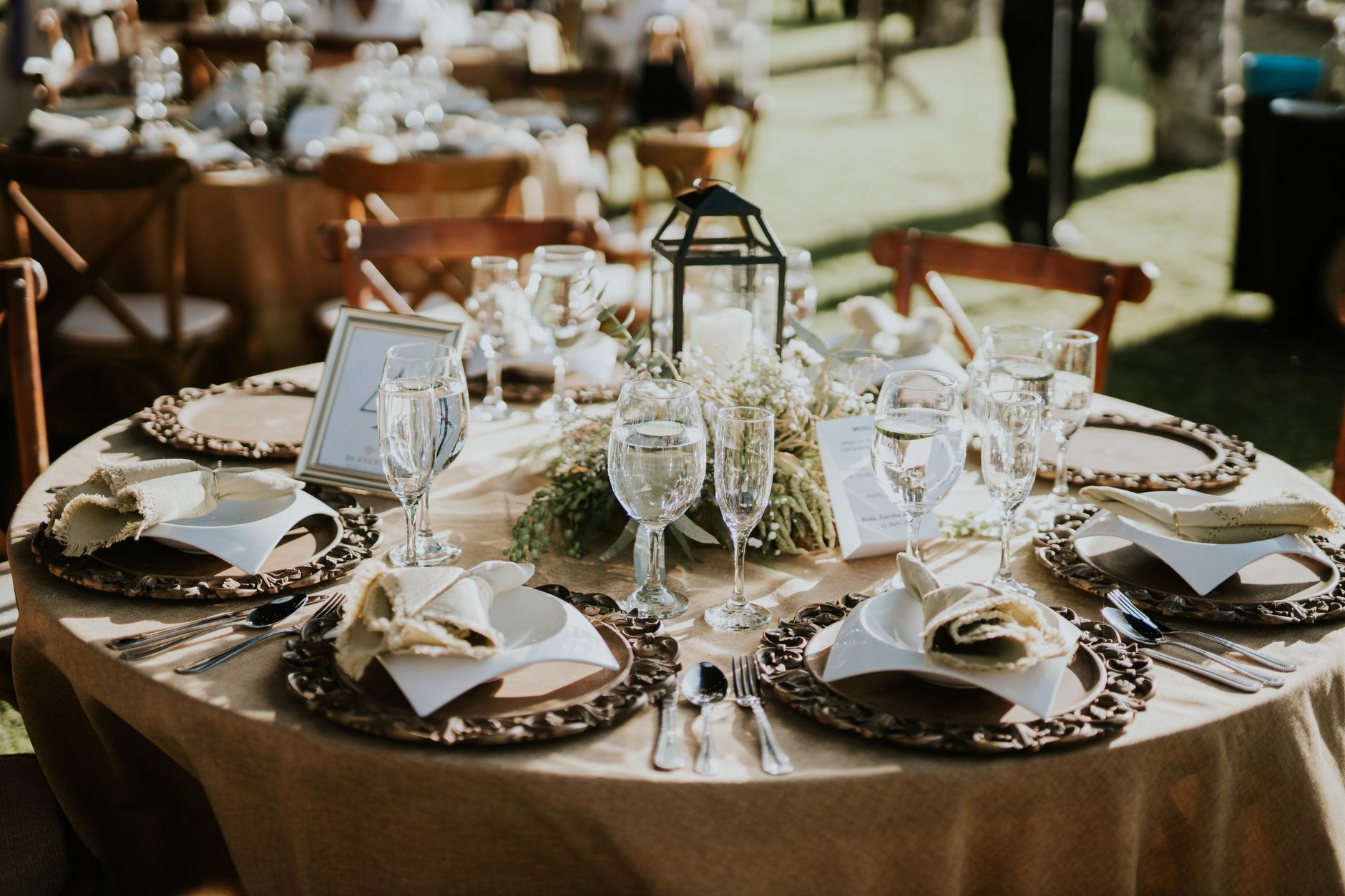
- 6:00–7:00 PM: Cocktail hour on the pavilion terrace. The videographer captures guest interactions, the couple's entrance into cocktail hour, and detail shots of the tablescape and floral installations inside the pavilion.
- 7:00–10:00 PM: Reception. Grand entrance, first dance, parent dances, toasts, dinner service, cake cutting, open dancing. The videographer prioritizes the structured moments (first dance, toasts) in the 7–8 PM window when the light is still balanced, then shifts to candid dance-floor coverage after dark.
- 10:00–11:00 PM: Final dance, sparkler exit (if permitted), and couple send-off. The videographer stages the exit and films the couple walking to their getaway car, which serves as the closing shot of the wedding film.
The timeline assumes a 5 PM ceremony. Couples who book a 4 PM ceremony gain an extra hour of daylight but risk losing the golden-hour light that makes Hummingbird Nest Ranch film-worthy. Couples who book a 6 PM ceremony lose the clean directional light on the knoll and rely entirely on the pavilion's interior lighting for the emotional weight of the film.
Working With a Wedding Videographer at Hummingbird Nest Ranch — Planner and Couple Workflow
Hummingbird Nest Ranch is a planner-friendly venue, and most weddings here involve a lead planner who coordinates the vendor timeline. The wedding videographer's workflow integrates with the planner's master schedule at four key points:
Venue walk-through (60–90 days before the wedding). The videographer walks the property with the planner to confirm ceremony and reception locations, identify backup plans for weather, and discuss audio and lighting considerations. This walk-through also establishes where the videographer will stage getting-ready coverage, where the first look will happen (if applicable), and where the couple will exit at the end of the night.
Timeline sync (30 days before the wedding). The planner shares the final vendor timeline, and the videographer confirms arrival time, meal break, and departure time. The timeline also specifies when the videographer will film the detail shots (dress, rings, invitations, shoes) and when the couple will be available for their post-ceremony portrait session.
Day-of coordination. The planner introduces the videographer to the venue coordinator, the DJ, and the photographer at the start of the day. The videographer then operates independently, following the timeline and adjusting in real time as needed. If the ceremony runs late, the videographer alerts the planner so the cocktail-hour buffer can be shortened and the couple still gets their portrait session before the light fades.
Final deliverables. After the wedding, the videographer sends the highlight reel to the couple and the planner for review. The planner often requests a copy of the highlight reel to share with other vendors and to feature on their portfolio site, which is why most wedding videographers at Hummingbird Nest Ranch grant portfolio-use rights to planners as part of the standard agreement.
Couples who book a wedding videographer without a planner receive the same timeline coordination, but the videographer communicates directly with the couple and the venue coordinator instead of routing everything through a third party. The workflow is identical; the communication path is shorter.
Booking a Wedding Videographer at Hummingbird Nest Ranch
Hummingbird Nest Ranch is a Saturday-and-Sunday venue during peak wedding season (May through October), and most videographers working Southern California estates book 18–24 months in advance for prime dates. Couples planning a Hummingbird Nest Ranch wedding typically reach out to their preferred videographer 12–18 months before the wedding date, after the venue is secured but before the rest of the vendor team is finalized.
The booking process starts with an inquiry form or email that includes the wedding date, the estimated guest count, the ceremony and reception locations, and the couple's coverage preferences (full-day wedding film, highlight reel only, full ceremony coverage, or photo + video combined). The videographer responds with availability, package options, and a link to a portfolio of work from Hummingbird Nest Ranch or similar estates like Saddlerock Ranch or Triunfo Creek Vineyards.
If the couple wants to move forward, the videographer schedules a consultation call to discuss the timeline, the couple's vision for the film, and any specific moments they want prioritized (parent dances, a surprise performance, a cultural ceremony element). After the call, the videographer sends a contract and an invoice for the deposit, which is typically 30–50% of the total package price. The remaining balance is due 30 days before the wedding.
Couples booking a wedding videographer at Hummingbird Nest Ranch should ask about travel fees (the venue is in Simi Valley, 45 minutes northwest of Los Angeles), parking logistics (the property has limited vendor parking near the bridal suite), and whether the videographer has shot at the venue before. A videographer who has filmed at Hummingbird Nest Ranch multiple times knows where the wind is worst, where the best portrait light is, and how to navigate the timeline without needing a second walk-through.
Why Hummingbird Nest Ranch Weddings Are Built for Cinematic Film
Hummingbird Nest Ranch is one of a handful of Southern California venues where the landscape does half the cinematography work. The ridge-top location gives the videographer a 270-degree horizon line, which means every wide shot includes layers—foreground oak canopy, mid-ground ceremony or reception, background canyon and sky. The glass pavilion at dusk creates a natural two-shot opportunity, where the couple is lit from the interior chandelier and the canyon lights glow behind them through the glass. The stone pathways and lavender borders add movement and texture to processional and recessional footage in a way that a hotel ballroom cannot replicate.
The venue also attracts a specific couple type—urban modern with garden romantic leanings, typically 30–38 years old, planning a 120–180 person wedding with a $150K+ overall budget. These couples value documentary photography and editorial photography as much as film, which is why most book the Photo + Video Combined Package rather than video alone. They want the wedding film to feel like a short documentary, not a highlight montage, and they expect the videographer to capture the small unscripted moments—the way the bride's father squeezes her hand during the vows, the way the groom's mother laughs during the best man's toast—as carefully as the structured scenes.
Hummingbird Nest Ranch weddings are built for this type of coverage. The venue is large enough that the videographer can move through the property without being intrusive, intimate enough that every guest's reaction is visible and film-worthy, and visually distinct enough that the final wedding film does not look like any other Southern California venue. A couple watching their Hummingbird Nest Ranch wedding film three years later will recognize the oak knoll, the glass pavilion, the canyon views, and the late-afternoon light that made the ceremony feel like it was happening in its own pocket of the world.
Begin a conversation about your wedding at Hummingbird Nest Ranch—or another Southern California estate—through the contact page. We work with couples planning garden ceremonies, pavilion receptions, and full-day coverage across venues like Hotel Bel-Air, San Ysidro Ranch, and Ojai Valley Inn.