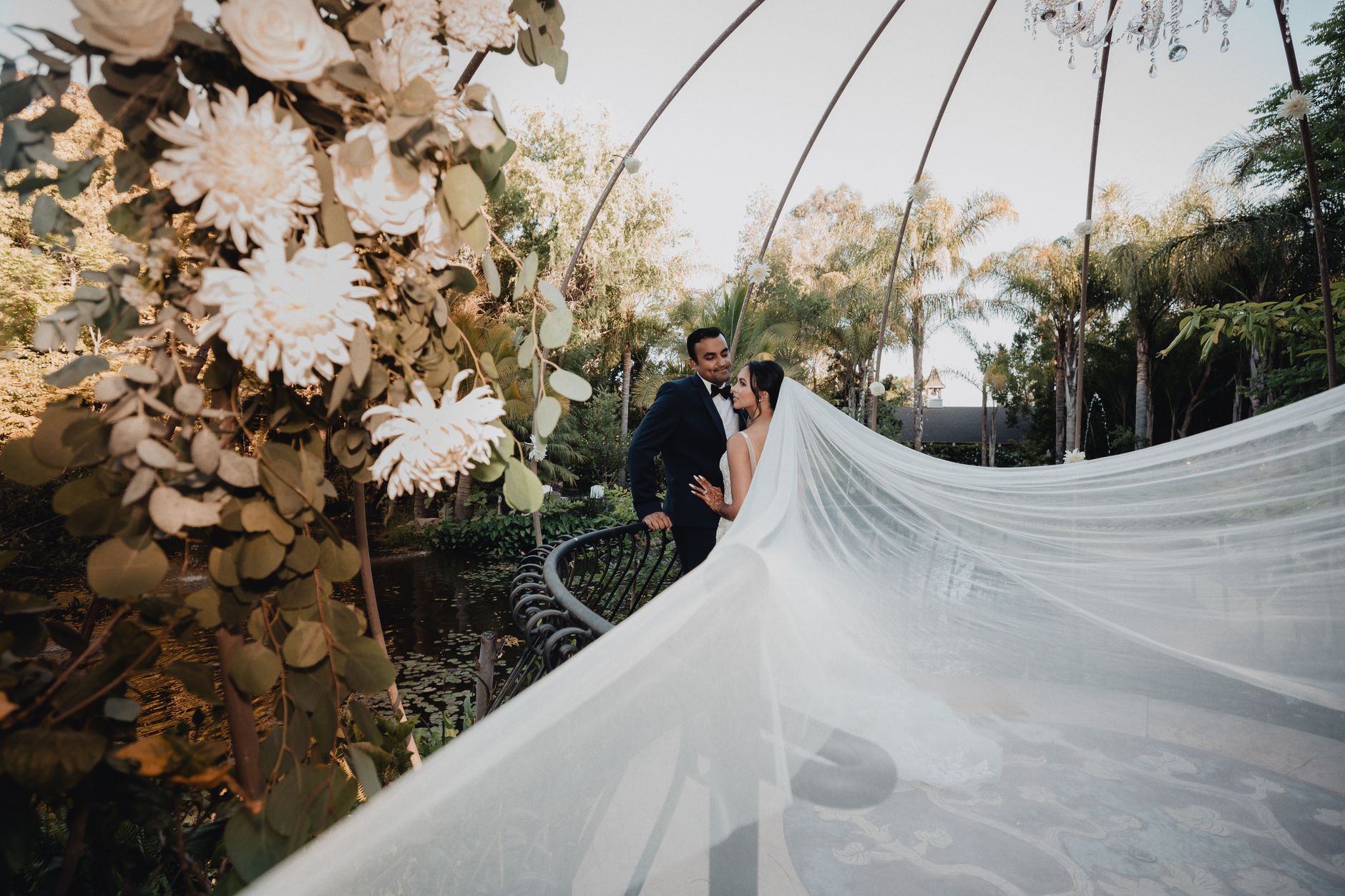
A wedding videographer at Resort at Pelican Hill structures coverage around three main scenes: the oceanfront ceremony lawn where the Pacific is visible but never guaranteed to be blue, the Andrea Palladio–inspired rotunda where vows echo regardless of marine layer, and the fifteen-to-twenty-minute portrait window that opens when coastal fog pulls back around 4:30 PM. The resort is a working study in how Southern California coastal light behaves differently than inland light—softer, cooler, slower to warm—and the videographer who understands that difference delivers a film that looks like Pelican Hill, not like a ballroom that could be anywhere.
Resort at Pelican Hill occupies 504 acres of Newport Coast hillside between Crystal Cove State Park and the Pacific. The property is Italianate Mediterranean by design—ochre stucco, terracotta tile, arched colonnades—and the wedding film coverage plan reflects that architecture. Two-shooter video teams position one camera inside the rotunda for vows and one outside on the lawn for processional wide shots, then reverse roles for the recessional. The video highlight reel typically runs 8–12 minutes; full ceremony coverage runs 45–60 minutes depending on whether the couple includes a Catholic mass or a shorter civil ceremony.
Why the Rotunda Films Differently Than an Outdoor Altar
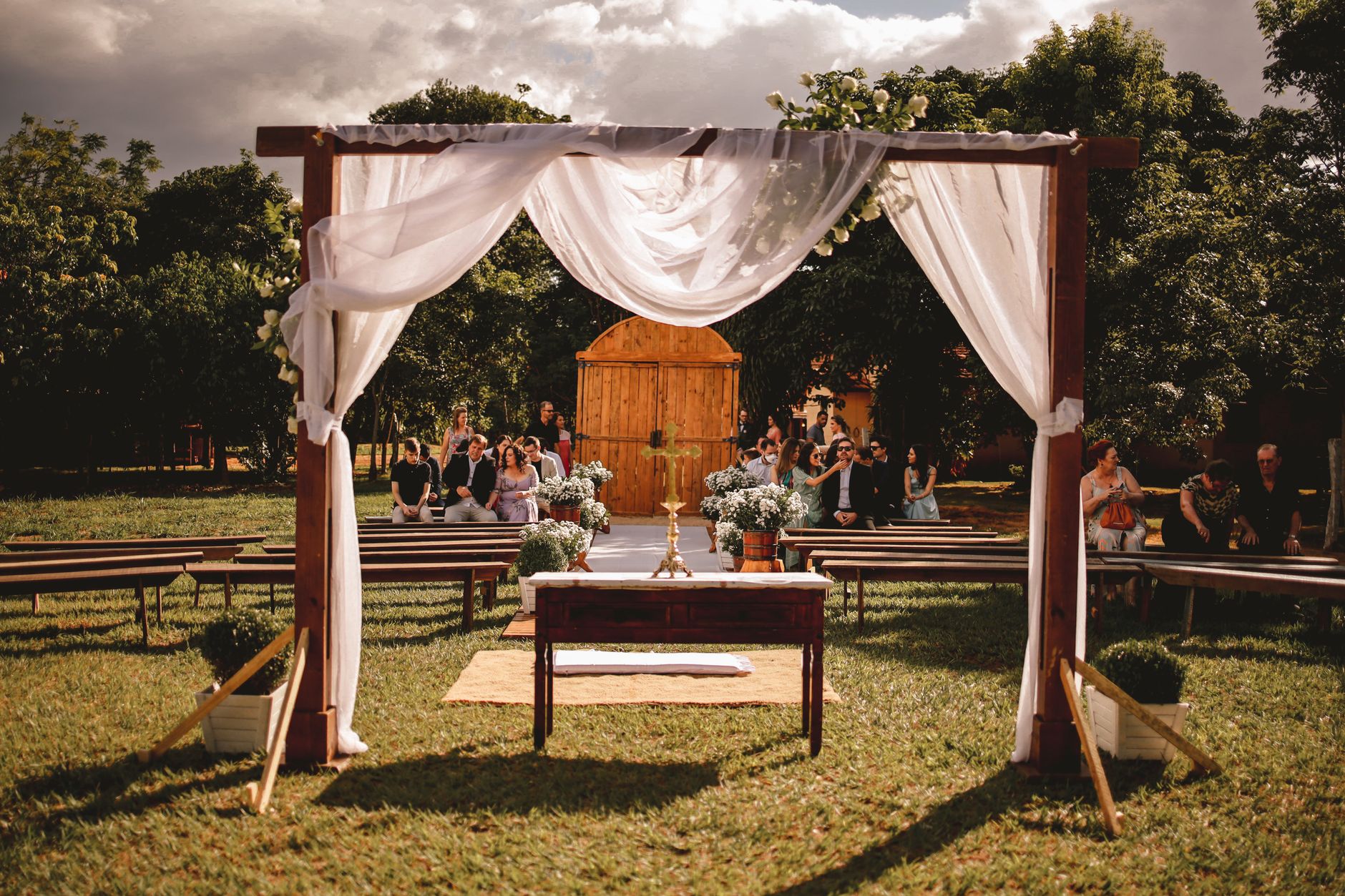
Photo by Luan Gracioli on Pexels
The rotunda is a circular, open-air pavilion with a coffered dome and no walls. Sound carries cleanly, which matters for vows recorded with lapel mics and a backup shotgun mic mounted on the camera. Because there are no walls, wind is a variable—the videographer always brings foam windscreens for the lapel mics and positions the backup shotgun mic inside the rotunda rather than on the lawn perimeter where gusts distort dialogue.
Visually, the rotunda frames the couple against either the ocean (west-facing ceremonies) or the resort's central lawn and pools (east-facing). Most couples choose west-facing so the Pacific appears in the wide shot, but that orientation also means the officiant and couple are backlit during a 5 PM ceremony. The videographer compensates by exposing for the couple's faces and letting the sky blow out slightly, or by scheduling the ceremony for 4 PM when the sun is still high enough to front-light faces without harsh shadows.
Inside the rotunda, the dome's coffers create repeating geometric shadows that read beautifully in 24fps cinematic footage. The wedding videographer shoots the processional in slow motion at 60fps or 120fps, then cuts to real-time 24fps for vows, then back to slow motion for the recessional and the first walk as a married couple down the aisle.
Ceremony Lawn Coverage and Coastal Light Timing
Photo by Luis Becerra Fotógrafo on Pexels
The oceanfront ceremony lawn sits on a bluff with unobstructed views south toward Laguna Beach and west toward Catalina Island on clear days. Marine layer is common May through early July, and the videographer building a shot list for a June wedding at Pelican Hill assumes the ceremony will be filmed in diffuse, overcast light rather than golden hour.
Overcast light is flattering for skin tones and eliminates harsh shadows, but it also reduces color saturation and contrast. The wedding film colorist compensates in post by lifting midtones and adding warmth to skin, but the footage is captured with a flat color profile (Log or CineD) to preserve latitude for grading. Couples who want saturated, warm, golden-light films at Pelican Hill are better served by an October or November wedding date when the marine layer burns off by early afternoon.
When the sky is clear, the best light on the ceremony lawn occurs between 4 PM and 5:30 PM. The sun is low enough to side-light the couple and guest faces without squinting, but high enough that the Pacific reflects blue rather than gray. The videographer places one camera on a tripod at the back of the aisle for the processional wide shot, and a second handheld camera on the side aisle for close-ups of the bride's face as she walks toward the groom, and the groom's reaction when he first sees her.
After the ceremony, the couple typically walks from the rotunda down a stone path toward the Mar Vista lawn for portraits. The videographer follows with a gimbal-stabilized camera to capture the walk as a continuous slow-motion shot—no cuts, just the couple holding hands and talking quietly as the ocean appears and disappears behind columns and terraces. This shot, when it works, becomes the bridge between the ceremony and reception in the final wedding film edit.
Reception Coverage in the Rotunda Ballroom and Outdoor Terraces
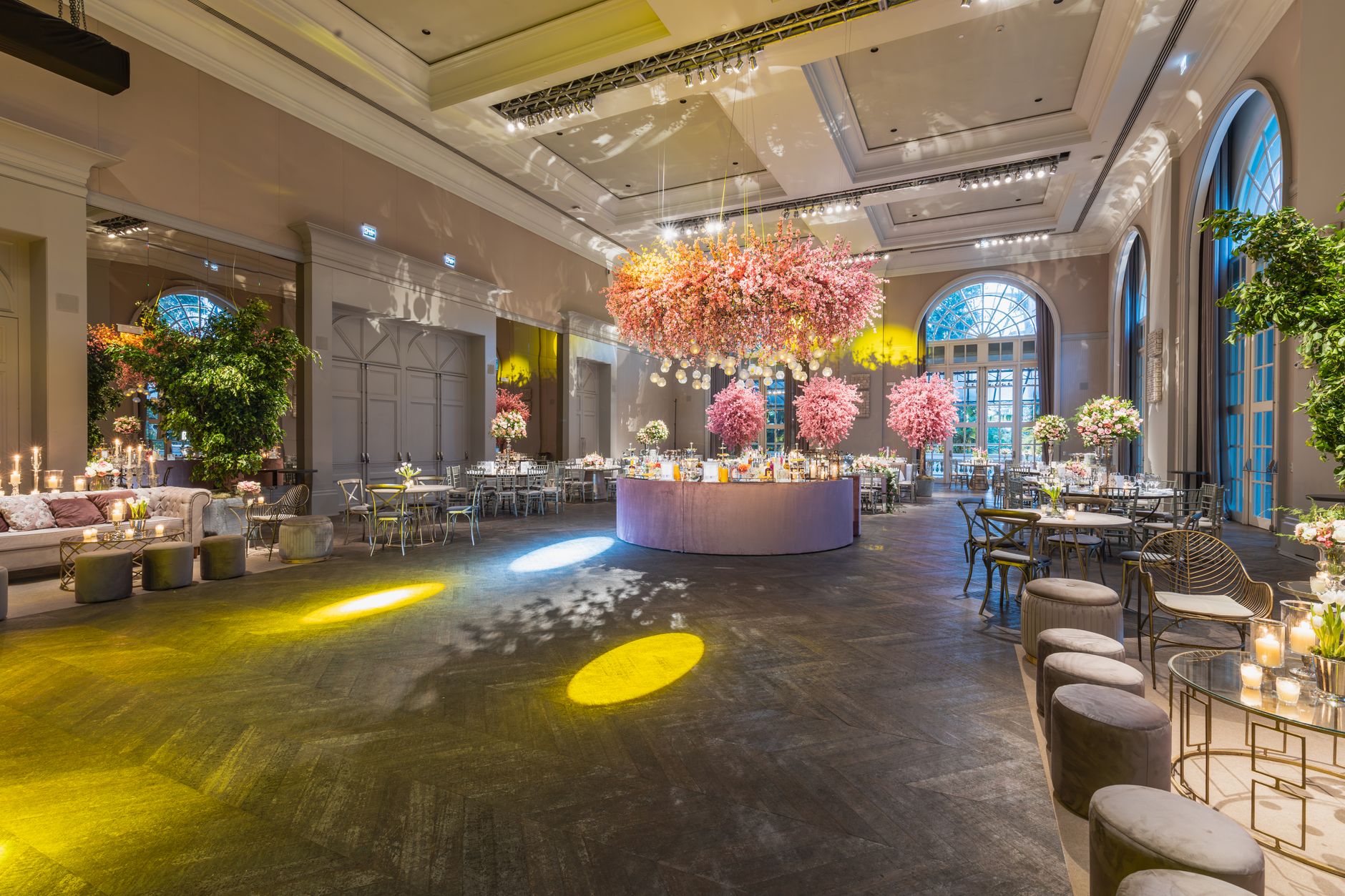
Photo by Matheus Bertelli on Pexels
Most Pelican Hill receptions take place in the Rotunda Ballroom, a circular room with floor-to-ceiling windows that frame the coastline and the resort's central pool. The ballroom holds up to 250 guests; smaller weddings (under 100 guests) often use the Mar Vista or Lido terraces for dinner under string lights.
The videographer's reception coverage begins with the couple's entrance, then documents toasts, first dance, parent dances, cake cutting, and open dancing. Because the ballroom is circular, the videographer positions cameras to avoid shooting directly into windows during the golden hour—backlit footage of toasts is difficult to recover in post if the exposure is off by more than one stop.
For outdoor terrace receptions, the coverage plan depends on the season. A summer terrace reception at 7 PM still has ambient daylight, so the videographer can shoot handheld without a gimbal and capture natural movement during dinner. A winter terrace reception at 7 PM is fully dark, and the videographer relies on the resort's string lights and uplighting. In low light, the wedding film is shot at ISO 3200 or 6400 with fast prime lenses (f/1.4 or f/2) to maintain a shallow depth of field and avoid grainy footage.
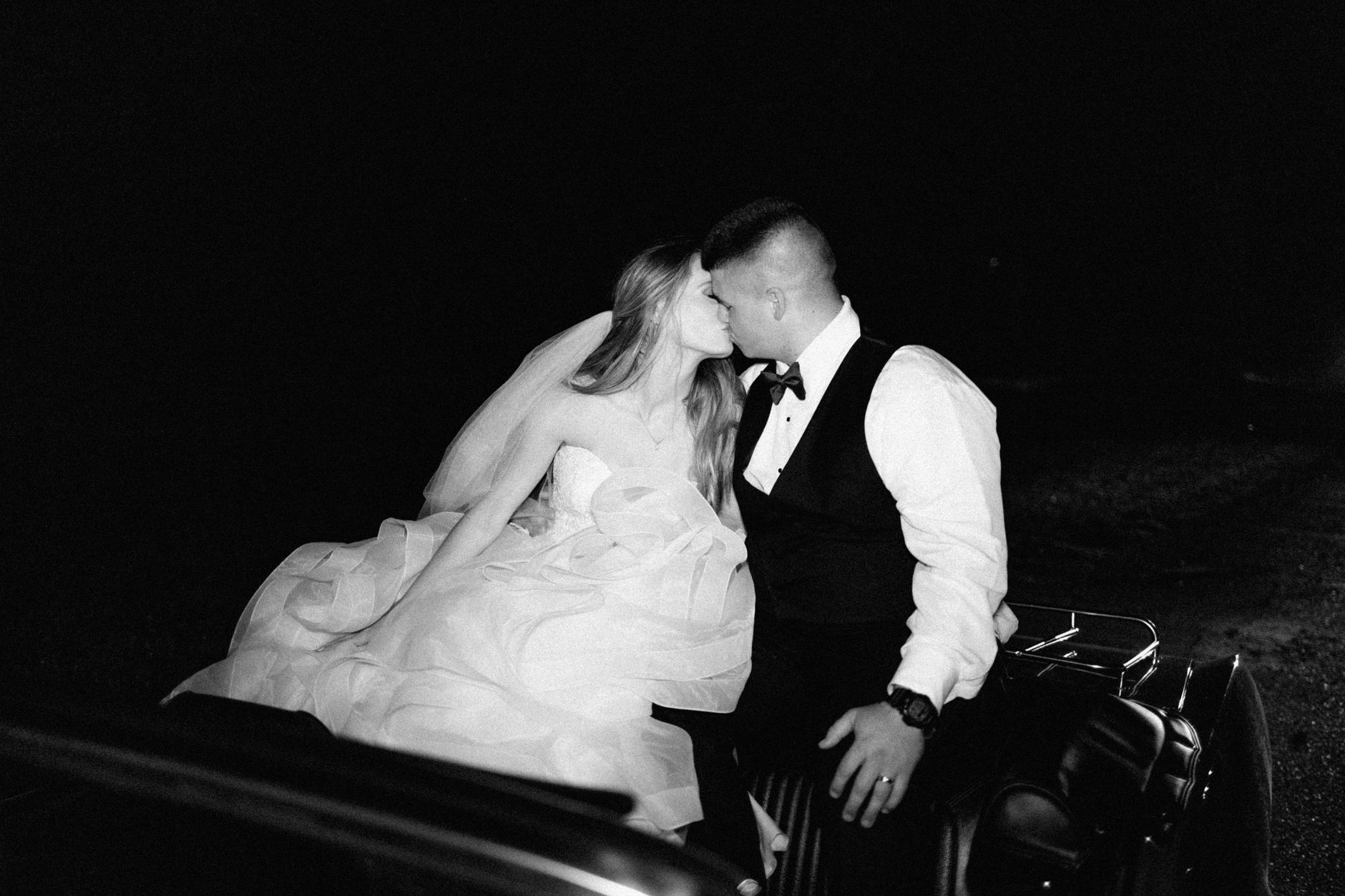
The final dance coverage at Pelican Hill often includes a sparkler exit on the front steps or the Mar Vista lawn. The videographer shoots this in slow motion at 120fps to capture sparks trailing in the dark. Because sparklers produce only small points of light, the videographer positions a small LED panel camera-left to fill the couple's faces so they don't render as silhouettes in the final edit.
Portrait Window Strategy Between Ceremony and Reception
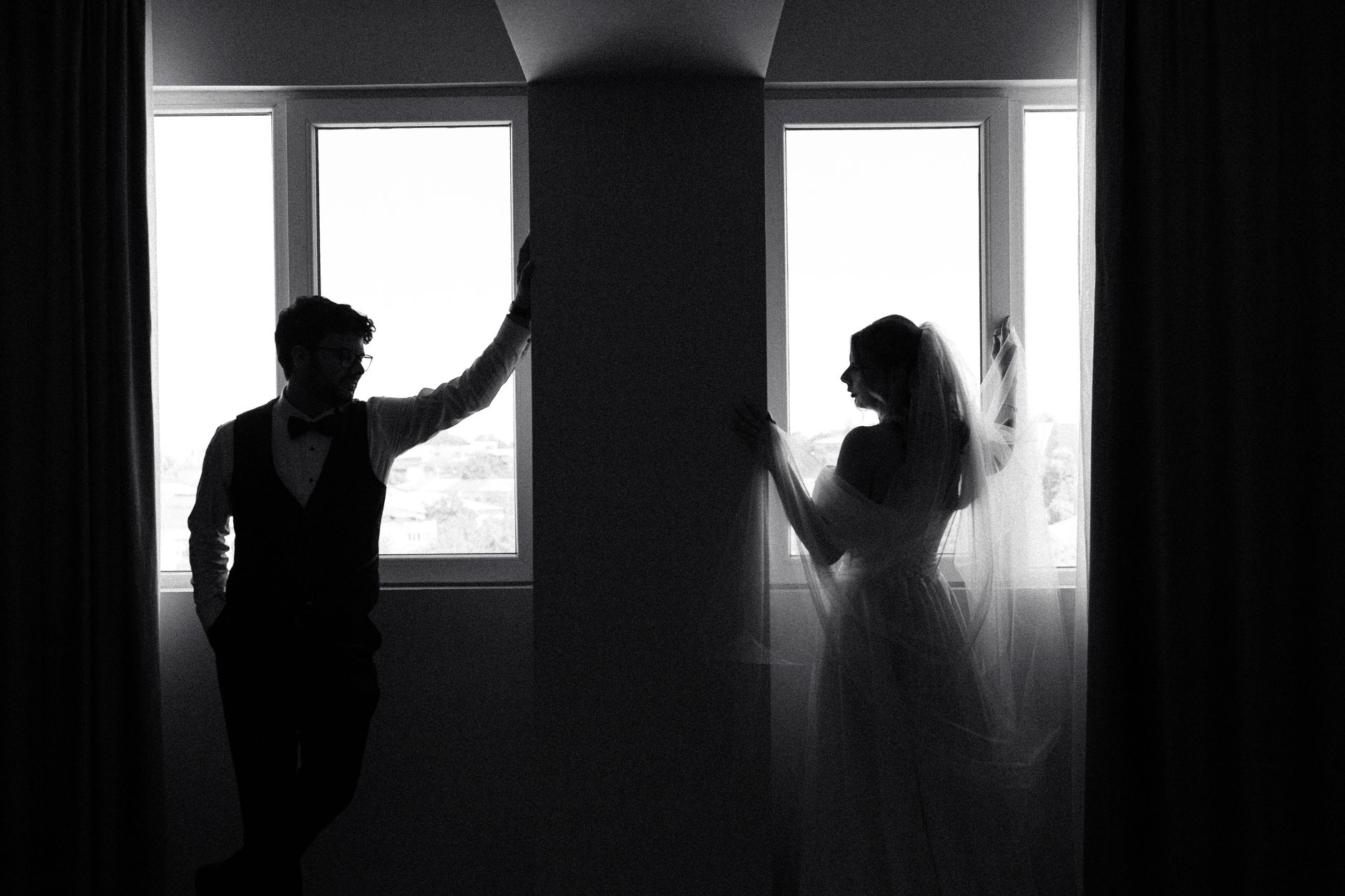
Photo by Foto Art Events on Pexels
The gap between a 4 PM ceremony and a 7 PM reception is three hours, and Pelican Hill couples typically use the first 20–30 minutes for portraits with the photo and video teams. The videographer captures the couple walking through the resort's gardens, standing on the bluff edge with the Pacific behind them, and sitting on stone steps near the central pool.
This portrait window is when the marine layer behavior matters most. If the fog is still present at 4:30 PM, the light is soft and even, and the couple can face any direction without squinting. If the fog has burned off, the light is directional and warm, and the videographer positions the couple so the sun is behind them (backlit) or 45 degrees to the side (Rembrandt lighting). Backlit portraits require fill light from a reflector or small LED panel to lift the couple's faces; side-lit portraits need no fill.
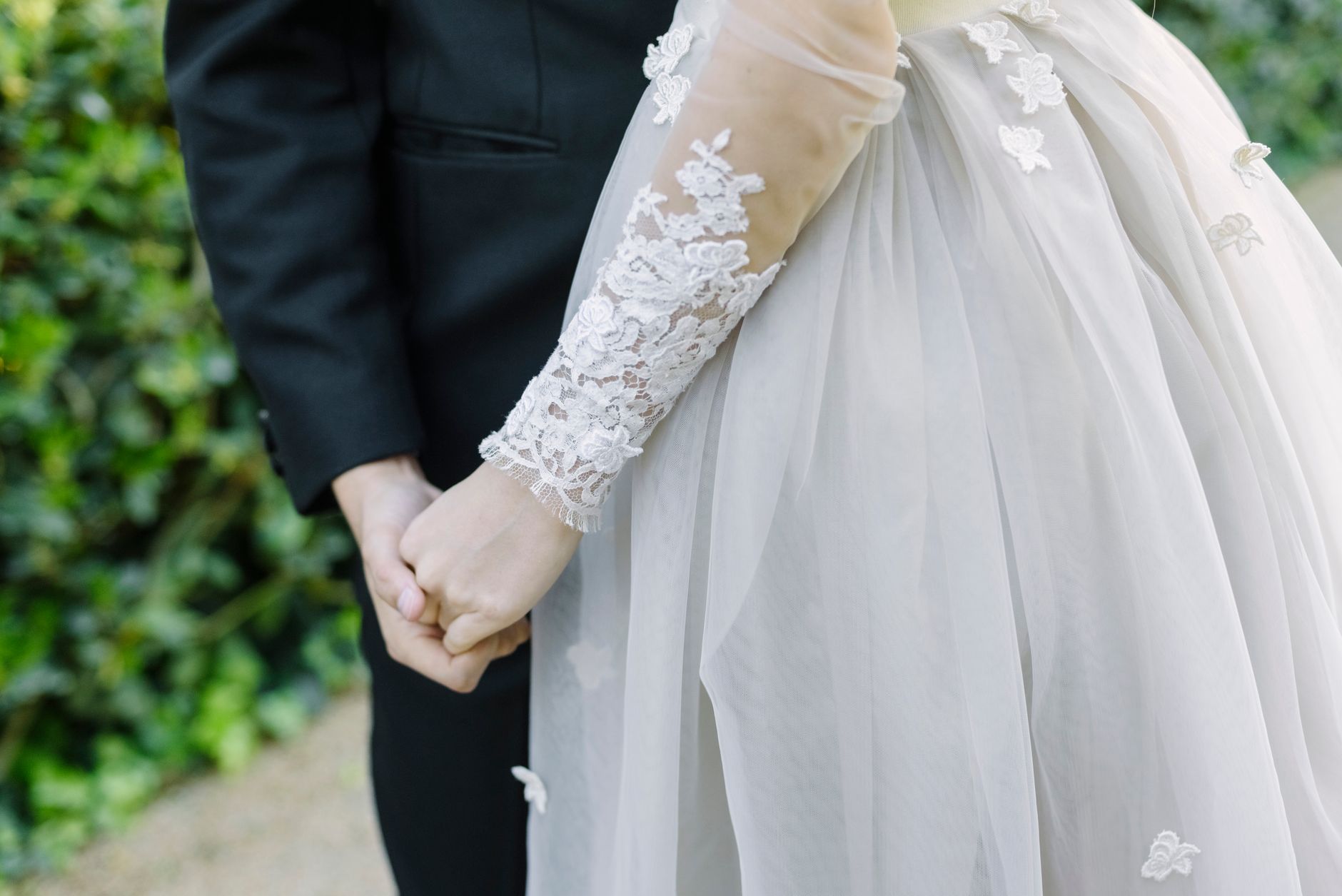
The wedding videographer typically allocates 10 minutes for wide environmental shots (couple small in frame, landscape dominant) and 10 minutes for close-up emotional shots (hands, faces, the bride adjusting the groom's boutonniere, the groom kissing the bride's forehead). The environmental shots establish Pelican Hill as the setting; the close-ups establish the couple as the subject. Both are necessary for a wedding film that feels grounded in place and time.
Multi-Day Coverage for Rehearsal Dinner and Post-Wedding Brunch
Pelican Hill is a resort, and many couples host rehearsal dinners on-site the night before the wedding and post-wedding brunches the morning after. The videographer's multi-day wedding film package includes 2–3 hours of coverage at the rehearsal dinner (toasts, candid moments, the couple's thank-you speech) and 1–2 hours at the brunch (morning light, the couple greeting guests in casual attire, candid conversation).
The rehearsal dinner footage is typically edited as a standalone 3–5 minute film that plays at the reception or is delivered separately. The brunch footage is woven into the wedding film's final montage to show the full weekend arc. Multi-day coverage at Pelican Hill also includes an engagement session or save-the-date film shot on the property 3–6 months before the wedding, so the couple is comfortable on camera by the wedding day.
Because Pelican Hill is a luxury resort in Orange County, most couples booking multi-day coverage are also booking the photo + video combined package. The combined package includes 2-shooter video, 2-shooter photo, and a shared shot list coordinated the week before the wedding so the photo and video teams do not duplicate portraits or compete for the couple's time during the 20-minute portrait window.
How the Videographer Coordinates with Pelican Hill Event Staff
Pelican Hill assigns each wedding a dedicated event coordinator who manages timeline, vendor load-in, and guest flow. The wedding videographer receives the final timeline 7–10 days before the wedding and coordinates load-in time, ceremony camera placement, and reception audio setup with the event coordinator.
The resort permits vendor load-in two hours before the ceremony start time. The videographer uses that window to scout the ceremony site, test lapel mic audio, and confirm that the rotunda's acoustics do not require a second backup recorder. The event coordinator also provides a floor plan of the ballroom so the videographer can pre-position tripod cameras for toasts and first dance without blocking guest sightlines.
During the reception, the event coordinator cues the videographer 60 seconds before each formal moment (entrance, toasts, first dance, cake cutting). This cueing system prevents the videographer from missing moments because they were swapping camera batteries or moving a tripod. The final wedding film includes a title card thanking the Pelican Hill events team by name, which reinforces the partnership and generates referrals from the resort's in-house preferred vendor list.
Orange County Travel and Timeline Considerations
Resort at Pelican Hill is located in Newport Coast, approximately 50 miles south of Los Angeles and 15 miles north of Laguna Beach. For a wedding videographer based in Los Angeles, the drive is 60–90 minutes depending on traffic, and the coverage day typically begins with a 1 PM load-in for a 4 PM ceremony.
The videographer arrives 30 minutes before load-in to walk the ceremony site in full daylight, confirm camera positions, and test audio. Because Pelican Hill is a resort with strict noise ordinances, the videographer uses silent camera bodies (mirrorless Sony or Canon R-series) during the ceremony so shutter clicks do not distract from vows. After the ceremony, the videographer remains on-site through the final dance, typically wrapping at 10 PM or 11 PM depending on the reception end time.
For couples booking full ceremony coverage or the documentary photography package in addition to the wedding film, the timeline extends to include getting-ready coverage starting at 2 PM. The videographer captures the bride in the suite with her mother and bridesmaids, the groom on the terrace with groomsmen, and the first look on the Mar Vista lawn if the couple chooses to see each other before the ceremony.
Begin a Conversation About Your Wedding at Resort at Pelican Hill
A wedding film at Resort at Pelican Hill is built around the property's coastal architecture, the behavior of marine layer and late-afternoon light, and the three main scenes that define coverage—ceremony, portraits, and reception. If you are planning a wedding at Pelican Hill and want a film that reflects the specific light and place of Newport Coast, reach out to discuss how our team structures multi-day coverage, coordinates with the resort's event staff, and delivers a final edit that feels grounded in the landscape rather than generic.