A wedding videographer at Resort at Pelican Hill needs to understand that the property's two signature ceremony sites—the Andrea Coliseum lawn and the ocean-view terrace—each film differently depending on the hour, and most couples who choose Pelican Hill for its Tuscan-villa aesthetic book a ceremony start time between 4:30 and 5:30 PM to capture the golden light before it drops behind the resort's main building. The light at Pelican Hill is coastal but controlled, filtered through the resort's architectural palette of ochre and cream, and a full-day wedding film from this venue typically requires 10 hours of coverage from a 2-shooter video team to document both the indoor getting-ready scenes in the villas and the outdoor ceremony and reception transitions.
Pelican Hill sits on a coastal bluff in Newport Beach, 300 feet above the Pacific, and the videographer's coverage plan begins with understanding that the resort operates as a contained luxury environment—guests rarely leave the property, the timeline is managed by the venue's in-house coordinators, and the couple's aesthetic is almost always coastal classic or editorial black-tie rather than garden romantic or bohemian. The Coliseum lawn ceremony, framed by the circular colonnade, gives the videographer a fixed architectural composition to work within, while the ocean terrace offers an unobstructed horizon line that changes minute by minute as the sun descends. Both scenes require different lens choices, different stabilization approaches, and different audio strategies, because the Coliseum amplifies sound and the terrace does not.
Why Pelican Hill Films Differently Than a Cliffside Venue
Resort at Pelican Hill is not a raw cliffside location like Terranea Resort or a garden estate like San Ysidro Ranch. It is an architectural resort with manicured sightlines, and the wedding film reflects that containment. The videographer is not chasing spontaneous light through olive groves or documenting a couple walking barefoot on the beach—instead, the film is built around composed scenes: the bride descending the villa staircase, the processional through the Coliseum colonnade, the first dance under the pavilion's vaulted ceiling. The aesthetic is more Côte d'Azur than California casual, and couples who book Pelican Hill expect a wedding film that mirrors the resort's editorial polish.
The Coliseum lawn ceremony site is the resort's most frequently filmed location. The circular colonnade creates a 360-degree frame, which means the videographer needs to position the primary camera to capture both the couple at the altar and the colonnade architecture without flattening the depth. A single static wide shot does not work here—the space reads as grand in person but can feel enclosed on screen unless the videographer uses movement (a slow dolly or gimbal arc during the vows) to reveal the dimensionality. The second shooter typically covers the processional from the opposite side of the circle, capturing the bride's entrance and the guests' reactions as she walks through the colonnade opening.
Audio at the Coliseum is straightforward—the circular architecture amplifies voices naturally, and lapel microphones on the officiant and couple are usually sufficient. The ocean terrace, by contrast, requires a more defensive audio approach. The terrace sits fully exposed to the coastal wind, and even a 5-mph breeze can render lapel audio unusable without foam windscreens and backup recorder placement. Couples who choose the terrace over the Coliseum are prioritizing the ocean view over acoustic control, and the videographer's pre-ceremony tech check needs to account for that tradeoff.
Coverage Timeline for a Full-Day Pelican Hill Wedding
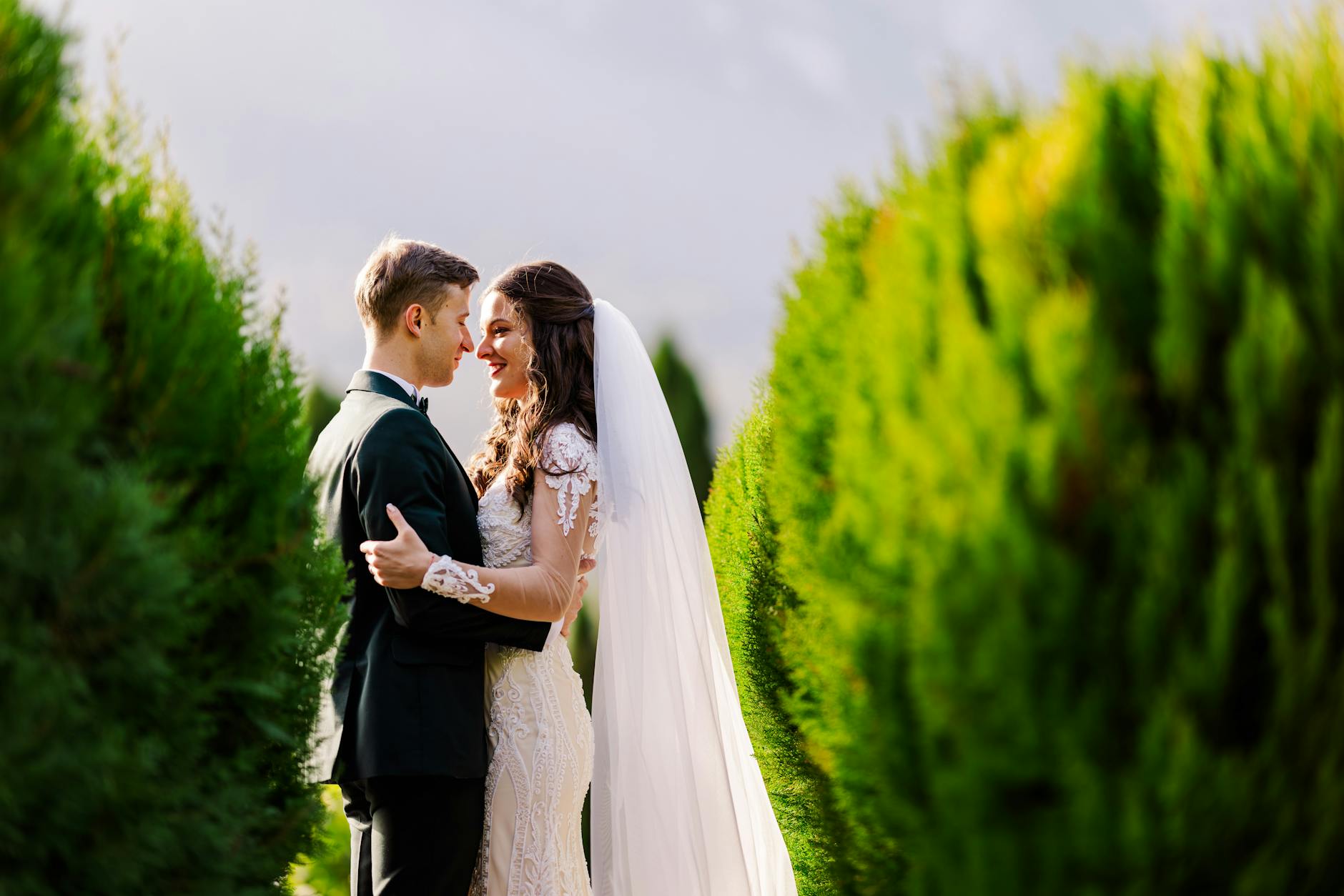
A 10-hour wedding film at Resort at Pelican Hill typically follows this structure:
12:00–2:00 PM: Getting-ready coverage in the bungalow or villa suite. The videographer documents the bride and bridal party in natural window light, focusing on the quieter moments—dress details, the mother helping with the veil, the first look with the bridesmaids. The villa interiors are warm-toned and textured, and the footage benefits from handheld movement rather than tripod setups.
2:00–3:00 PM: Groom prep and groomsmen coverage in a separate villa or the resort's private lounge. This block is shorter and typically includes the groomsmen arriving, cufflinks and boutonnieres, and any pre-ceremony toasts.
3:00–4:30 PM: First look and couple portraits on the resort grounds. The videographer uses this window to capture the couple walking through the olive-tree courtyard, standing on the terrace overlook, and interacting naturally before the ceremony begins. This is also when the second shooter scouts the ceremony site and confirms camera positions.
4:30–5:15 PM: Ceremony coverage at the Coliseum lawn or ocean terrace. The primary camera is locked on a tripod at the center aisle for the processional and vows; the second camera is handheld or on a gimbal for reaction shots, detail work (rings, hands, the couple's expressions), and the recessional.
5:15–6:30 PM: Cocktail hour and extended couple portraits during golden hour. The videographer takes the couple to the bluff edge or the resort's fire-pit terrace for the day's most cinematic light. The second shooter covers cocktail-hour guest interactions, toasts, and detail shots of the reception setup.
6:30–10:00 PM: Reception coverage—grand entrance, first dance, parent dances, toasts, dinner, cake cutting, and open dancing. The Pavilion reception space has high ceilings and dramatic uplighting, and the videographer adjusts white balance and ISO as the natural light fades and the venue lighting takes over.
Couples who book a combined photo + video package at Pelican Hill receive a primary videographer, a second-shooter videographer, a lead photographer, and a second-shooter photographer—four people total. The coverage timeline is coordinated so the couple is never standing in front of both a still camera and a video camera simultaneously; the first-look and portrait windows are staggered, and the ceremony positions are divided by sightline.
Documentary vs Cinematic Style at an Architectural Resort
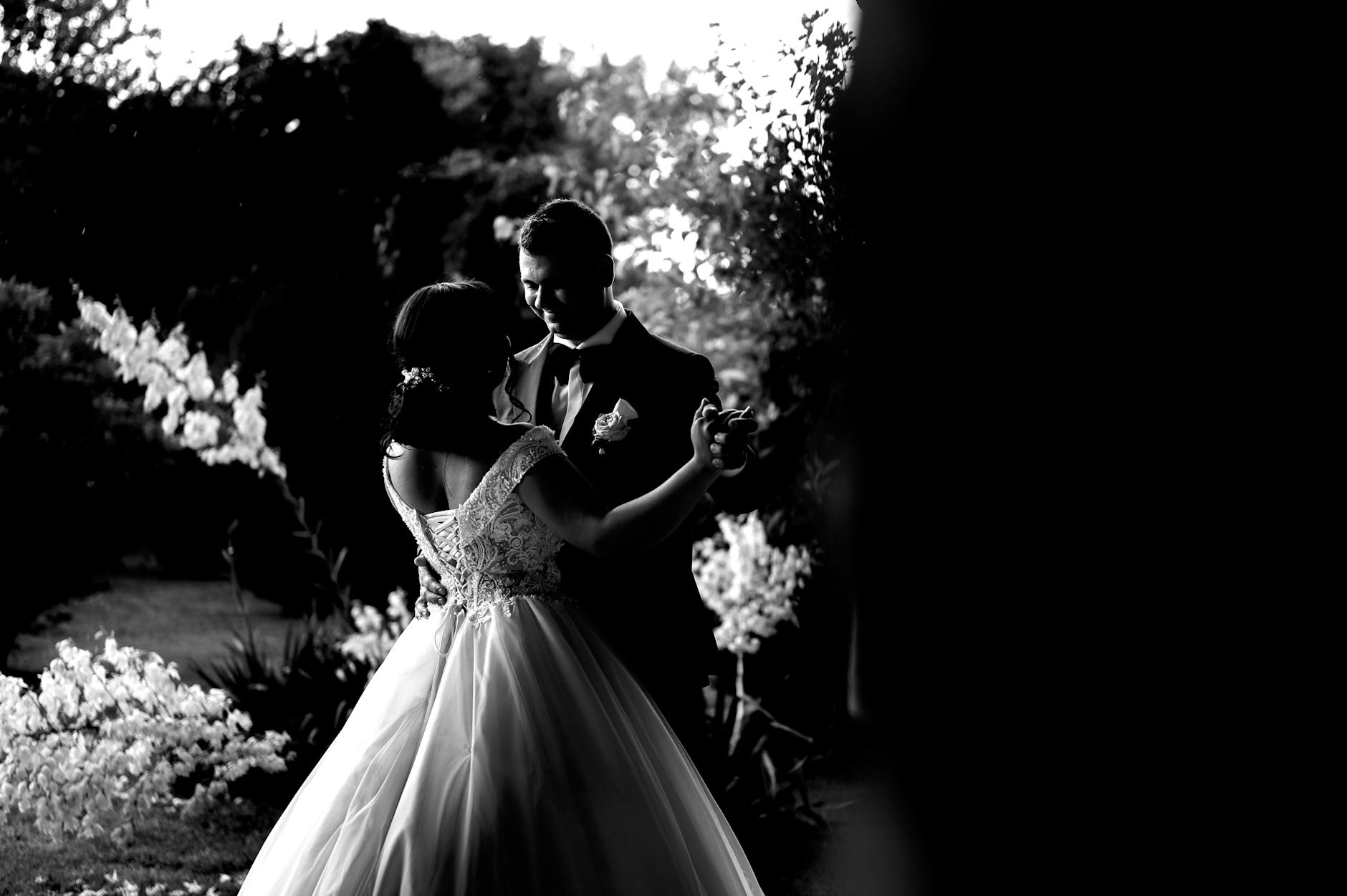
Pelican Hill's design language—symmetrical, Italianate, ochre-and-cream—lends itself to cinematic composition more naturally than documentary spontaneity. A purely documentary wedding film at this venue can feel underpowered, because the resort's architecture is asking to be framed, and couples who choose Pelican Hill over a barn venue or a beach club are typically expecting a wedding film that emphasizes visual composition alongside emotional moments.
LifeStory's approach at Resort at Pelican Hill blends both: the vows, toasts, and parent reactions are covered in full with documentary audio and minimal intervention, while the couple portraits, first-look sequences, and reception entrances are directed for cinematic framing. The bride and groom are never asked to repeat a moment for the camera, but they are guided into better light, better backgrounds, and better movement during the portrait windows. The result is a wedding film that feels observed rather than staged, but that carries the editorial weight the venue's aesthetic implies.
The distinction matters for couples comparing videographers. A documentary-only team will deliver real moments but may undersell the visual grandeur of the property. A cinematic-only team will deliver composed beauty but may miss the unscripted parent reaction during the father-daughter dance. The editorial black-tie couples who book Pelican Hill are usually looking for both, and the videographer's ability to toggle between modes without disrupting the timeline is the skill that justifies the $7,500–$10,000 wedding film package.
Photo and Video Coordination at a High-Coordination Venue
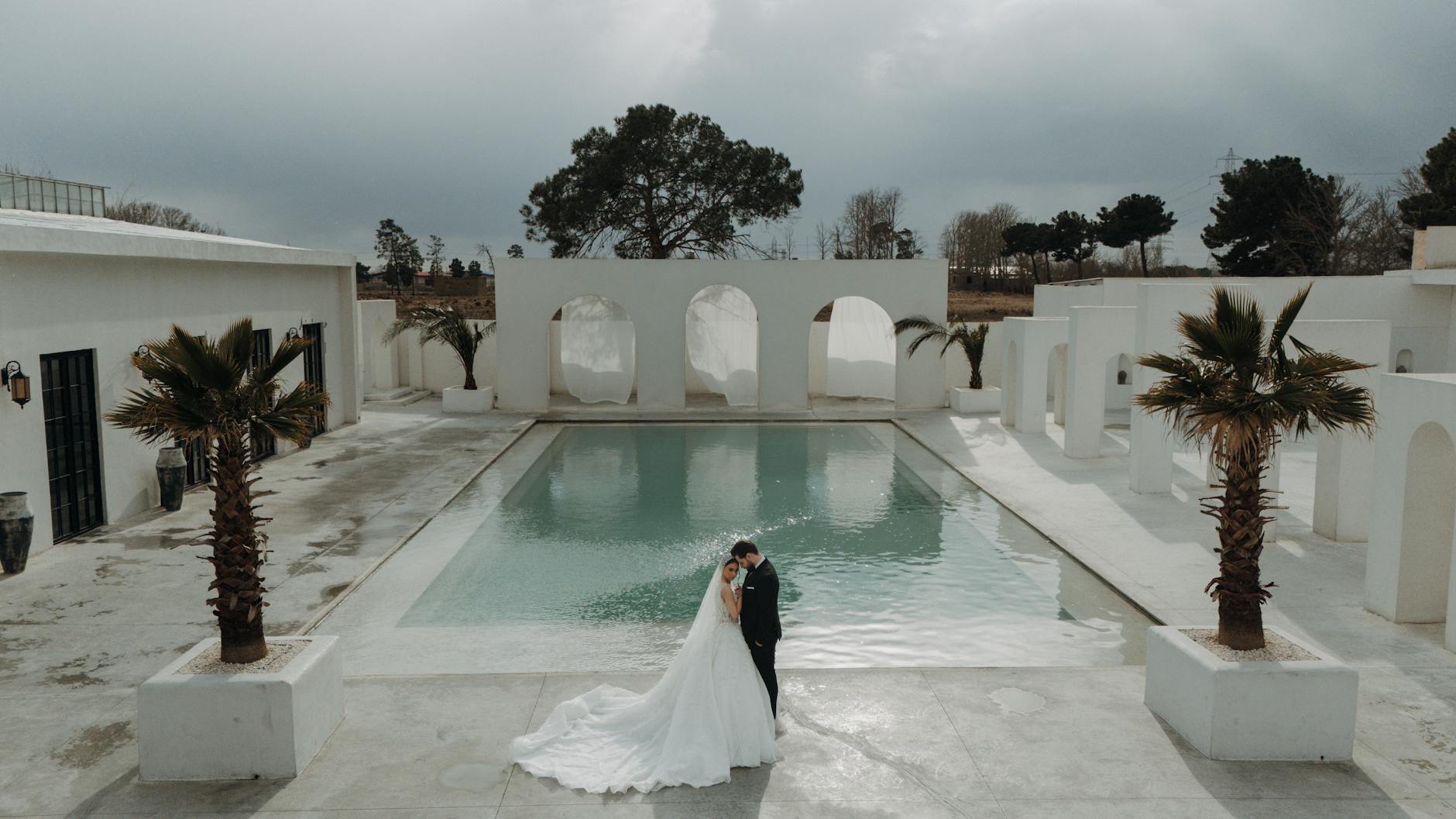
Resort at Pelican Hill enforces a structured timeline managed by their in-house event coordinators, and the wedding videographer works within that structure rather than negotiating around it. The venue provides a day-of timeline that allocates specific windows for couple portraits, family formals, and cocktail-hour transitions, and the photo and video teams are expected to share those windows without extending them.
The coordination challenge is the first-look and couple-portrait block, which is typically scheduled for 60–90 minutes but must accommodate both the photographer's shot list (30–40 setups including bride-and-groom portraits, bridal party groups, and family formals) and the videographer's need for movement-based sequences (the couple walking through the olive courtyard, standing at the terrace overlook, sitting on the villa steps). A combined photo + video package solves this by pre-assigning each team to separate zones during the first 30 minutes, then bringing both teams together for the final 30 minutes of golden-hour couple portraits.
Couples who book photo and video separately—different vendors—need to confirm during the planning stage that both teams have worked together before or are willing to coordinate shot lists in advance. A photographer who expects to control the entire 90-minute portrait window and a videographer who needs the couple to walk, move, and interact naturally will collide unless the timeline is divided explicitly.
Edit Turnaround and Deliverables
The full wedding film from Resort at Pelican Hill is delivered 8–12 weeks after the wedding date and typically runs 45–60 minutes, covering the getting-ready scenes, first look, full ceremony, vows audio, toasts, first dance, parent dances, and reception highlights. The film is edited to a licensed music track (couples choose from a curated list during the planning stage), color-graded to match the resort's warm coastal palette, and delivered as a high-resolution digital file plus a password-protected Vimeo link for sharing.
A 3–5 minute highlight reel is delivered within 2–3 weeks and edited to a single music track, emphasizing the day's most cinematic moments—first look, vows, first dance, and golden-hour portraits. The highlight reel is designed for social sharing and typically garners higher engagement than the full film because it condenses the emotional arc into a single-song edit.
Couples who want same-day edits (a 2–3 minute recap screened at the reception) need to request that service during the booking stage, as it requires an on-site editing station and a third team member dedicated to assembly and export. Same-day edits are not included in the standard wedding film package and are priced as an add-on, typically $1,200–$1,800.
When to Book and How to Begin the Conversation
Couples planning a wedding at Resort at Pelican Hill should reach out to their videographer 9–12 months before the wedding date. The resort is a preferred vendor venue—certain photography and videography teams are listed on the venue's recommended vendor list, which simplifies coordination but does not mandate exclusivity—and couples who want a specific videographer (LifeStory or another editorial team) can bring them in as an outside vendor without penalty.
The booking conversation begins with a portfolio review. Couples should ask to see a full wedding film from Resort at Pelican Hill or a comparable venue (Montage Laguna Beach, Terranea Resort, Bacara Resort & Spa) to understand how the videographer handles architectural framing, coastal light, and luxury-resort timelines. A videographer who has only shot garden weddings or urban loft weddings may not understand how to work within Pelican Hill's contained, high-coordination environment, and the couple's film will reflect that learning curve.
Begin a conversation about your wedding at Resort at Pelican Hill through the inquiry form on the LifeStory.Film site, and include your ceremony date, estimated guest count, and whether you are booking video only or a combined photo + video package.
Vendor Relationships and Preferred Teams
Resort at Pelican Hill maintains relationships with a small group of wedding planners who manage 80% of the weddings filmed at the property, and those planners—often based in Orange County or Los Angeles—work repeatedly with the same videography teams. Couples who hire a planner with a strong Pelican Hill track record will receive videographer recommendations that reflect real experience at the venue, which shortcuts the vetting process.
The venue itself does not restrict outside vendors, but the on-site coordination team expects all vendors to attend a pre-wedding walkthrough (typically scheduled 1–2 weeks before the event) and to arrive on the wedding day with a clear understanding of load-in procedures, equipment restrictions (no drones without advance approval, no tripod setups in guest walkways during cocktail hour), and timeline checkpoints. A videographer who has filmed at Pelican Hill before will already know these protocols; a first-time vendor will need to budget extra time for the walkthrough and coordination calls.
What Makes a Pelican Hill Wedding Film Work
A wedding film at Resort at Pelican Hill works when the videographer understands that the couple chose this venue for its visual and experiential restraint—the resort does not allow tented receptions on the lawn, does not permit candles in glass hurricanes near the colonnade, and does not tolerate vendor activity that disrupts the guest experience. The wedding film reflects that same restraint: composed, polished, emotionally present but never overwrought.
The couple's decision to marry at Pelican Hill is a decision to prioritize a specific aesthetic—coastal classic, editorial, architecturally grounded—and the videographer's job is to deliver a film that honors that choice. The result is not a documentary of a chaotic, joyful, unpredictable day; it is a composed record of a wedding that unfolded exactly as planned, in a location designed for that purpose, with every detail attended to. That is the film the couple expects, and that is the film worth making.