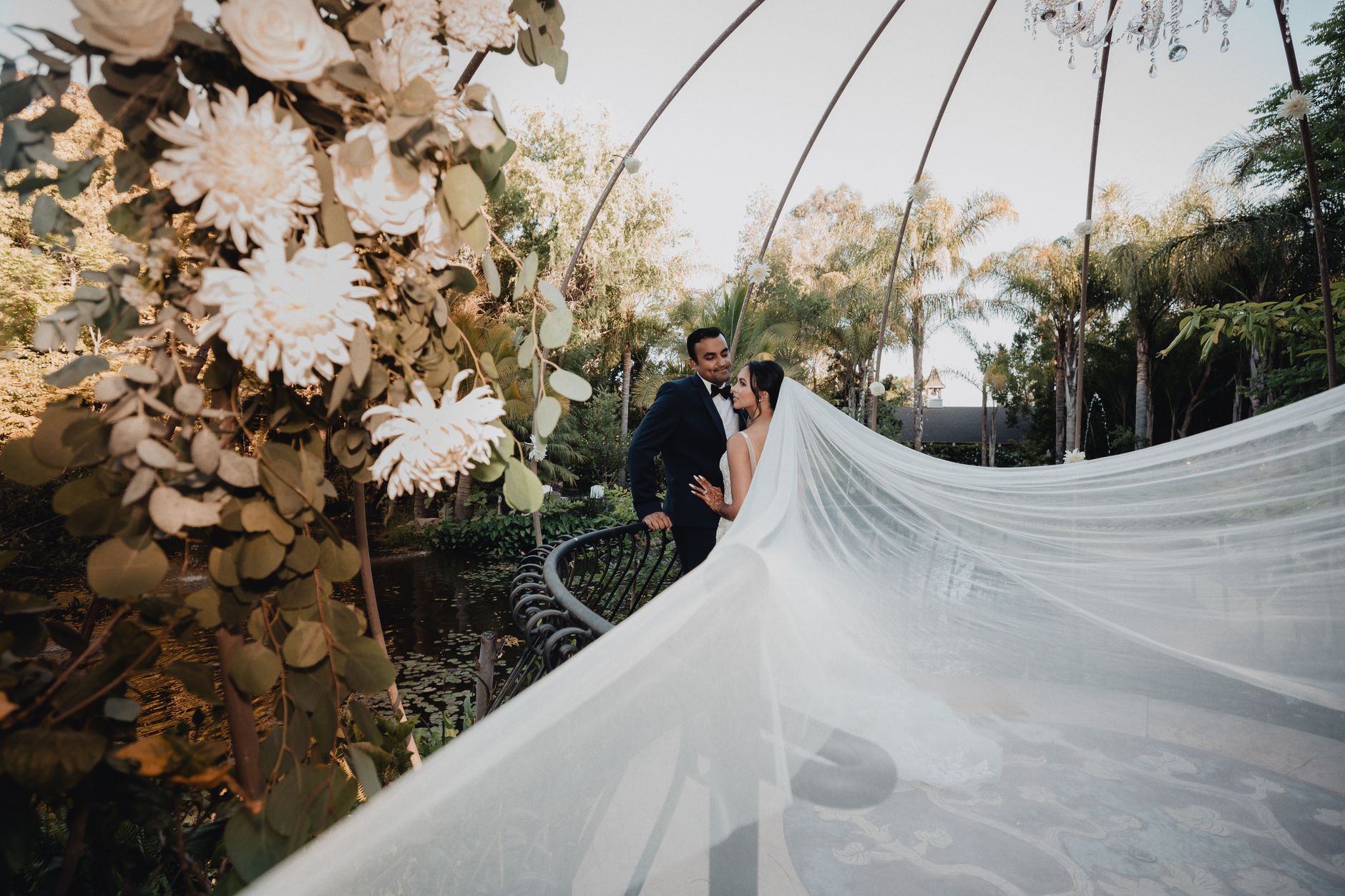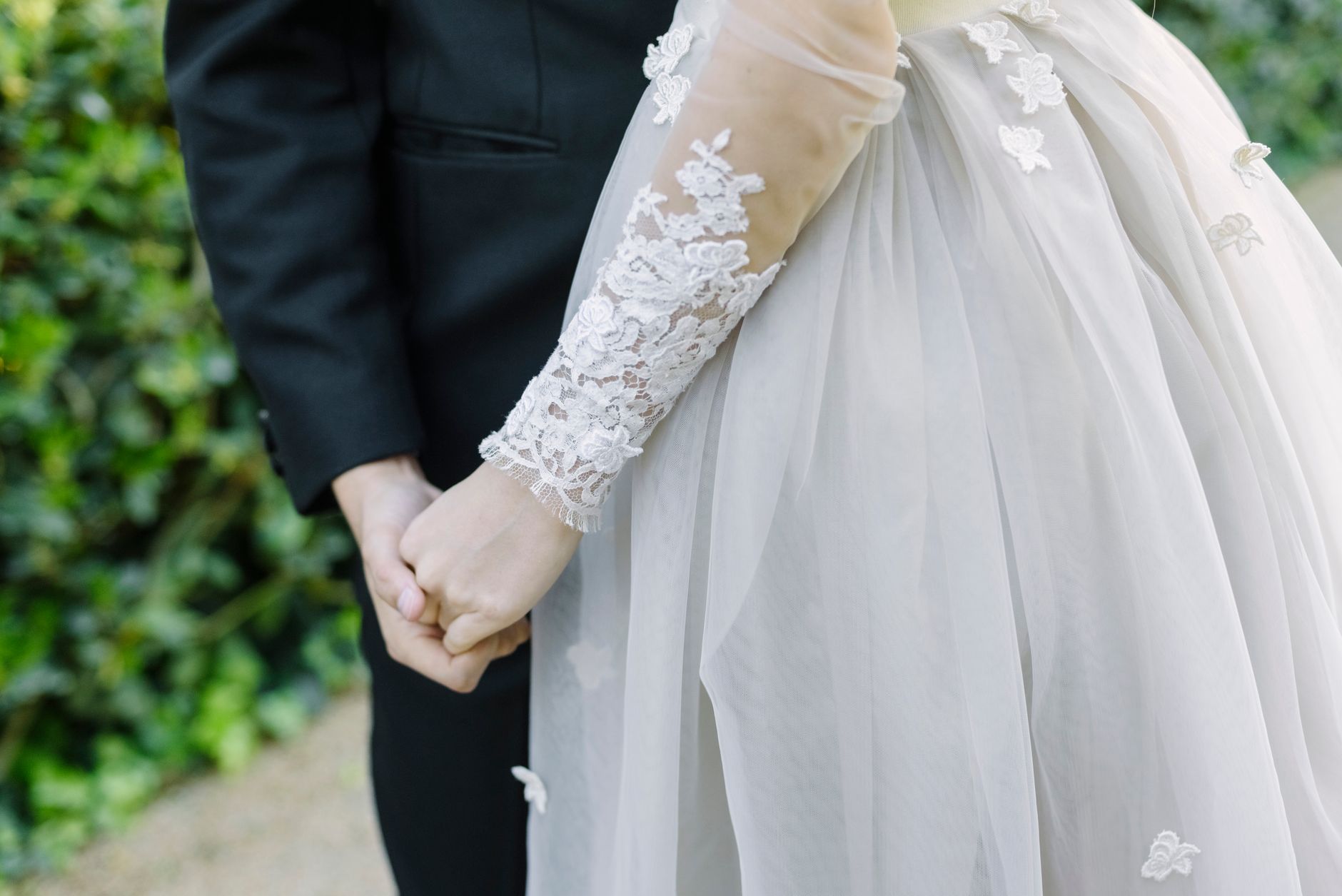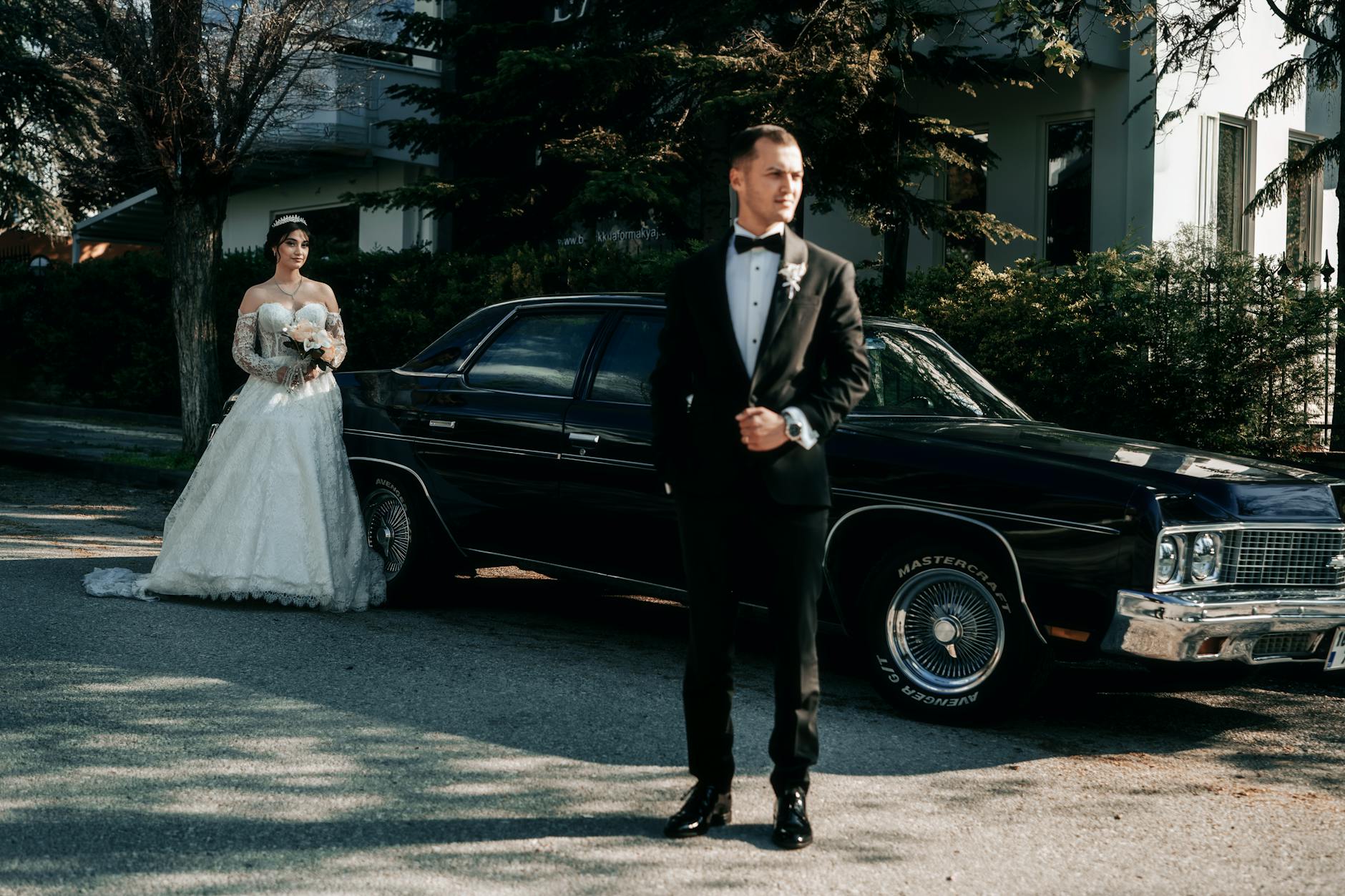
Luxury wedding videography emphasizes composed frames, editorial pacing, and deliberate lighting; documentary style captures moments as they unfold with minimal direction from the crew. A luxury wedding film at Hotel Bel-Air or San Ysidro Ranch typically includes 2–4 hours of planned portrait windows, structured first-look coverage, and formal vow sequences shot with cinema lenses. A documentary approach at the same venue relies on long-lens observation, ambient sound, and the choreography that naturally emerges when a planner runs a tight timeline.
Both styles can be cinematic. Both can be emotionally resonant. The distinction is not "posed versus candid" — luxury crews still capture spontaneous reactions, and documentary crews still compose frames — but rather where the videographer's attention sits during the day and how much of the timeline is reserved for scenes that exist primarily for the camera.
What Luxury Wedding Videography Means in Practice
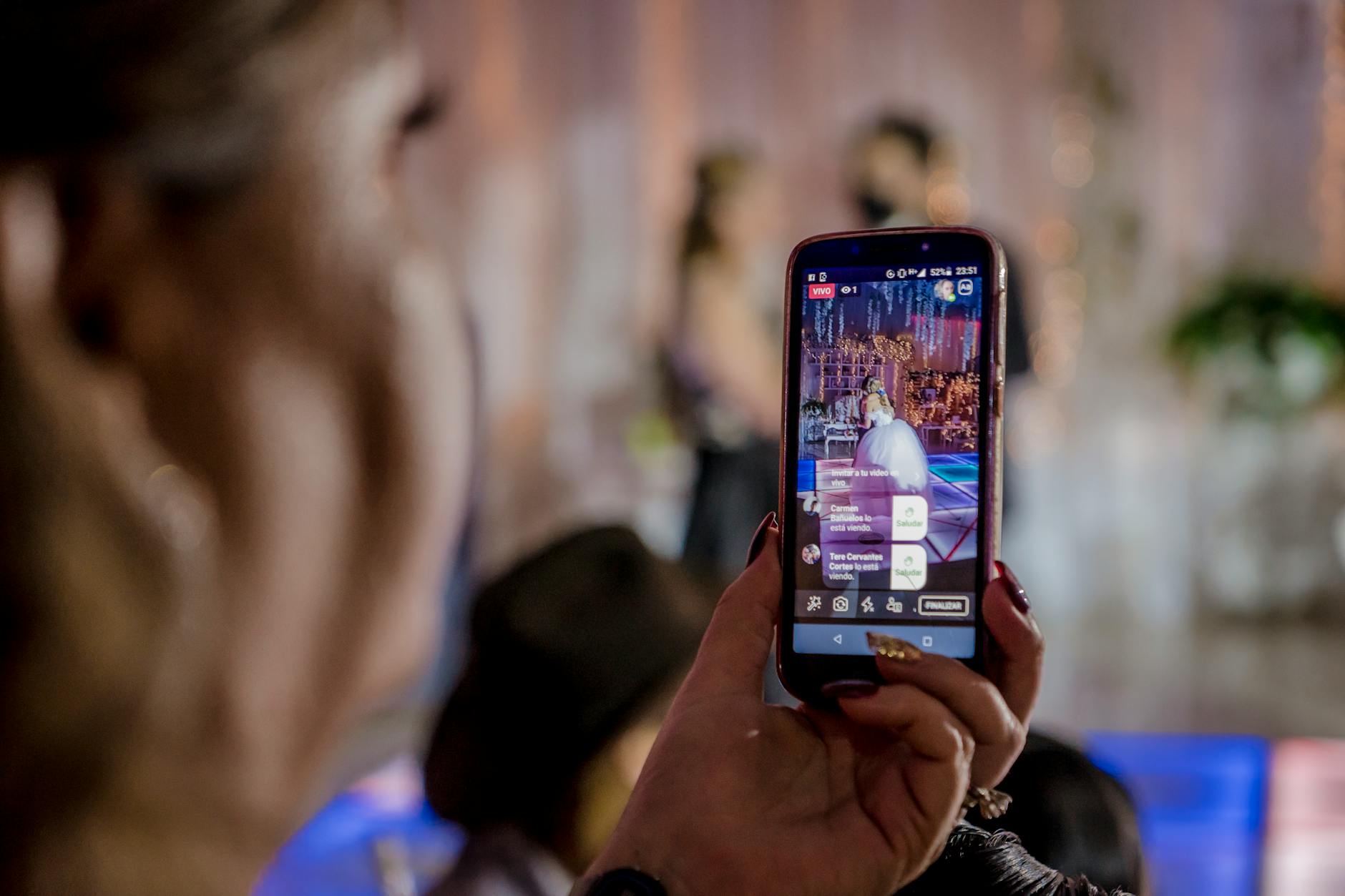
Luxury wedding videography is built around scenes that require the couple to pause, stand in specific light, and hold still long enough for the crew to capture a sequence. The first look at Calamigos Ranch is not "let's see what happens" — it is a 15-minute segment with the couple positioned under the oak canopy at 4:15 PM, the angle chosen to favor the direction of the sun, and the videographer working from a tripod and a gimbal in tandem to capture both the wide establishing shot and the close reaction.
The ceremony itself is covered with at least two cinema cameras — one locked off on the couple from the side or rear, one handheld or on monopod for the processional, vows, and exit. Vows are recorded with wireless lavalier microphones clipped to the groom's lapel and the officiant, ensuring clean isolated audio even if the wind picks up or the string quartet plays through the exchange. Luxury coverage includes a formal portrait session after the ceremony, typically 30–60 minutes, during which the couple works with the photographer and videographer together to capture composed sequences in the venue's key zones — the garden, the courtyard, the terrace overlooking the coast.
This approach requires cooperation from the planner, the couple, and the timeline. A luxury wedding film cannot be made in the margins of the day. It is planned into the schedule, discussed during the venue walk-through weeks before the wedding, and executed with the same level of choreography as the ceremony itself.
At Bel-Air Bay Club, a luxury crew typically arrives 3 hours before the ceremony to capture getting-ready coverage in the bridal suite — detail shots of the dress on the hanger, the rings on the invitation suite, the bride's veil being attached by her mother. These moments are half-documentary, half-directed: the bride is genuinely getting ready, but the videographer asks her to pause at the window so the light hits her face from the side rather than overhead, or to hold the bouquet at waist height rather than chest height so the flowers read clearly against the dress.
The result is a wedding film that looks and feels like editorial content from Vogue Weddings or Martha Stewart Weddings — every frame could be a still photograph, the pacing is deliberate, and the color grade favors the kind of controlled, filmic look that holds up on a 4K screen five years later.
What Documentary Wedding Videography Means in Practice
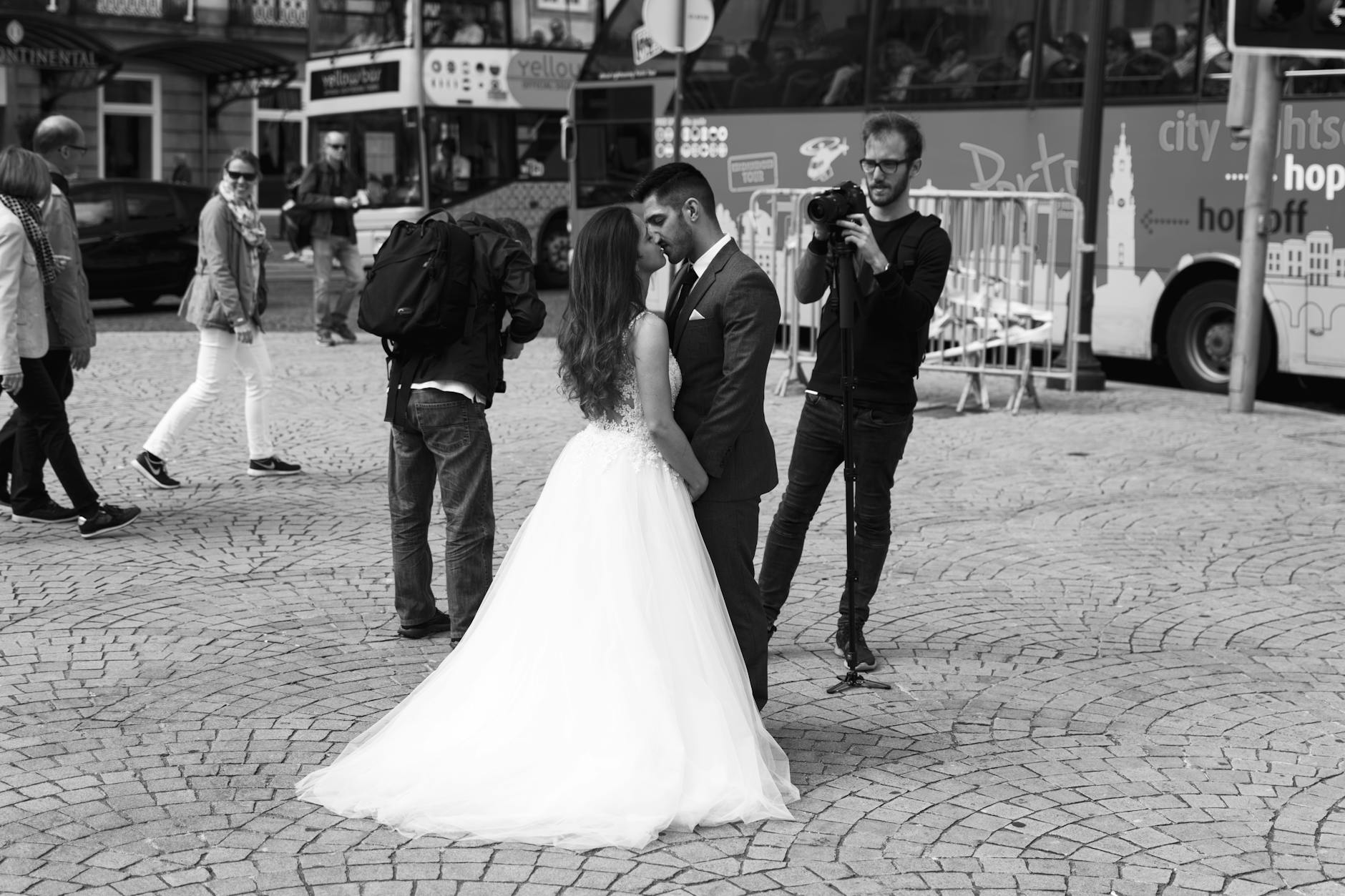
Documentary wedding videography is observation-first. The crew positions itself where key moments are likely to occur — the doorway where the bride will exit to walk down the aisle, the corner of the reception where the father of the bride tends to stand during toasts, the edge of the dance floor during the last song — and then waits for the scene to unfold. The videographer does not ask the couple to repeat an entrance, does not reposition them for better light, and does not interrupt a conversation between the bride and her grandmother to request that they face the camera.
Documentary style prioritizes real-time emotion over composed frames. At Ojai Valley Inn, a documentary crew captures the groom's reaction when he first sees the bride during the processional by shooting from 40 feet away with a 70–200mm lens, compressed depth of field isolating his face against the soft bokeh of the oak grove behind him. The moment lasts 3 seconds. There is no second take.
This does not mean documentary films are visually inferior. A skilled documentary videographer working at Resort at Pelican Hill will pre-scout the light during cocktail hour, anticipate where the sunset will hit the terrace, and position themselves so that when the couple steps outside for a quiet moment after dinner, the camera is already in place to capture it without direction. The editing is tighter — less slow-motion, more real-time pacing, more ambient sound from the venue itself rather than a licensed soundtrack layered over every scene.
Documentary wedding films tend to run shorter — 8 to 12 minutes for a highlight reel versus 15 to 20 minutes for a luxury edit — because there is less material that can carry a slow editorial pace. The coverage relies on the couple, the planner, and the guests to generate visually compelling moments organically, which works well at venues with strong natural light and experienced event designers but can feel sparse at indoor hotel ballrooms or evening-start weddings where the bulk of the day happens after dark.
The Gear, the Crew, and the Coverage Hours
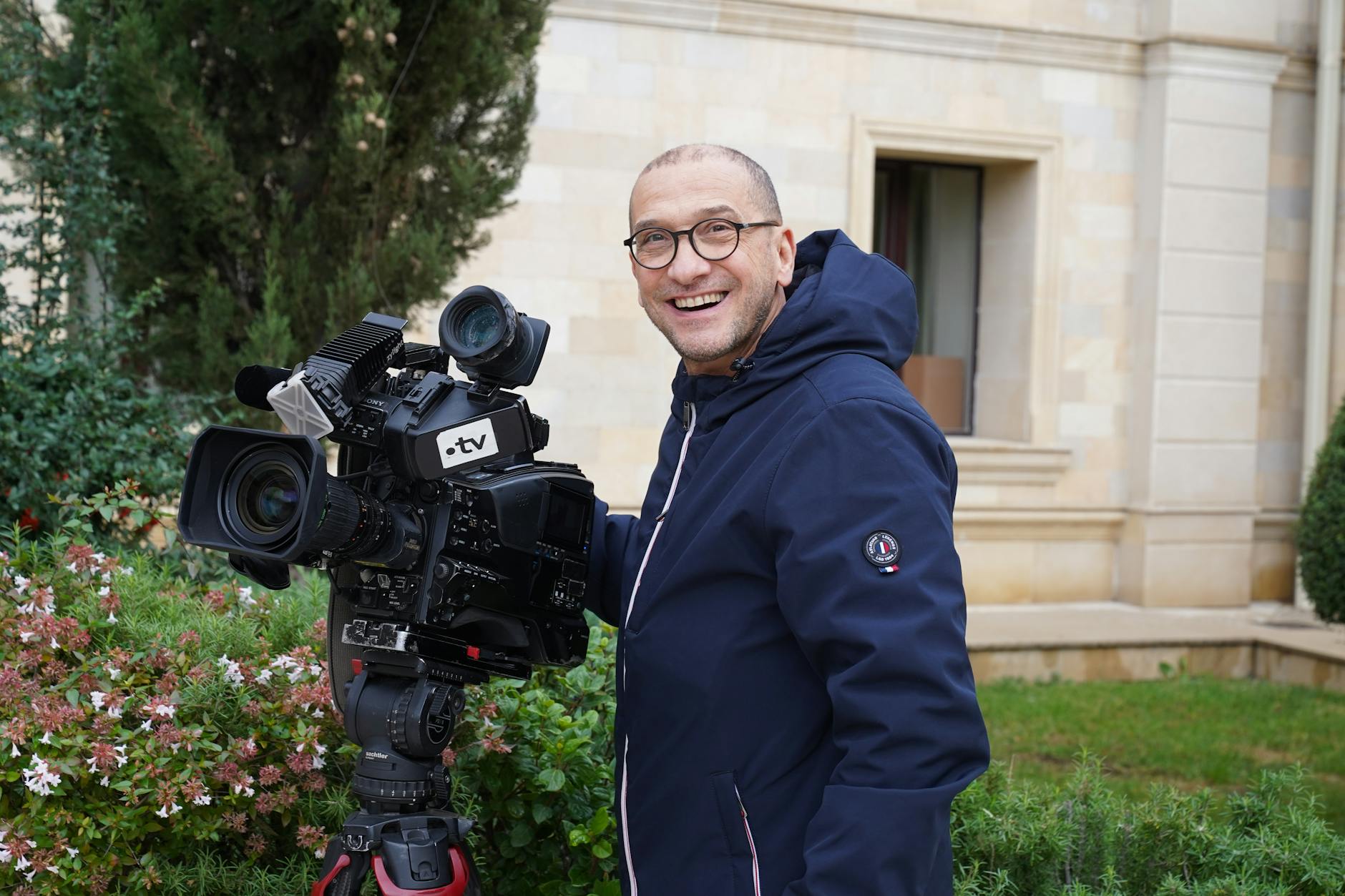
Luxury wedding videography at a venue like Rancho Valencia or Montage Laguna Beach typically requires a 2-shooter video team working 10 hours, plus a third shooter if the reception runs past midnight or if the couple books a next-day brunch edit. The primary shooter works from a DJI Ronin gimbal and a tripod-mounted cinema camera (often a Sony FX6 or Canon C70 with cinema prime lenses); the second shooter covers wide angles, alternate perspectives during the ceremony, and B-roll during transitions. Both shooters carry wireless lav systems, a boom mic for the officiant, and at least one LED panel for controlled fill light during the portrait session.
Documentary wedding videography can be executed by a single experienced shooter working 8 hours, though most couples book a 2-shooter documentary team to ensure no critical moment is missed while one shooter is repositioning or swapping batteries. The gear is lighter — mirrorless bodies (Sony a7S III, Canon R5), telephoto zooms, and handheld gimbals optimized for mobility rather than slow cinematic moves. Audio is typically captured via on-camera shotgun mics and one or two wireless lavs placed on the groom and officiant. There is rarely a formal portrait session, which reduces the total coverage window by 45–90 minutes compared to a luxury package.
The cost difference reflects the time commitment and the post-production complexity. A luxury wedding film involves 40–60 hours of editing — color grading every clip to match a consistent cinematic look, layering audio from multiple sources, and cutting to a licensed soundtrack with precise beat-matching. A documentary edit runs 20–35 hours, with less aggressive color work and more reliance on natural venue sound.
Venue Fit: Where Each Style Works Best
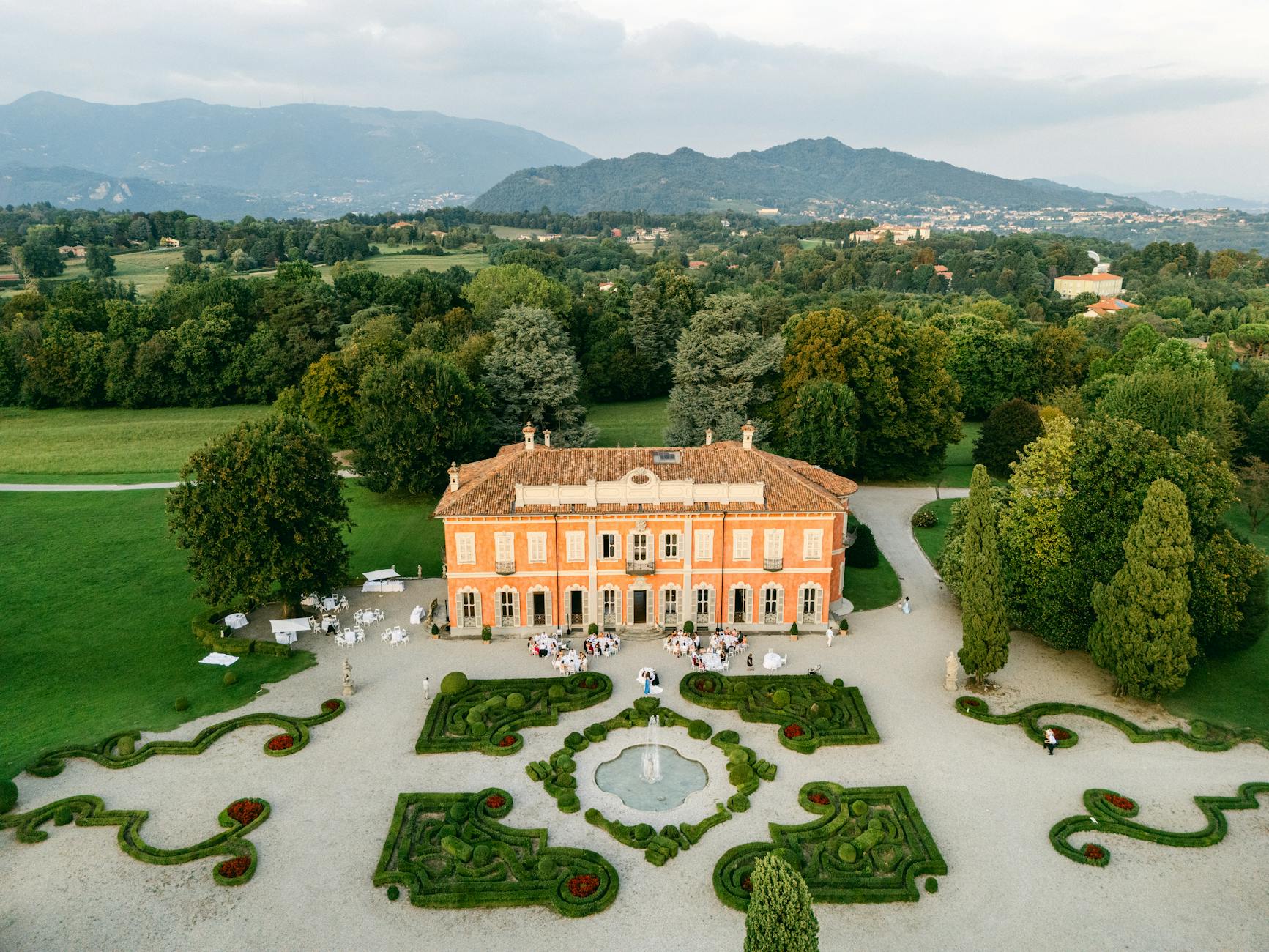
Luxury wedding videography thrives at venues with controlled light, editorial architecture, and built-in portrait zones. Hotel Bel-Air, Beverly Hills Hotel, and Auberge du Soleil are designed for this approach — manicured gardens, symmetrical courtyards, covered terraces that hold soft light even at noon. The planner can carve out 60 minutes after the ceremony for formal portraits, the couple is comfortable being directed by the photographer and videographer working in tandem, and the timeline includes margin for the crew to reset between scenes.
Documentary wedding videography excels at venues where the event itself generates visual interest without the crew's intervention. Calamigos Ranch barn receptions, Terranea Resort clifftop ceremonies, and San Ysidro Ranch garden dinners all offer continuous natural light, layered depth in every frame, and enough movement from guests and vendors that a well-positioned camera captures compelling footage simply by recording what occurs.
Venues that are harder for documentary coverage: hotel ballrooms with overhead fluorescent work lights during setup, urban lofts with inconsistent window light, and any reception that transitions to a dark dance floor within 30 minutes of dinner ending. Documentary style relies on ambient light and environmental context, so once the DJ drops the house lights and activates the uplighting, the visual language flattens. A luxury crew compensates with off-camera LEDs and planned dance-floor sequences shot at wider apertures; a documentary crew captures what they can and moves on.
Couple Fit: Which Style Matches Your Comfort Level
If you are comfortable being directed, enjoy the idea of a formal portrait session, and want the wedding film to feel like a produced piece of editorial content, luxury wedding videography aligns with that vision. Couples who book this style tend to be editorial black-tie or destination minimalist in aesthetic — they have strong opinions about composition, color palette, and pacing, and they expect the final film to reflect those preferences. The videographer functions as a creative director during key moments, not just an observer.
If you want the film to document the day as it happened, prefer not to pause for formal sequences, and trust the videographer to find the emotional beats without orchestrating them, documentary wedding videography is the better match. Couples who choose this style are often garden romantic or coastal classic — they value authenticity and spontaneity over composed frames, and they are willing to accept that some moments may not be perfectly lit or framed in exchange for the guarantee that nothing was staged.
There is also a hybrid model — sometimes called "documentary with intention" — where the crew works primarily in observation mode but reserves 20–30 minutes for a structured golden-hour portrait session and requests that the couple repeat their first look if the initial angle was blocked by a bridesmaid. This is the most common approach for Photo + Video Combined Package bookings at venues like Meadowood or Carmel Valley Ranch, where the couple wants the authenticity of documentary coverage but also expects a few hero frames that could run full-bleed in a print magazine.
How the Edit and Deliverables Differ
A luxury wedding film delivered 10–12 weeks after the wedding at Borgo Egnazia or Le Sirenuse typically includes a 15- to 20-minute cinematic highlight reel, a 60- to 90-minute full ceremony edit, and 8–12 minutes of portrait and reception coverage cut to a licensed soundtrack. The color grade is consistent across all deliverables — usually a warm, slightly desaturated look inspired by film stocks like Kodak Portra 400 — and every transition is intentional. The audio mix layers vows, toasts, and music at precise levels so the couple's words are always intelligible even when underscored by the soundtrack.
A documentary wedding film delivered 8–10 weeks after the wedding includes an 8- to 12-minute highlight reel cut in real-time or near-real-time pacing, a full ceremony edit with minimal color grading, and optional toast coverage if the couple books it as an add-on. The color grade is naturalistic — corrected for exposure and white balance but not pushed into a stylized look — and the soundtrack is often diegetic (the band, the DJ, the string quartet) rather than a licensed track layered over the entire edit.
Both deliverables are 4K, both are downloadable via a private Vimeo link, and both include rights for the couple to share the film on social media and with family. The luxury edit takes longer because the post-production is more labor-intensive; the documentary edit is faster but less forgiving of footage that was under-lit or poorly framed during capture.
Making the Decision Before You Book
Most couples do not need to choose between luxury and documentary as binary opposites. The question to ask during the consultation is not "which style do you shoot?" but rather "how much of the timeline will be reserved for directed sequences, and how much will be observational?" A videographer who shoots luxury-style portraits but documentary-style reception coverage gives you both.
The clearest signal of which style a videographer prioritizes is the portfolio. Watch three full wedding films, not just the 60-second Instagram reels. If every film opens with a slow-motion portrait sequence, includes multiple costume changes or location shifts, and features long stretches of the couple walking hand-in-hand with no dialogue, that crew works luxury-first. If the films open on the ceremony processional, include uninterrupted vow exchanges, and cut quickly between guest reactions and environmental details, that crew works documentary-first.
Ask how many hours of coverage are included, how much of that time is allocated to portraits, and whether the crew will direct the couple during the first look or simply document it. If the answer is "we'll position you for the best light and ask you to walk toward each other twice so we can capture it from two angles," that is luxury. If the answer is "we'll be in place before you arrive, and you won't know we're there," that is documentary.
Both are valid. Both produce films that couples watch annually on their anniversary. The right choice is the one that matches how you want to experience the day while it is happening and how you want to remember it afterward.
When to Combine Luxury and Documentary Teams
At destination weddings in Italy, France, or Japan, some couples book separate luxury and documentary teams — one crew for the formal portrait session and ceremony coverage, one crew for the reception and candid moments. This is logistically complex and expensive (you are paying for two full crews, two sets of deliverables, and two rounds of post-production), but it guarantees comprehensive coverage without forcing either team to compromise their creative approach.
A simpler version of this model is booking a luxury videographer for the wedding film and a documentary photographer for the reception. The two crews operate independently but share the timeline, so the photographer is not waiting on the videographer's portrait session and the videographer is not competing for the same angle during the first dance. This works well at venues like Belmond Hotel Caruso or Villa Cetinale, where the property is large enough that both teams can work simultaneously without appearing in each other's frames.
For most California weddings at venues like Hummingbird Nest Ranch, Saddlerock Ranch, or Triunfo Creek Vineyards, a single hybrid crew is sufficient. The videographer shoots luxury-style portraits during the golden-hour window and documentary-style observational coverage during dinner and dancing. The couple receives one cohesive film that reflects both approaches, and the timeline does not require splitting the day into discrete creative handoffs.
Final Considerations: Timeline, Budget, and Venue Constraints
Luxury wedding videography requires a longer timeline — plan for 10–12 hours of coverage, including 60–90 minutes reserved exclusively for formal portraits and first-look sequences. If your venue has a hard end time (many California state parks and coastal properties enforce sunset cutoffs), confirm that the portrait session can happen before the ceremony rather than after, or accept that the luxury coverage will focus on getting-ready and ceremony rather than reception.
Documentary wedding videography fits tighter timelines but demands that the rest of the vendor team — planner, florist, band, caterer — execute on schedule. A documentary crew cannot manufacture compelling footage if the ceremony starts 45 minutes late and the reception is rushed to meet the venue's noise curfew. The style depends on rhythm, and rhythm depends on a well-run event.
Both styles are available across our collections — luxury packages center on 2-shooter coverage, a full ceremony edit, and a cinematic highlight reel, while documentary-leaning packages emphasize longer real-time edits. Destination weddings are quoted individually to reflect the additional pre-production coordination international venues require. See Packages & Pricing for current collections.
If you are planning a wedding at a venue known for editorial light and architectural beauty — Hotel Bel-Air, San Ysidro Ranch, Auberge du Soleil, Resort at Pelican Hill — luxury wedding videography will produce a film that honors the property's visual language. If you are planning a wedding that prioritizes guest experience, spontaneous emotion, and uninterrupted celebration, documentary wedding videography will capture the day as it felt to be inside it. Both are investments in how you will remember the wedding a decade from now. Choose the one that aligns with how you want to experience it while it is happening.