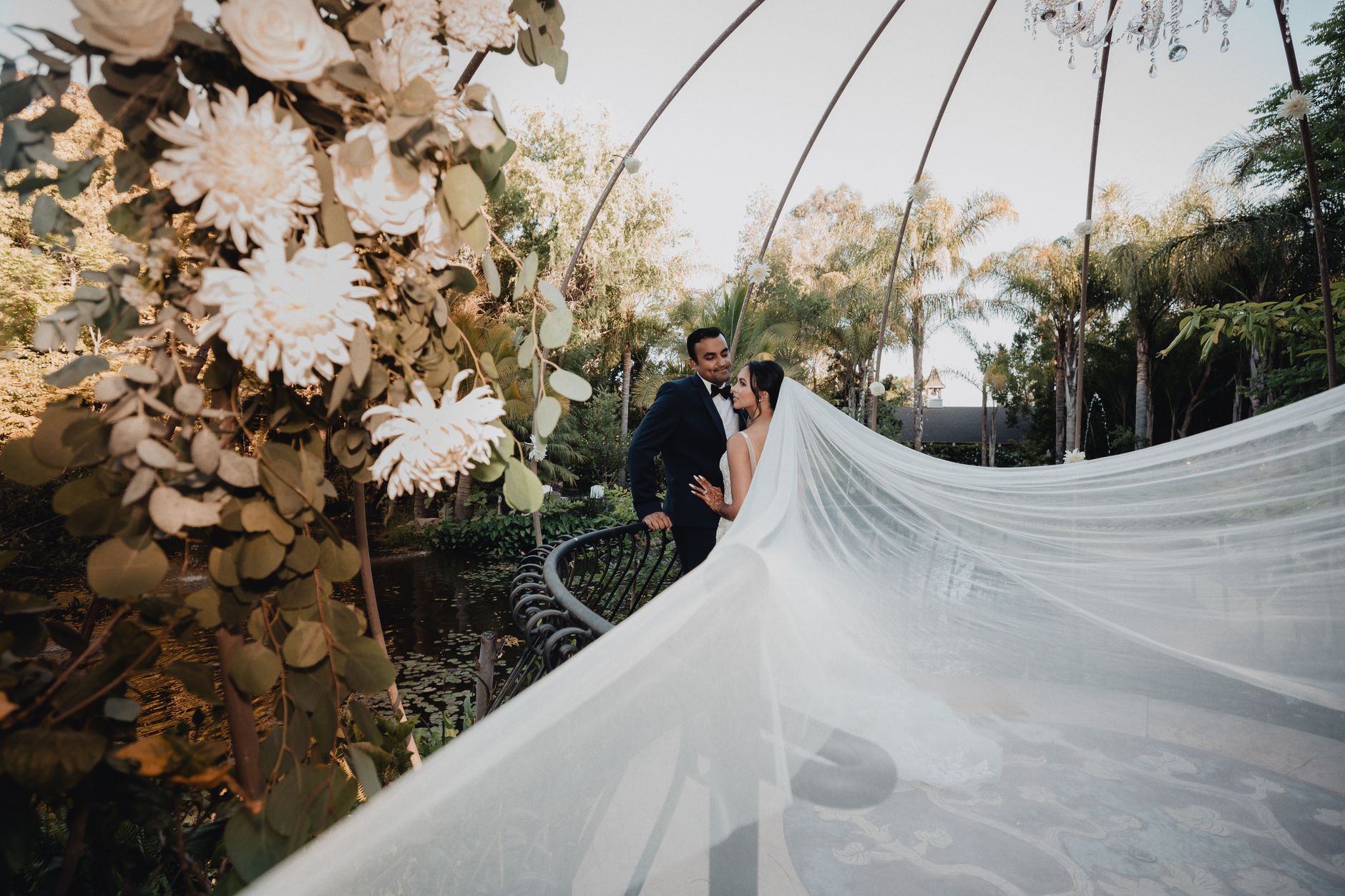
An Orange County wedding videographer builds the coverage plan around the region's coastal light, resort architecture, and the specific rhythm of a ceremony that starts at 4:30 PM at Resort at Pelican Hill versus one that begins at sunset on the Montage Laguna Beach terrace. The answer to "which videographer" is less about equipment lists and more about who has walked the Mar Vista Lawn at Pelican Hill during every hour of afternoon light and knows when the Pacific haze softens versus when it flattens.
Orange County weddings cluster at a handful of resort properties — Pelican Hill in Newport Coast, Montage in Laguna Beach, and a scattering of private estates and golf clubs inland — and each imposes its own editorial constraints. The videographer who shoots the Rotunda ceremony at Pelican Hill needs to anticipate the marble acoustic, the column reflections, and the fact that the bride's processional is visible from three angles simultaneously. At Montage, the ocean terrace ceremony is wind-exposed; lapel microphones are mandatory, and the coverage plan must account for the fact that vows recorded outdoors will compete with surf and guests shifting in their chairs.
Why Orange County Wedding Films Require Resort-Specific Coverage Planning
Photo by NUDE Nahum on Pexels
A wedding film at Resort at Pelican Hill typically requires 10 hours of coverage from a 2-shooter video team, because the property spans three distinct zones — the Rotunda and colonnade for the ceremony, the Mar Vista Lawn for cocktail hour, and either the Ballroom or the Coliseum Pavilion for the reception. Each zone films differently. The Rotunda interior is bright marble and high ceilings, requiring wireless lavs on the officiant and groom to isolate vows from the reverb. The Mar Vista Lawn is open sky and requires polarizers to manage Pacific glare at 5 PM. The Ballroom is low ambient light with warm uplighting, which means the videographer switches to fast primes and raises ISO to 3200–6400 to preserve motion without grain.
Montage Laguna Beach presents the opposite challenge. The ceremony typically unfolds on the Ocean Terrace, an exposed cliffside platform with no overhead cover and direct west-facing sun until 6:30 PM in summer. Couples who book the 5 PM ceremony slot are backlit for the entire processional and vows, which is cinematic in stills but requires the videographer to position a second shooter at the ocean-side angle to capture front-lit facial expressions. The reception moves indoors to the Mosaic Ballroom or Studio, both of which are tightly framed spaces where a 24mm lens is too wide and a 50mm is often ideal.
The coverage differences are not stylistic preferences — they are site-imposed logistics. A videographer who has not shot both properties will misallocate time, miss the 20-minute portrait window between cocktail hour and reception introductions at Pelican Hill, or fail to anticipate that the Montage terrace ceremony runs 15 minutes longer than scheduled because the bride's processional staircase is steep and slow.
Documentary vs Cinematic Wedding Film Coverage in Orange County

Photo by Anastasia Shuraeva on Pexels
Orange County couples typically request one of two film styles: documentary or cinematic. A Documentary Photography approach prioritizes chronological coverage and ambient audio — the entire ceremony is recorded in real time, vows are uncut, and the edit follows the day as it unfolded. A cinematic Wedding Film compresses the day into a 10- to 15-minute narrative, scored to music, with vows and toasts excerpted rather than presented whole.
At Resort at Pelican Hill, the documentary approach requires the videographer to cover four key moments in full:
- Bride prep in the villa suite — typically 60–90 minutes before the ceremony, including the first look with the father and bridesmaids.
- Groom prep at the colonnade or lawn — first look with groomsmen, typically 30 minutes before the bride's first look.
- Ceremony in the Rotunda or on the Mar Vista Lawn — full processional, vows, ring exchange, pronouncement, and recessional, uninterrupted.
- Reception introductions, first dance, parent dances, toasts, and cake cutting — the Ballroom or Pavilion, approximately 90 minutes of continuous coverage.
The cinematic approach compresses those four blocks into a single 12-minute film, pulling 8–12 seconds from each moment and layering them over a three-act structure: preparation and anticipation, ceremony and vows, celebration and dancing. The couple receives both the cinematic edit and the full ceremony footage as a separate deliverable, which is standard practice for wedding films priced above $7,500.
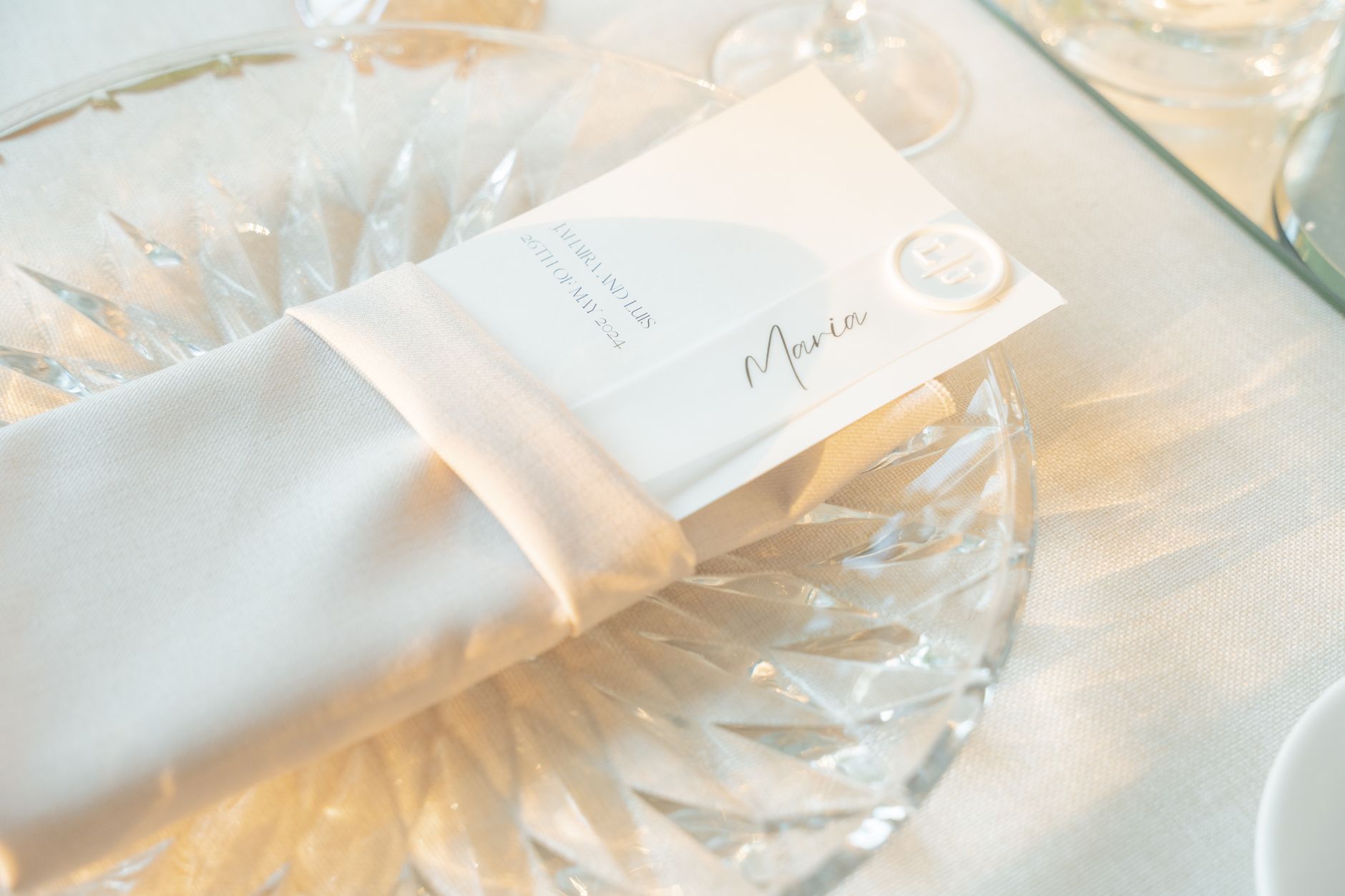
Montage Laguna Beach weddings lean more heavily cinematic because the property's aesthetic — white marble, ocean backdrop, terraced gardens — reads as editorial by default. Couples who book Montage are often planning a wedding that will be featured in a publication (or styled as if it will be), and the film needs to match that register. The videographer is expected to capture not just the ceremony and toasts, but also the design details: the floral installation on the Mosaic Bar, the place settings, the cake before it is cut, the bride's dress on the hanger before she steps into it.
Coverage Logistics — Timeline, Team Size, and Deliverables

Photo by Francesco Paggiaro on Pexels
A full-day Wedding Film at Resort at Pelican Hill or Montage Laguna Beach includes:
- 10 hours of continuous coverage from a 2-shooter video team (lead videographer + second shooter).
- Full ceremony recording with dual-angle coverage (one camera on the couple, one on the guests and officiant).
- Wireless lapel microphones on the groom, officiant, and any speakers giving toasts (to isolate voices from ambient noise and room reverb).
- Highlight reel (10–15 minutes, delivered 10–12 weeks after the wedding).
- Full ceremony edit (uncut, delivered 6–8 weeks after the wedding).
- Same-day edit option (3- to 5-minute recap shown at the reception, requires advance notice and an additional editor on-site).
Couples who also book Documentary Photography or Editorial Photography receive coordinated shot lists and a unified timeline. The videographer and photographer walk the venue together 60 minutes before the ceremony to confirm positioning, identify light pockets, and agree on who covers which angle during the processional. This advance coordination prevents two problems that plague uncoordinated teams: the videographer blocking the photographer's sightline during vows, and the photographer stepping into the videographer's wide establishing shot during the first dance.
For Destination Wedding Film coverage — couples who live outside California but are hosting their wedding at an Orange County resort — the timeline often extends to two days. Day one covers the rehearsal dinner and welcome event; day two covers the full wedding. The videographer delivers both as separate films or as a single extended cut, depending on the couple's preference.
Why Couples Choose Cinematic Wedding Videography at Orange County Resorts
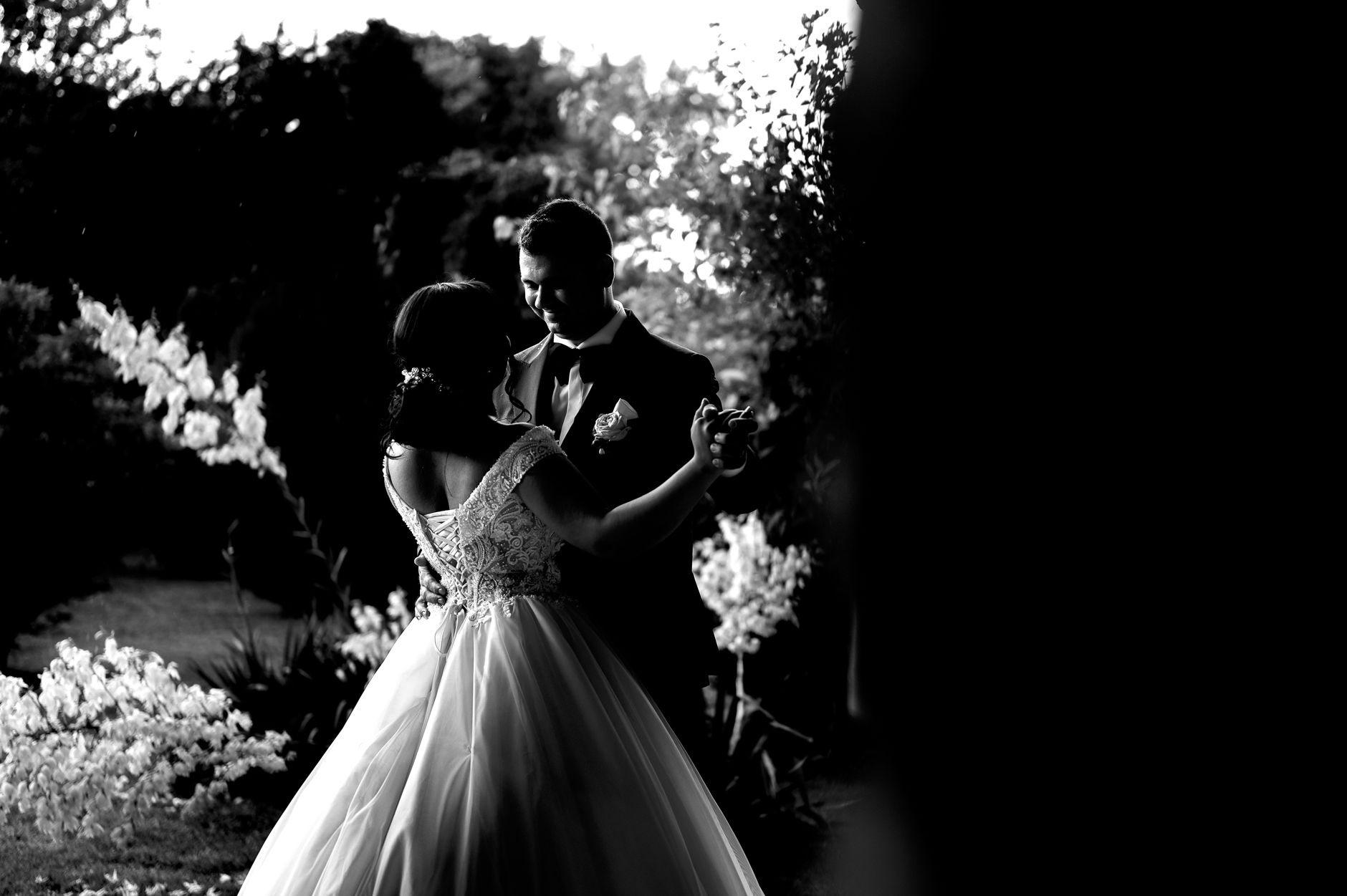
Photo by Mihai on Pexels
The decision to hire a wedding videographer is rarely about whether to document the day — most couples already plan to do that through photography. The decision is about whether the couple wants a film they will actually watch, which depends on edit pacing, audio mix, and color grading. A 45-minute ceremony recording with ambient wind noise and no music is a document; a 12-minute cinematic edit with isolated vows, a three-act structure, and a color grade that matches the editorial photography is a film.
Couples who book Resort at Pelican Hill or Montage Laguna Beach are already investing $100,000–$300,000 in the wedding weekend. The videography decision becomes a question of whether the film will match the rest of the day's production value. If the florist is building a suspended installation, the lighting designer is uplighting the colonnade, and the stationery is letterpressed, the couple typically wants a Wedding Film that reflects that level of craft — which means a videographer who color-grades in DaVinci Resolve, uses cinema cameras (RED, ARRI, Sony FX series), and delivers in 4K or 6K with a theatrical aspect ratio (2.39:1 or 1.85:1 rather than 16:9).
The aesthetic differences between a consumer wedding video and a cinematic wedding film are immediate:
- Aspect ratio — cinematic films render in 2.39:1 or 1.85:1 (letterboxed), not 16:9 (television standard).
- Frame rate — cinematic films shoot at 24 fps for a filmic cadence, with 60 fps or 120 fps for slow-motion moments (the first kiss, the dress reveal, the bouquet toss). Consumer videos shoot at 30 fps or 60 fps and play back at recorded speed.
- Color grading — cinematic films are graded in post to a custom LUT (look-up table) that matches the couple's photography. Consumer videos apply an in-camera profile or a single-click preset and call it finished.
- Audio mix — cinematic films isolate vows, toasts, and laughter using wireless lavs and shotgun microphones, then mix them against a music bed in a digital audio workstation (DAW). Consumer videos use on-camera audio, which captures wind, room reverb, and guests talking over the vows.
At Montage Laguna Beach, the couple books the Mosaic Ballroom, hires an 8-piece band, and budgets $15,000 for florals. The videographer who shows up with a single camera and no wireless microphones will deliver a film where the vows are inaudible and the first dance is a static wide shot. The couple will watch it once, feel disappointed, and never share it. The videographer who brings a 2-shooter team, isolates audio, shoots the first dance from three angles (wide, medium, close-up on hands), and delivers a film where the couple can actually hear themselves say "I do" will produce something the couple watches on their anniversary and sends to family abroad.
The First Look, the Vows, and the Last Dance — Moments That Define the Film
Every wedding film is built around three scenes: the first look, the vows, and the last dance. These are the moments couples remember most clearly and the moments that, if filmed poorly, render the rest of the footage irrelevant.
At Resort at Pelican Hill, the first look typically unfolds on the Mar Vista Lawn or in the colonnade courtyard. The videographer positions the groom facing away from the approach path, films the bride walking toward him in a slow dolly or Steadicam move, then captures the turn and the reaction in a close-up. The entire sequence runs 90 seconds in the final edit but requires 8–10 minutes of real-time coverage to capture multiple angles, the bride's父亲's reaction in the background, and the bridesmaids watching from the villa balcony.
The vows are the editorial center of the ceremony. If the couple has written personal vows, the videographer must record them cleanly — no wind noise, no officiant stepping into the frame, no guest coughing over the phrase "I promise to." At Montage Laguna Beach, the Ocean Terrace is fully exposed to wind and surf. The videographer runs two wireless lapel microphones (one on the groom, one on the bride or officiant) and a shotgun mic on a boom pole as a backup. The lapel mics go directly into a field recorder (Sound Devices MixPre-6 or Zoom F6), which allows the editor to isolate each voice in post and remove background noise.
The last dance is the final emotional beat. At Pelican Hill, the Ballroom or Coliseum Pavilion dims to candlelight and uplighting, and the couple dances alone while guests form a circle. The videographer films the scene in three passes: a wide establishing shot from the Ballroom entrance, a medium shot from the edge of the dance floor, and a close-up on the couple's hands and faces. The final edit cross-cuts all three, synced to the song's bridge and final chorus.
If any of these three scenes are missing or poorly executed, the couple will feel the absence every time they watch the film.
Photo + Video Combined Packages — Why Coordination Matters More at Resort Weddings
Most couples booking Resort at Pelican Hill or Montage Laguna Beach hire both a photographer and a videographer, and the logistics of coordinating both teams are more complex at a resort than at a private estate. Resort weddings follow strict timelines — the ceremony must conclude by 5:30 PM to allow cocktail hour setup, the reception must end by 11 PM due to noise ordinances, and the couple is allocated a specific 20-minute window for portraits on the Mar Vista Lawn or the Treasure Island overlook.
A Photo + Video Combined Package solves the coordination problem by assigning both teams to the same production company. The photographer and videographer walk the venue together during the site visit, agree on positioning for the ceremony and first dance, and share a unified shot list. During the 20-minute portrait window, the photographer shoots first (because stills require precise posing), and the videographer captures behind-the-scenes footage and wide establishing shots of the couple walking through the garden or colonnade.
The alternative — hiring a photographer and videographer from separate companies — introduces friction. The photographer may request the couple hold a pose for 30 seconds while adjusting light, unaware that the videographer is rolling and capturing the couple standing still and silent. The videographer may set up a dolly track for the processional without confirming the photographer's sightline, blocking the aisle shot. The couple ends up managing two timelines, two contracts, two shot lists, and two sets of expectations.
Combined packages also unify the aesthetic. If the couple has requested a light, airy photography style with lifted shadows and desaturated greens, the videographer can grade the footage to match. If the couple prefers a moody, high-contrast look with deep blacks and warm highlights, both the photos and the film share the same color palette. The couple receives a cohesive visual record rather than a photography set that looks like Kinfolk and a film that looks like a network television drama.
Pricing, Booking Timeline, and What to Expect from a Wedding Videographer in Orange County
Wedding videography packages in Orange County range from $3,959 for a half-day Highlight Reel to $14,299 for a multi-day Destination Wedding Film with full ceremony coverage, same-day edit, and drone footage. The average package for a Resort at Pelican Hill or Montage Laguna Beach wedding is $7,500–$10,000, which includes 10 hours of coverage, a 2-shooter team, a 12-minute cinematic highlight reel, and the full ceremony edit.
Couples typically book their videographer 10–14 months before the wedding date, after securing the venue and the photographer. The videographer conducts a site visit 60–90 days before the wedding to walk the ceremony and reception spaces, confirm the timeline, and identify any site-specific challenges (low light in the Ballroom, wind on the Ocean Terrace, acoustic issues in the Rotunda). The couple provides a shot list and song preferences 30 days before the wedding, and the videographer delivers the highlight reel 10–12 weeks after the wedding date.
Raw footage is not typically included in standard packages. Couples who want the full unedited files (all 8–10 hours of footage from both cameras) can request them for an additional fee, but most couples find the raw files unmanageable — sorting through 400+ video clips to find a specific toast or dance is not something most couples want to do themselves.
For more detail on what to expect during the planning process, review our FAQ page or explore the full Wedding Videography service overview.
Orange County Venues Where LifeStory.Film Has Filmed Weddings
LifeStory.Film has produced wedding films at both Resort at Pelican Hill and Montage Laguna Beach, along with private estates and golf clubs across Newport Beach, Laguna Beach, and Irvine. Each venue presents specific coverage opportunities and constraints, and the videographer's advance familiarity with the property — where the afternoon light lands, which spaces require wireless lavs, where the couple can take portraits without interrupting guest flow — shapes the final film.
For couples planning weddings outside Orange County, LifeStory.Film also covers venues across Southern California, including Calamigos Ranch, Bel-Air Bay Club, and Terranea Resort, as well as destination weddings in Italy, France, Japan, and the Caribbean.
Begin a conversation about your wedding film at Resort at Pelican Hill, Montage Laguna Beach, or another Orange County venue by reviewing our pricing packages or reaching out through the contact form.