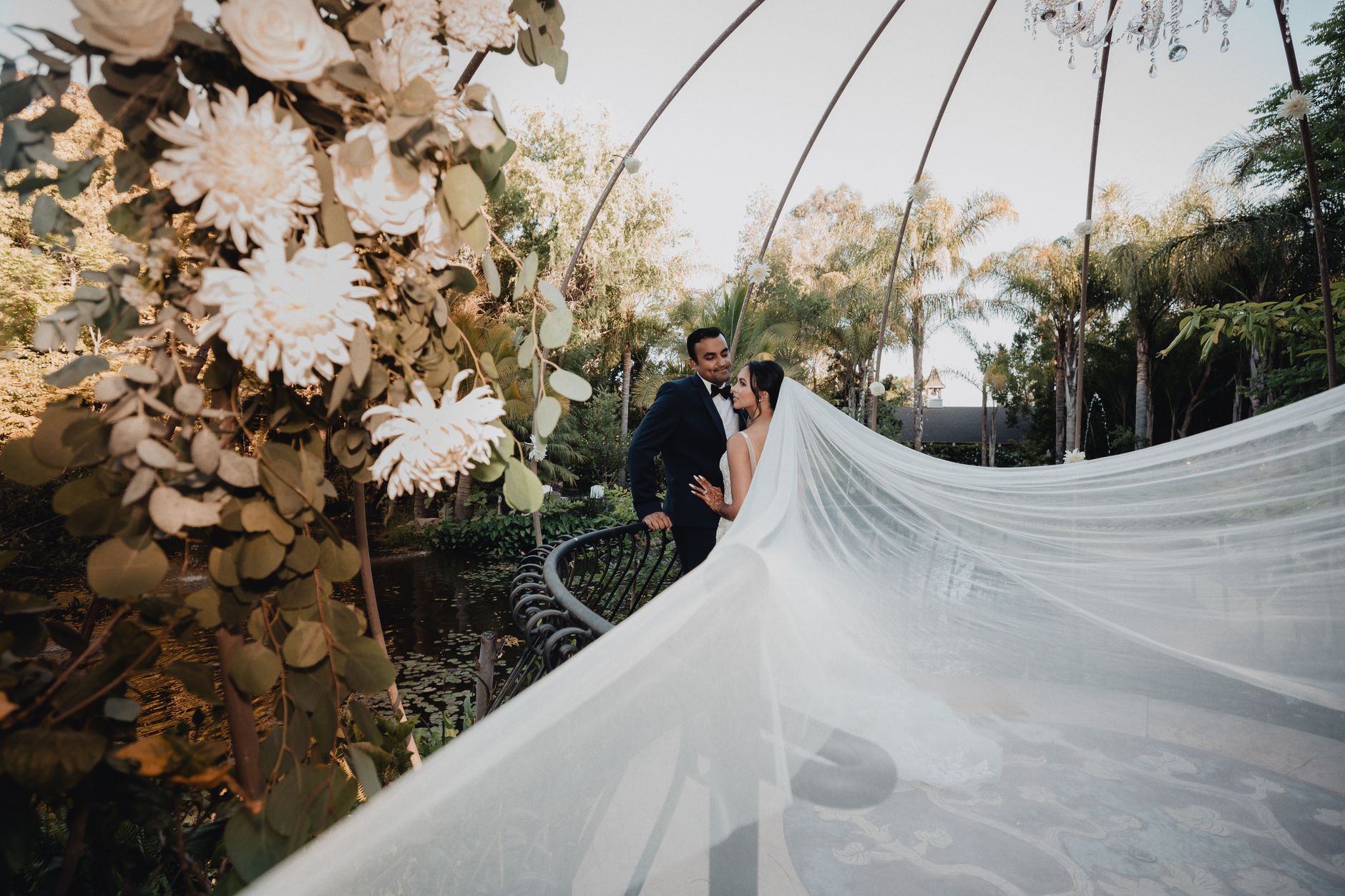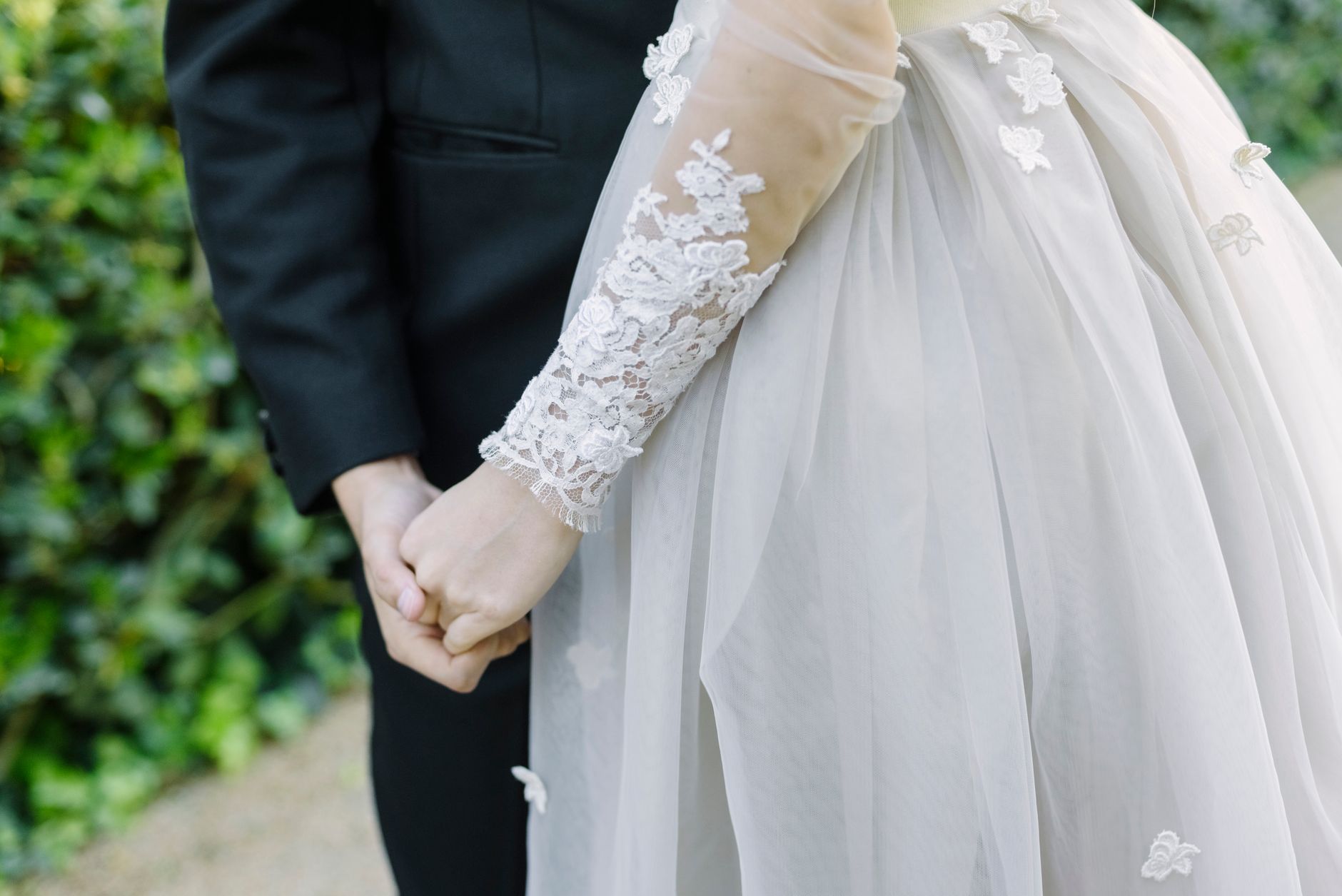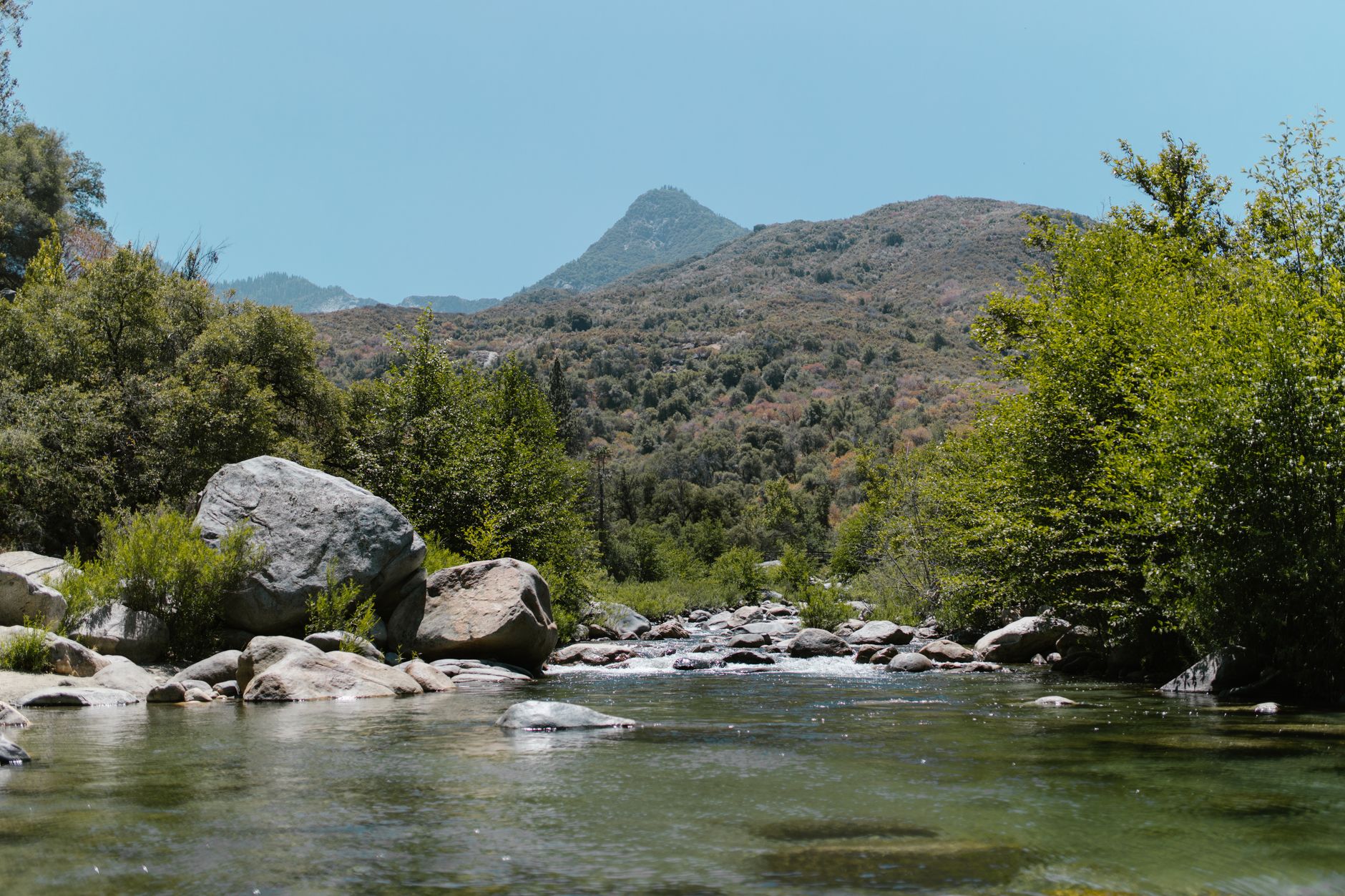
A wedding videographer at Triunfo Creek Vineyards plans coverage around the vineyard-row ceremony light that arrives between 4:00 and 6:00 PM, when the Santa Monica Mountains ridgeline casts shadows across the property and the remaining sun filters through the vines in long, low angles. This two-hour window defines the ceremony timing for couples who want the vineyard rows to appear golden rather than midday-flat in the wedding film, which is most couples who book Triunfo Creek specifically for the vineyard aesthetic rather than for a barn or garden alternative.
The property sits at 1,200 feet elevation in the western Santa Monica Mountains, 12 miles inland from Malibu and 40 minutes northwest of Beverly Hills. The vineyard rows run east-west, which means the late-afternoon sun strikes them lengthwise rather than head-on — a coverage advantage for a videographer, because the rows glow without the couple squinting into direct backlight during the processional. A 2-shooter video team at Triunfo Creek typically positions one camera at the altar facing the vineyard aisle and one camera on the ridgeline path above the ceremony site to capture the full property context and the mountain backdrop that defines the venue.
Why Triunfo Creek Vineyards Films Differently Than a Coastal Terrace Venue
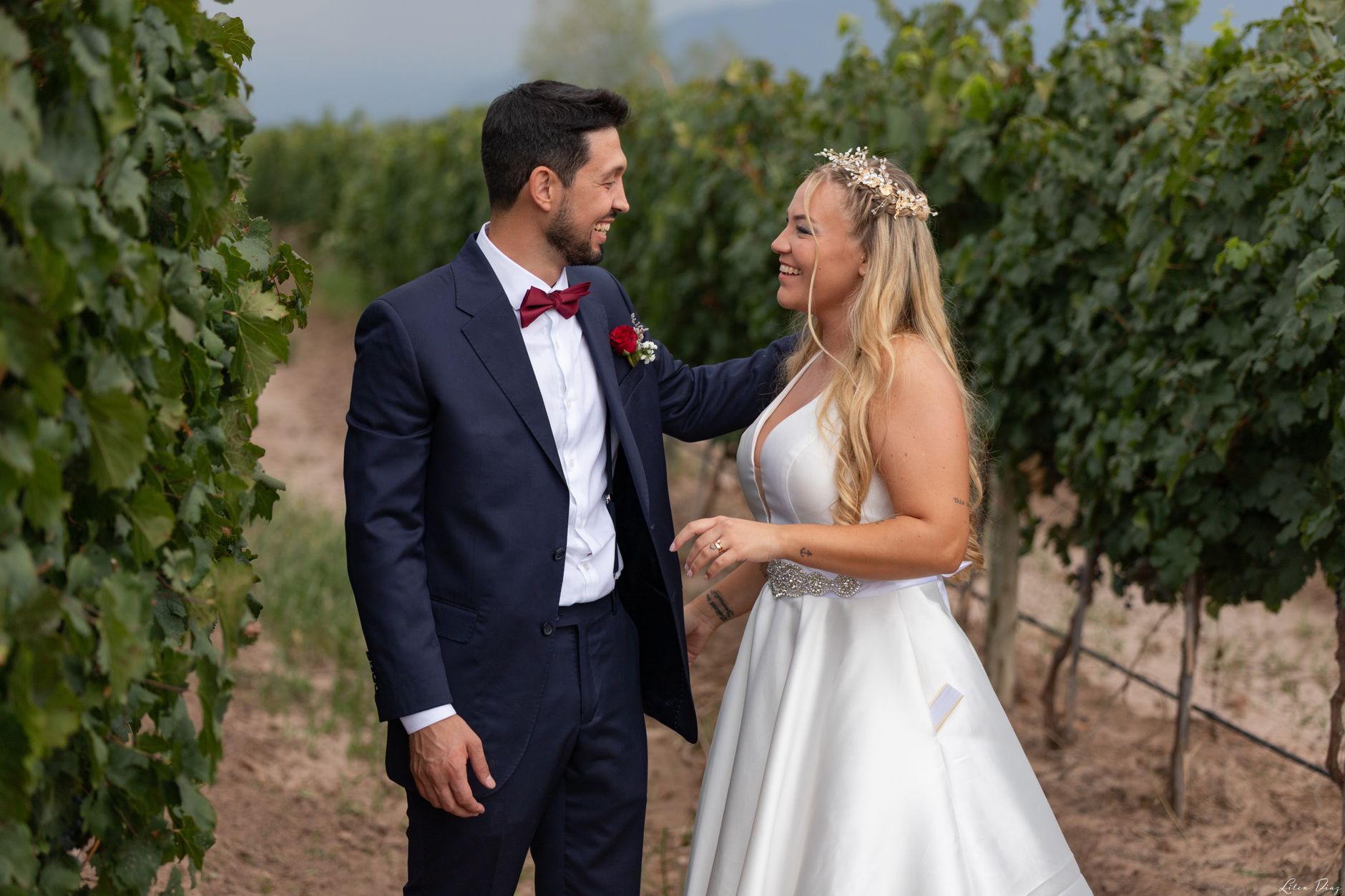
Photo by Lilen Diaz on Pexels
Triunfo Creek is inland, elevated, and surrounded by chaparral-covered mountains rather than ocean or manicured lawns. The light is drier and harder than at coastal venues like Bel-Air Bay Club or Terranea Resort, which means the videographer's white-balance and exposure strategy shifts toward warmer tones and deeper shadow contrast. The ceremony typically takes place on a crushed-gravel aisle between two vineyard blocks, with the Santa Monica Mountains ridgeline visible behind the altar — a composition that reads as California wine country rather than California coast.
The reception moves indoors to the barrel room or outdoor to the winery courtyard, depending on guest count and season. The barrel room is a working winery space with concrete floors, steel fermentation tanks, and oak barrels stacked along the walls — industrial-rustic rather than ballroom-formal. The space has no natural light after sunset, so the videographer relies on string lights, uplighting from the florist, and practicals (candles, Edison bulbs) to build the scene. Couples who prioritize a soft, romantic reception aesthetic often add market lights or cafe string above the long tables; couples who lean editorial-modern tend to leave the industrial elements exposed and light the room with fewer, more dramatic sources.
The property has no hotel rooms, no bridal suite, no lawn games, and no pool — it is a winery first and a wedding venue second. This means the coverage plan is tighter and more focused than at a resort like Ojai Valley Inn or San Ysidro Ranch, where the videographer might capture getting-ready scenes across multiple rooms or film a first look on a private terrace. At Triunfo Creek, the couple typically gets ready off-site (often at a nearby Airbnb or hotel in Malibu) and arrives at the venue 90 minutes before the ceremony for portraits in the vineyard rows. The videographer's timeline reflects this: less getting-ready coverage, more vineyard portrait coverage, and a concentrated 6–8 hours of on-site filming rather than a full-day resort package.
Vineyard-Row Coverage and Ridgeline Camera Angles

Photo by Francesco Ungaro on Pexels
The vineyard rows are the primary visual anchor for the ceremony film. A wedding videographer at Triunfo Creek walks the rows the morning of the wedding (or during a site visit weeks earlier) to identify which rows will be backlit rather than side-lit at the planned ceremony time, which rows have the cleanest sightlines to the altar, and which rows are accessible for a handheld moving shot during the processional.
The ridgeline path that runs along the western edge of the property offers an elevated vantage point 40 feet above the ceremony site. From this angle, the videographer can capture the full vineyard grid, the mountain backdrop, and the guest seating layout in a single wide frame — a shot that establishes the venue's scale and geography in the opening minute of the wedding film. This angle is especially effective during the processional, when the bride walks the gravel aisle and the camera on the ridgeline tracks her movement through the vineyard rows without obstruction.
A 2-shooter video team at Triunfo Creek typically assigns one videographer to the ridgeline for the processional and vows, while the second videographer remains at ground level to capture close-up reactions — the parent who reaches for a tissue during the reading, the couple's hands during the ring exchange, the groom's expression when he first sees the bride at the top of the aisle. The ground-level videographer moves between the front row of guest seating and the side of the altar, staying low and mobile to avoid blocking sightlines while still capturing intimate moments within arm's reach of the couple.
Ceremony Timing and the Ridgeline Shadow Sweep
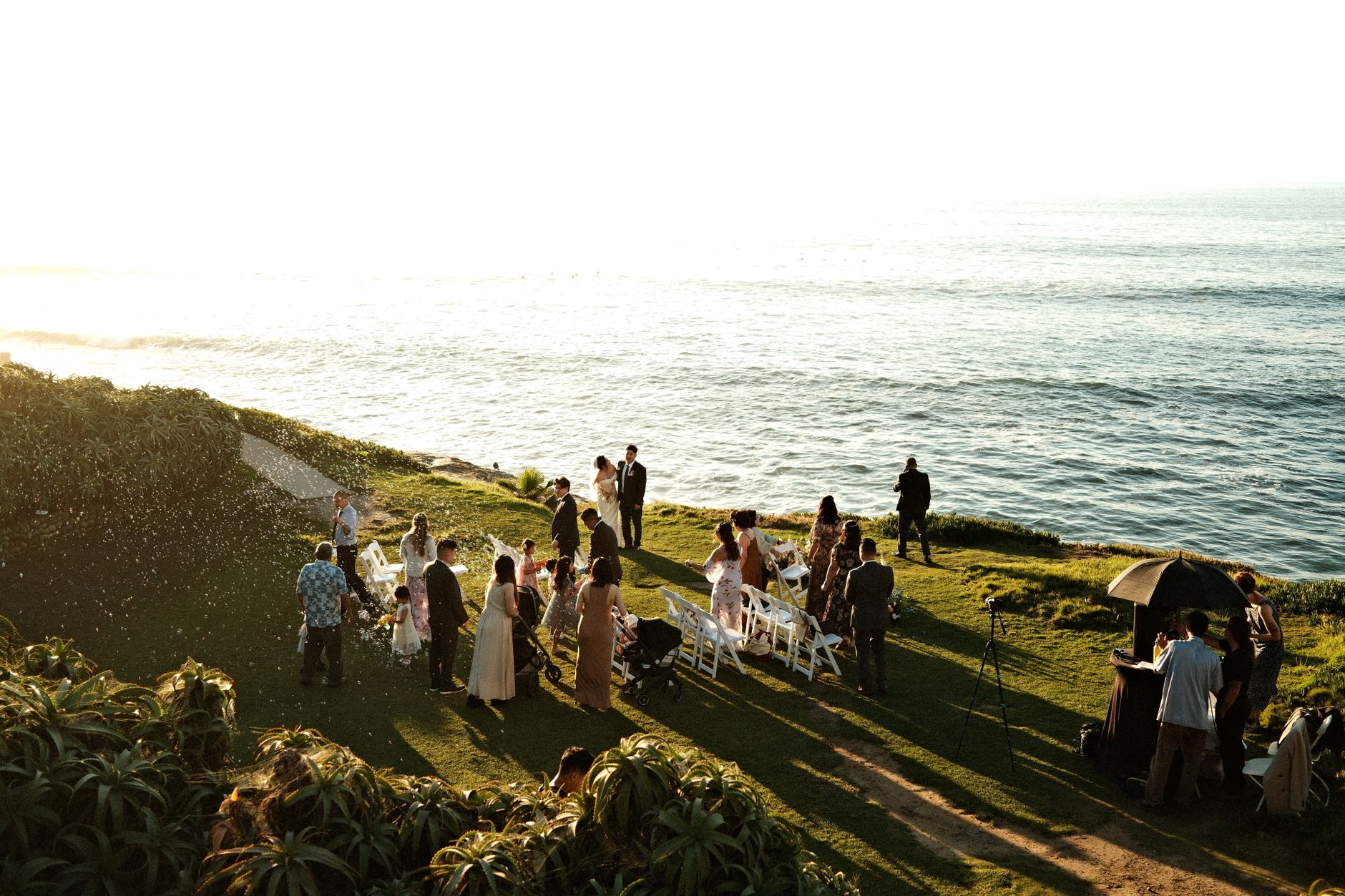
Photo by Umay Isik on Pexels
The ridgeline shadow sweeps across the vineyard rows between 5:30 and 6:15 PM in late spring and summer, and between 4:00 and 4:45 PM in fall and winter. Couples who want the ceremony filmed in full sun rather than in shade typically start the processional 60 minutes before the shadow reaches the altar — which means a 4:30 PM ceremony in June or a 3:00 PM ceremony in November.
The shadow sweep itself is cinematic: the ridgeline casts a sharp diagonal line across the vineyard that moves visibly during a 30-minute ceremony, so the first dance or the cocktail hour filmed 45 minutes after the recessional will appear in a completely different light quality than the processional. A videographer who has filmed at Triunfo Creek multiple times will plan the couple portraits and the first look to occur in the 90 minutes before the shadow arrives, when the vineyard rows are still in full sun and the couple's faces are evenly lit rather than half in shadow.
The wind is another coverage variable. Triunfo Creek sits on an exposed ridgeline with no windbreak trees, so afternoon winds of 10–15 mph are common in spring and fall. The videographer's audio strategy accounts for this: lapel mics on both the bride and groom (not just the groom), a shotgun mic on the officiant, and a backup recorder placed near the altar as insurance against wind noise that can overwhelm a single lapel mic in gusts. Vows filmed at Triunfo Creek often include audible wind in the background — not disruptive, but present — which reads as authentic outdoor ceremony sound rather than controlled indoor acoustics.
Barrel-Room Reception and String-Light Coverage Strategy
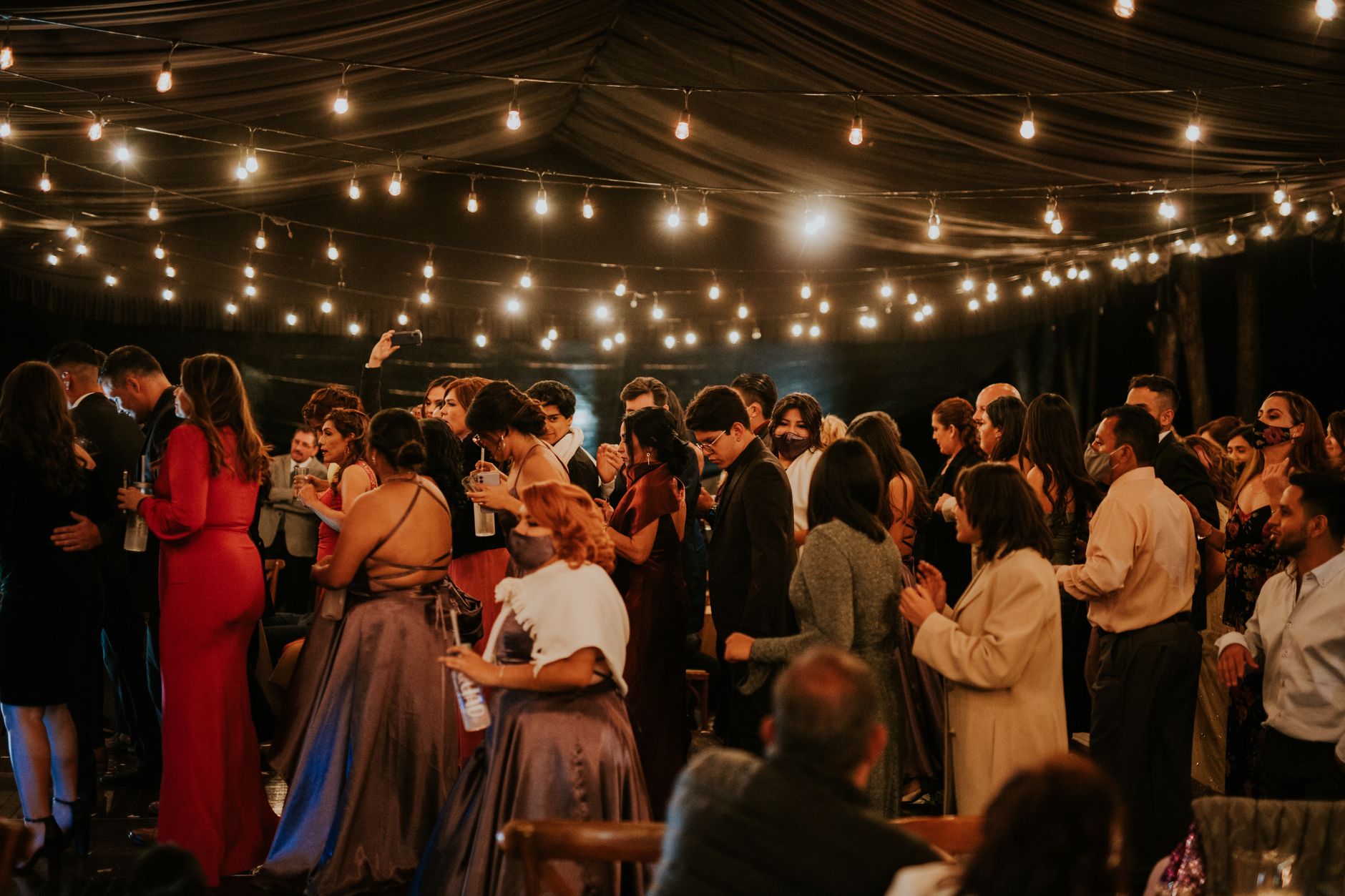
Photo by Amar Preciado on Pexels
The barrel room is a rectangular space with 18-foot ceilings, concrete floors, and no windows. The room accommodates 120 guests at long farm tables or 100 guests at round tables, depending on the layout. The default overhead lighting is minimal — a few industrial pendants and wall sconces — so the room requires supplemental lighting from the couple's rentals (string lights, uplighting, candles) to film well after dark.
A wedding videographer at Triunfo Creek works with the couple's planner and lighting designer (if one is hired) to identify where the string lights will be installed and where the uplighting will be positioned, because these practicals become the primary light sources in the reception film. The videographer does not bring cinema lights or LED panels into the barrel room — the aesthetic is candlelit and intimate, not broadcast-lit — so the camera's ISO is pushed to 3200 or 6400 to capture the dim ambient light without adding artificial sources that would flatten the mood.
The toasts, the first dance, and the cake cutting are typically filmed in the barrel room under string lights. The videographer positions one camera on a tripod at the back of the room to capture wide establishing shots of the space and the guest tables, and one handheld camera close to the couple during the first dance to capture their expressions and the movement of the bride's dress under the string-light glow. The handheld camera stays within 6 feet of the couple during the dance, using a 35mm or 50mm prime lens at f/1.4 to separate the couple from the background and render the string lights as soft bokeh rather than sharp points.
Photo + Video Coordination in the Vineyard Rows
Couples who book both documentary photography and a wedding film at Triunfo Creek need a portrait timeline that allows the photographer and videographer to work the same vineyard rows without competing for the same sightline. The standard coordination approach is a 20-minute photographer-only portrait session in the vineyard rows immediately after the ceremony, followed by a 10-minute videographer-only movement sequence (the couple walking between the rows, the bride adjusting her veil, the groom pouring wine at the tasting bar) that the photographer observes but does not shoot.
The videographer's movement sequence is slower and more directed than the photographer's portrait session. The couple is asked to walk a specific row at a specific pace while the videographer films from behind, from the side, and from the front, using a gimbal stabilizer to smooth the handheld motion. This sequence typically produces 30–60 seconds of footage in the final wedding film — the couple moving through the vineyard at golden hour, the camera gliding alongside them — but requires 10 minutes of on-site time to capture multiple takes and angles.
The vineyard portrait session is also when the videographer captures the couple's audio vows (if they wrote personal vows that were not spoken aloud during the ceremony) or a brief interview segment ("What was the first moment you saw each other today?" "What are you most looking forward to at the reception?"). These audio clips are recorded with the couple standing still in the vineyard rows, using lapel mics rather than the camera's onboard mic, and edited into the wedding film as voiceover during the portrait or reception montage.
Full-Day Coverage vs Ceremony-and-Reception Packages
A full-day wedding film at Triunfo Creek includes 8–10 hours of coverage from getting-ready through the last dance, delivered as a 12–18 minute highlight film and a separate full-ceremony edit. A ceremony-and-reception package includes 6 hours of coverage starting 90 minutes before the processional, delivered as an 8–12 minute highlight film and full-ceremony edit. The difference is getting-ready coverage and extended cocktail-hour footage — scenes that add context and emotional buildup to the wedding film but are not essential to the ceremony and reception narrative.
Most couples who book Triunfo Creek choose the ceremony-and-reception package rather than full-day coverage, because the venue does not offer on-site getting-ready suites and the couple typically gets ready at a separate location (often a Malibu hotel or Airbnb) that is 20–30 minutes from the winery. The videographer's travel time between the getting-ready location and the vineyard adds logistical complexity and cost, so couples who prioritize vineyard and reception coverage over getting-ready coverage tend to allocate their budget toward the 6-hour package and skip the morning scenes.
Couples who do book full-day coverage often get ready at a Malibu property within 15 minutes of Triunfo Creek — close enough that the videographer can film the bride's final dress moments, drive to the venue, and be in position on the ridgeline 20 minutes before the processional without requiring a second shooter to hold the ceremony coverage. This coordination requires precise timeline planning with the couple's planner, because a 10-minute delay in the getting-ready schedule can cascade into the videographer arriving at the vineyard after the processional has started.
Multi-Day Weddings and Rehearsal Dinner Film
Triunfo Creek does not host rehearsal dinners or welcome parties on-site, but couples planning a multi-day wedding weekend in the Malibu area sometimes book a separate engagement film or rehearsal dinner coverage at a nearby location — often a private estate in the Santa Monica Mountains or a beach house in Point Dume. The rehearsal dinner film is typically a 3–5 minute short edit that captures toasts, candid moments, and the couple's interaction with family and close friends, delivered as a standalone piece separate from the wedding day film.
The rehearsal dinner coverage is filmed by a single videographer (not a 2-shooter team) and runs 2–3 hours, starting at the cocktail hour and ending after the final toast. The footage is edited in the same cinematic style as the wedding film — handheld movement, natural light, audio from the toasts and ambient conversation — but with a tighter runtime and a faster turnaround (often delivered within 4 weeks rather than the 10–12 week standard for a full wedding film).
What to Expect in the First 60 Days After Booking
Once a couple books a wedding videographer for Triunfo Creek, the first planning step is a venue walkthrough — either in person (if the couple is local to Los Angeles) or via a detailed shot list and timeline discussion over video call. The videographer walks the couple through the coverage plan for the vineyard rows, the ridgeline camera angle, the barrel-room lighting strategy, and the portrait timeline coordination with the photographer.
The couple is asked to provide a rough ceremony timeline (processional start time, ceremony duration, cocktail hour location) and a rough reception timeline (first dance, toasts, cake cutting, last dance) so the videographer can map the coverage hours and identify any gaps or overlaps with the photographer's schedule. The videographer also asks whether the couple plans to write personal vows, whether they want an audio interview segment filmed in the vineyard, and whether they want the rehearsal dinner or a next-day brunch session added to the package.
The couple receives a final shot list and timeline confirmation 30 days before the wedding, followed by a final walkthrough call 7 days before the wedding to confirm any last-minute changes to the ceremony start time, the reception layout, or the portrait session logistics. The videographer arrives at Triunfo Creek 90 minutes before the ceremony to walk the vineyard rows, test the ridgeline camera angle, and coordinate with the photographer and planner on the portrait timeline.
Editing Timeline and Deliverables
The wedding film edit is delivered 10–12 weeks after the wedding date. The deliverable package includes a 12–18 minute cinematic highlight film (full-day coverage) or an 8–12 minute highlight film (ceremony-and-reception coverage), a full-ceremony edit (uncut, with processional, vows, readings, and recessional), and a digital download link for all edited files in 1080p and 4K resolution.
The highlight film is structured as a narrative arc: the film opens on the vineyard portrait session or the processional, builds through the ceremony vows and the couple's reactions, peaks at the first dance or the toasts, and closes on the last dance or a quiet exit moment. The full-ceremony edit is presented as a standalone chapter, not integrated into the highlight film, so the couple can share the full ceremony with family members who could not attend without requiring them to watch the entire 12-minute highlight reel.
The editing style is documentary-cinematic: handheld camera movement, natural light, ambient audio from the ceremony and reception, and minimal use of slow motion (reserved for the processional, the first kiss, and the first dance). The color grade is warm and filmic, matching the golden-hour vineyard light and the candlelit barrel-room aesthetic. The audio mix prioritizes the couple's vows, the toasts, and the ambient sounds of the vineyard (wind, footsteps on gravel, laughter during cocktail hour) over a continuous music bed.
Regional Context — Malibu and Santa Monica Mountains Venues
Triunfo Creek Vineyards is one of three vineyard wedding venues in the Santa Monica Mountains, alongside Saddlerock Ranch (7 miles east, in the Malibu Wine Trail corridor) and Cielo Farms (9 miles southeast, near Westlake Village). All three venues share the inland-mountain light quality and the vineyard-row aesthetic, but Triunfo Creek is the smallest and most intimate — it accommodates 120 guests maximum, compared to Saddlerock's 250-guest capacity and Cielo's 300-guest capacity.
Couples choosing between Triunfo Creek and Saddlerock often prioritize size and exclusivity: Triunfo Creek feels private and undiscovered, while Saddlerock feels larger and more resort-like. Couples choosing between Triunfo Creek and coastal venues like Bel-Air Bay Club or Calamigos Ranch often prioritize vineyard rows over ocean views or oak groves — the vineyard aesthetic is specific and deliberate, not a fallback when a coastal terrace is unavailable.
The drive from Los Angeles (Beverly Hills or West Hollywood) to Triunfo Creek is 40–50 minutes via the 101 Freeway and Kanan Road, depending on traffic. The drive from Santa Monica or Brentwood is 35 minutes via Sunset Boulevard and Kanan Road. The venue is accessible but not convenient for guests staying in downtown Los Angeles or Orange County, so couples planning a Triunfo Creek wedding typically arrange shuttle transportation from a nearby Malibu hotel or provide detailed driving directions and parking instructions in the wedding weekend itinerary.
Begin a Conversation About Your Wedding at Triunfo Creek Vineyards
Coverage plans for vineyard weddings in the Santa Monica Mountains begin with the light — the time of day the ceremony starts, the angle of the ridgeline shadow, and the coordination between the vineyard portrait session and the reception timeline. A conversation about your wedding at Triunfo Creek starts with your ceremony timing, your guest count, and whether you want full ceremony coverage or a highlight reel that condenses the day into an 8–12 minute cinematic narrative. Reach out through the contact form to discuss your Triunfo Creek wedding film.