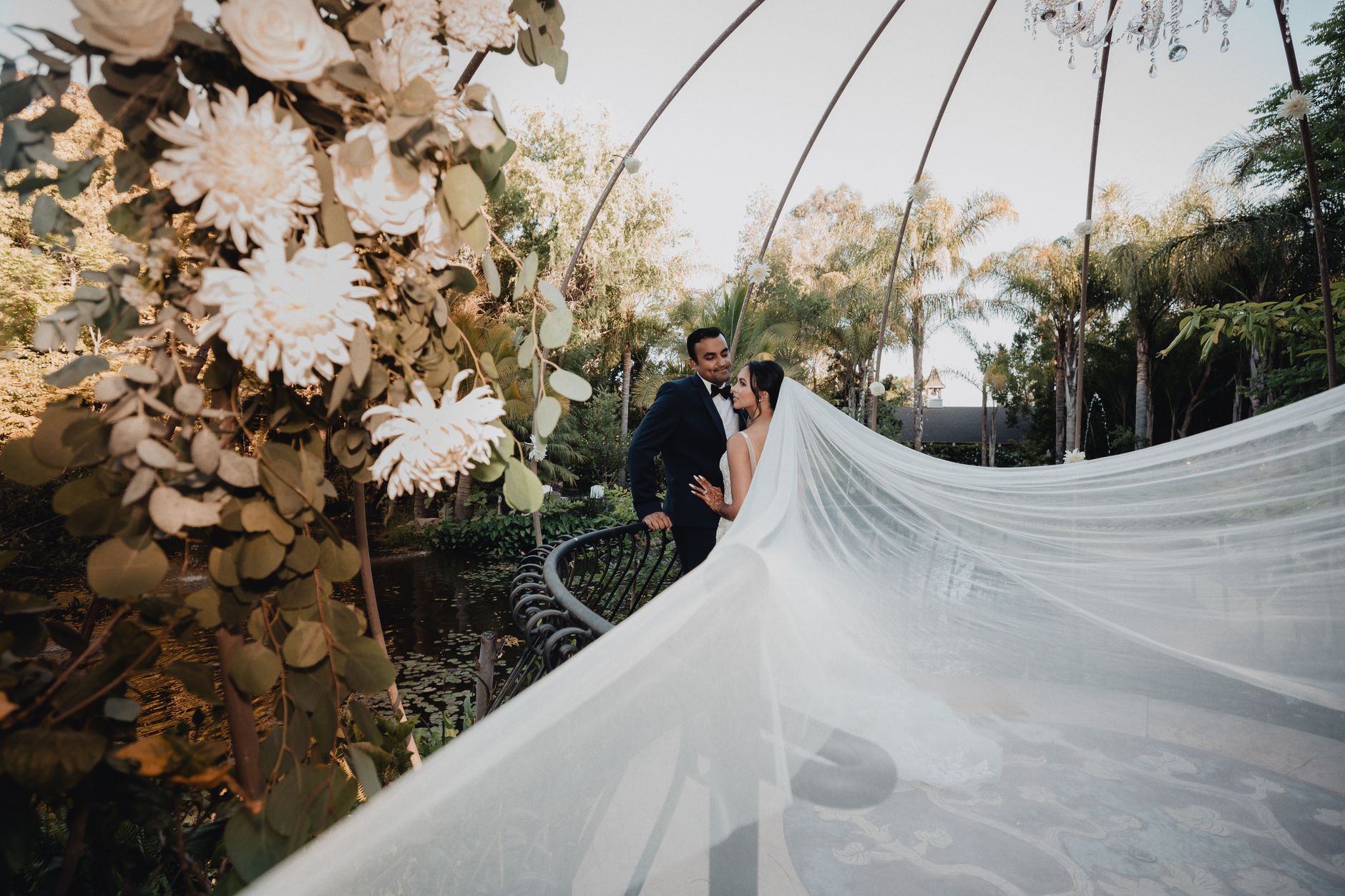
A wedding film at Saddlerock Ranch requires a 2-shooter video team to cover the vineyard ceremony at golden hour and the barn reception after dark. The 1,000-acre Malibu wine country estate sits at the convergence of three distinct visual zones — the terraced vineyard rows, the weathered-wood barn with Edison-bulb chandeliers, and the paddocks where zebras, camels, and Stanley the giraffe wander freely — and a videographer who hasn't walked the property before the ceremony will miss the 4:30pm window when the vineyard light goes amber and the Santa Monica Mountains cast long shadows across the vines.
Why Saddlerock Ranch Films Differently Than a Resort Ballroom
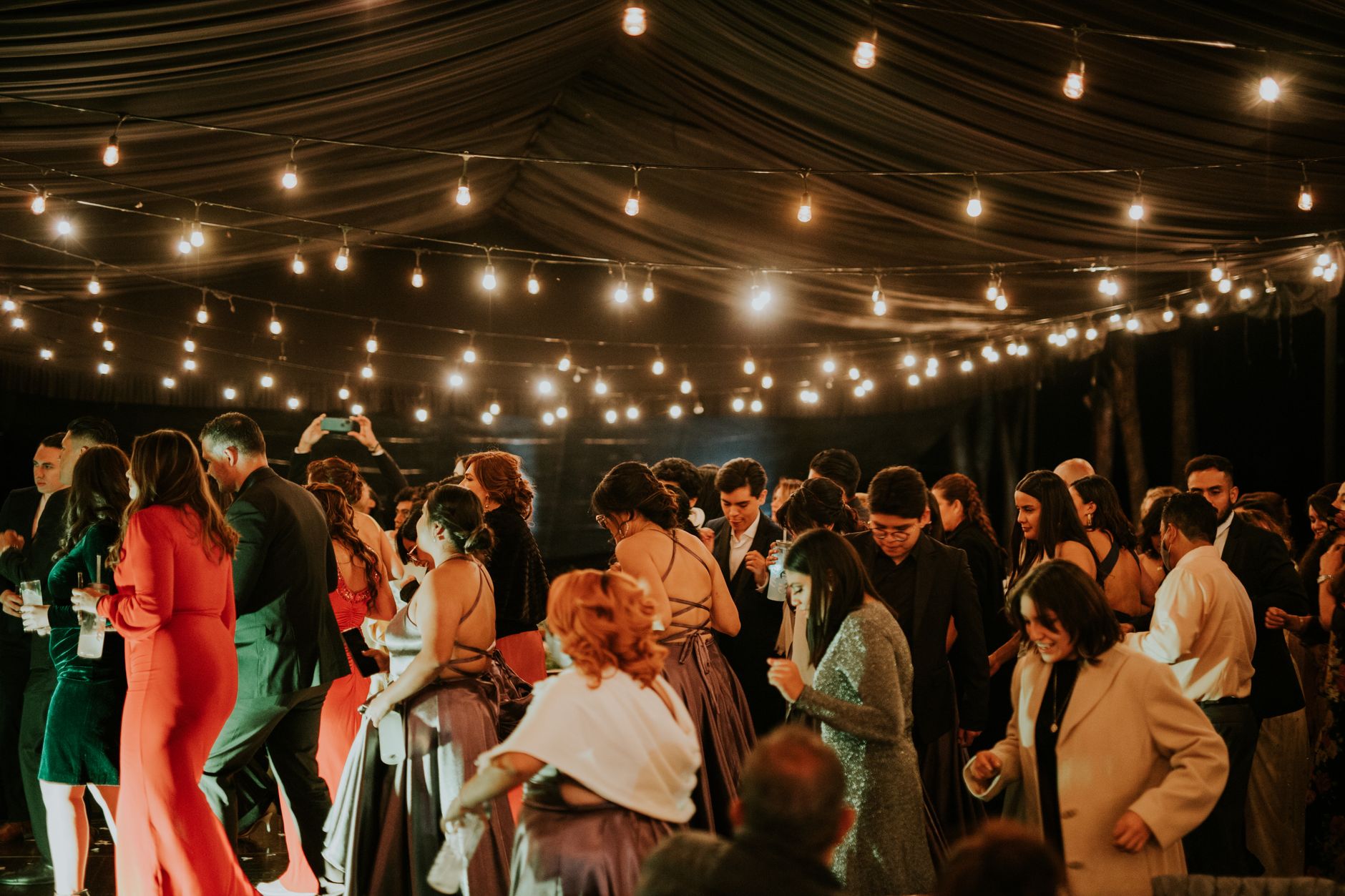
Photo by Amar Preciado on Pexels
The ranch operates as a working vineyard first and a wedding venue second, which means the coverage plan is shaped by agricultural rhythms rather than hotel service timelines. Harvest season runs August through October; if the wedding falls mid-September, the vineyard rows may be bare or the air heavy with fermentation from the crush pad a hundred yards uphill. The video frame either incorporates that context or works around it — there is no neutral backdrop here.
The ceremony site sits on the upper terrace overlooking the vineyard, exposed to full western sun from 2pm onward. Couples who schedule the processional for 5pm get the golden-hour gradient the ranch is known for; couples who start at 3pm get harsh overhead light that flattens facial features and requires the videographer to shoot tight on expressions rather than wide on landscape. A full-day wedding film at Saddlerock Ranch typically includes 10 hours of coverage from a 2-shooter video team to capture both the outdoor ceremony and the barn reception without a coverage gap during the venue transition.
The exotic animals are not props — they are residents with their own routines. Stanley the giraffe usually grazes near the lower paddock between 4pm and 6pm, which overlaps with the cocktail hour. Couples planning portrait coverage with the giraffe need to communicate that intent to the venue coordinator at least two weeks before the wedding day, because the ranch staff will position Stanley near the portrait zone only if requested in advance. A videographer who assumes the giraffe will appear on cue will lose the shot.
Vineyard Ceremony Coverage — Light, Sound, and the Mountain Backdrop
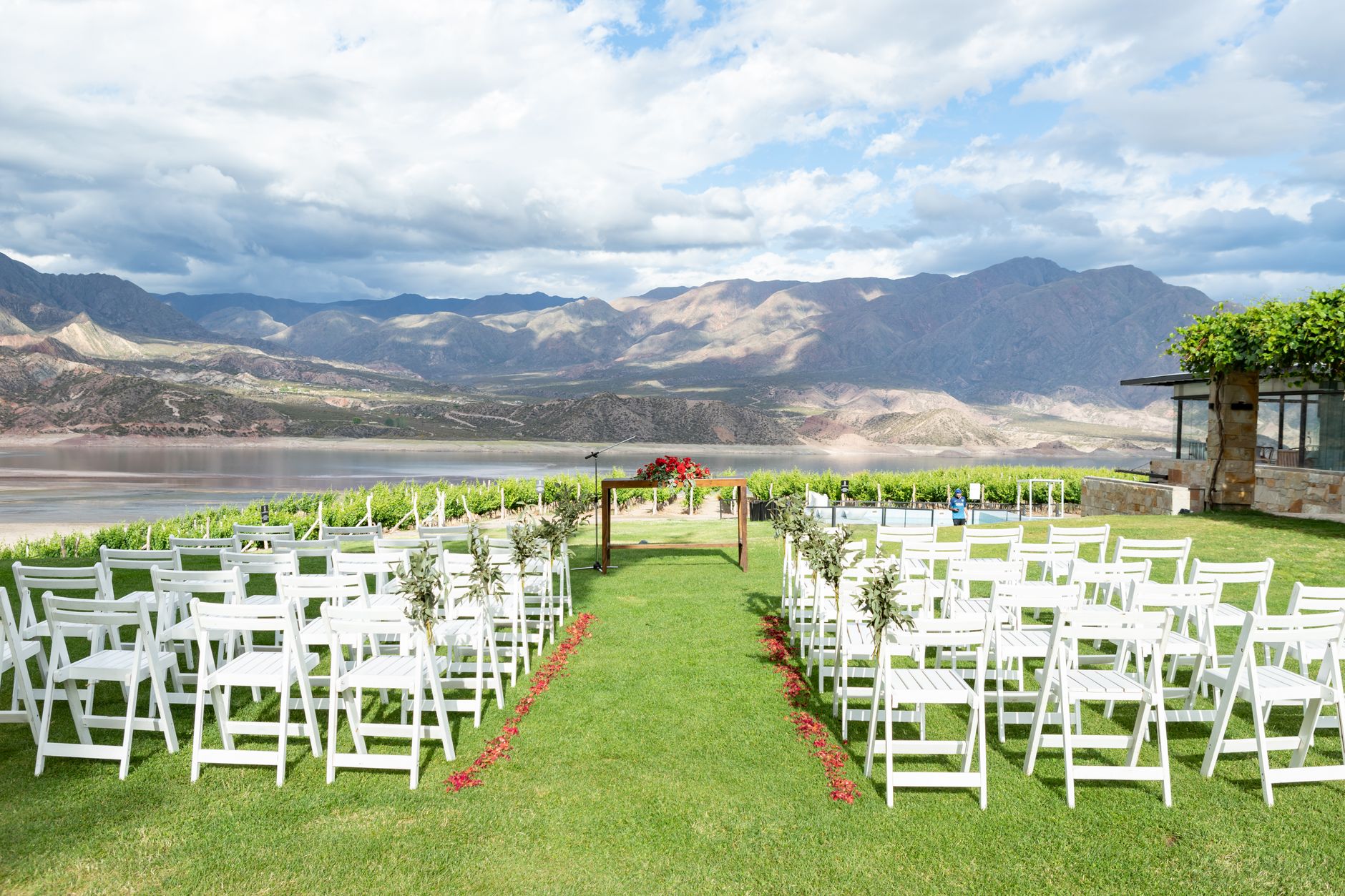
Photo by Lilen Diaz on Pexels
The vineyard terrace ceremony accommodates 150–200 guests on white folding chairs arranged in a semicircle facing west toward the Santa Monica Mountains. The officiant and couple stand at the terrace edge with the mountain ridge and vineyard rows as the backdrop, which means the videographer positions the primary camera to the side — not directly behind the last row of guests — to capture both the couple's expressions and the landscape in the same frame.
Audio is the first technical challenge. The terrace is open air with no natural sound barrier, so ambient noise from the nearby Kanan Dune Road and the occasional low-flying helicopter traveling between Malibu and the San Fernando Valley can intrude on the vows. A wireless lavalier microphone clipped to the officiant's lapel and a second lav on the groom's jacket are non-negotiable for a clean ceremony edit. The ranch does not provide a house sound system for outdoor ceremonies; couples who hire a DJ or band for the reception should confirm that the audio vendor will also mic the ceremony and provide a direct feed to the videographer.
Wind is the second variable. The Malibu hills funnel coastal breezes through the canyon, especially in late afternoon. If the ceremony begins at 5pm, the wind typically picks up by 5:30pm, lifting veils and flipping ceremony programs. The videographer shoots the processional and vows first, then captures the recessional and guest reactions as the wind builds. The edit reflects that progression — the early ceremony footage is still and composed, the later footage more kinetic.
The mountain backdrop changes color as the sun drops. At 5pm the ridge is a warm tan; by 6pm it shifts to purple-gray. A ceremony scheduled for 5:30pm places the vows at the exact moment the light goes amber and the mountains begin to silhouette, which is the frame couples associate with Saddlerock Ranch when they first tour the property. A ceremony scheduled for 4pm sacrifices that color shift but gains softer facial light and less wind.
Barn Reception — Edison Bulbs, Long Tables, and the Coverage Transition
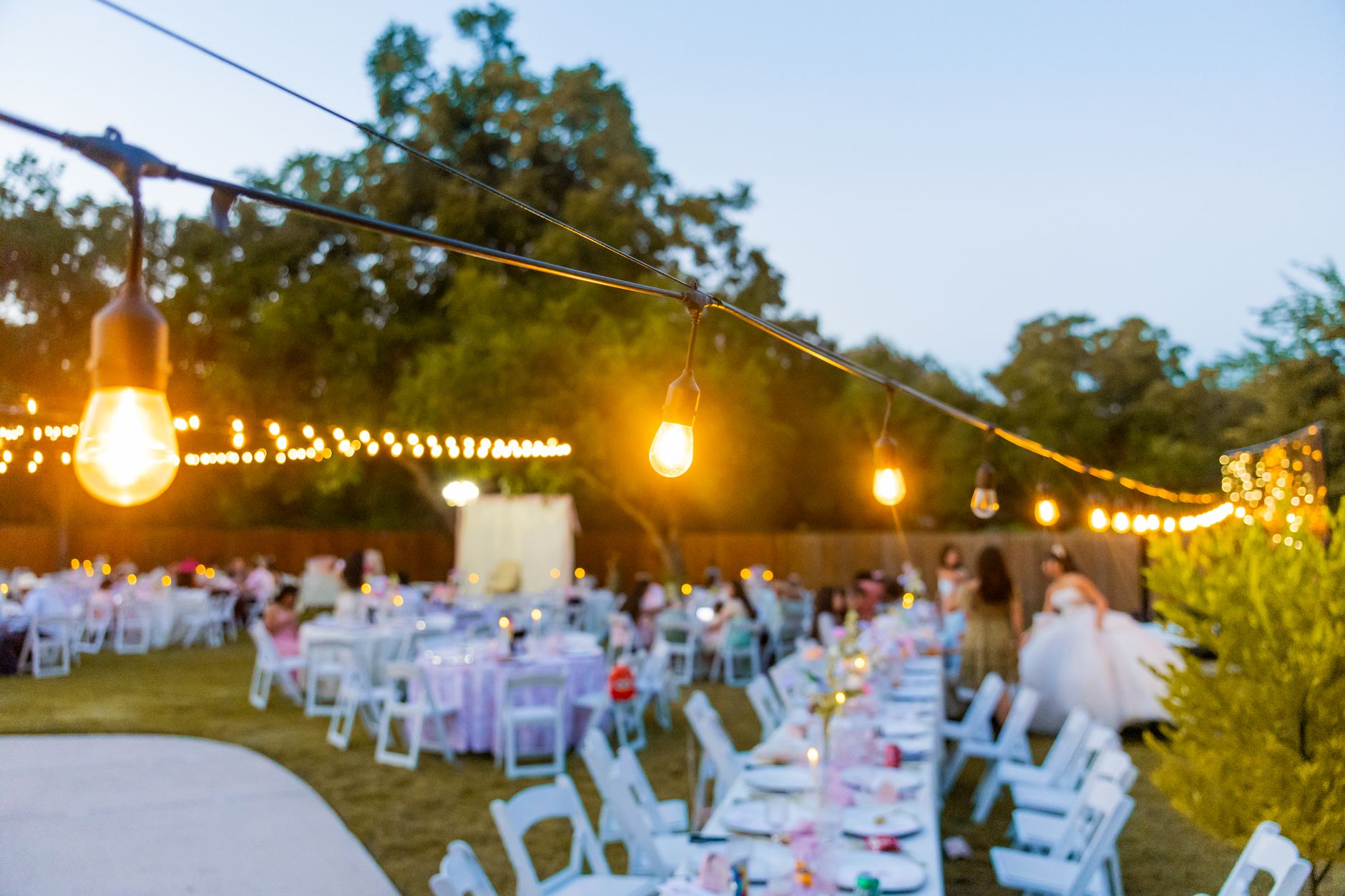
Photo by Caleb Oquendo on Pexels
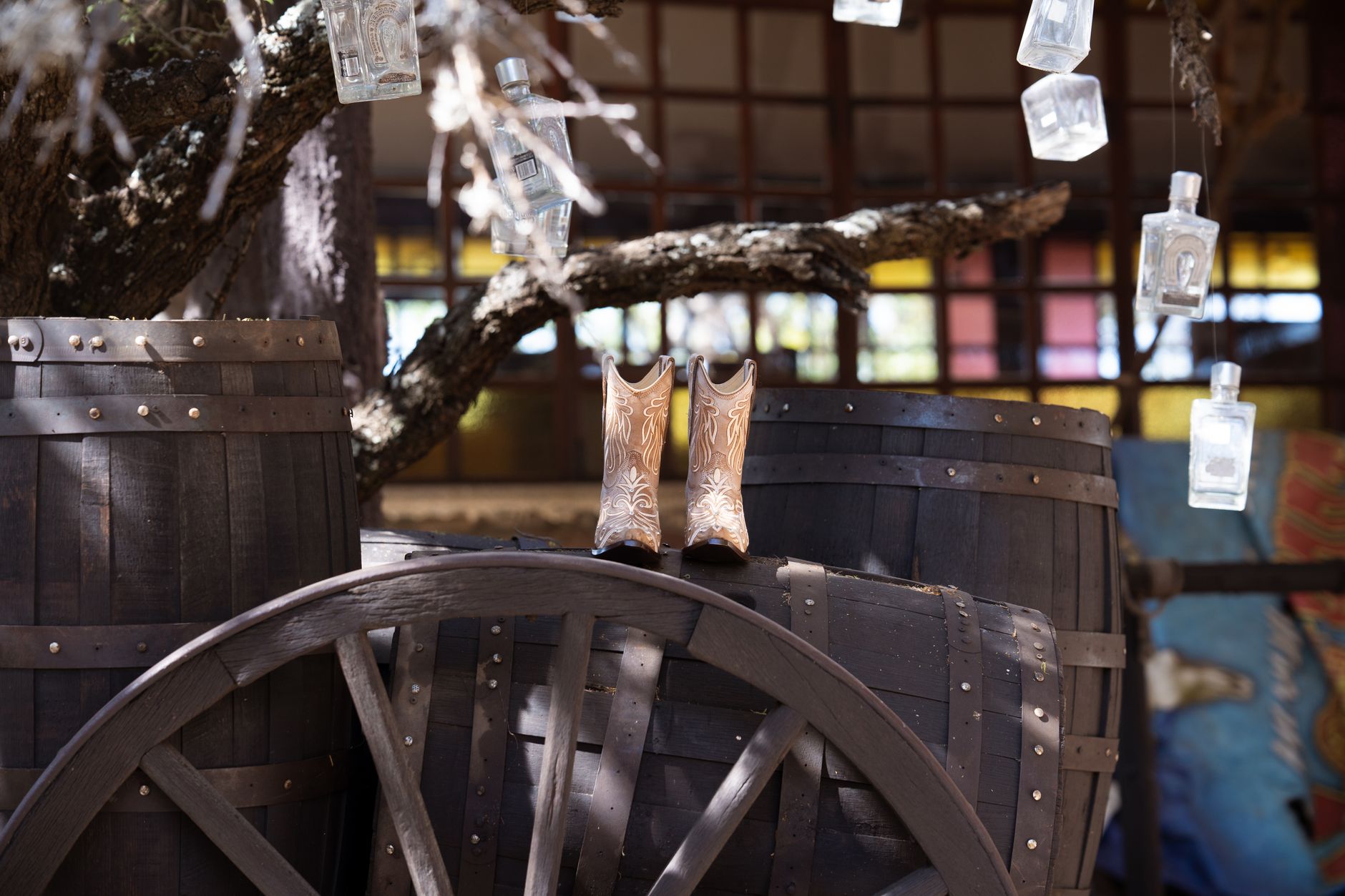
The barn sits downhill from the vineyard terrace, a five-minute walk on a dirt path that guests navigate after the ceremony. The structure is open-sided with a vaulted wood-beam ceiling strung with Edison-bulb chandeliers, long farmhouse tables instead of rounds, and a concrete floor that echoes. The space accommodates 200 guests at maximum capacity, though 150 is more comfortable.
The videographer arrives at the barn during cocktail hour to capture establishing shots before guests enter — the Edison bulbs glowing against the twilight sky, the long tables set with candles and greenery runners, the DJ booth or band setup in the north corner. Once guests are seated, the ambient noise level rises sharply. The concrete floor and open sides amplify conversation, silverware, and chair scraping, which means toast audio requires the same wireless-lav discipline as the ceremony. The best man and maid of honor each wear a lav, and the DJ provides a direct audio feed from the house microphone to the videographer's recorder.
First dance, parent dances, and cake cutting are staged at the center of the barn under the brightest cluster of Edison bulbs. The videographer shoots these moments from two angles — one wide from the barn entrance to show the full space and guest circle, one tight from the side to isolate the couple's expressions. The edit intercuts between the two.
Dancing begins around 8:30pm, after toasts and dinner. The Edison bulbs provide ambient light but not enough fill for clean wide shots of the dance floor. The videographer uses an on-camera LED panel set to 3200K to match the tungsten bulbs, positioned high and to the side to avoid casting hard shadows on dancers' faces. The panel is visible in some frames — a small circle of white light in the upper corner — but without it the dance-floor footage underexposes and the edit loses energy.
Exotic Animal Moments — When and How the Giraffe Appears
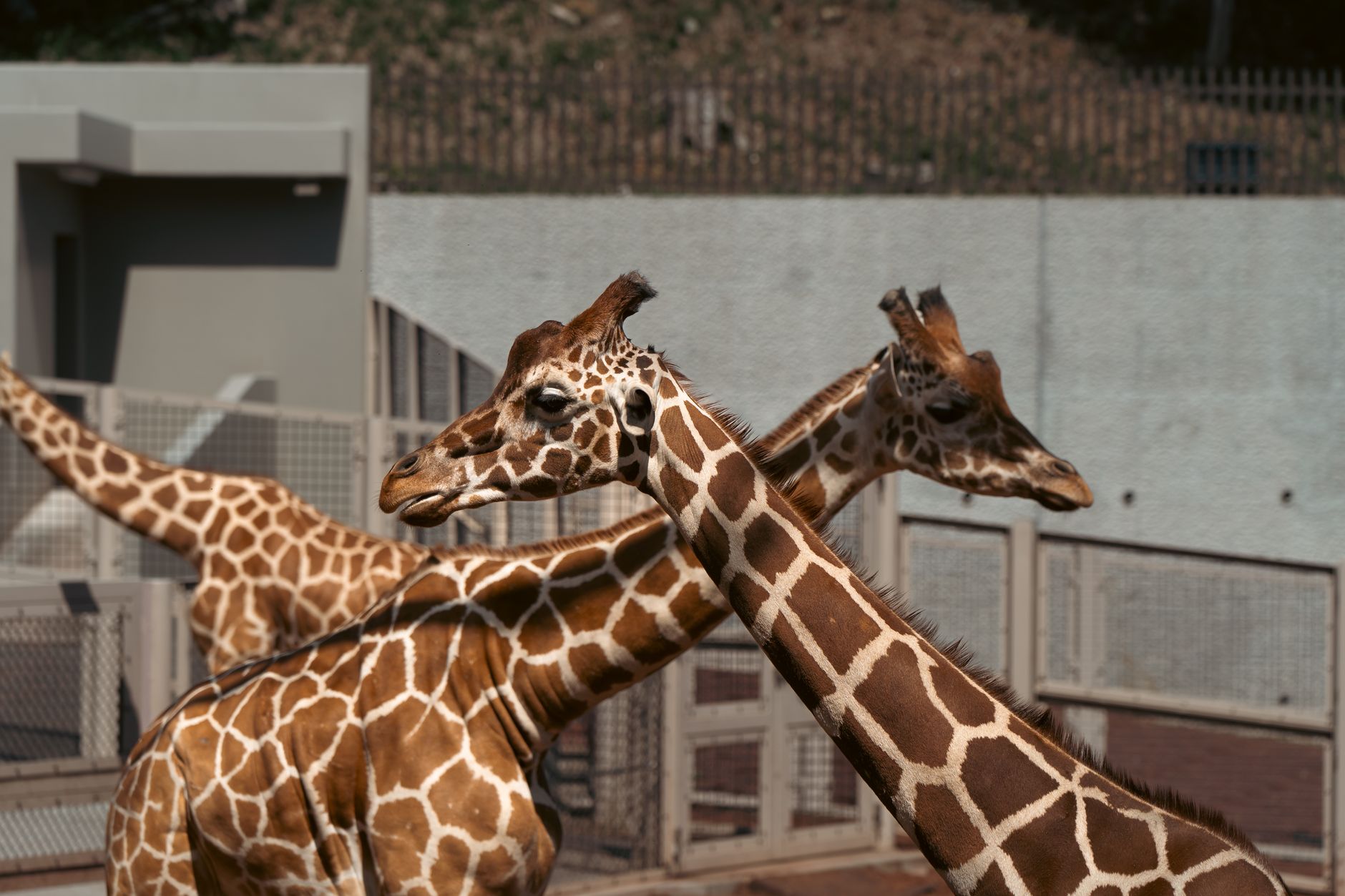
Photo by Iban Lopez Luna on Pexels
Stanley the giraffe, the ranch's most photographed resident, grazes in the lower paddock adjacent to the cocktail hour lawn. The venue coordinator can position Stanley near the fence line for portrait sessions if requested in advance, but Stanley is not led or directed — he either approaches the fence or he doesn't. Couples who want giraffe footage in the wedding film should schedule 20 minutes of portrait time during cocktail hour, when Stanley is most likely to be near the fence and the light is still usable.
The videographer captures the interaction in two passes: a wide shot showing the couple at the fence with Stanley's head and neck in frame, and a tight shot on the couple's reaction — laughter, surprise, the bride reaching up to touch Stanley's muzzle. The edit uses the wide shot to establish context and the tight shot to land the emotional beat. The moment plays for 8–12 seconds in the final film; anything longer and the novelty flattens.
The other animals — zebras, miniature horses, a camel, alpacas — roam the paddocks throughout the day and occasionally appear in the background of vineyard ceremony footage. The videographer does not stage interactions with these animals; they are environmental texture, not focal points. A zebra grazing in the mid-distance during the processional adds a surreal editorial note to the frame; a zebra blocking the aisle would require the venue coordinator to intervene before the ceremony begins.
Photo + Video Coordination at a Multi-Zone Estate
Saddlerock Ranch's layout — vineyard terrace, barn, paddocks, crush pad, oak grove, hilltop overlook — offers more portrait backdrops than most couples have time to use. A typical wedding timeline allocates 45 minutes for portraits between the ceremony and reception, which is enough time to cover three locations if the photographer and videographer coordinate their shot lists in advance.
The Photo + Video Combined Package structures portrait coverage so the photographer and videographer work the same location simultaneously rather than splitting the couple between two zones. At Saddlerock Ranch, the sequence typically runs: 10 minutes at the vineyard rows for wide landscape shots, 15 minutes at the barn entrance for architectural frames, and 20 minutes at the giraffe paddock for the animal interaction and golden-hour portraits. The videographer captures the photographer directing the couple — the adjustment of a veil, the repositioning of hands, the moment the couple breaks into laughter between setups — which becomes part of the wedding film edit and shows the collaboration rather than hiding it.
Couples who book photo and video separately need to provide both vendors with a shared timeline document at least two weeks before the wedding day. The timeline specifies which vendor has the couple's attention during each portrait block and which vendor is capturing B-roll or guest coverage. Without that coordination, the photographer and videographer will compete for the same moments, and the couple will feel pulled in two directions during the portrait window.
Coastal Classic and Garden Romantic Couples at Saddlerock Ranch
The ranch draws two primary couple aesthetics. Coastal classic couples gravitate toward the vineyard ceremony and barn reception as a wine-country alternative to a resort ballroom — they want the elevated rusticity of long tables and Edison bulbs paired with the formality of a plated dinner and a live band. Their wedding film emphasizes the architecture and landscape: the barn silhouetted at dusk, the vineyard rows in geometric perspective, the mountains backlit at golden hour.
Garden romantic couples treat the ranch as an elevated farm setting and lean into the pastoral elements — wildflower centerpieces, loose greenery runners, the exotic animals, and the surrounding oak trees. Their wedding film foregrounds intimate moments and organic interactions: the bride petting Stanley during portraits, the flower girl chasing a chicken near the barn, the couple walking hand-in-hand through the vineyard at twilight. The edit is softer, the pacing slower, the color grade warmer.
Both aesthetics require the same technical coverage — ceremony audio, barn reception lighting, portrait-window coordination — but the edit tone shifts based on what the couple responds to during the planning conversation. A videographer who assumes every Saddlerock Ranch wedding wants the same cinematic wide shots will deliver a film that feels generic rather than authored.
Full Ceremony Coverage and Edit Turnaround
The Full Ceremony Coverage deliverable at Saddlerock Ranch includes the processional, readings, vows, ring exchange, and recessional edited as a continuous sequence without music underlay — only the live audio from the lavalier microphones and ambient sound. For couples with religious or multicultural ceremonies that include specific rituals, this version preserves the words and sequence exactly as spoken.
The ceremony-only edit delivers in 6–8 weeks. The full wedding film — ceremony, portraits, toasts, first dance, reception highlights — delivers in 10–12 weeks. Couples planning a Saddlerock Ranch wedding in peak season (May through October) should expect the longer end of that range, as the edit queue fills with back-to-back weekend coverage.
Rush delivery is available for an additional fee if the couple needs the film before the standard turnaround — for example, to screen at a post-wedding brunch or to share with elderly family members who could not travel. Rush edits move to the front of the queue and deliver in 4–6 weeks, but the editor cannot begin work until all raw footage is reviewed and the shot list is complete, which takes 7–10 days after the wedding date.
Documentary Photography vs Editorial Photography at the Ranch
The ranch's working-vineyard context suits documentary photography — unposed moments, environmental portraits, and the spontaneous interactions that happen when guests wander the property during cocktail hour. A documentary approach captures the guest feeding a carrot to the miniature horse, the groomsmen exploring the crush pad, the grandmother resting in the shade of the oak grove. These frames are narrative rather than composed.
Editorial photography at Saddlerock Ranch emphasizes the designed elements: the long tables styled with runner and candlelight, the bride's silhouette against the barn at dusk, the couple framed by vineyard rows in perfect symmetry. Editorial frames are art-directed and intentional, requiring the photographer to control the composition, lighting, and styling. Both approaches can coexist in the same wedding-day coverage, but the photographer needs to know which aesthetic the couple prioritizes before the timeline is finalized.
Editorial portraits require more time — 60–90 minutes instead of 45 — because the photographer will reposition the couple multiple times to find the frame. Documentary portraits happen faster, often during transitions between ceremony and cocktail hour, and rely on available light rather than supplemental strobes.
Timeline Logistics — Ceremony Start Time and Cocktail Hour Placement
The single most consequential timeline decision at Saddlerock Ranch is the ceremony start time, because it determines the vineyard light quality, the portrait-window duration, and the barn reception entry moment. A 5pm ceremony places the vows at golden hour (5:30pm), portraits at twilight (6–6:45pm), and the barn reception entry at dusk (7pm). A 4pm ceremony sacrifices the amber vineyard light but gains a longer portrait window in full daylight.
Cocktail hour can be staged on the lower lawn near the giraffe paddock or under the oak grove adjacent to the barn. The lower lawn offers the animal interactions and open sky; the oak grove offers shade and proximity to the reception entrance. Couples who prioritize giraffe coverage choose the lower lawn and accept the five-minute uphill walk to the barn afterward. Couples who prioritize guest comfort and seamless transitions choose the oak grove and schedule giraffe portraits separately during the portrait window.
Sunset at Saddlerock Ranch varies by season: 7:45pm in June, 6:30pm in October. A videographer planning the coverage timeline cross-references the ceremony start time with the sunset hour to ensure the portrait window aligns with the best light. A 5pm ceremony in June leaves 2.5 hours of usable daylight for portraits and cocktail hour; a 5pm ceremony in October leaves less than 90 minutes.
Service Area — Malibu, Los Angeles, and Destination Coverage
LifeStory.Film is based in Los Angeles and covers Saddlerock Ranch weddings as part of the core Southern California service area. Travel to Malibu from the Los Angeles or Santa Monica studios takes 45–60 minutes depending on Pacific Coast Highway traffic; the team typically arrives at the ranch 90 minutes before the ceremony start time to walk the property, confirm audio setup with the DJ, and capture establishing shots of the vineyard and barn in pre-ceremony light.
For couples planning destination weddings at venues comparable to Saddlerock Ranch — working vineyards with architectural reception spaces and mountain or coastal backdrops — the destination wedding film service extends the same cinematic coverage approach to locations worldwide. Past destination projects have included vineyard estates in Tuscany, coastal terraces on the Amalfi Coast, and alpine resorts in the French Alps. The team travels with the same 2-shooter video setup used at Saddlerock Ranch, ensuring visual and editorial consistency across geographies.
Couples booking LifeStory.Film for a Saddlerock Ranch wedding receive a coverage proposal that specifies the shooter count (2-shooter video + 2-shooter photo for combined packages), the timeline recommendations based on ceremony start time and season, and the deliverables schedule. The proposal is tailored to the specific wedding date, guest count, and aesthetic priorities discussed during the initial planning conversation.
When to Book and How Far in Advance
Saddlerock Ranch wedding dates book 12–18 months in advance, especially for Saturday evenings in May, June, September, and October. Couples who have reserved their date with the venue should begin the videographer search immediately, as the best editorial wedding film teams in Los Angeles also book on a 12-month lead time for peak-season Saturdays.
Booking LifeStory.Film requires a signed contract and a 30% deposit, which reserves the wedding date exclusively. The remaining balance is due 30 days before the wedding. Couples who book 6–9 months before the wedding date may find availability for Friday or Sunday coverage, but Saturday availability for Saddlerock Ranch in peak season is limited once the calendar crosses the 10-month threshold.
The initial planning conversation covers the ceremony start time, the portrait priorities (giraffe interaction, vineyard landscape, barn architecture), the photo-video coordination preference (combined package vs. separate vendors), and the edit deliverables (ceremony-only cut, full wedding film, highlight reel). That conversation informs the coverage timeline and the shooter assignments for the wedding day.
Begin a conversation about your Saddlerock Ranch wedding film at https://lifestory.film.