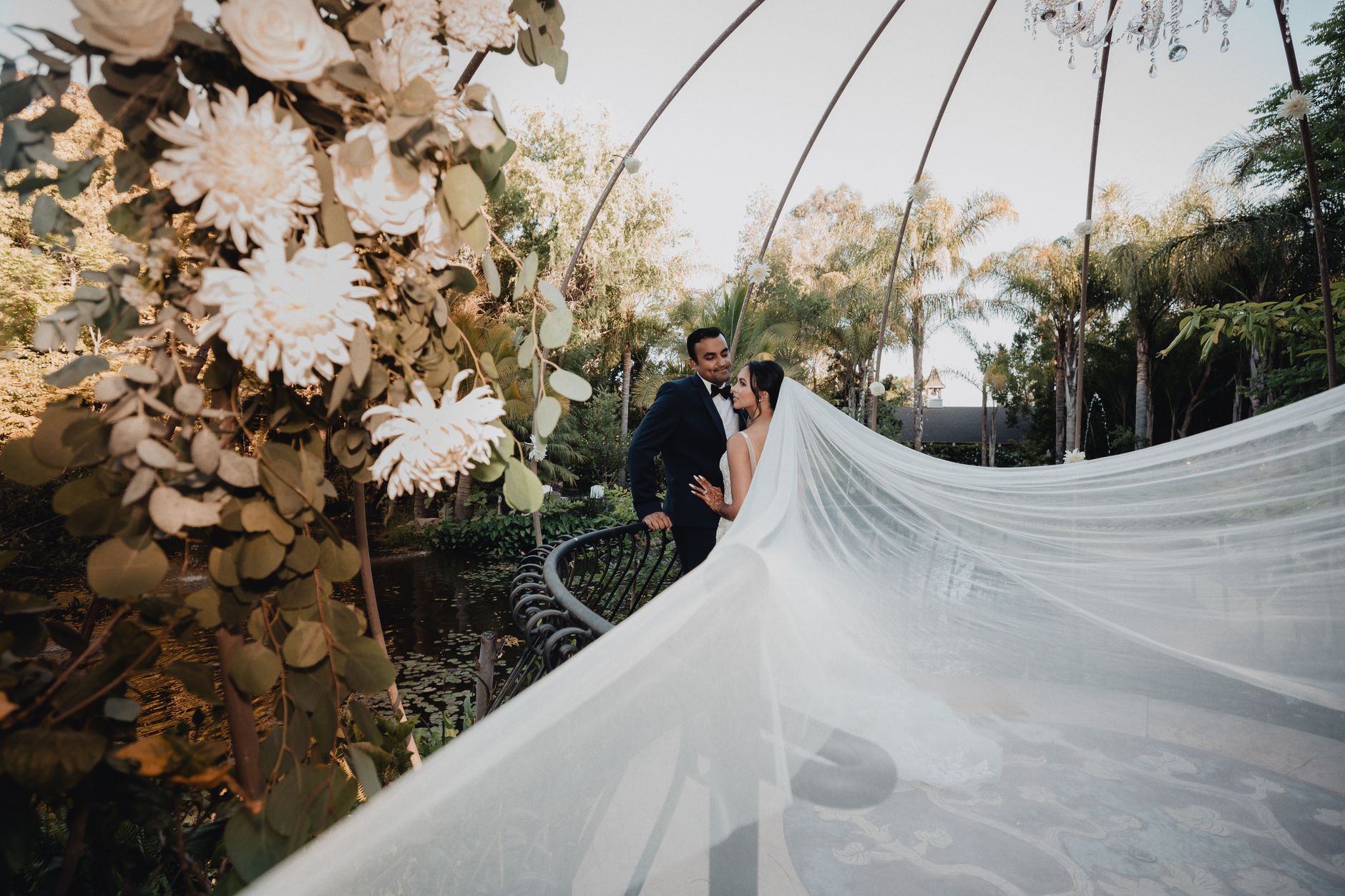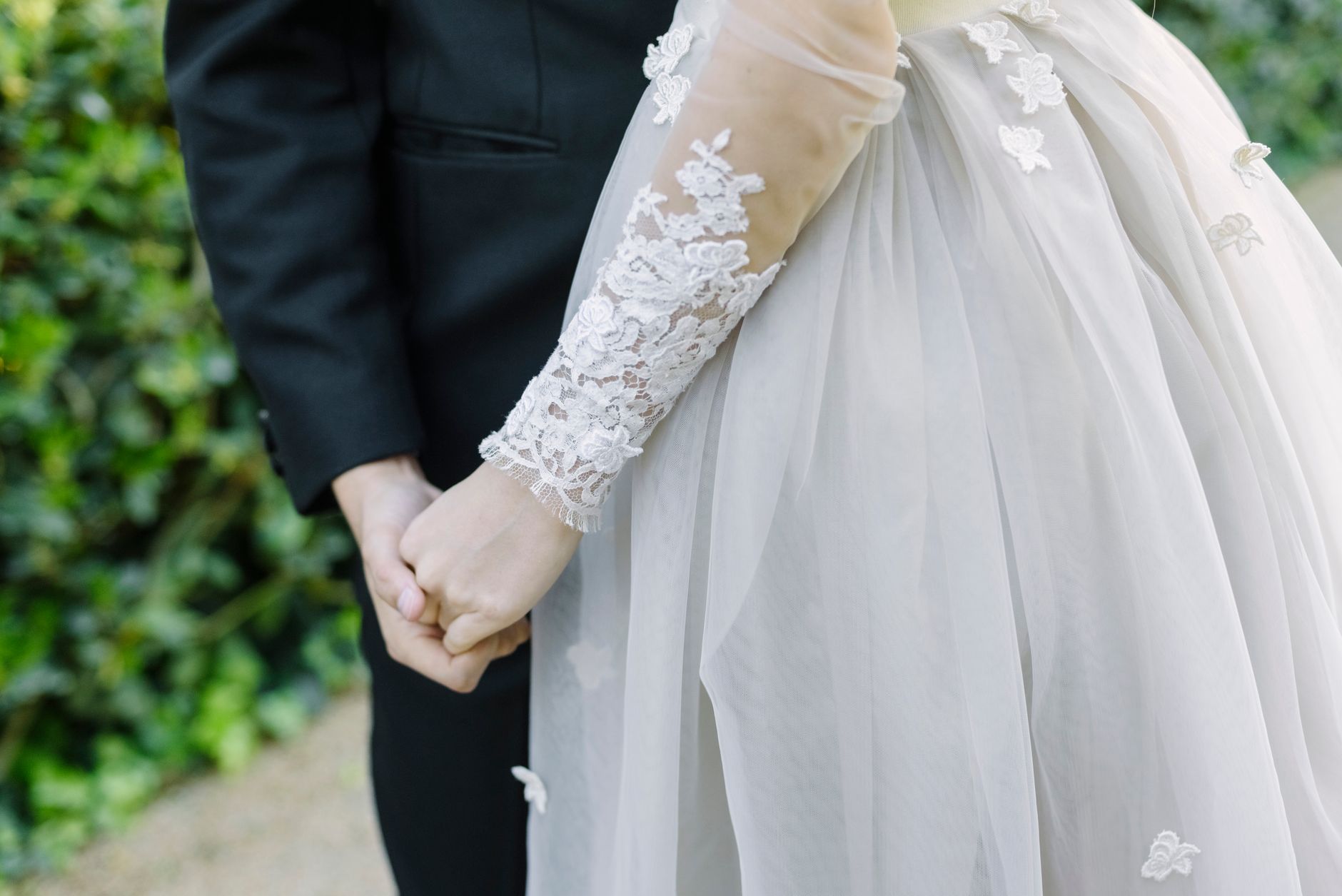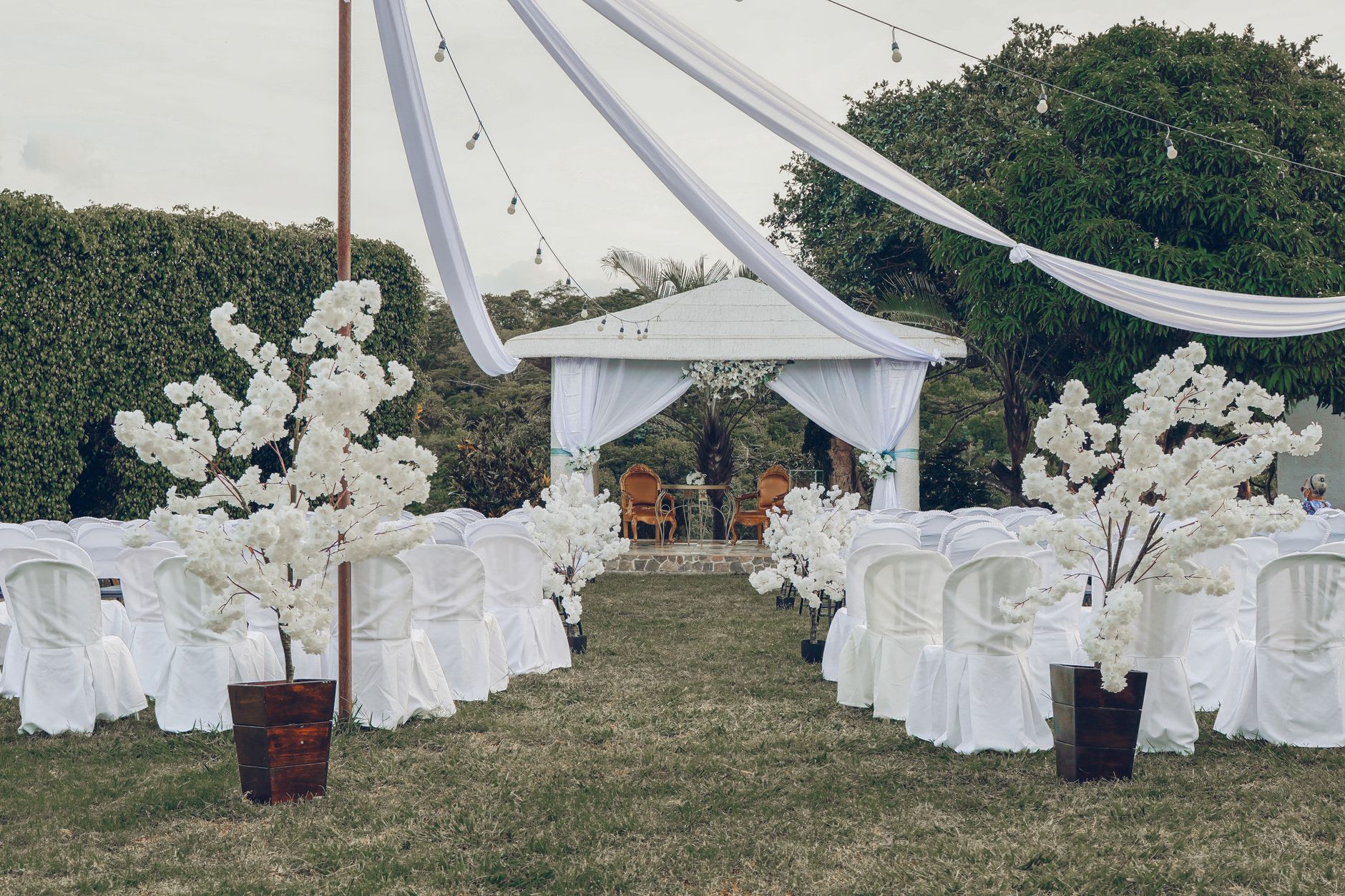
A wedding film at Bel-Air Bay Club is shaped by two scenes: the oceanfront terrace ceremony and the cliffside reception pavilion, each lit differently and each demanding its own coverage plan. The terrace faces west across the Pacific, which means ceremony light is either high and even (3 PM starts) or warm and directional (5 PM starts), and a videographer's positioning, lens choice, and audio rig all change accordingly.
The club sits on a bluff in Pacific Palisades, twenty minutes north of Santa Monica. Couples who choose Bel-Air Bay Club tend toward coastal classic or editorial black-tie aesthetics — understated palette, clean lines, guest counts of 120–180, and a preference for the venue to speak rather than decor to dominate. The result is a wedding film built on architecture, Pacific light, and the rhythm of the day rather than on centerpiece closeups.
Why Bel-Air Bay Club Films Differently Than an Indoor Ballroom
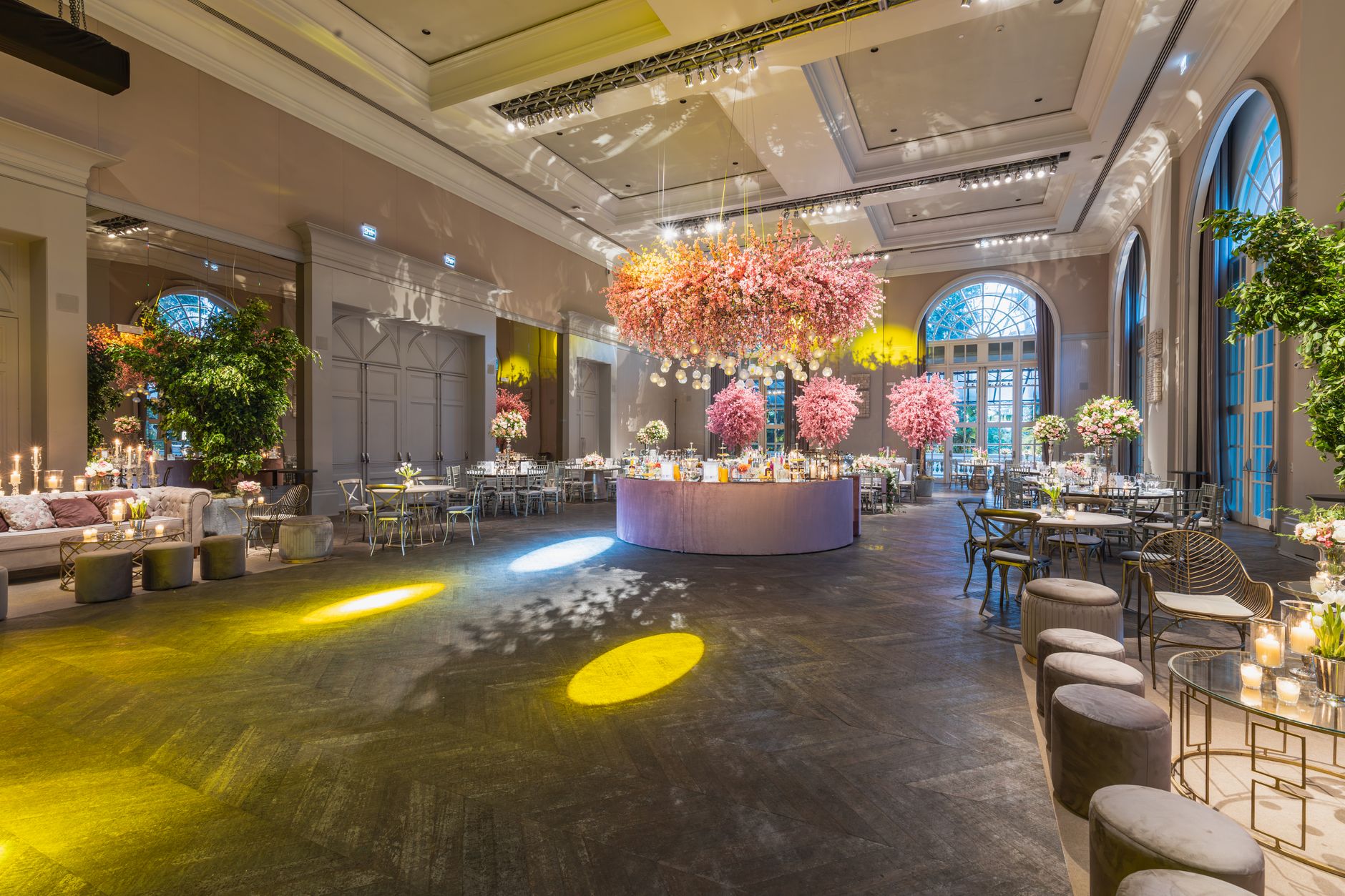
Photo by Matheus Bertelli on Pexels
Indoor ballrooms control light; Bel-Air Bay Club does not. The terrace is fully open to the west, and the pavilion opens to the south and west through floor-to-ceiling glass. A 2-shooter video team working a full-day wedding here spends the morning and midday relying on even coastal overcast or blue-sky fill, then shifts at 4 PM to manage backlight, lens flare, and shadow contrast as the sun descends.
Three factors distinguish the coverage approach:
- Wind and wireless audio. The terrace is exposed. Lavalier mics on the officiant and both partners are mandatory; a shotgun alone will not survive Pacific wind. A 10-hour wedding film package includes redundant wireless transmitters and a backup recorder on the podium.
- Sunset timing vs ceremony start. A 5 PM ceremony delivers golden light during vows and processional; a 3 PM start gives even, editorial light but no sunset payoff. Couples booking wedding film coverage coordinate ceremony time with the videographer before finalizing the timeline.
- Cliffside reception positioning. The pavilion's glass walls mean reflections after dark. A videographer positions the second shooter outside on the lawn during toasts and first dance to capture clean backlit frames without bounce-back from interior lights.
These considerations do not apply to Hotel Bel-Air or Beverly Hills Hotel, where interiors and garden canopies buffer wind and control light. Bel-Air Bay Club is a coastal venue first, which the wedding film reflects.
Coverage Plan — Ceremony on the Terrace and Reception in the Pavilion
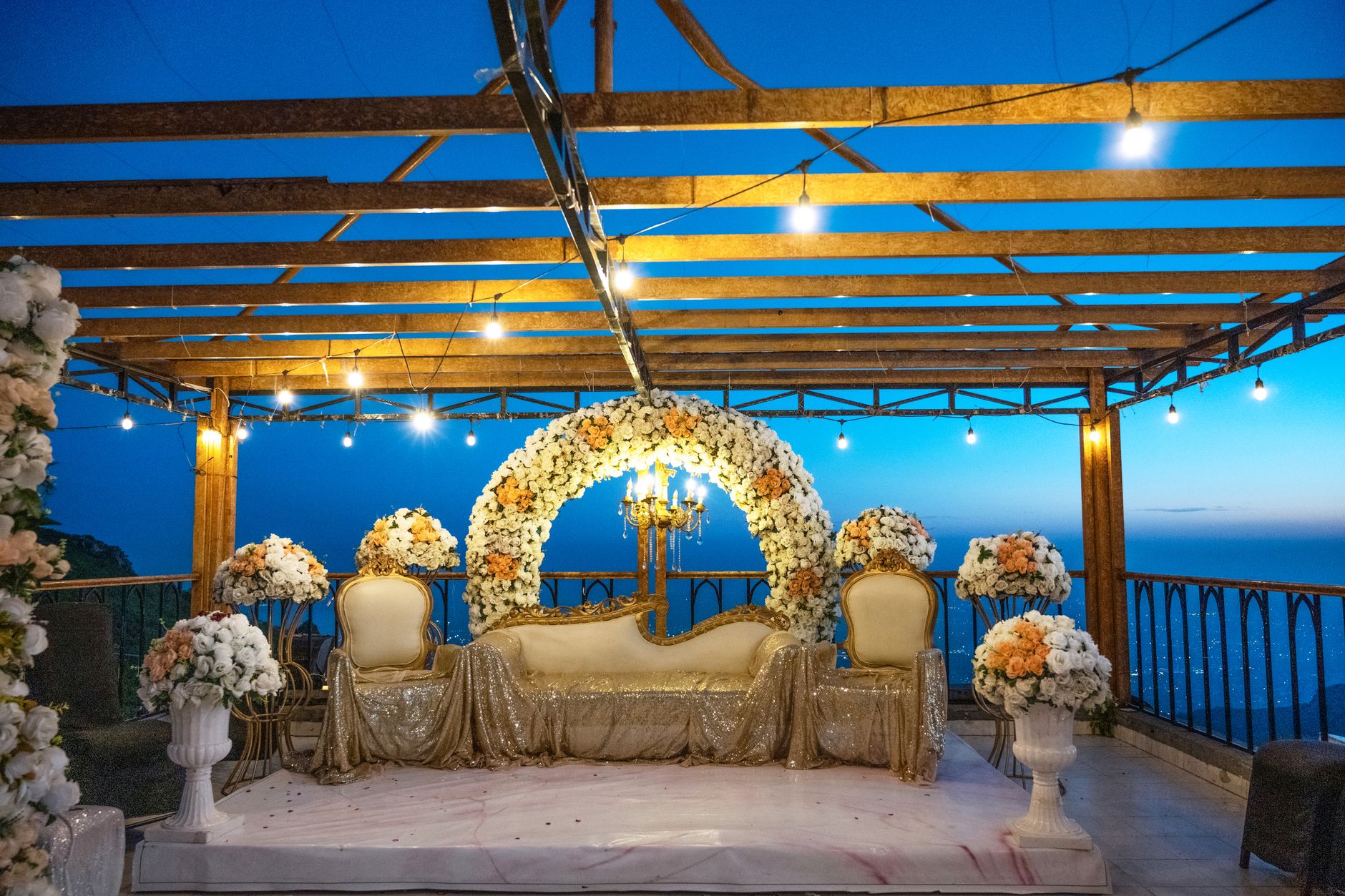
Photo by Tauseef Kazmi on Pexels
A full-day wedding film at Bel-Air Bay Club typically requires 10 hours of coverage from a 2-shooter video team. The day is structured around two primary scenes and two secondary portrait windows.
Primary Scene 1: Terrace Ceremony (60–75 minutes)
The ceremony takes place on the west-facing terrace, with the Pacific as backdrop. Guest seating is set in rows; the aisle runs north-south. Shooter A positions at the rear of the aisle on a tripod with a 70–200mm lens to capture processional, vows, and recessional without crossing sightlines. Shooter B works handheld from the side or beneath the terrace, capturing wide establishing frames and reaction closeups of parents in the front row during vows.
Audio captures three channels: officiant lav, partner A lav, partner B lav. Wind on the terrace is persistent; foam windscreens are insufficient. Deadcat fur covers are standard.
The ceremony timeline influences color and contrast:
- 3 PM start: Even light, soft shadows, blue-to-neutral sky. The film reads editorial and calm.
- 5 PM start: Warm directional light during vows, golden hour during recessional, increased shadow contrast. The film reads cinematic and dimensional.
Most couples scheduling full ceremony coverage at Bel-Air Bay Club choose the 5 PM window for the light quality, then plan cocktail hour to last through sunset.
Secondary Window 1: Couple Portraits (20 minutes)
Immediately after the ceremony, the couple and videographer move to the north lawn and bluff edge for portraits. This is a 20-minute window before cocktail hour ends. The videographer captures 3–5 setups: walking along the bluff path, standing at the edge with the Pacific behind, and a quiet moment on the north terrace near the club entrance.
The light during this window is the same light that closed the ceremony. If the ceremony started at 5 PM, portraits happen in the last 15 minutes of golden hour. Shooter A films the couple on a gimbal; Shooter B captures wide environmental frames from a distance to establish the bluff and coastline in the geography of the film.
Primary Scene 2: Pavilion Reception (4–5 hours)
The reception moves into the pavilion, a glass-walled structure on the south side of the property. Dinner, toasts, first dances, and open dancing all take place here. The pavilion's transparency creates two challenges after dark: reflections on the glass and extreme contrast between the lit interior and the black ocean beyond.
A videographer addresses this by positioning one shooter inside for toasts and speeches (capturing speakers and couple reactions) and one shooter outside on the south lawn, filming back toward the pavilion through the glass. The exterior angle eliminates reflections and produces a backlit, dimensional frame of the couple during the first dance.
By 9 PM, the pavilion is fully lit and the outside is fully dark. The videographer reduces ISO, opens the aperture, and allows the interior light to shape the frame. The result is warm, intimate, and theatrical rather than flat and even.
Secondary Window 2: Sunset on the Bluff (10 minutes, optional)
If the ceremony started at 3 PM and sunset occurs during cocktail hour, the couple may step away for a 10-minute sunset portrait session on the bluff. This is scheduled at 6:45–7 PM in summer, earlier in winter. Shooter A captures the couple backlit by the setting sun; Shooter B films environmental wides from the terrace above.
This window is not standard in every timeline. Couples who prioritize uninterrupted cocktail hour skip it. Couples booking a wedding film that emphasizes landscape and light typically build it into the schedule.
Ceremony Start Time and Light Quality — A Direct Comparison
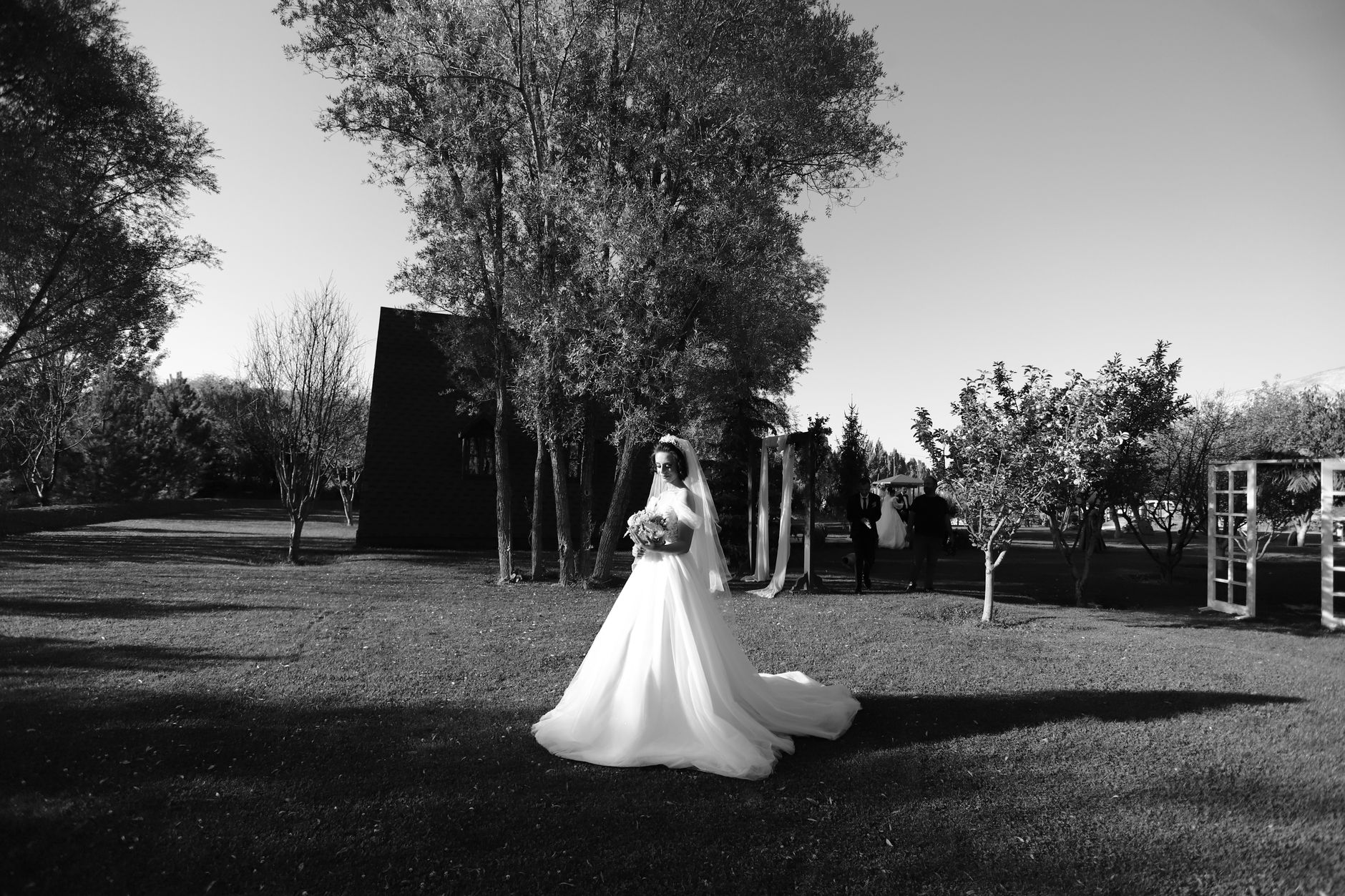
Photo by ömer aliko on Pexels
The most significant creative variable at Bel-Air Bay Club is ceremony start time. The venue does not control light; the couple does, by choosing when vows occur.
| Start Time | Light During Vows | Recessional Light | Portrait Window Light | Best For |
|---|---|---|---|---|
| 3:00 PM | High, even, soft | Even, editorial | Even through cocktail hour | Editorial black-tie couples who want clean, soft frames |
| 5:00 PM | Warm, directional, golden | Peak golden hour, warm glow | Last 15 minutes of golden hour | Coastal classic couples who want cinematic dimension and warmth |
| 5:30 PM | Golden hour starting | Full golden glow | Blue hour (post-sunset) during cocktails | Couples willing to have portraits in twilight rather than sunset |
A 5 PM ceremony start is the most common choice for couples booking cinematic wedding film coverage. It delivers the warmest light during vows and positions the recessional at the peak of golden hour. The tradeoff: portraits happen in the narrow 20-minute window between 5:45 and 6:05 PM, which requires the couple to move quickly after the ceremony ends.
A 3 PM start offers more relaxed pacing and even light that flatters all skin tones equally. It is preferred by couples prioritizing editorial photography and documentary coverage over dramatic cinematic frames.
Audio Strategy for an Exposed Coastal Terrace
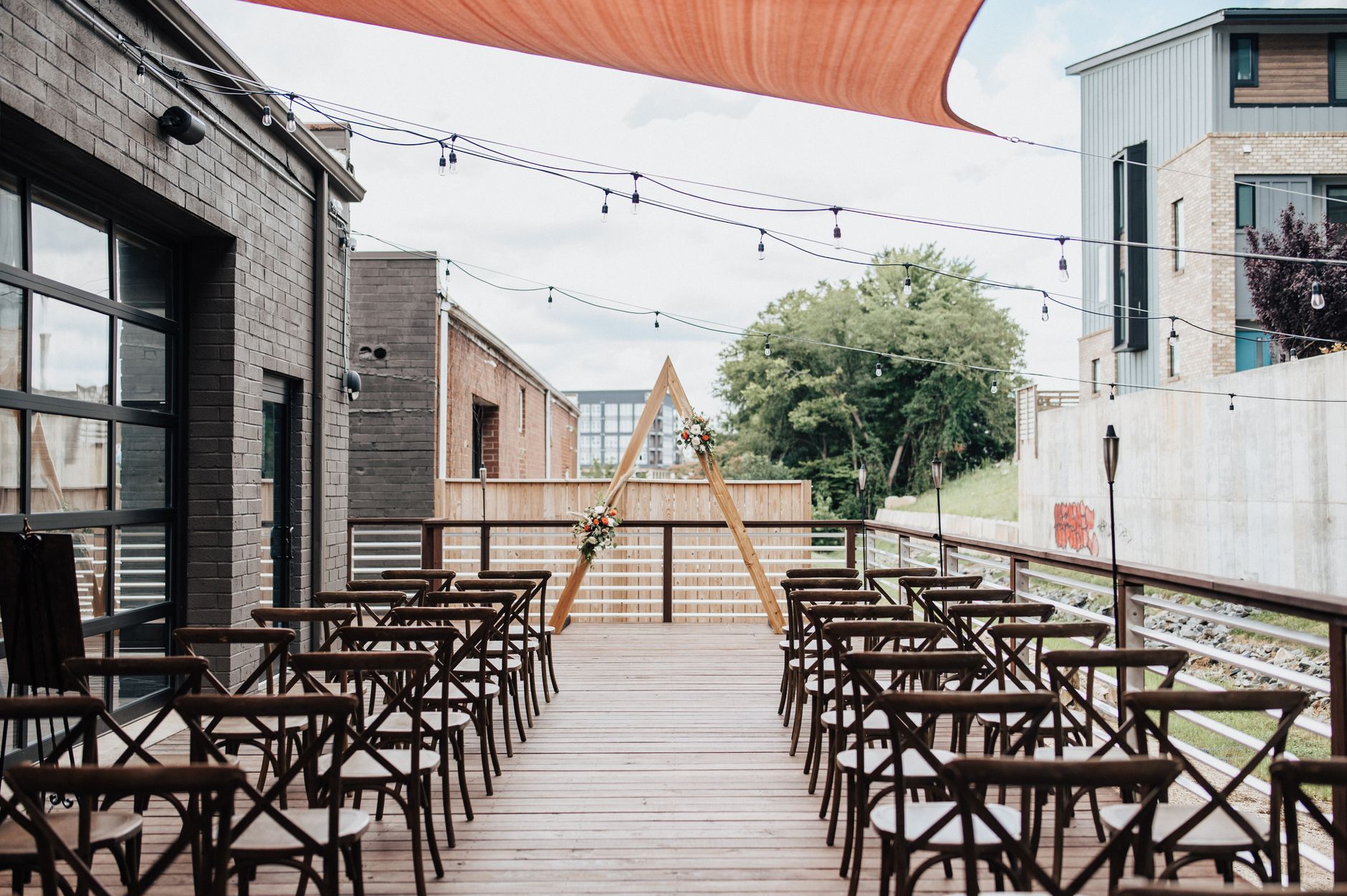
Photo by Katelyn Whitson on Pexels
Bel-Air Bay Club's terrace is open to the Pacific and to prevailing westerly wind. A shotgun mic alone — even a high-quality Sennheiser MKH 416 in a blimp — will not produce clean vows audio in 12 mph wind.
The standard audio rig for ceremony coverage here is:
- Wireless lavalier on the officiant — Sennheier G4 or Sony UWP-D series, hidden under the lapel or collar, transmitting to Shooter A's camera.
- Wireless lavalier on Partner A — clipped inside the jacket lapel or dress neckline, transmitting to Shooter B's camera.
- Wireless lavalier on Partner B — same placement, transmitting to a dedicated audio recorder (Zoom F6 or Sound Devices MixPre) as a redundant safety track.
- Shotgun mic on Shooter A's camera — captures ambient crowd reaction and processional music, but is not the primary vows track.
The lavaliers use deadcat windscreens, not foam. The backup recorder runs throughout the ceremony at -12 dB to avoid clipping if a partner's voice peaks during emotional vows.
This four-channel setup is standard across any coastal venue without wind protection — Terranea Resort, Resort at Pelican Hill, and Montage Laguna Beach require identical rigs. Inland venues like Calamigos Ranch or Saddlerock Ranch allow lighter audio approaches because the oak canopy and vineyard buffers reduce wind interference.
Photo + Video Coordination at Bel-Air Bay Club
Couples booking both documentary photography and wedding film coverage at Bel-Air Bay Club typically hire a 2-shooter photo team and a 2-shooter video team, for a total crew of four.
The coordination points are:
- Ceremony positioning. The lead photographer works the aisle from the front, moving during processional and recessional. The lead videographer remains stationary at the rear of the aisle on a tripod. The two do not cross sightlines.
- Portrait window division. After the ceremony, the photo and video teams split the 20-minute portrait session. The photographer takes the first 10 minutes (5 setups, quick coverage); the videographer takes the second 10 minutes (3 setups, slow movement on gimbal). This prevents both teams from directing the couple simultaneously.
- Reception overlap. During toasts, the photographer positions near the speakers for reaction closeups; the videographer positions at the back of the pavilion for full-body frames of the speaker and wide shots of the room. Both teams film the first dance from opposite angles to avoid duplicate framing.
This workflow is formalized in a photo + video combined package, which includes a pre-wedding coordination call between the lead photographer, lead videographer, and the couple to align on priorities and timing.
The benefit of booking combined coverage from a single company rather than hiring separate vendors is that the photo and video teams have already worked together at Bel-Air Bay Club multiple times. They do not need to negotiate positioning on the wedding day.
Who Books Wedding Film Coverage at Bel-Air Bay Club
Three couple types account for the majority of wedding film bookings at Bel-Air Bay Club:
Coastal classic couples — neutrals, whites, greenery, minimal florals. Guest count 120–160. Timeline structured around a 5 PM ceremony to capture golden-hour light. The wedding film emphasizes the Pacific, the bluff geography, and the couple's interaction with the landscape rather than elaborate decor closeups.
Editorial black-tie couples — formal attire, structured timeline, cocktail hour on the north terrace, seated dinner in the pavilion. Guest count 140–180. The couple prioritizes clean, composed frames and even light (3 PM ceremony start). The film reads like the editorial pages of a luxury wedding magazine rather than a cinematic narrative.
Los Angeles professional couples — often both partners work in entertainment, law, medicine, or finance. They are familiar with production quality and expect the wedding film to match the standard of work they encounter professionally. They book 10–12 hours of coverage, request same-day highlights, and often add an engagement film shot at the same venue three months before the wedding.
Couples who choose Bel-Air Bay Club over Hotel Bel-Air or San Ysidro Ranch are selecting the venue for its architecture and coastal setting, not for elaborate gardens or historical estate character. The wedding film reflects that priority — less about ornament, more about place and light.
Edit Turnaround and Deliverables for a Bel-Air Bay Club Wedding Film
A full wedding film edit from a 10-hour shoot at Bel-Air Bay Club takes 8–12 weeks. The deliverable package includes:
- Feature film (8–12 minutes) — ceremony vows, toasts, first dance, portrait sequences on the bluff, and reception dancing, edited to the couple's chosen music.
- Highlight reel (3–4 minutes) — a condensed version of the feature film, optimized for social sharing and mobile viewing. Delivered within 2 weeks of the wedding date.
- Full ceremony edit (20–30 minutes) — the complete ceremony from processional through recessional, with clean audio and minimal cuts. Delivered as a separate file.
- Full toasts edit (15–25 minutes) — all reception speeches in sequence, unabridged. Delivered as a separate file for family archive.
All files are delivered as 4K mp4 (H.265 codec) via a private Vimeo link and as direct download. No DVDs, no USB drives — streaming and cloud storage only.
Couples may request rush delivery for an additional fee. A 4-week turnaround is possible but requires blocking the edit calendar in advance and is only offered during off-season months (January–March, November).
Raw footage is not included in the deliverable package. Couples who want the raw files for personal archiving or for a separate editor may purchase them as an add-on at the time of booking.
Begin a Conversation About Your Wedding at Bel-Air Bay Club
Cinematic wedding film coverage at Bel-Air Bay Club is built around two primary scenes — the terrace ceremony in golden hour and the pavilion reception after dark — and requires a coverage plan that anticipates wind, backlight, and the timing of the Pacific sunset. If you are planning a wedding here and want a film that reflects the venue's coastal architecture and natural light rather than a generic highlight reel, reach out to discuss your timeline, your aesthetic priorities, and how a 2-shooter video team structures the day to capture both.