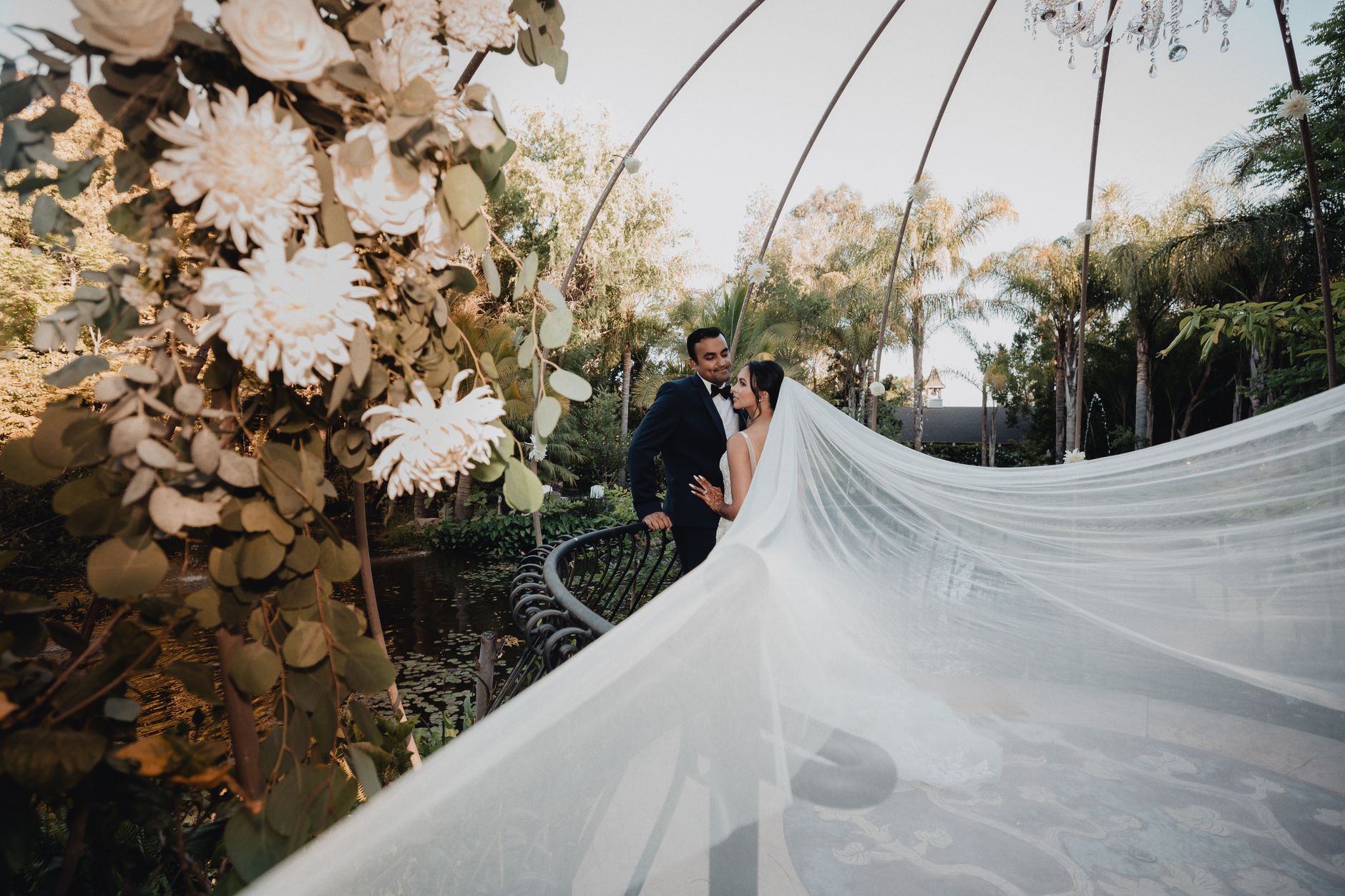
A Los Angeles wedding videographer plans coverage around the city's distinct neighborhoods and their light: Hotel Bel-Air films in green-gold shade under sycamores at 4 PM, Beverly Hills Hotel reads warmest in the hour before sunset along the fountain courtyard, and Calamigos Ranch in Malibu shows its best color when the oak canopy filters late-afternoon sun into that specific amber the camera loves. Each venue in Los Angeles County asks for a different approach — not because of guest count or timeline, but because the light changes by neighborhood, and the videographer's crew size, lens selection, and shot list adjust accordingly.
This is a guide to hiring a wedding videographer in Los Angeles — built around the coverage decisions that matter before the contract is signed. It addresses the question couples and planners ask most often: how do you structure a film crew and a shot sequence for a wedding that moves between indoor ceremony spaces, outdoor cocktail terraces, and ballroom receptions across a city where traffic, parking, and permitting vary by venue?
Why Los Angeles Weddings Require Location-Specific Coverage Plans
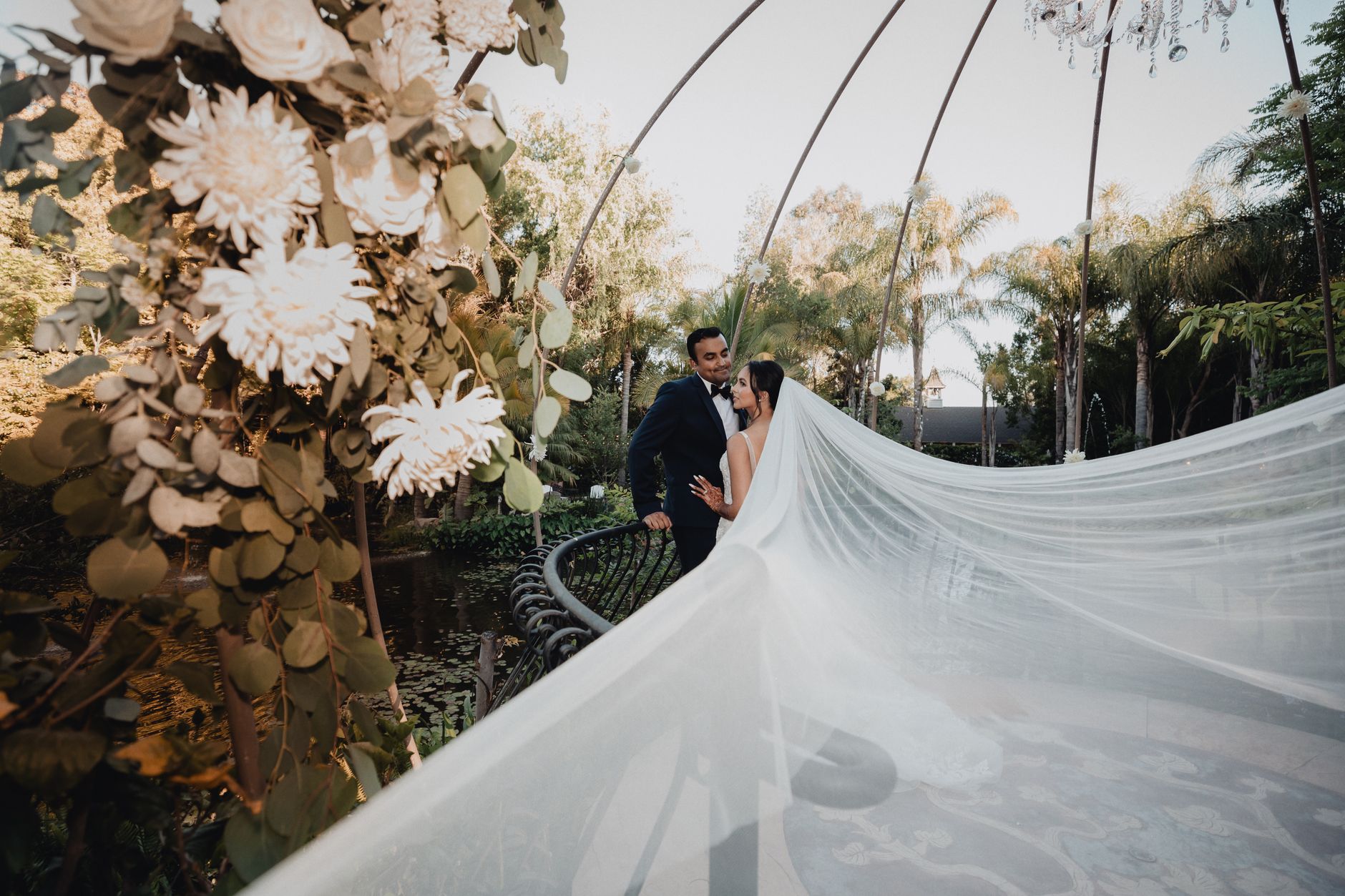
Photo by Lulan Studio on Pexels
Los Angeles is not one wedding market. A Beverly Hills Hotel wedding films differently than a downtown loft wedding, which films differently than a Malibu ranch ceremony. The videographer you hire should walk the venue before the day — either in person or through detailed floor plans and timeline coordination with the planner — because assumptions about natural light, acoustics, and crew positioning that hold true at Hotel Bel-Air do not apply at a rooftop in Downtown LA.
Hotel Bel-Air ceremonies take place outdoors at Swan Lake, under a canopy of sycamores that create dappled shade. The videographer needs two shooters minimum: one stationary at the altar to capture vows in clean medium shots, and one roaming the perimeter for reaction coverage of parents and guests seated in mixed sun and shadow. Audio is captured with two wireless lavalier microphones (officiant and groom) plus a shotgun mic on the altar camera, because the lake's fountain and the surrounding garden create ambient sound that a single lav cannot isolate against.
Beverly Hills Hotel weddings center on the Crystal Ballroom or the outdoor Fountain Courtyard. The courtyard films in warm late-afternoon light between 4:30 PM and 6 PM from March through October; after 6 PM the space is in shade and requires LED panel fill to match the warmth of the surrounding architecture. The videographer stages portrait coverage immediately after the ceremony — the 20-minute window between ceremony end and cocktail hour start — because the light through the banana-leaf canopy reads best in that narrow slice of time.
Calamigos Ranch sits in Malibu's inland hills, surrounded by oak and eucalyptus. The ranch offers multiple ceremony sites (the oak grove, the winery lawn, the eucalyptus-lined aisle), and the videographer's shot list changes depending on which location the couple chooses. The oak grove ceremony benefits from a 3-shooter setup: one on the aisle for processional, one at the altar, and one elevated on the hill behind the seating to capture the full grove canopy in wide shots. The winery lawn is flatter and more open, so a 2-shooter team suffices, but the crew needs to plan for wind — lapel mics require windsocks, and the altar mic should be a hypercardioid shotgun rather than a standard cardioid to reject off-axis wind noise.
Each of these venues sits within Los Angeles County, but the coverage approach — crew size, lens choice, audio redundancy, and shot sequencing — is built around what the specific site offers and how the couple has structured the day's timeline.
Documentary vs Cinematic Wedding Film Style in Los Angeles
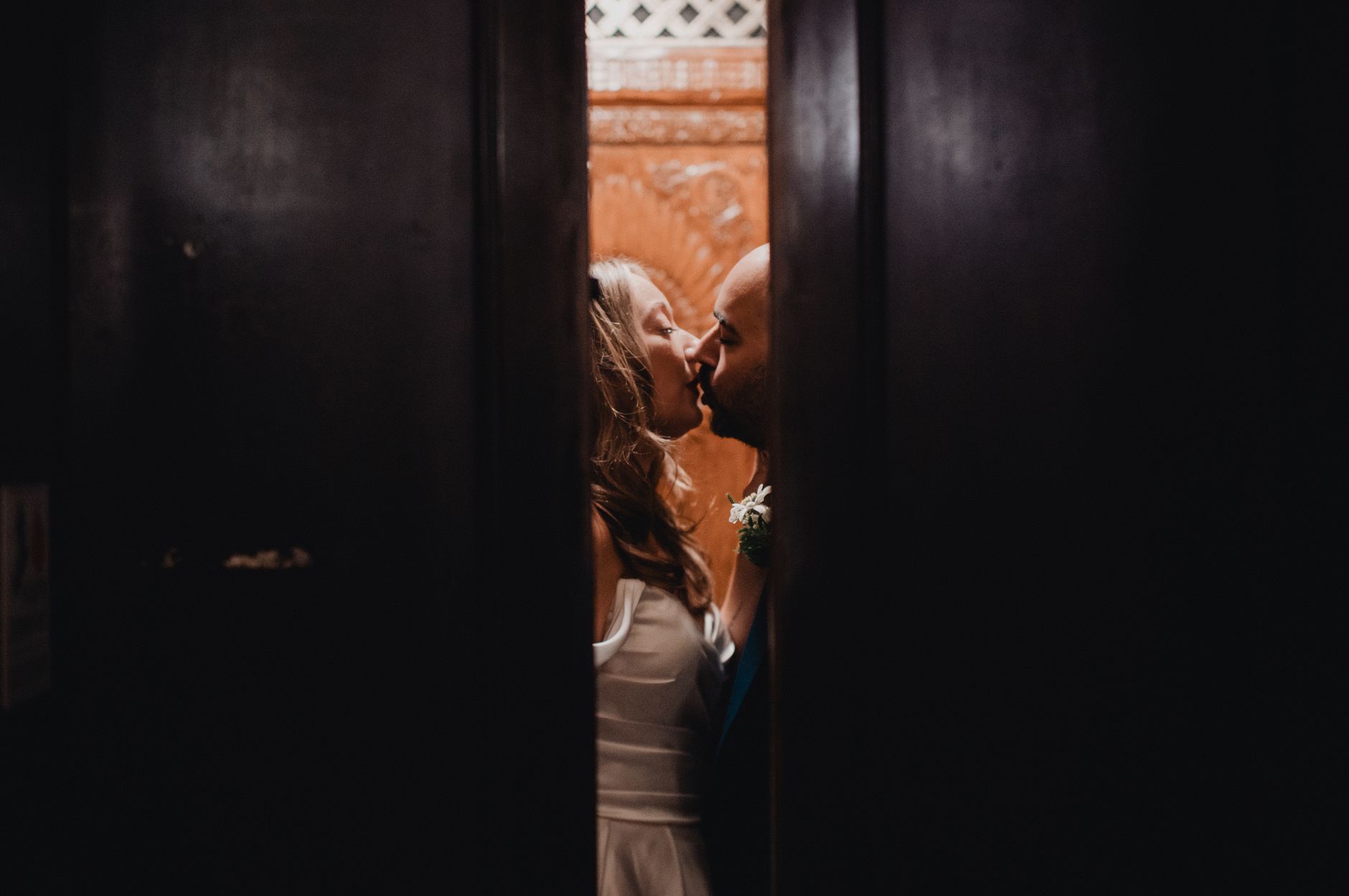
Photo by Lulan Studio on Pexels
Los Angeles couples hiring a wedding film team typically request one of two styles: documentary or cinematic. The terms are not interchangeable, and the coverage decisions made on the wedding day depend on which the couple prioritized during the planning process.
Documentary wedding films prioritize chronological storytelling and unscripted moments. The videographer follows the day as it unfolds: getting ready, first look, ceremony, cocktail hour, reception entrance, toasts, first dance, parent dances, open dancing, and exit. The final edit runs 20–45 minutes and includes full vows, full toasts, and full parent speeches. Documentary films require longer shoot hours (typically 10–12 hours) and produce larger files, because the editor needs enough material to construct a narrative arc that mirrors the actual day.
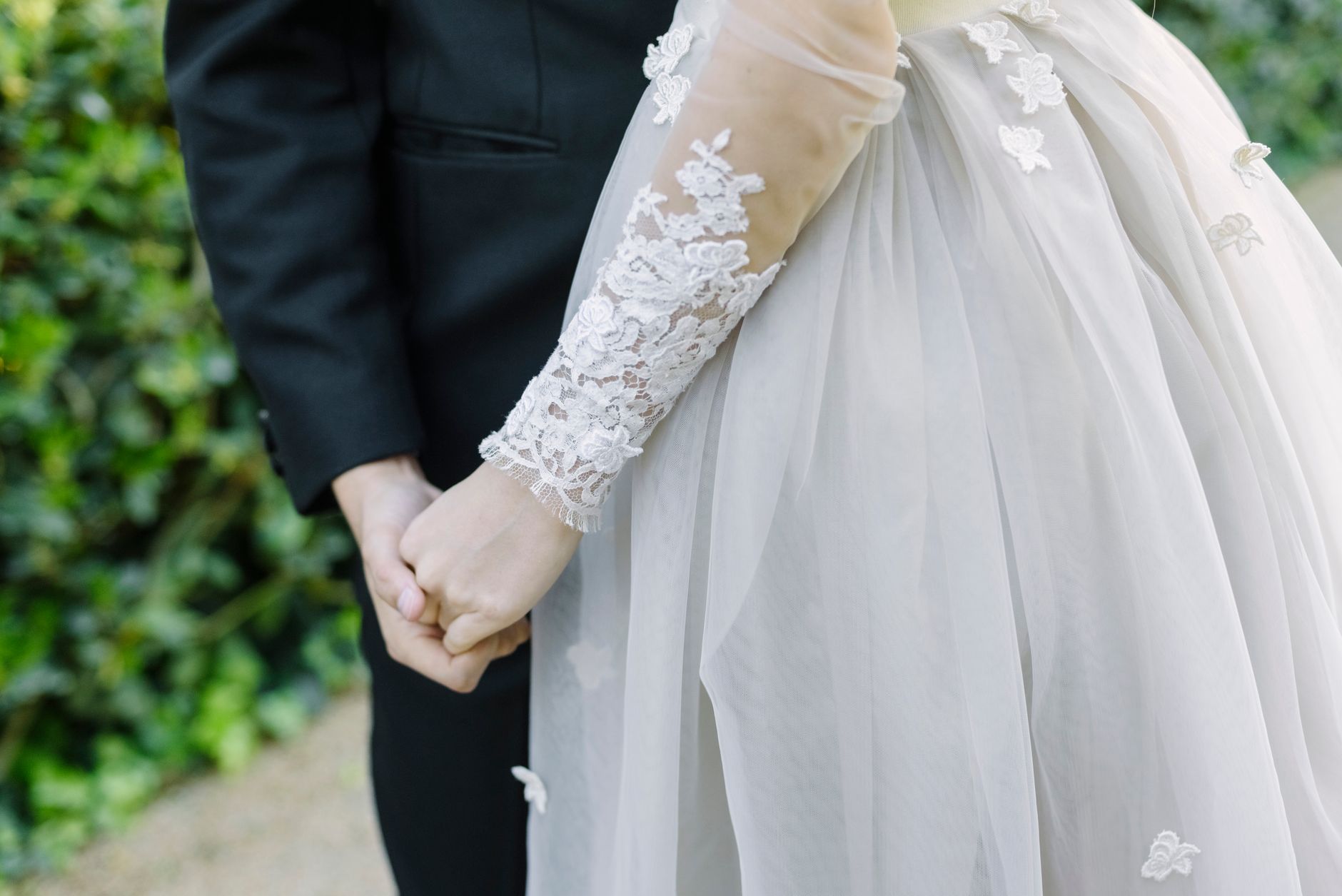
Cinematic wedding films compress the day into a 6–12 minute highlight film built around emotional peaks and visual composition. The videographer still captures the full day, but the shot list emphasizes portraiture, movement (slow-motion b-roll of the bride walking through a garden, the couple's hands, dress details, rings, florals), and carefully composed wide shots that establish place. The final edit is shorter, set to licensed music, and intercuts moments out of chronological order to match the emotional tone of the soundtrack. Cinematic films require fewer shoot hours (8–10 hours) because the editor is not obligated to include every speech or dance in full.
Most Los Angeles wedding videographers offer both. Couples booking Hotel Bel-Air, Beverly Hills Hotel, or Hummingbird Nest Ranch tend toward cinematic, because the venues themselves are visually editorial and the couple's planning aesthetic often matches that register. Couples booking industrial lofts in Downtown LA or intimate garden estates in Pasadena more often choose documentary, because the day's structure — toasts, open mic moments, curated playlists — carries the narrative weight the couple wants preserved in full.
The coverage approach changes depending on style. A documentary crew needs continuous rolling coverage during toasts and speeches, which means the videographer positions two cameras with overlapping angles to ensure no moment is missed due to a card change or battery swap. A cinematic crew can pause recording between key moments and instead focus on composed b-roll during cocktail hour and the transition from ceremony to reception.
Coverage Logistics: Crew Size, Equipment, and Timeline Coordination
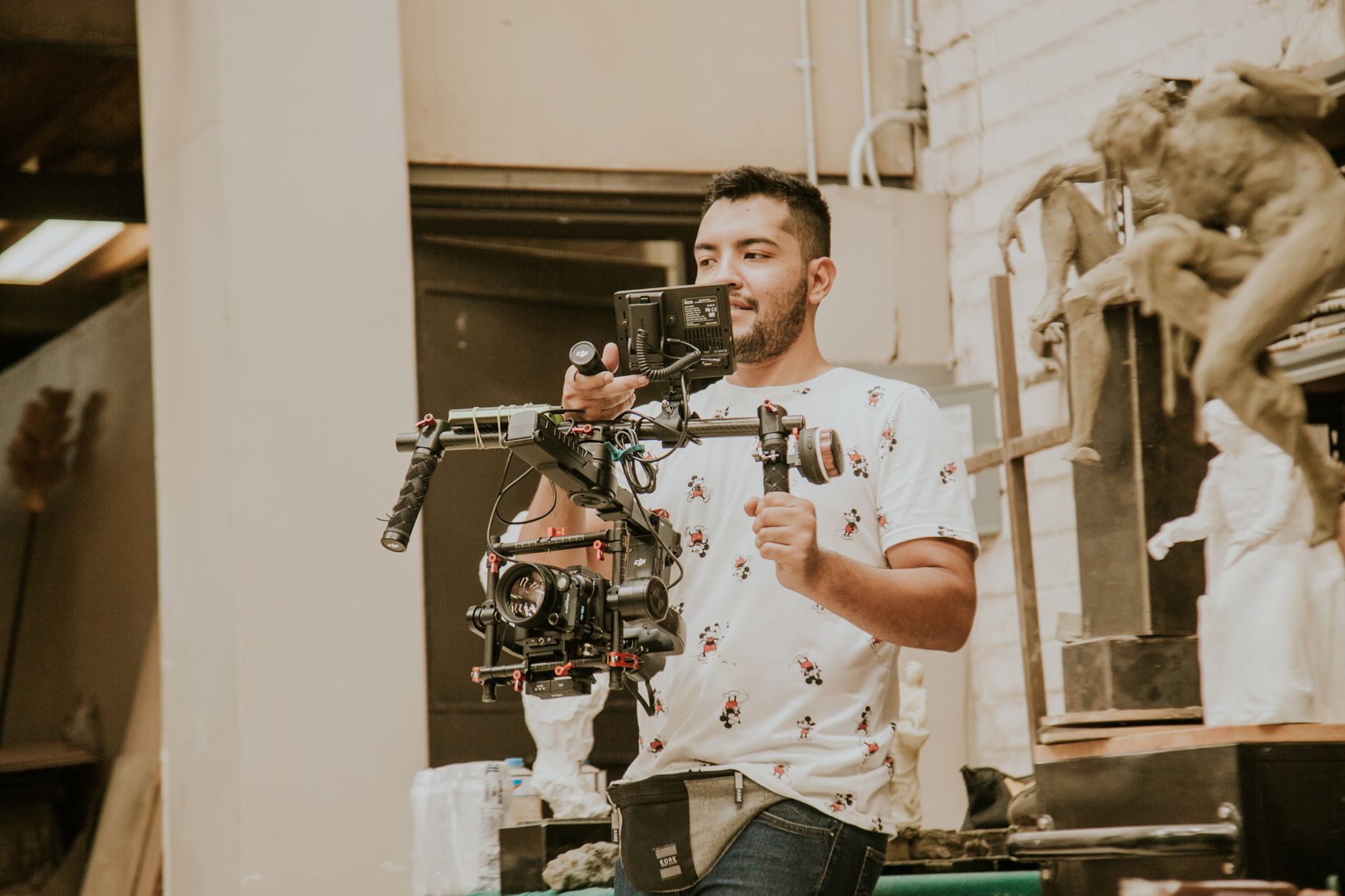
Photo by Amar Preciado on Pexels
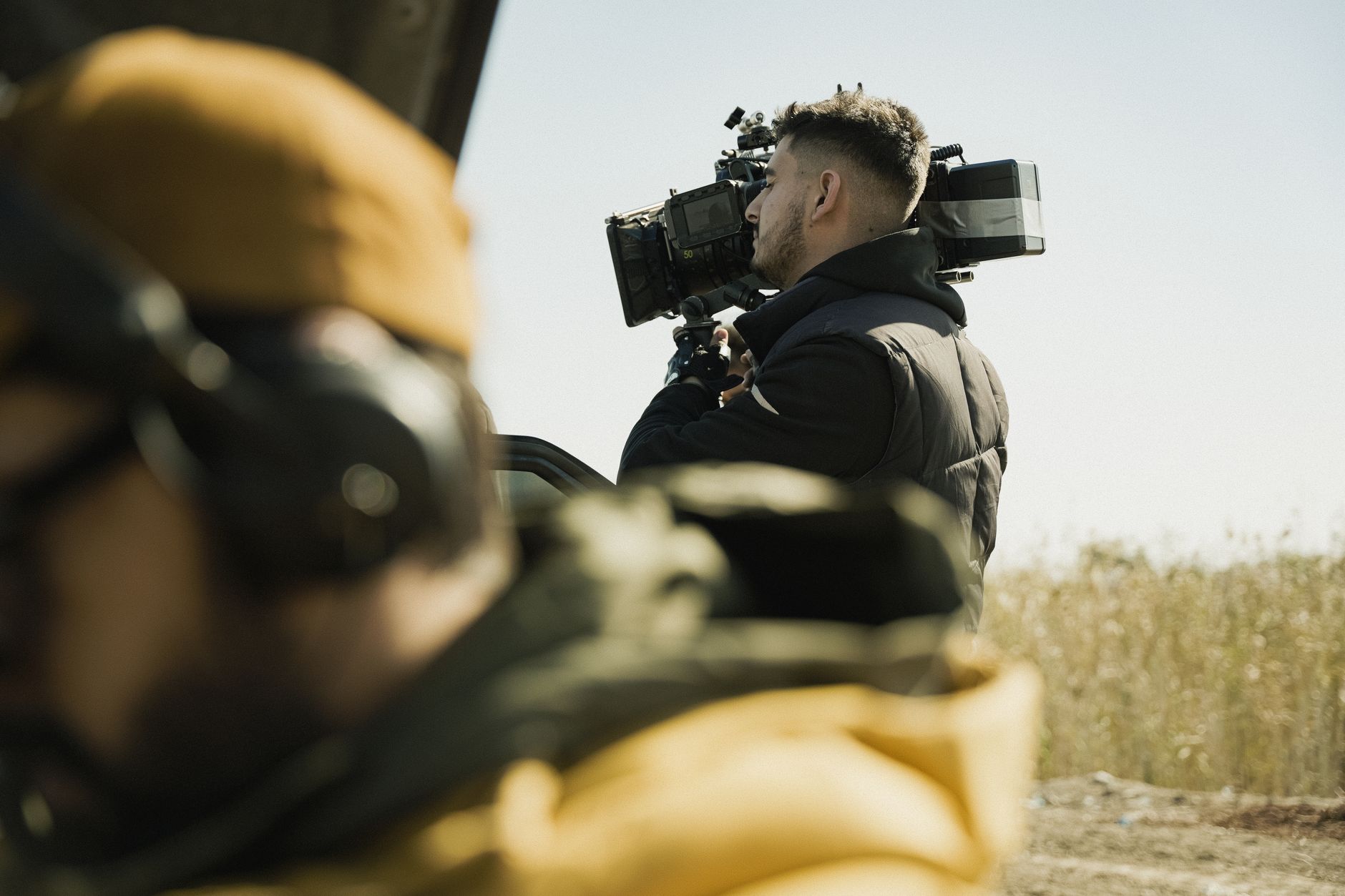
A full-day wedding film in Los Angeles typically requires a 2-shooter video team for 10 hours of coverage. One shooter leads (primary camera, ceremony and vows close-ups, bride and groom portraits), and the second shooter captures wide angles, reaction shots, guest arrivals, detail coverage, and reception candids. For weddings with guest counts above 200 or venues with multiple ceremony and reception locations on the same property (Calamigos Ranch, Hummingbird Nest Ranch), a 3-shooter team is the safer choice.
Audio redundancy is non-negotiable. The lead videographer wires the groom and officiant with wireless lavalier microphones before the ceremony, and the second shooter positions a shotgun mic on a boom pole or mounted atop the ceremony altar camera. If one wireless pack fails or if the officiant moves out of mic range during the vows, the backup audio source ensures the moment is captured cleanly. At outdoor Los Angeles venues — Calamigos Ranch, Saddlerock Ranch, Bel-Air Bay Club — wind and ambient sound (traffic on PCH, helicopters overhead, leaf rustle) require that the videographer monitor audio live through headphones during the ceremony, not after the fact.
Timeline coordination with the photographer is handled during the pre-wedding walkthrough or the week-of coordination call with the planner. The videographer and photographer agree on who leads during portraits (typically the photographer, because lighting setups take longer than video composition), and they split coverage during the ceremony so neither obstructs the other's sightline. At Hotel Bel-Air, the standard positioning is: photographer on the left aisle, videographer on the right, both shooters staying low and moving between shots rather than standing in one position. At Beverly Hills Hotel, where the Fountain Courtyard ceremony is more compressed, the photographer stays stationary at the back-center aisle, and the videographer moves along the side perimeter for angled coverage.
The videographer's shot list for a Los Angeles wedding breaks into five blocks:
Getting ready (1–2 hours): bride and groom prep in separate rooms, detail shots of dress, rings, shoes, invitation suite, florals. The videographer captures the bride's reaction when she first sees herself in the full dress, and the groom's reaction during the boutonniere pinning or tie adjustment. These moments are often the most unguarded of the day and carry significant emotional weight in the final edit.
First look and portraits (30–60 minutes): typically staged in a garden, courtyard, or shaded alcove with soft directional light. The videographer positions one camera on the bride as she approaches, and a second camera (or the photographer's assistant holding a video rig) captures the groom's reaction. After the first look, the couple moves into 10–15 minutes of portrait coverage — walking hand-in-hand, standing in shade under trees, close-ups of hands and rings. The videographer and photographer work in tandem here, alternating setups.
Ceremony (30–45 minutes): full processional, vows, ring exchange, kiss, and recessional. The lead videographer stays stationary at the altar for vows; the second shooter captures the processional from the back aisle and moves to the side for reaction shots during the vows. Audio is the priority — if the videographer must choose between a perfectly composed shot and clean audio, audio wins every time.
Cocktail hour and reception details (45–60 minutes): the videographer captures the tablescape, florals, place cards, cake, and guest candids during cocktail hour. This is also when the crew scouts the reception space for the best angle on the head table, the dance floor, and the DJ or band setup. Lighting conditions change once the reception begins, so the videographer tests white balance and ISO in the actual reception room before guests are seated.
Reception (3–5 hours): grand entrance, first dance, parent dances, toasts, cake cutting, bouquet toss (if applicable), open dancing, and exit. The videographer prioritizes full continuous coverage of toasts, because these are unscripted and cannot be re-shot. Open dancing is captured in 10–15 minute bursts rather than continuously, because the editor only needs 30–60 seconds of dance floor footage for the final cut.
Editing, Turnaround, and Deliverables
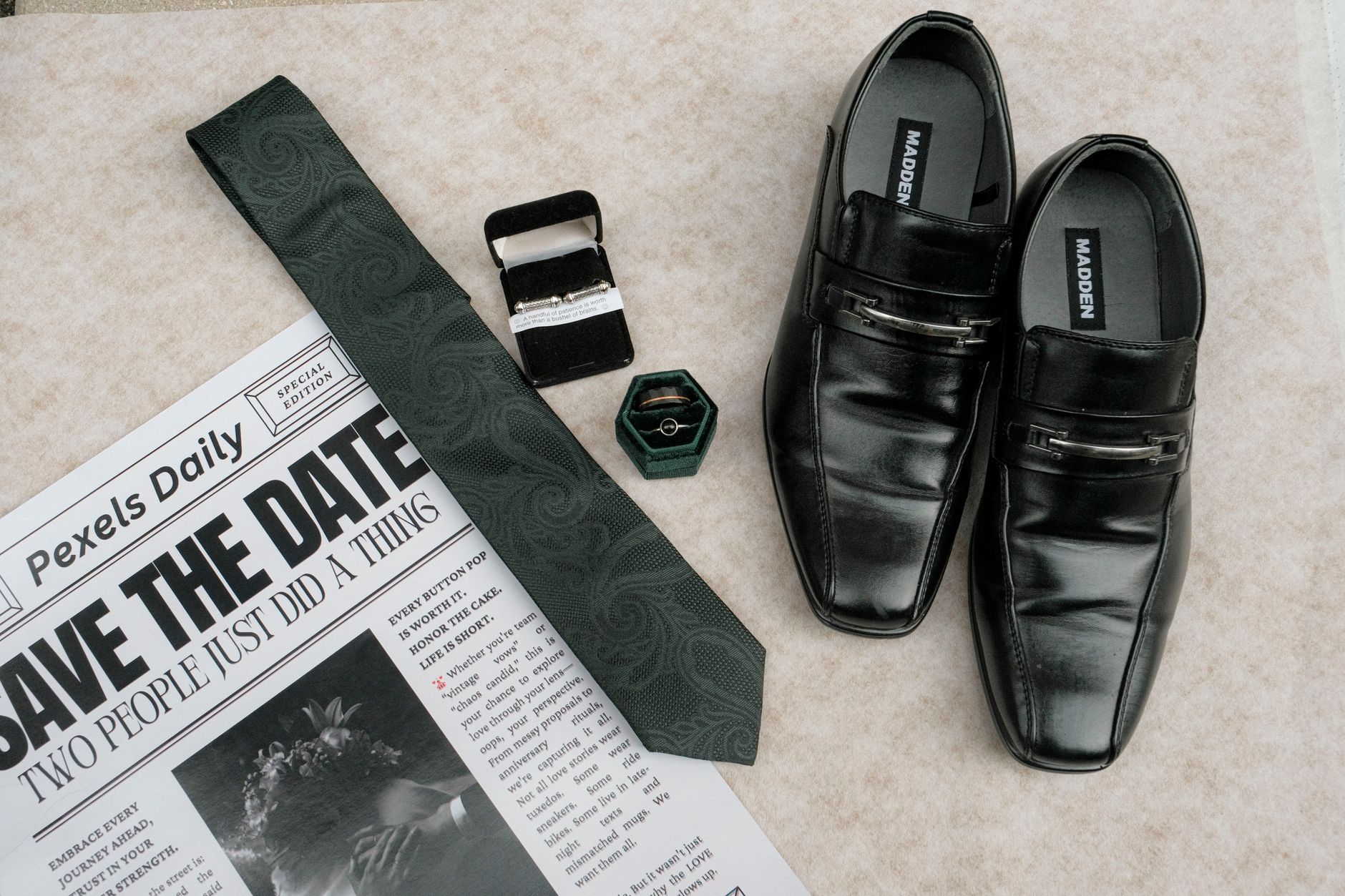
Photo by Jonathan Walker on Pexels
The editing process for a Los Angeles wedding film begins the week after the wedding. The videographer ingests all footage, syncs audio, and assembles a rough cut that mirrors the day's chronological structure. For a cinematic highlight reel, the editor selects 6–12 minutes of the strongest visual and emotional moments, arranges them to match the rhythm of the chosen soundtrack, and color-grades each shot to match the film's overall tone — warm and golden for Calamigos Ranch and Beverly Hills Hotel weddings, cooler and more neutral for Downtown LA loft weddings.
Turnaround time is 8–12 weeks from the wedding date. Destination weddings and holiday-season weddings (October through December) may extend to 14 weeks due to editing queue volume. Couples receive the final film as a private Vimeo link (password-protected, downloadable) and a high-resolution MP4 file delivered via Dropbox or Google Drive.
Raw footage policy: most Los Angeles wedding videographers do not deliver raw footage as part of the standard package. Raw files are large (200–500 GB for a full-day wedding), ungraded, and require professional editing software to view. Couples who want raw footage for archival purposes can request it as an add-on, typically priced at $500–$750 to cover the cost of hard-drive duplication and file organization.
What to Ask Before Booking a Los Angeles Wedding Videographer
Before signing a contract, ask these six questions. The answers clarify coverage scope, deliverables, and the videographer's familiarity with Los Angeles venues.
Have you filmed at my venue before? If yes, ask to see a sample from that venue. If no, ask whether the videographer plans a site visit or timeline coordination call with your planner. Venue-specific experience is not required, but the videographer should demonstrate a process for learning the site's layout, light conditions, and logistical constraints.
How many shooters will be on-site, and for how many hours? Standard is 2 shooters for 10 hours. Clarify what happens if the day runs long — is overtime charged per hour or per half-hour? Is there a hard stop time?
What audio equipment do you use for ceremony coverage? The correct answer includes wireless lavalier mics plus a backup shotgun mic. If the videographer relies on only one audio source, that is a red flag.
How do you handle coordination with the photographer? The best videographers have a pre-wedding call or email exchange with the photographer to agree on positioning, portrait timing, and who leads during key moments.
What is your editing turnaround time, and what is included in the deliverables? Confirm whether the package includes a highlight reel only, or also a full ceremony edit and full toasts edit. Ask what format the final film is delivered in (Vimeo link, MP4 download, USB drive).
Do you carry liability insurance, and are you listed as a preferred vendor at my venue? Many Los Angeles venues (Hotel Bel-Air, Beverly Hills Hotel, Calamigos Ranch) require proof of liability insurance before granting filming access. Preferred-vendor status is not mandatory, but it signals the videographer has worked the venue before and knows the property's rules.
Combining Photo and Video: The Case for Booking Both Services Together
Couples booking both a photographer and a videographer from the same company simplify logistics and improve creative cohesion. A photo + video combined package assigns one point of contact, one contract, one invoice, and one coordination call. The photo and video teams already know each other's working rhythm, so they do not compete for space during portraits or obstruct each other during the ceremony.
At Calamigos Ranch, where the oak grove ceremony site is narrow and the aisle is bordered by guest seating, a photo-video team from the same company can pre-plan their positioning so the photographer stays at the back-center aisle and the videographer moves along the side perimeter. At Beverly Hills Hotel, where the Fountain Courtyard ceremony is equally compressed, the two teams coordinate so one captures the processional from the front and the other from the back, then they switch angles for the recessional.
Combined packages also produce more cohesive storytelling. The videographer can reference the photographer's shot list during editing to ensure the film highlights the same emotional moments the couple will see in their photo album — the bride's first look at her father, the groom's reaction during vows, the parent dances. This alignment is harder to achieve when the photo and video teams meet for the first time on the wedding day.
Los Angeles Wedding Videography Investment
Wedding videography in Los Angeles spans from a single-shooter highlight reel with 8 hours of coverage to a 2-shooter documentary film with full ceremony coverage and a separate highlight reel, delivered over 12 hours on the wedding day. The average investment for a full-day cinematic wedding film from a luxury videographer is $7,500–$10,000.
Pricing variables include:
- Crew size: 1-shooter packages are least expensive, 2-shooter packages are standard, 3-shooter packages add $1,500–$2,500.
- Shoot hours: 8 hours vs 10 hours vs 12 hours. Each additional hour typically costs $300–$500.
- Deliverables: highlight reel only vs highlight reel + full ceremony edit + full toasts edit. Each additional deliverable adds $800–$1,200.
- Travel: for weddings outside Los Angeles County (Santa Barbara, Palm Springs, San Diego, Napa), travel fees range from $500 to $2,000 depending on distance and whether the videographer needs overnight accommodations.
- Engagement film or save-the-date film: couples who book an engagement film or save-the-date film before the wedding often receive a discount when bundling with the wedding-day package.
The least expensive package that still delivers a polished cinematic film is 2 shooters, 10 hours, highlight reel only, no travel, no add-ons: $6,000–$7,500 in the Los Angeles market as of 2026.
Start a Conversation About Your Los Angeles Wedding Film
If you are planning a wedding at Hotel Bel-Air, Beverly Hills Hotel, Calamigos Ranch, Hummingbird Nest Ranch, or another Los Angeles County venue, reach out to discuss coverage that fits your timeline, your aesthetic, and the way your day is structured. We work with couples and planners across Southern California and travel for destination wedding films worldwide.