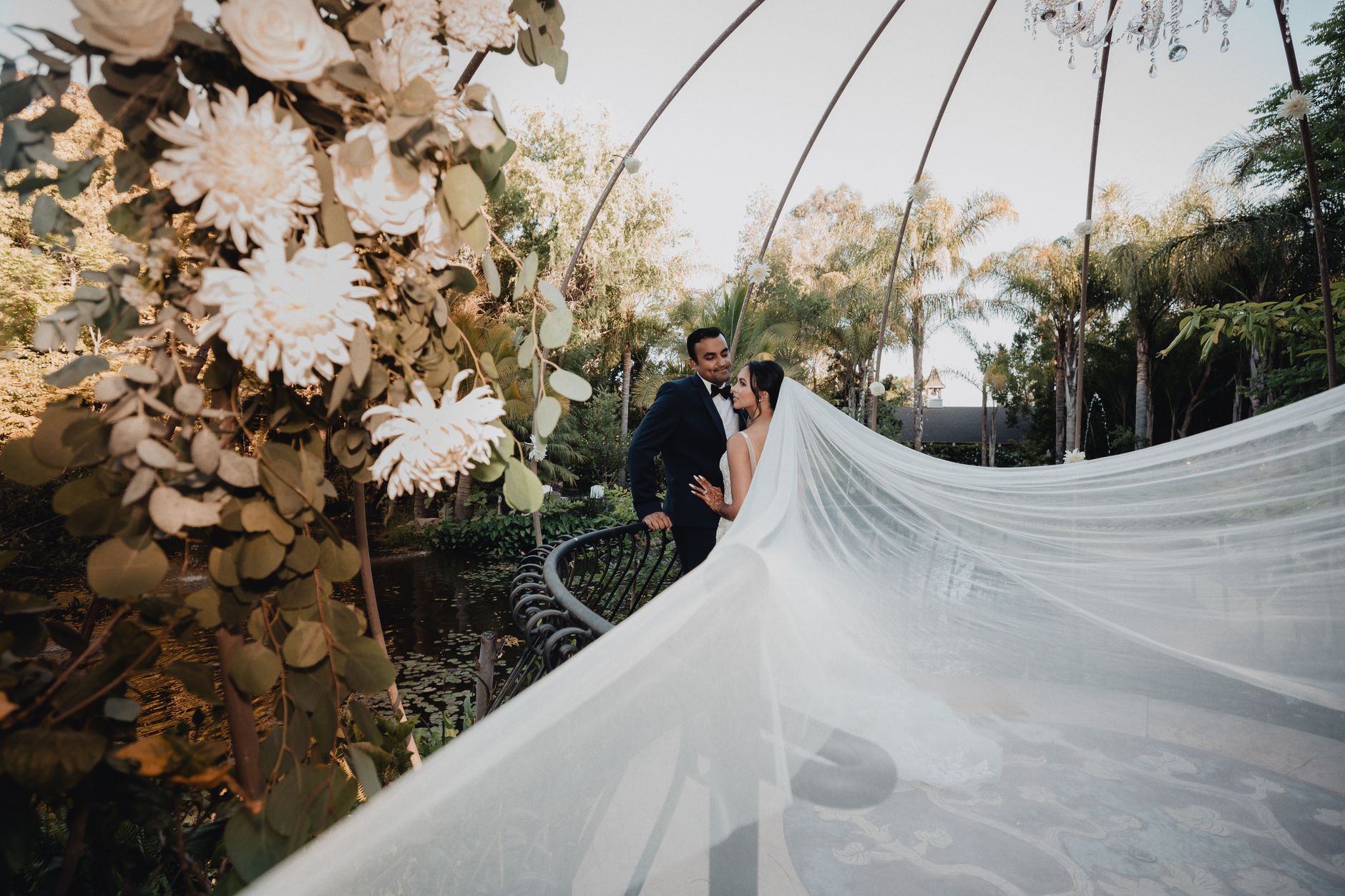
A wedding videographer at the Beverly Hills Hotel plans coverage around three distinct scenes: the poolside cabana ceremony in late-afternoon light, the portrait session in the hotel's signature pink corridors, and the Crystal Ballroom reception after dark. Each scene demands a different rigging strategy, and the transition windows between them are tighter than couples expect — typically 20 minutes from ceremony recessional to cocktail-hour portraits, then 45 minutes before the ballroom doors open.
The hotel's iconic status means your guests arrive with visual expectations already formed. Your film needs to deliver the pink-and-green palette, the poolside glamour, and the old-Hollywood formality they associate with the property, while isolating the moments that belong only to your day — the way your father's hand steadies on your shoulder during the first look in Cabana 1, the single quiet minute you share with your partner at the edge of the pool before the processional begins.
Why Beverly Hills Hotel Ceremonies Film Differently Than Garden Estates
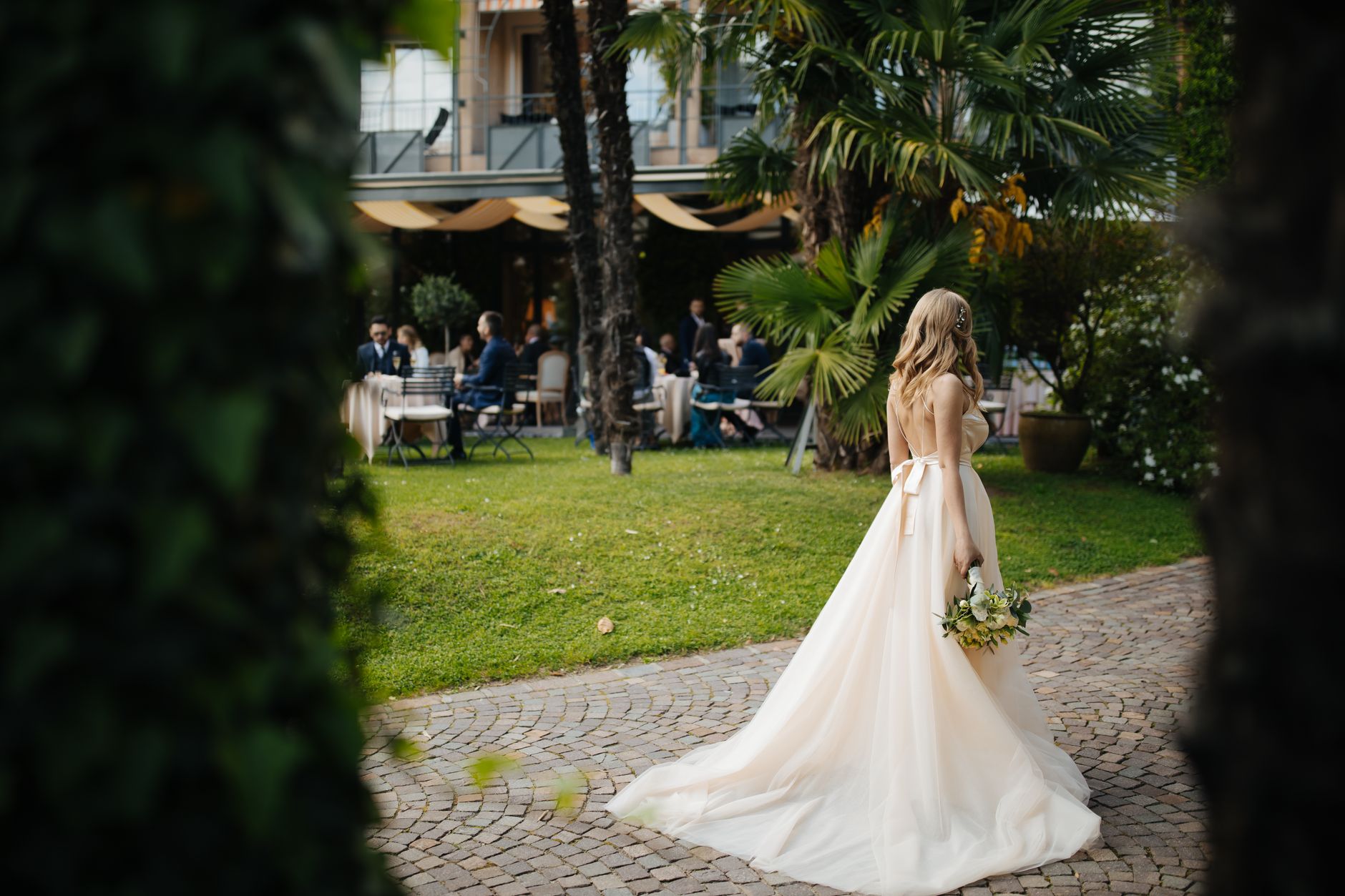
Photo by Image Studio on Pexels
A ceremony at the Beverly Hills Hotel happens in a compressed luxury environment. Unlike the open oak groves at Calamigos Ranch or the cliffside expanse at Terranea Resort, the poolside ceremony footprint at Beverly Hills Hotel measures roughly 40 feet by 60 feet, surrounded by cabanas, tropical plantings, and the hotel's pink stucco facade. This density creates two advantages for a videographer: controlled natural light bouncing off the pool surface, and multiple elevation options (balcony, poolside, second-story terrace) within a 30-foot radius of the ceremony site.
The trade-off is guest proximity. Rows are shallow — typically 6 to 8 rows of gold Chiavari chairs on each side of the aisle, each row no more than 8 seats wide. A 2-shooter video team positions one camera on a monopod at the rear center aisle (capturing the processional and wide ceremony), and one handheld shooter circulating the perimeter for parent reactions, ring-exchange close-ups, and the first kiss. There is no room for a third locked-off angle without obstructing guest sightlines, so the two shooters carry the entire ceremony coverage.
Audio is critical. The pool acts as a natural amplifier for voices, but it also picks up every glass clink from the adjacent Polo Lounge terrace and every leaf-blower two properties away on Sunset Boulevard. We rig two wireless lavalier microphones — one on the officiant, one on the groom — and place a third recorder near the couple as a safety track. The resulting ceremony audio is clean enough to use verbatim in the wedding film, including the vows and the officiant's opening remarks, without requiring noise-reduction processing in post.
Poolside Portrait Light: 4:30 PM to 6:00 PM
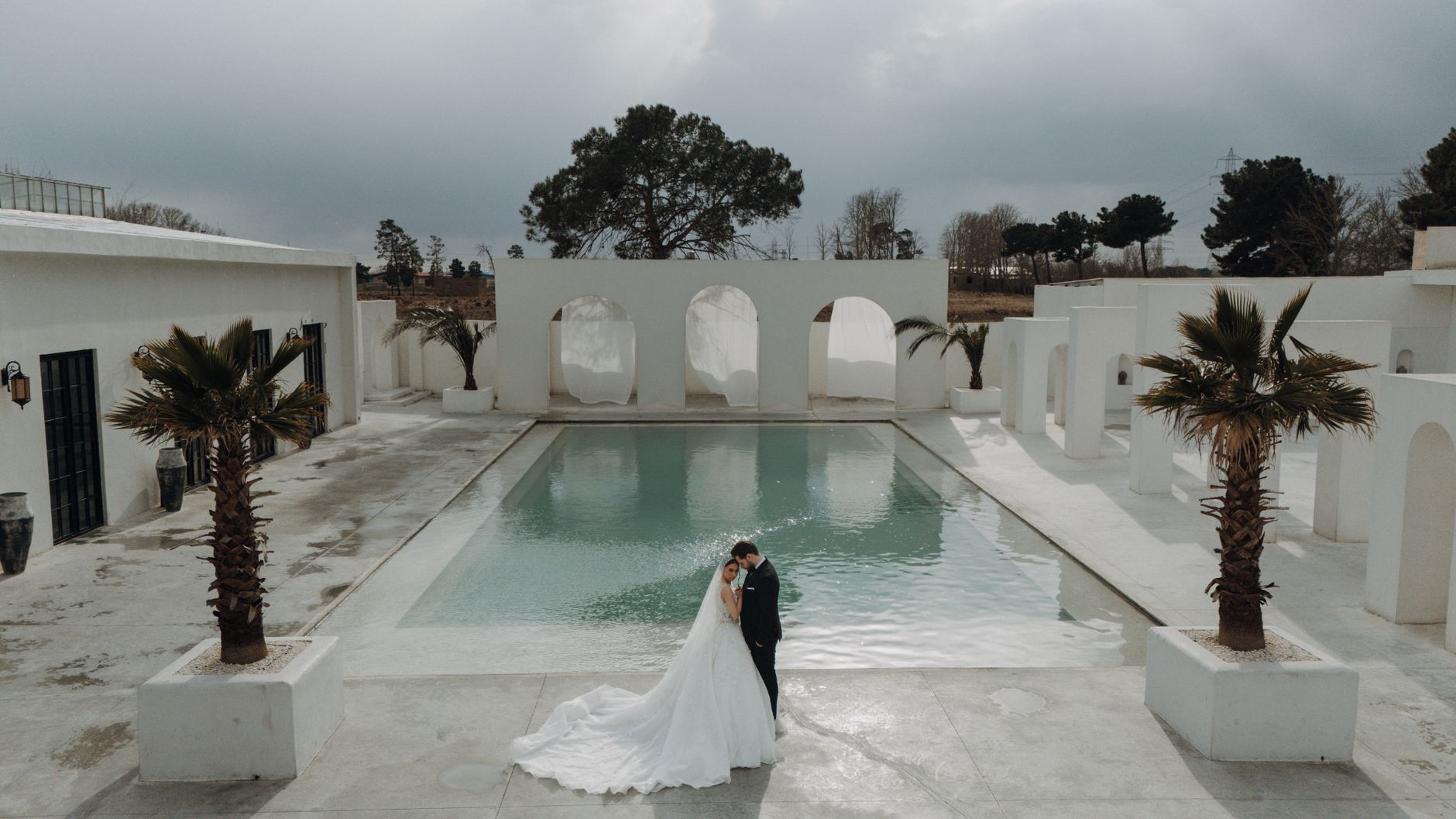
Photo by alirezamani wedding team on Pexels
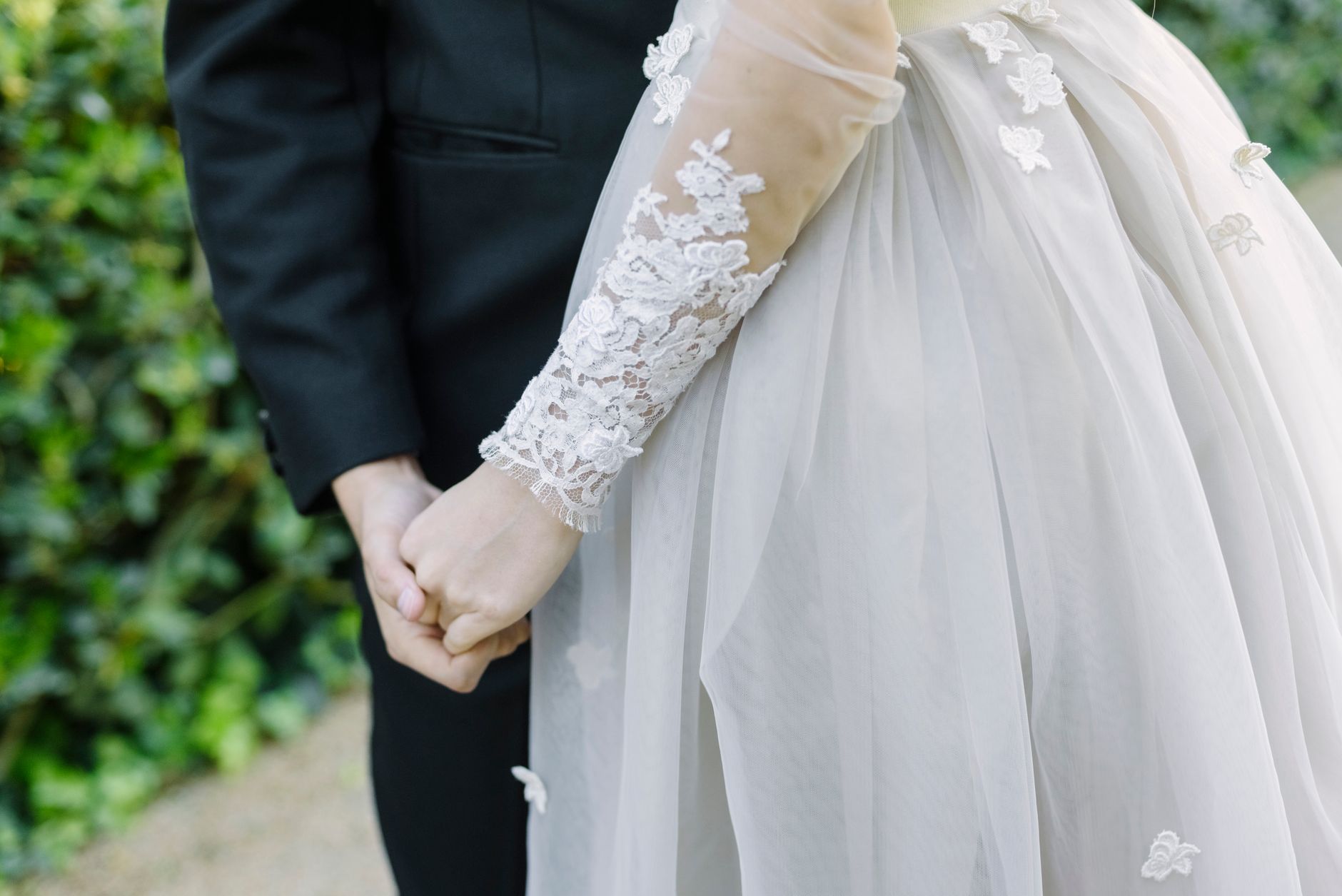
The best light at the Beverly Hills Hotel for portrait filming falls between 4:30 PM and 6:00 PM, when the sun has dropped below the hotel roofline but the sky remains bright enough to fill the poolside area with soft, even illumination. This is the window for couple portraits on the pool deck, bridal-party groupings near the cabanas, and family formals on the lawn behind Cabana 5.
Urban modern couples lean into the hotel's mid-century geometry — shooting clean, symmetrical frames against the pink facade, using the pool's edge as a leading line, isolating the couple in the center of a wide shot with the hotel's neon sign visible in the background. Garden romantic couples favor the tropical plantings along the north side of the pool, where birds-of-paradise and banana leaves create a softer, more organic frame.
A 10-hour wedding film package at the Beverly Hills Hotel typically allocates 45 minutes to this portrait session. The videographer coordinates with the photographer to rotate setups — video captures movement (the bride walking toward the groom along the pool edge, the couple laughing as they dip their hands in the water, the bridal party toasting with champagne on the lawn), while the photographer freezes the composed, editorial frames. This rotation prevents the couple from feeling directed twice for the same moment and ensures both teams deliver distinct coverage.
Crystal Ballroom Reception Coverage and Multi-Camera Strategy
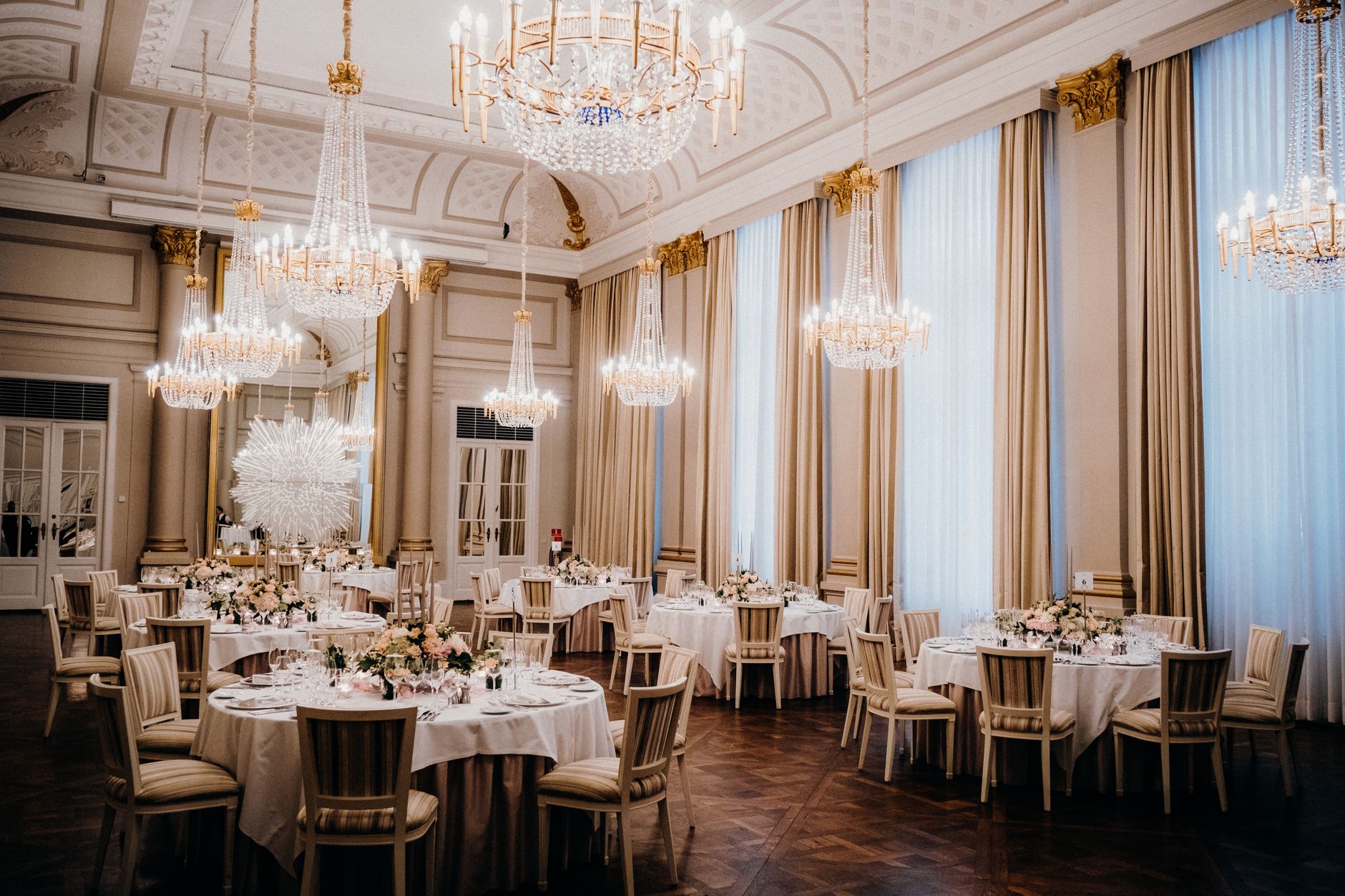
Photo by Rene Terp on Pexels
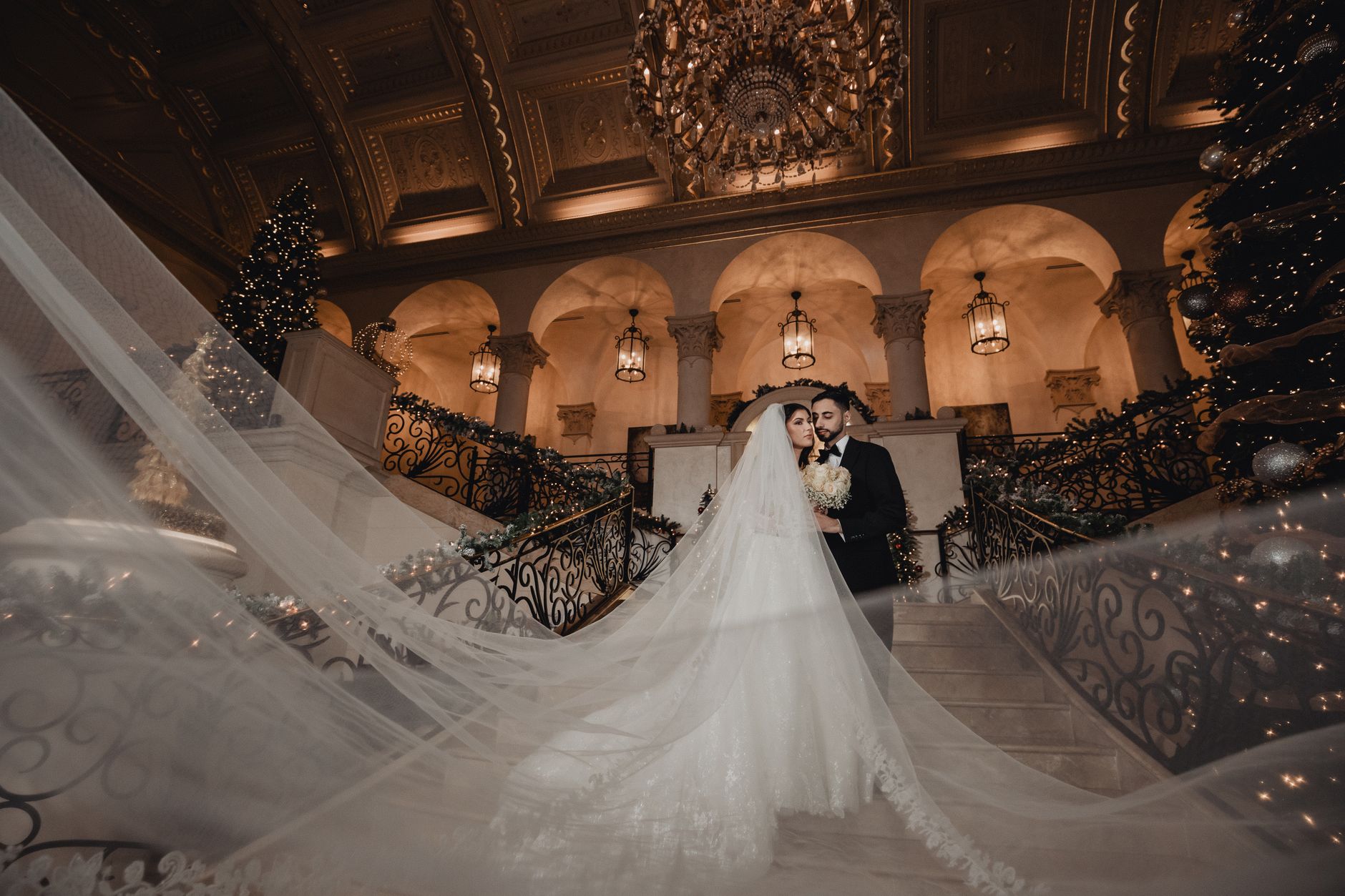
The Crystal Ballroom reception presents a lighting challenge that defines the videographer's approach: dramatic uplighting on the perimeter columns, minimal overhead light on the dance floor, and candlelight-only table illumination. A single-camera setup struggles to expose both the couple's first dance in the center of the room and the parent reactions at the perimeter tables without toggling ISO settings mid-dance.
Our solution is a 2-shooter video rig with locked exposure zones. Camera A locks exposure for the dance floor (ISO 3200, f/1.4, 24mm), capturing the first dance, parent dances, and cake cutting. Camera B roams the perimeter tables at a higher exposure (ISO 6400, f/2.0, 50mm), capturing guest reactions, toasts, and the quieter moments between courses. Both cameras record in 4K at 24 frames per second, preserving highlight detail in the candle flames and shadow detail in the couples' faces.
The ballroom's acoustics are forgiving — vaulted ceilings and heavy draping dampen echo — but toast audio still requires dedicated microphone placement. We position one shotgun microphone on a stand 6 feet from the podium (facing the toaster), and we request that the hotel's AV team provide a line-out from their house sound system so we capture the toasts at the same level the guests hear them. This dual-source audio mix eliminates the hollow, distant sound that plagues ballroom toast coverage when the videographer relies only on the camera's onboard microphone.
Documentary Photography and Wedding Film Combined Coverage
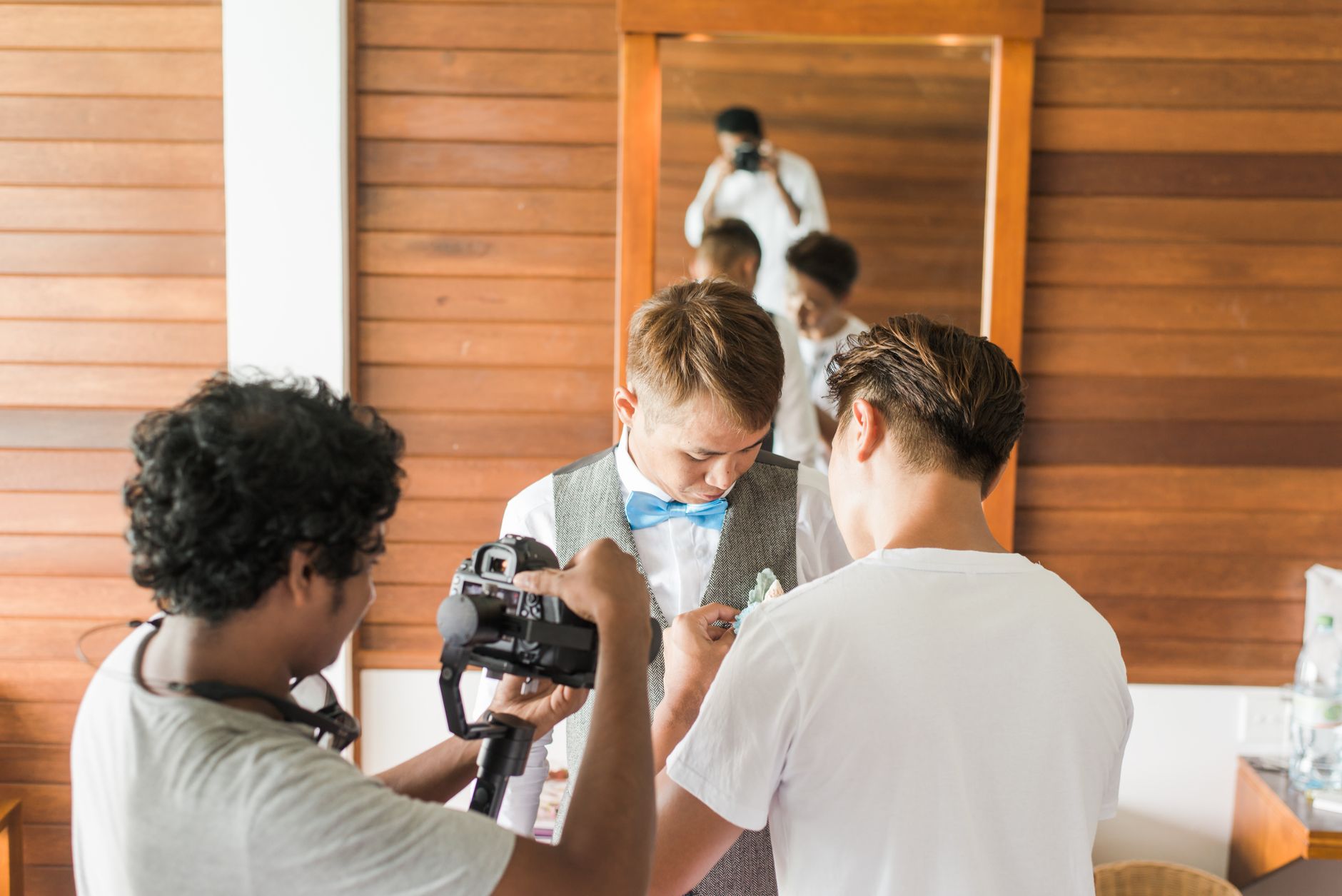
Photo by Asad Photo Maldives on Pexels
A Photo + Video Combined Package at the Beverly Hills Hotel coordinates 2-shooter video and 2-shooter documentary photography across the same 10-hour timeline. The advantage is coverage density: one photographer captures the bride's getting-ready suite while the second covers the groom's suite, and both video shooters capture the first look from opposite angles (one close on the bride's face, one wide on the groom's reaction).
The coordination challenge is spatial — the poolside ceremony area is small enough that four people with cameras can overcrowd the perimeter. Our protocol: the two photographers claim the front-row aisles (one on the bride's side, one on the groom's side) for the processional and vows, while the video team holds the rear center aisle and the balcony above. After the first kiss, the photographers move to the recessional path, and the video team pivots to capture the couple's walk back down the aisle from a low, handheld angle.
This division ensures that no guest sees two cameras pointing at the couple from the same angle, and it prevents the photo and video teams from blocking each other's key frames. The resulting wedding film includes both the wide cinematic establishing shots and the intimate close-up moments that define documentary photography, without visual duplication.
Timeline Logistics: From Cabana Getting-Ready to Ballroom Send-Off
A typical Beverly Hills Hotel wedding timeline for full-day coverage runs as follows:
- 1:00 PM — Video team arrives. Shooter A captures bride's suite (getting-ready, dress details, champagne with bridesmaids). Shooter B captures groom's suite (tie adjustments, cufflinks, groomsmen toasts).
- 3:00 PM — First look in Cabana 1. Both shooters present: one close on the bride, one capturing the groom's reaction.
- 3:30 PM — Poolside couple portraits and bridal-party groupings. Coordination with photographer to rotate setups.
- 4:30 PM — Guest arrival. Video team switches to ceremony positions (rear aisle and balcony).
- 5:00 PM — Ceremony begins. Processional, vows, ring exchange, first kiss, recessional. Total ceremony runtime: 28 minutes.
- 5:30 PM — Cocktail hour on the pool deck. Video team captures guest mingling, appetizer service, sunset light.
- 6:30 PM — Ballroom doors open. Guests take seats. Video team rigs for reception coverage.
- 7:00 PM — Grand entrance, first dance, parent dances, toasts. Captured with 2-camera ballroom rig.
- 8:30 PM — Dinner service. Video team captures room details, candlelight, quiet couple moments.
- 9:30 PM — Cake cutting, bouquet toss, open dancing.
- 11:00 PM — Send-off or last dance. Video coverage concludes.
This timeline assumes a 10-hour Full Ceremony Coverage package. Couples booking an 8-hour Highlight Reel package typically start coverage at 3:00 PM (first look) and conclude at 11:00 PM (send-off), skipping the getting-ready suites.
Deliverables and Edit Turnaround for Beverly Hills Hotel Films
A wedding film from the Beverly Hills Hotel delivers in three formats:
- Highlight reel (4–6 minutes) — narrative edit set to music, opening on the bride's first look, building through the ceremony vows, and closing on the first dance. Delivered 8 weeks after the wedding date.
- Full ceremony coverage (22–35 minutes) — uncut footage of the processional, vows, ring exchange, and recessional, with audio from the officiant and couple microphones. Delivered 10 weeks after the wedding date.
- Reception edit (8–12 minutes) — toasts, parent dances, cake cutting, and open dancing, sequenced chronologically. Delivered 12 weeks after the wedding date.
All three formats deliver as private Vimeo links (password-protected, downloadable) and as high-resolution MP4 files via Dropbox. Couples purchasing the Photo + Video Combined Package also receive a synchronized gallery where wedding film clips embed directly into the photo album, so the first-look video plays inline with the first-look stills.
Beverly Hills Hotel vs Hotel Bel-Air: Venue Comparison for Film Coverage
Couples choosing between the Beverly Hills Hotel and Hotel Bel-Air often ask how the two properties differ from a videographer's perspective. Both are luxury urban-resort hybrids in Los Angeles, both offer garden-ceremony and ballroom-reception options, and both attract editorial black-tie weddings with guest counts between 120 and 180.
The key difference is spatial density. Beverly Hills Hotel ceremonies happen in a compact, controlled poolside footprint with strong architectural geometry (pink facade, symmetrical cabanas, rectangular pool). Hotel Bel-Air ceremonies spread across the Swan Lake lawn, with organic, asymmetrical sightlines and softer natural light filtered through sycamore canopy. For couples who want crisp, graphic, mid-century frames, Beverly Hills Hotel is the stronger choice. For couples who want lush, romantic, diffused-light coverage, Hotel Bel-Air delivers.
Both venues require advance coordination with the property's event team to confirm videographer access, rigging permissions, and timeline logistics. Beverly Hills Hotel allows tripod placement on the pool deck but restricts drone footage. Hotel Bel-Air permits stationary camera positions around Swan Lake but requires all ceremony coverage to remain silent (no verbal direction, no camera movement during vows).
What Planners and Couples Need to Know Before Booking
Wedding planners coordinating Beverly Hills Hotel coverage should confirm the following details with the videographer during the initial inquiry:
- Second-shooter availability. A 2-shooter video team is the baseline for poolside ceremony and ballroom reception coverage. Single-shooter packages cannot capture both the couple's vows and the parent reactions simultaneously.
- Audio rigging timeline. Wireless lavalier microphones require 20 minutes of setup time before the ceremony. The videographer needs access to the ceremony site by 4:30 PM for a 5:00 PM processional.
- Ballroom uplighting coordination. If the couple hires a lighting designer to add color washes or gobo projections, the videographer should receive the lighting plot 48 hours before the wedding to plan camera exposures accordingly.
- First-look location preference. Cabana 1 is the most requested first-look site, but it books on a first-come basis. If Cabana 1 is unavailable, the north lawn behind the pool offers similar light quality and privacy.
- Travel and lodging. LifeStory.Film is based in Los Angeles. Beverly Hills Hotel is within our primary service area, so no travel fee applies. For destination weddings at Borgo Egnazia, Le Sirenuse, or Aman Tokyo, travel and lodging costs are billed separately and confirmed at booking.
Couples booking directly (without a planner) should begin the videographer inquiry 8 to 12 months before the wedding date. Beverly Hills Hotel is a high-demand venue for luxury wedding films, and preferred weekend dates in spring and fall typically book 10 months in advance.
Begin a Conversation About Your Beverly Hills Hotel Wedding
A wedding film at the Beverly Hills Hotel captures the property's mid-century glamour, the poolside ceremony light, and the ballroom formality that define the space — alongside the small, unrepeatable moments that belong only to your day. Coverage begins with the first look in the cabanas and extends through the last dance under the Crystal Ballroom chandeliers, preserving both the iconic frames and the quiet in-between scenes that a photographer's timeline often skips.
If you are planning a wedding at the Beverly Hills Hotel or considering the property as part of your Los Angeles venue search, reach out to discuss your timeline, your coverage priorities, and how a wedding film fits into your broader planning budget. We are based in Los Angeles, we know the property's ceremony and reception spaces in detail, and we travel worldwide for destination weddings when the couple's vision requires it.