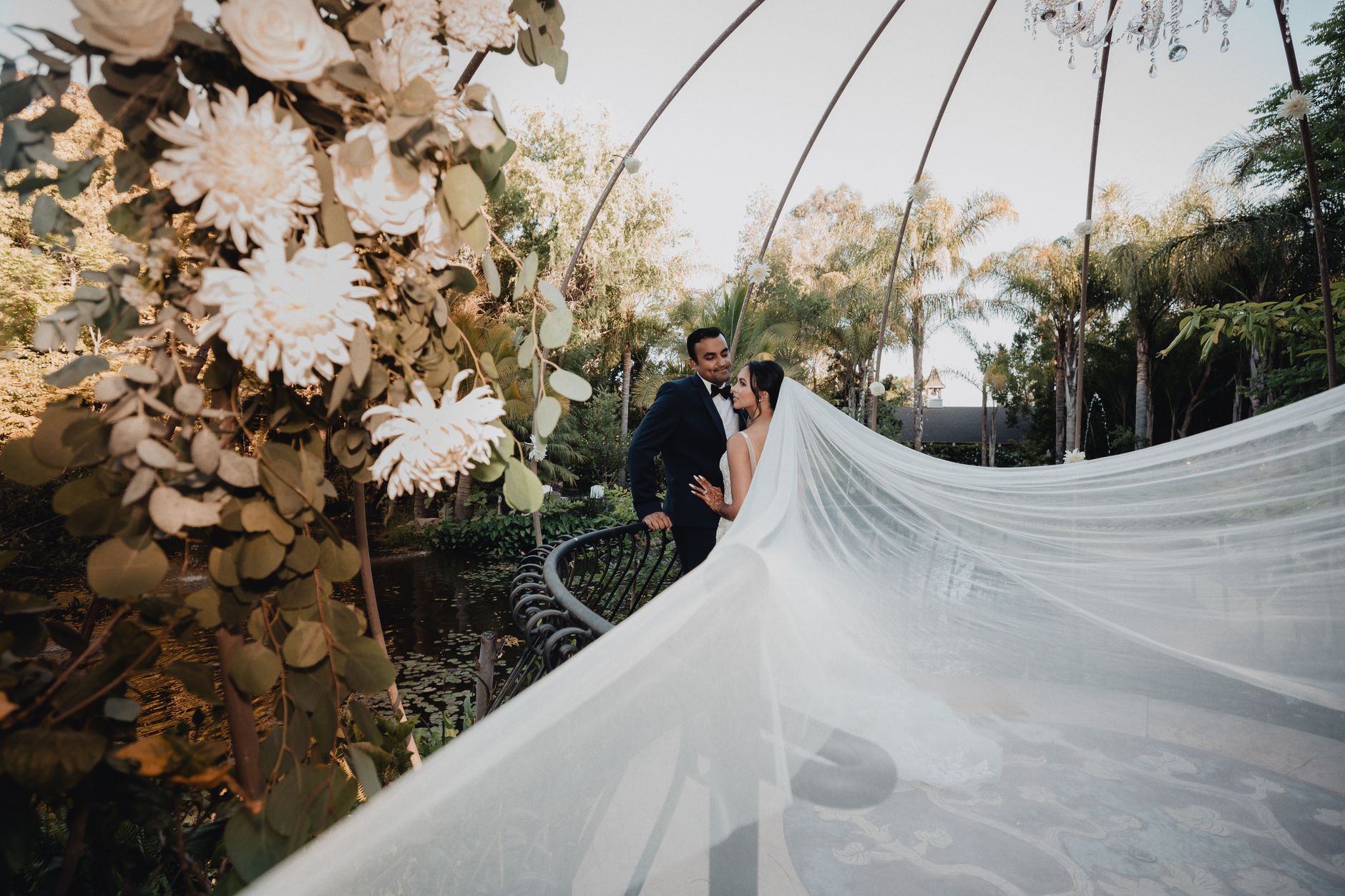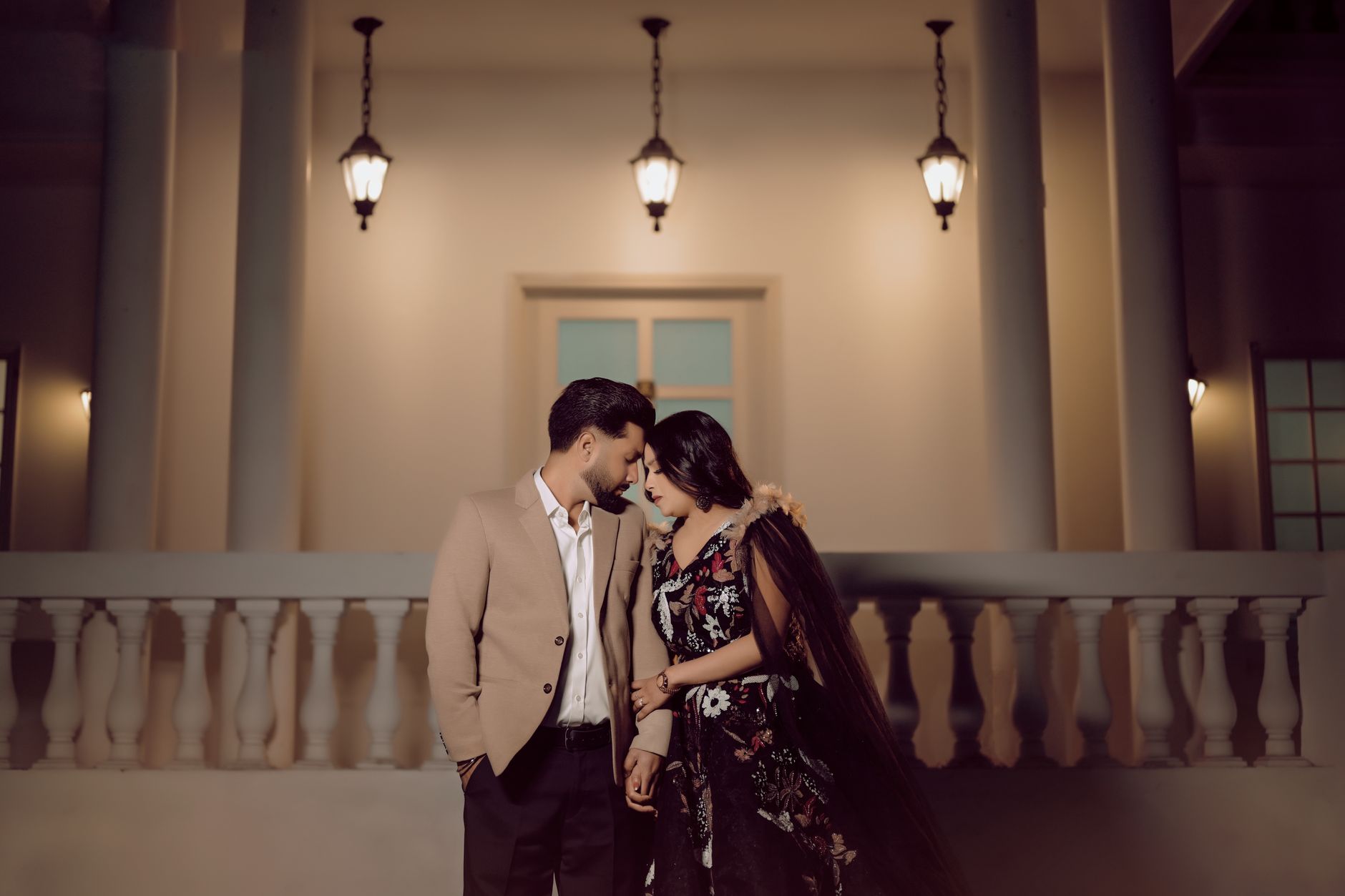
A destination wedding videographer travels with a coverage plan shaped by the specific venue, the local light schedule, and the logistical constraints of shooting 5,000 to 12,000 miles from home. We film weddings across Italy, France, Japan, Mexico, and the Caribbean — 2-shooter video teams, full-day coverage, and the same documentary-and-editorial approach we bring to weddings at Calamigos Ranch or Hotel Bel-Air, adapted to the rhythm and architectural constraints of Villa Cetinale, Le Sirenuse, or Aman Tokyo.
Why Couples Hire a California-Based Videographer for a Destination Wedding
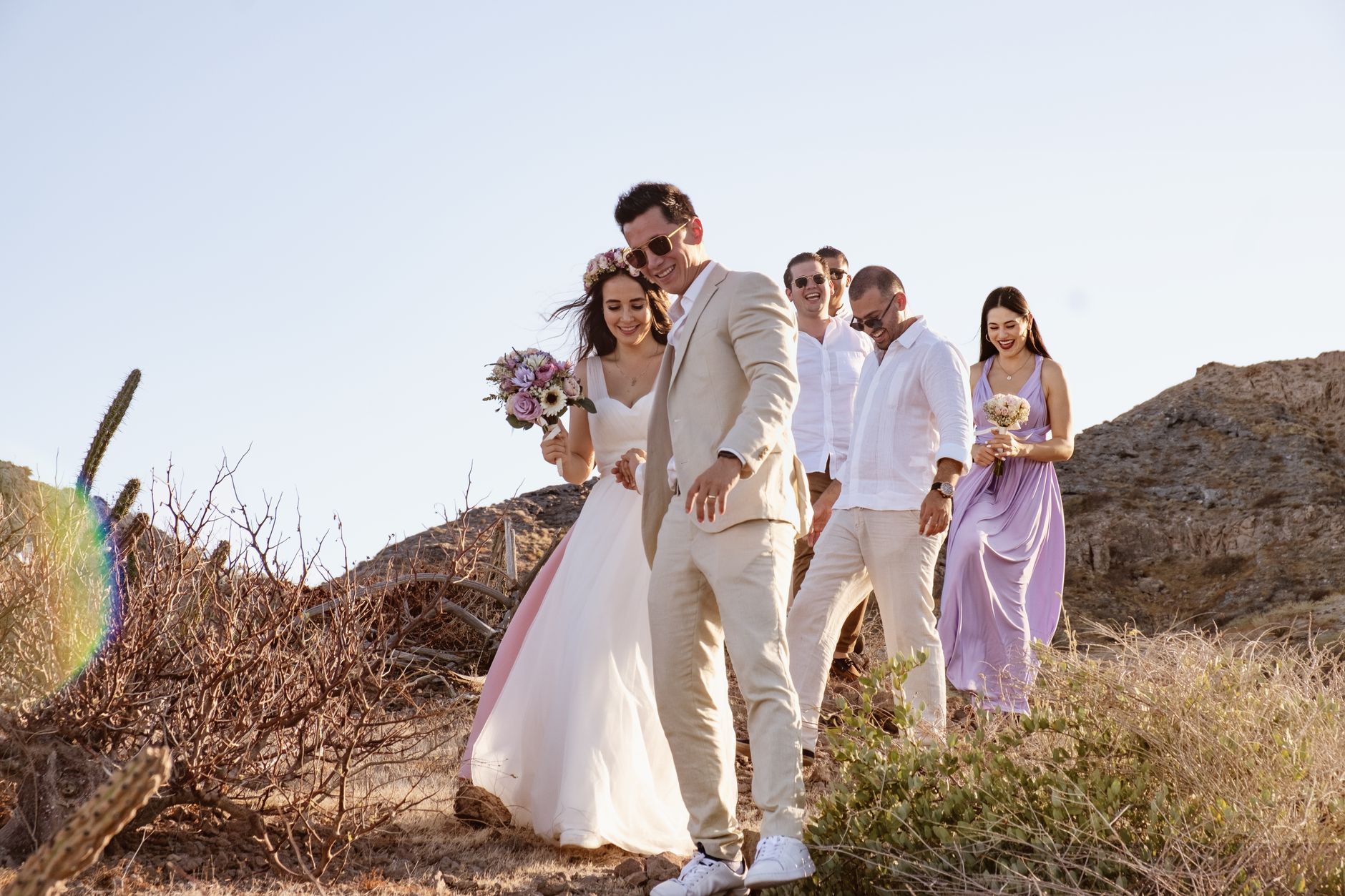
Photo by Asdrubal Luna on Pexels
Most couples planning a wedding in Positano or Kyoto live in California — and they prefer the continuity of working with one videographer from the engagement film through the wedding day rather than coordinating with a local vendor they meet for the first time during the rehearsal. A California-based team arrives 2–3 days before the wedding to walk the property, meet the planner, test the ceremony and reception light, and build the same pre-wedding relationship we establish for a wedding at San Ysidro Ranch or Auberge du Soleil.
The edit workflow, deliverables timeline, and communication cadence remain identical whether the wedding takes place in Malibu or Ravello. The couple books a 10-hour destination wedding film package, receives the same 8–12 week turnaround for the full ceremony edit and the highlight reel, and reviews drafts through the same shared platform. The videographer is not a logistical unknown; the couple has already seen the work, discussed the shot list, and confirmed the coverage priorities during the planning phase.
Coverage Workflow for Italy Weddings — Amalfi Coast, Puglia, and Tuscany
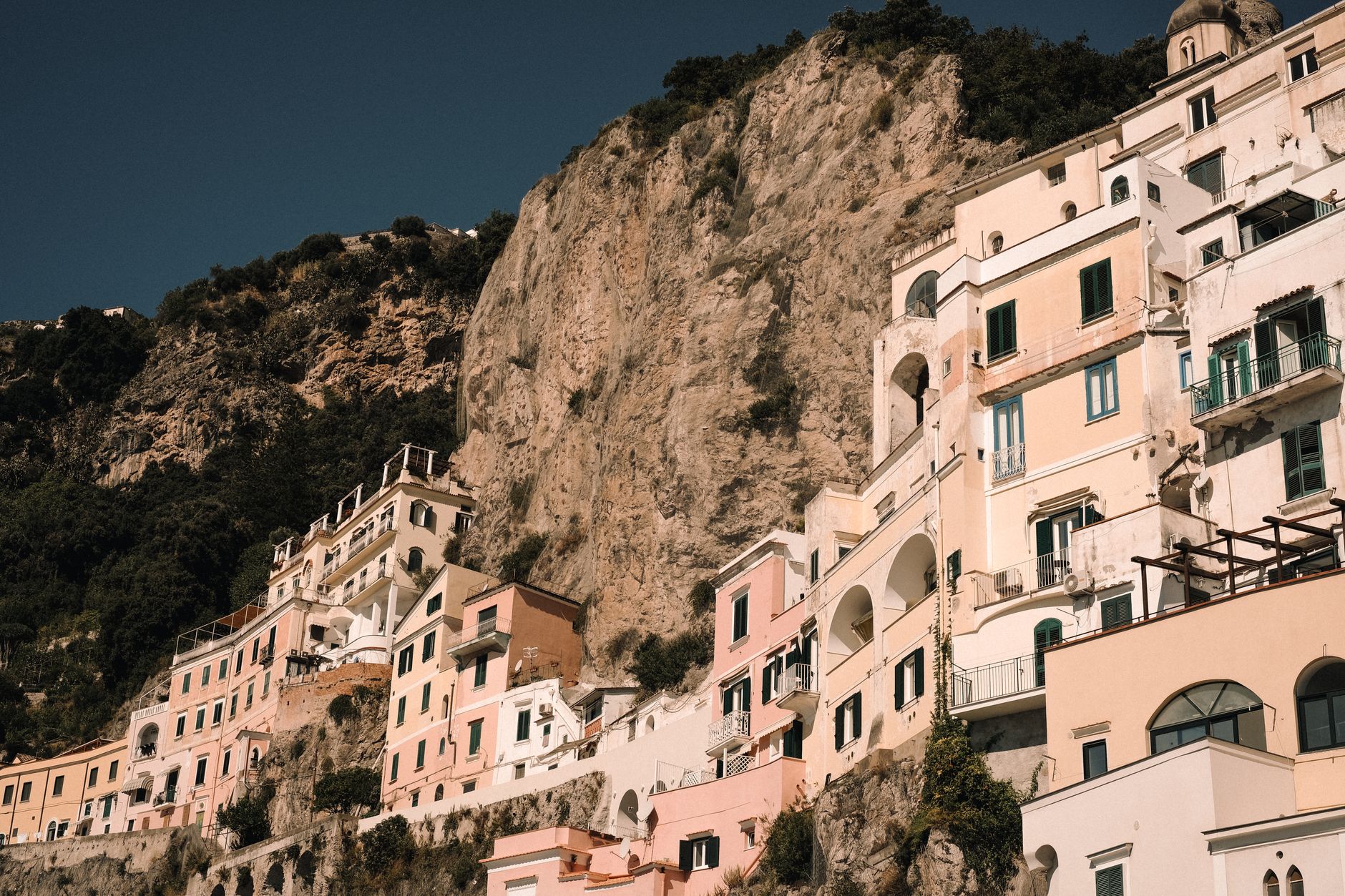
Photo by Alina Chernii on Pexels
A wedding film at Le Sirenuse in Positano or Belmond Hotel Caruso in Ravello requires advance coordination with the property's event team to confirm ceremony timing, terrace access during cocktail hour, and villa or suite access for getting-ready coverage. The Amalfi Coast's vertical architecture — staircases, terraced gardens, cliffside ceremony decks — shapes the camera movement and the two-shooter workflow. One shooter follows the bride through the suite and down the exterior staircase to the ceremony terrace; the second positions wide on the opposite terrace to capture the processional against the coastline.
Borgo Egnazia in Puglia offers a different set of coverage challenges: the masseria's interior courtyards and whitewashed stone corridors require bounce lighting during midday getting-ready coverage, while the exterior olive-grove ceremony benefits from late-afternoon sun that arrives at 5:30 PM in June. Villa Cetinale in Tuscany pairs an intimate indoor ceremony in the villa's frescoed salon with an outdoor reception in the lemon-tree courtyard — the videographer plans for two distinct lighting environments and confirms generator access if the reception extends past sunset.
Each Italy wedding includes 2 pre-wedding site visits (one virtual walkthrough with the planner, one in-person property walk 48 hours before the ceremony), 10 hours of wedding-day coverage, and coordination with the couple's photographer to ensure the portrait session, family formal window, and cocktail-hour shots do not overlap or compete for the same terrace light.
France Destination Wedding Film — Provence, Côte d'Azur, and Paris
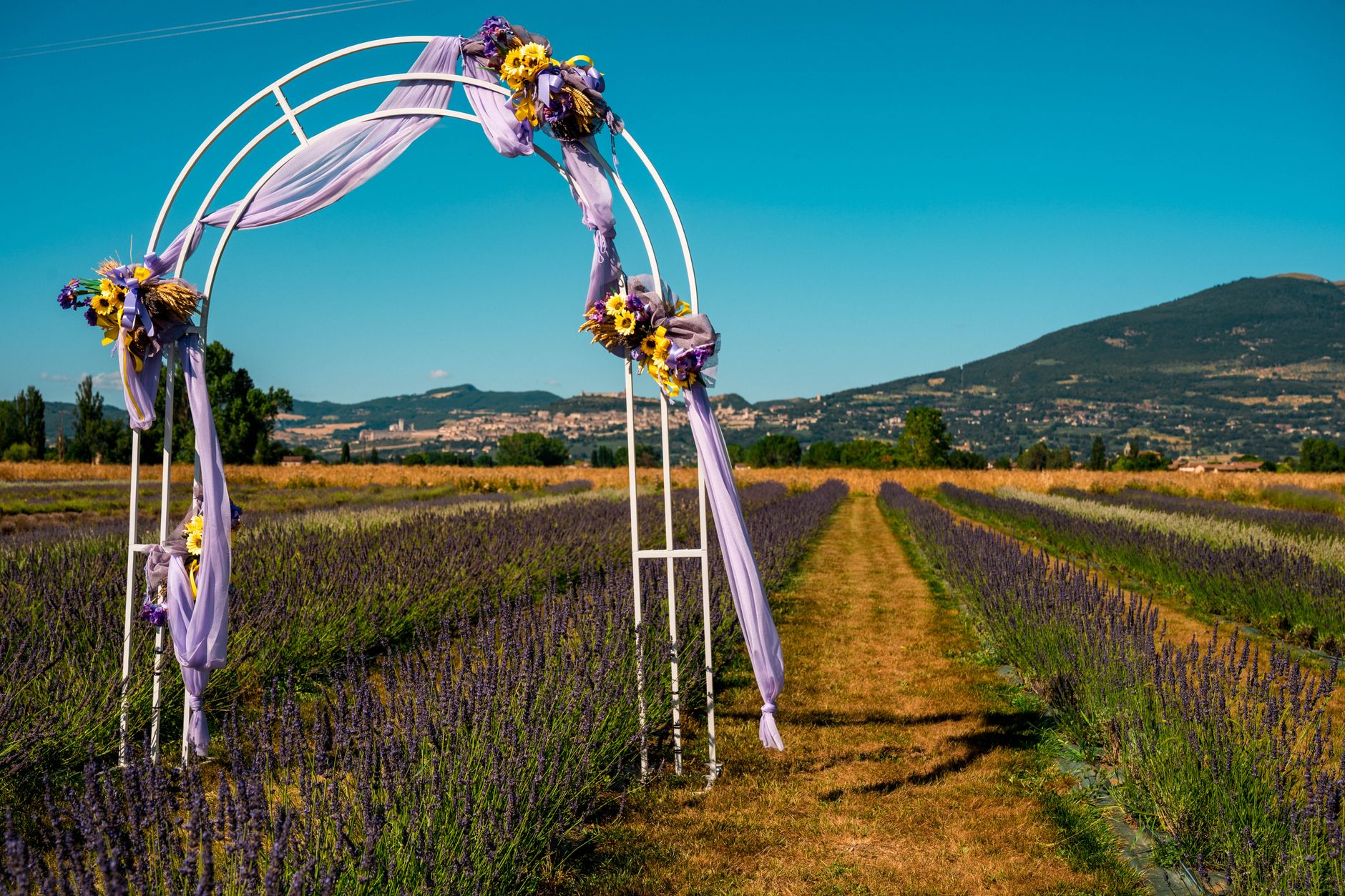
Photo by Edo Rossi on Pexels
A wedding at Hotel du Cap-Eden-Roc in Antibes spans three distinct scenes: the garden ceremony under pine trees, the Eden-Roc pavilion cocktail hour on the Mediterranean cliffside, and the formal dinner in the hotel's colonnaded terrace. The videographer's shot list prioritizes the 20-minute window between the end of the ceremony and the start of cocktail hour, when the couple walks from the garden to the pavilion and the late-afternoon light renders the coastline in soft gold rather than the harsh midday white that dominates earlier in the day.
Provence château weddings — typically held at private estates rather than hotels — require advance logistics coordination for vendor load-in, generator placement, and guest transportation timing. The videographer arrives the morning before the wedding to confirm ceremony-site access (many château ceremonies take place in lavender fields or vineyards a 10-minute walk from the main house) and to test audio in the outdoor ceremony space, where wind and distance from the officiant can compromise lapel-mic clarity.
Paris weddings at non-traditional venues (private museums, heritage hotels, restaurant courtyards) often include a civil ceremony at the mairie followed by a religious or symbolic ceremony at the reception venue 2–4 hours later. The videographer's coverage plan accommodates both ceremonies, the transit window, and the couple's preference for whether the mairie ceremony is fully documented or captured as B-roll only.
Japan Wedding Coverage — Tokyo, Kyoto, and Shinto Ceremony Traditions
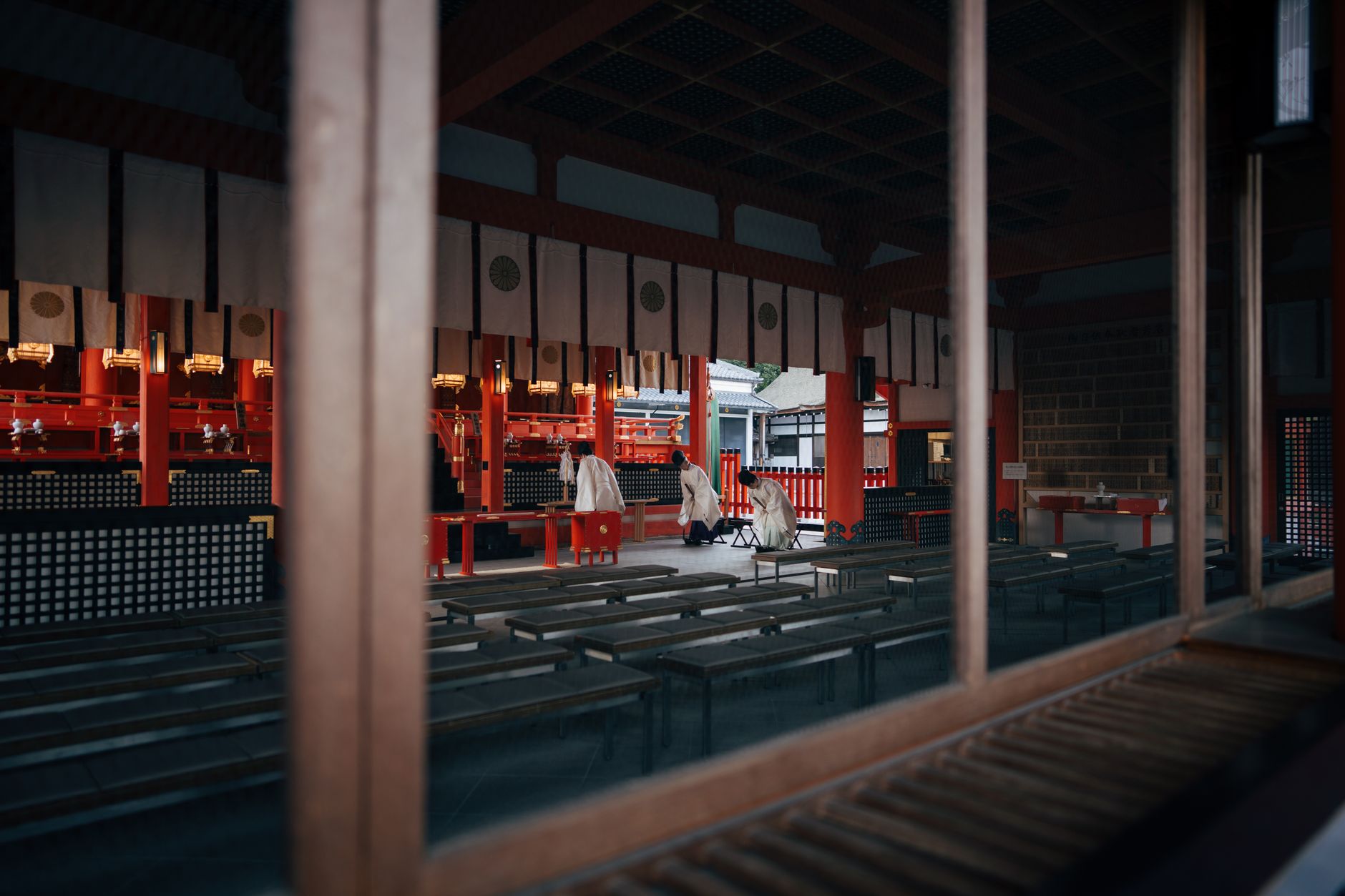
Photo by Gül Işık on Pexels
A Shinto ceremony at Aman Tokyo or a heritage shrine in Kyoto follows a formal structure that determines the videographer's camera placement and movement. The couple, immediate family, and the officiant occupy the inner shrine space; guests and vendors remain in the outer hall or courtyard. The videographer coordinates with the shrine's staff in advance to confirm whether video recording is permitted inside the honden (main hall), whether audio recording is allowed, and where the cameras may be positioned during the san-san-kudo sake ceremony and the tamagushi offering.
Most Japan weddings pair a traditional Shinto ceremony with a Western-style reception at a hotel ballroom or private kaiseki restaurant. The videographer's workflow accounts for the couple's costume change between ceremonies (from shiromuku or iro-uchikake to a Western gown and tuxedo), the timing gap between the two events (often 60–90 minutes), and the reception's structured program, which typically includes speeches, a champagne toast, the cake cutting, and a candle-lighting ceremony in a specific order.
Aman Tokyo weddings benefit from the hotel's floor-to-ceiling windows overlooking the Tokyo skyline — the getting-ready coverage, first-look session, and pre-ceremony portraits are all scheduled to take advantage of the natural northern light that fills the suite between 2 PM and 5 PM. The ceremony itself takes place in the hotel's private event space or at a nearby shrine, followed by a return to Aman Tokyo for the reception.
Logistics — Travel, Gear, and Timeline for International Wedding Coverage
Destination wedding videography requires the same two-shooter team, camera bodies, lenses, audio recorders, and stabilizers we bring to a wedding at Montage Laguna Beach or Terranea Resort, plus redundant batteries, international power adapters, and check-bag padding sufficient to protect cinema cameras and glass during 12+ hours of air travel. We travel with carry-on backups for all critical components — one camera body, one prime lens, one lapel mic transmitter, one audio recorder — so that a delayed or lost checked bag does not eliminate the ability to shoot the ceremony.
The timeline for a destination wedding includes:
- 90–120 days before the wedding: venue walkthrough call with the planner, confirmation of ceremony and reception timing, discussion of any site-specific restrictions (audio limitations, drone restrictions, vendor load-in constraints).
- 30 days before the wedding: final shot-list review with the couple, coordination with the photographer on portrait and family-formal timing, confirmation of travel and accommodation details.
- 2–3 days before the wedding: arrival at the destination city, in-person property walk, lighting and audio tests at the ceremony and reception sites, meeting with the planner and the venue's event coordinator.
- Wedding day: 10 hours of coverage beginning with getting-ready scenes and ending after the couple's send-off or the final reception moment (typically the last dance, the cake cutting, or the sparkler exit).
- 8–12 weeks after the wedding: delivery of the full ceremony edit, the highlight reel, and any additional reels (parent speeches, vows-only edit, dance-floor montage) specified in the package.
Travel and accommodation costs are billed separately from the videography package. Most couples include the videographer's flights, hotel stay, and ground transportation as a line item in the overall wedding budget rather than as a markup within the videography contract.
Destination Wedding Videography vs Hiring a Local Videographer
Hiring a local videographer in Italy, France, or Japan eliminates travel costs but introduces three risks: the couple has not seen the vendor's full portfolio in person, has not met the videographer before the rehearsal or the wedding morning, and cannot easily coordinate pre-wedding coverage (the engagement film, the rehearsal dinner, or a day-after shoot in a nearby location). A California-based videographer who has already filmed the couple's engagement film in Los Angeles or Napa arrives at the destination wedding with an established visual language, a documented shot list, and a working relationship with the couple's communication preferences and decision-making rhythm.
The edit workflow remains consistent across all weddings regardless of location. The couple receives the same Vimeo review links, the same revision process, and the same final deliverables (a 60–90 minute full ceremony and reception edit, a 4–6 minute highlight reel, and any additional reels requested in the package). A local videographer may offer a faster turnaround or a lower day rate, but the couple manages the risk of stylistic misalignment, communication gaps, and the inability to request revisions after the vendor has moved on to the next wedding season.
What a Destination Wedding Film Costs — Package Pricing and Travel Fees
Destination wedding film packages range from $7,500 to $14,000+ depending on coverage hours, shooter count, and deliverables. A standard 10-hour package with 2-shooter video coverage, full ceremony edit, and highlight reel starts at $7,500. Travel fees (flights, hotel, ground transportation, meals, and per diem) are billed separately and typically add $3,000–$6,000 for Europe or Japan weddings, depending on the season, the departure city, and the couple's preference for the videographer's accommodation tier.
Multi-day wedding coverage — common for destination weddings that include a welcome dinner, the wedding day, and a day-after brunch or excursion — is priced as a combined package with a discount relative to booking each day separately. A 3-day Italy wedding (welcome dinner at a vineyard, full wedding-day coverage at Borgo Egnazia, and a day-after boat excursion along the Puglian coast) is quoted as one contract with tiered coverage hours for each event rather than three separate invoices.
The couple receives a detailed cost breakdown during the inquiry phase so that travel fees, accommodation preferences, and any optional add-ons (a same-day highlight reel screened at the reception, drone footage of the ceremony site, or a separate vows-only edit for the couple's parents) are transparent and approved before the contract is signed. Final payment is due 30 days before the wedding date; travel is booked and confirmed within 7 days of final payment.
Editorial vs Documentary Style for Destination Weddings
Destination weddings lend themselves to editorial treatment — the couple has chosen a location for its visual and architectural qualities, and the film should foreground the relationship between the venue and the ceremony rather than compressing everything into a montage of reaction shots and dance-floor clips. An editorial destination wedding film includes long takes of the couple walking through the Villa Cetinale courtyard at dusk, wide shots that establish the terraced vineyards or the coastline beyond the ceremony site, and a pacing that allows the viewer to experience the location's scale and atmosphere rather than cutting every 2 seconds to maintain energy.
Documentary wedding films prioritize the unscripted moments — the mother's reaction during the processional, the couple's private conversation after the first look, the toast that earns a standing ovation — and the coverage plan accommodates those moments without staging or directing the couple into predetermined compositions. A documentary approach works well for couples who prefer a film that reflects what actually happened rather than a stylized reconstruction of the day's aesthetic high points.
Most destination wedding films combine both modes: editorial coverage of the location, the architecture, and the designed moments (the ceremony, the first dance, the couple's portrait session), plus documentary coverage of the unscripted emotional beats (vows, parent reactions, speeches, the send-off). The editor balances the two styles in post-production based on the couple's feedback during the rough-cut review phase.
Coordination with Planners and Venue Teams
A destination wedding videographer works closely with the couple's planner to confirm the day-of timeline, vendor load-in procedures, and any site-specific rules that affect camera placement or movement. Planners based in Italy, France, or Japan often have preferred vendor lists that include local videographers, but most planners are accustomed to working with California-based or U.S.-based vendors when the couple has an established relationship and prefers continuity across the engagement film, the wedding day, and any pre-wedding content.
The planner coordinates with the venue's event team to confirm ceremony timing (critical for outdoor weddings where light quality changes rapidly between 4 PM and 6 PM), audio restrictions (some heritage venues and religious sites prohibit amplified sound or require silent recording), and guest-flow logistics that affect the videographer's ability to move between the ceremony site, the cocktail terrace, and the reception space without navigating through seated guests.
Venue teams at hotels like Le Sirenuse, Belmond Hotel Caruso, and Aman Tokyo provide a dedicated event coordinator who manages vendor access, confirms load-in timing, and troubleshoots day-of challenges (weather contingencies, timeline adjustments, last-minute layout changes). The videographer meets with the coordinator during the pre-wedding site visit to walk through the coverage plan, confirm power and internet access for on-site backup, and discuss any areas of the property that are off-limits or require advance permission for filming.
Climate and Seasonal Light Considerations for Destination Weddings
Italy weddings scheduled for June, July, or August benefit from long daylight hours (sunset at 8:30 PM or later in Tuscany and Puglia) but face midday heat and harsh overhead light that flattens skin tones and eliminates shadow detail in outdoor portraits. The videographer's timeline recommendations typically place the ceremony at 5 PM or later to take advantage of the golden-hour light that begins around 6:30 PM and extends through cocktail hour. Morning getting-ready coverage starts at 11 AM or noon to avoid the early light that is too cool and directional for flattering interior shots.
France weddings in Provence or the Côte d'Azur follow a similar summer light pattern, with the added variable of mistral winds that can affect outdoor audio recording and require backup lapel mics or shotgun mics mounted closer to the officiant. Spring weddings (April and May) offer softer light and more moderate temperatures but carry higher rain risk; the videographer confirms the venue's covered-ceremony backup plan and brings rain covers for all camera bodies and audio equipment.
Japan weddings in spring (cherry blossom season, late March to early April) and fall (koyo foliage season, November) offer the most visually dramatic backdrops but also the highest venue pricing and the tightest booking windows. The videographer's timeline accommodates the couple's desire to include cherry-blossom or autumn-foliage shots in the portrait session, which may require scheduling the session at a nearby park or shrine rather than on the hotel property. Winter weddings in Tokyo and Kyoto benefit from crisp, clear light and lower travel costs but require indoor ceremony and reception plans due to cold temperatures and limited outdoor comfort.
Client Experience — What to Expect When You Book Destination Wedding Videography
The booking process for a destination wedding begins with an inquiry form submitted through the LifeStory.Film contact page, followed by a video consultation to discuss the couple's vision, the venue, the timeline, and the coverage priorities. During the consultation, the videographer reviews the couple's Pinterest boards or style references, discusses any must-have shots or moments (the couple's entrance to the reception, a specific family portrait, the officiant's blessing), and walks through the package options and pricing structure.
After the consultation, the couple receives a detailed proposal that includes the coverage package, travel cost estimate, deliverables timeline, payment schedule, and contract terms. Once the contract is signed and the deposit is paid, the couple is added to the production calendar and the planning phase begins. The videographer coordinates with the planner, confirms the venue walkthrough schedule, and requests any advance materials (the ceremony program, the floor plan, the vendor contact list) needed to finalize the shot list.
Two weeks before the wedding, the couple and the videographer hold a final planning call to review the timeline, confirm the must-have shot list, discuss any last-minute changes (guest-count adjustments, weather contingencies, timeline shifts), and answer any outstanding questions. The videographer arrives at the destination 2–3 days before the wedding to complete the site visit, meet the planner in person, and acclimate to the local time zone and working conditions.
After the wedding, the couple receives a same-week confirmation email with a rough timeline for the edit process. The full ceremony edit and highlight reel are delivered 8–12 weeks after the wedding date. The couple reviews the rough cut via a private Vimeo link, submits revision notes (typically one round of revisions is included in the package), and receives the final films as high-resolution downloads plus a USB drive shipped to their home address.
Begin a Conversation About Your Destination Wedding Film
We produce destination wedding films across Italy, France, Japan, and beyond — full-day coverage shaped by the venue, the light, and the specific rhythm of your wedding day. If you are planning a wedding at Le Sirenuse, Borgo Egnazia, Aman Tokyo, or another destination property, reach out through the inquiry form to discuss your timeline, your coverage priorities, and how we can document the day in a way that reflects both the location and the moments that matter most to you.