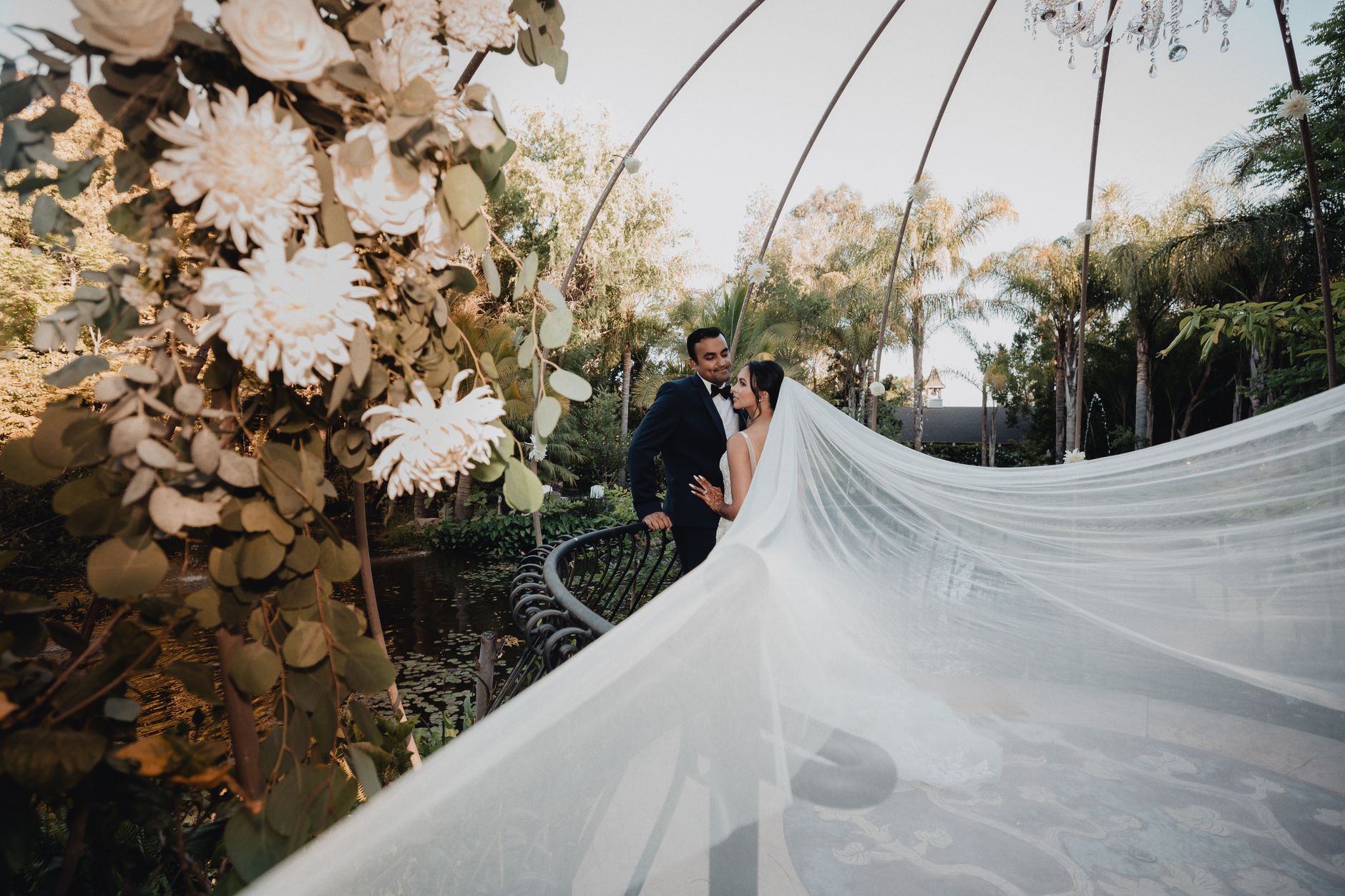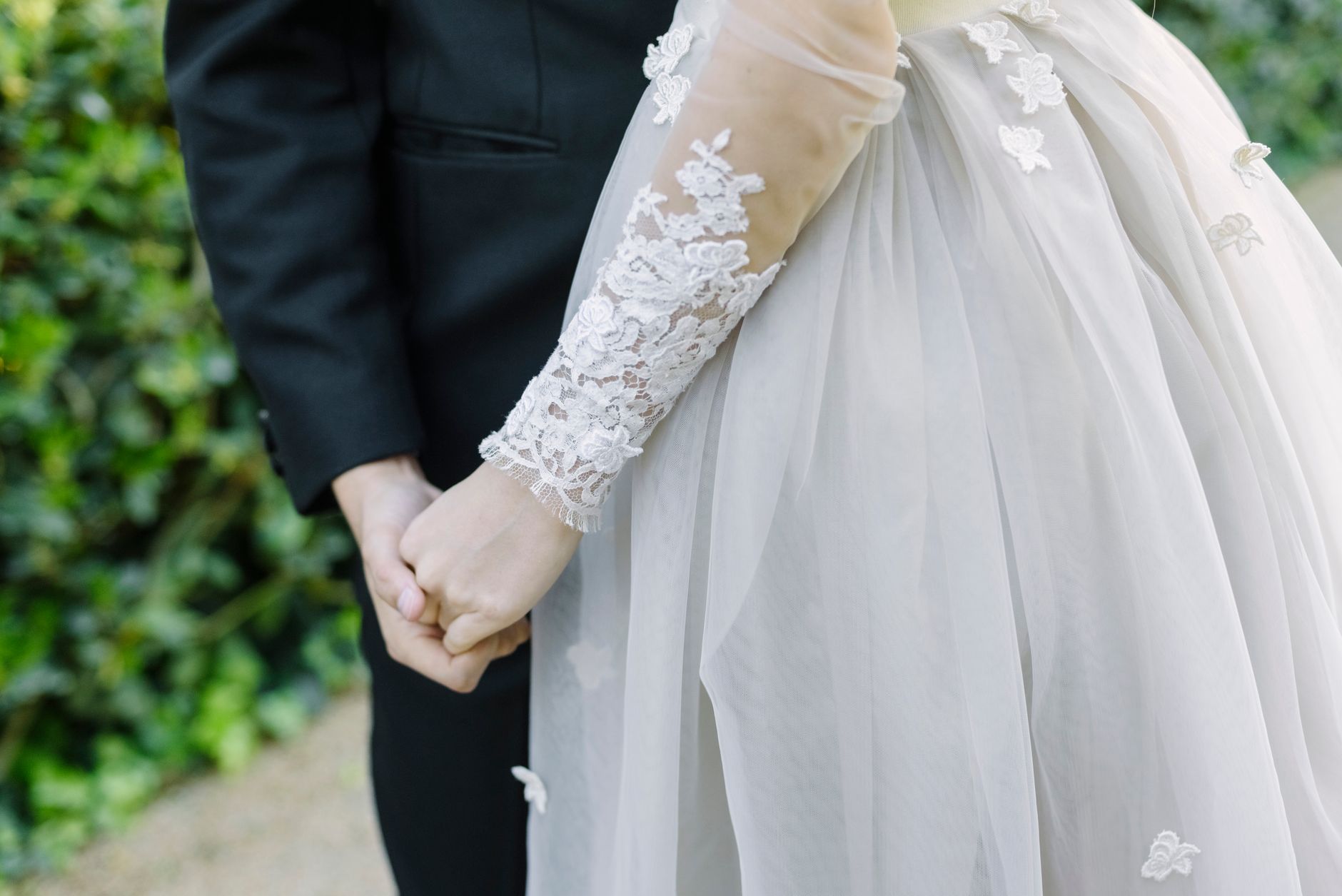
Choose a wedding videographer by reviewing their full films first, confirming their shooting style matches your vision, and verifying they have experience at your venue type. The right videographer will show you complete ceremony and reception films—not just highlight reels—and will articulate how they capture audio, work with your photographer, and deliver your final edit. Start your search 10–14 months before your wedding date, budget $3,500–$15,000 depending on coverage length and deliverables, and prioritize cinematic storytelling over equipment specs.
A wedding film at Calamigos Ranch is built around two scenes — the oak-grove ceremony in late-afternoon light and the barn reception after dark — and the videographer's coverage plan needs to anticipate both before the day begins. That level of venue-specific fluency separates a professional from someone learning on your wedding day.
Watch Full Wedding Films, Not Just Highlight Reels
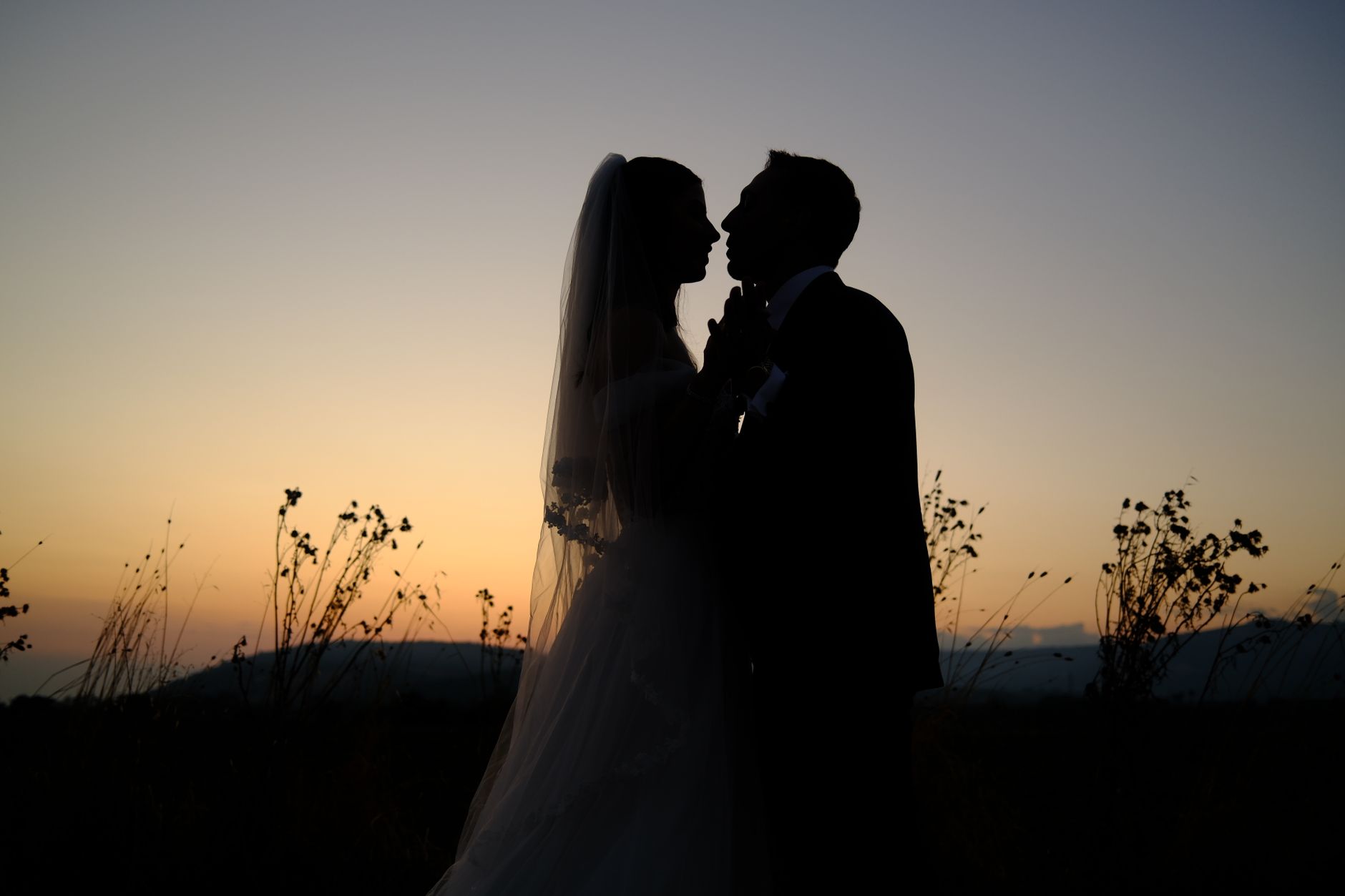
Photo by Andrea Prochilo on Pexels
Request full ceremony and reception films to evaluate pacing, audio quality, and storytelling across 20–40 minutes, not just the best 90 seconds. Cinematic highlight reels can mask poor audio capture, awkward transitions, or lack of narrative structure. A videographer with 50+ weddings should have multiple full films available for review, not just social media clips.
Why 60-Second Reels Hide Critical Details
The 90-second Instagram reel compresses a 10-hour wedding into a dozen carefully selected moments — perfect lighting, flawless audio, the couple's most photogenic angle. What it doesn't show: whether the videographer captured intelligible vows when the groom's voice cracked, whether the maid of honor's toast survived wind noise during the outdoor reception, whether the edit feels cohesive when you watch the complete 25-minute feature film on your first anniversary.
Look for natural moments between scripted events — parent reactions during the processional, unplanned toasts, guest interactions during cocktail hour. These moments reveal whether the videographer anticipates emotion or simply records what's in front of them.
What to Look for in a Complete Ceremony Edit
Notice whether vows and toasts are clearly audible. Listen for wind noise, echo in large ballrooms, or distortion when the officiant raises their voice. Watch how the edit transitions between wide establishing shots and close-ups of hands, rings, and faces. A skilled editor builds rhythm through pacing, not just through music.
Ask to see films from weddings similar to yours in guest count, venue type, and formality level. A 200-person ballroom wedding at the Beverly Hills Hotel requires different coverage than an intimate 40-person ceremony at San Ysidro Ranch.
Red Flags in Portfolio Presentation
If a videographer deflects your request for full films with "we only share those with booked clients" or "our highlight reels show our best work," walk away. Professional studios maintain portfolio libraries organized by venue, season, and wedding style. LifeStory.Film provides prospective clients with 8–12 full wedding films spanning ceremony, vows, toasts, and reception coverage across venues including Calamigos Ranch, Hotel Bel-Air, and Ojai Valley Inn.
Another red flag: portfolio films that all look identical in color grade, pacing, and music choice. Every wedding has its own emotional texture; the edit should reflect that, not impose a house style on every couple.
Confirm Their Style Matches Your Vision — Documentary vs Cinematic
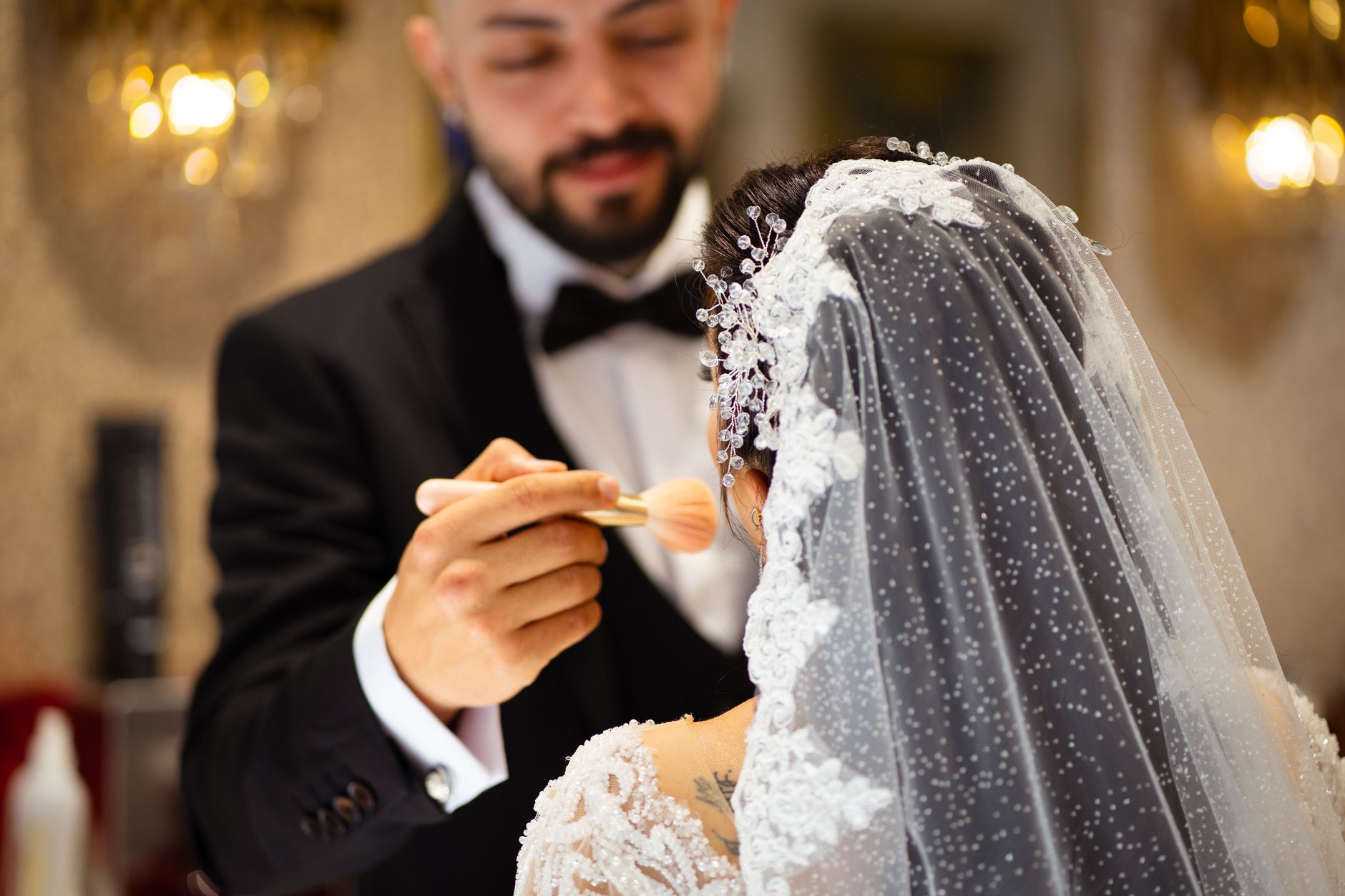
Photo by serkan atay on Pexels
Documentary videographers prioritize real-time chronology and minimal intervention, ideal for couples who want unobtrusive coverage. Cinematic videographers use intentional composition, movement, and editorial pacing to create a film that feels like a short narrative work. Hybrid shooters blend observational moments with directorial sequences like first-look coverage or golden-hour couple portraits.
Documentary Style — Observational and Journalistic
Documentary wedding videography captures events as they unfold, with minimal directorial intervention. The videographer positions themselves to observe rather than orchestrate. Audio typically includes ambient room sound, guest conversations, and the ceremony officiant's natural speaking volume. Edits run 45–90 minutes and preserve chronological sequence.
This style suits couples who value authenticity over stylization and who want their film to serve as a factual record of the day. It works especially well for intimate weddings where a small guest count allows the videographer to remain invisible.
Cinematic Style — Editorial and Narrative-Driven
Cinematic wedding films borrow techniques from narrative filmmaking: intentional camera movement, shallow depth of field, editorial color grading, and sound design that layers music, vows, and ambient audio into a cohesive score. Cinematic wedding films typically run 15–30 minutes and include curated vows, toasts, and key moments set to a sound-designed score.
The cinematographer may direct the couple during golden-hour portraits, asking them to walk the Terranea Resort cliffside path three times to capture different angles and light. The first look becomes a choreographed sequence rather than a single unbroken shot.
Your venue and timeline influence style fit — intimate 50-person estate weddings suit documentary, while editorial venues like San Ysidro Ranch or Montage Laguna Beach pair well with cinematic treatment.
Hybrid Approaches and When They Work Best
Many luxury wedding videographers blend both approaches: documentary coverage during the ceremony and toasts, cinematic treatment during couple portraits and reception details. This hybrid model delivers the emotional authenticity of documentary with the visual polish of cinematic filmmaking.
Ask your videographer which moments they approach documentarily and which they direct. A clear answer signals experience; vague language suggests they haven't thought through their own methodology.
Verify Venue Experience and Lighting Proficiency
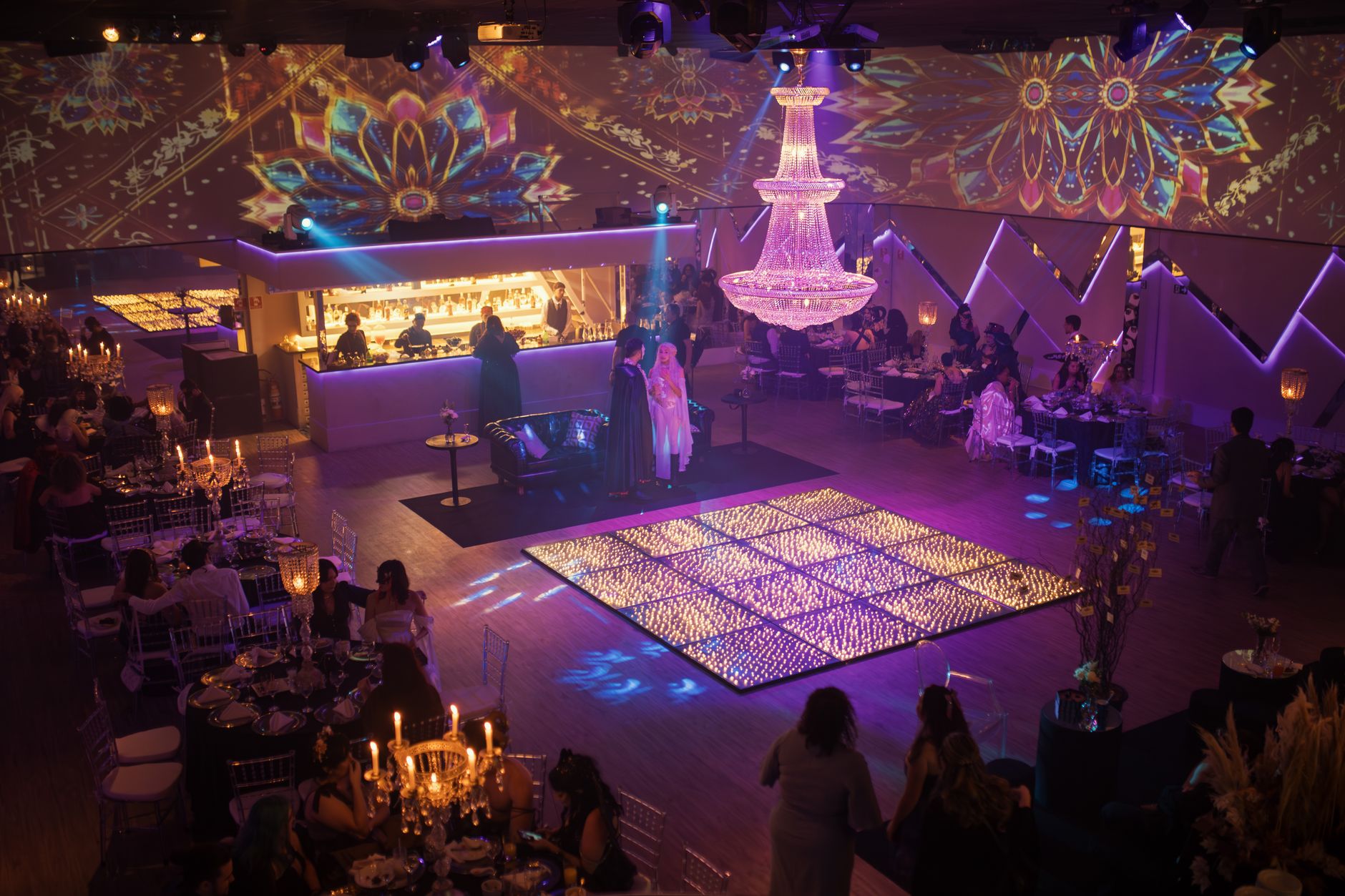
Photo by Matheus Bertelli on Pexels
Videographers who have worked your venue understand optimal ceremony angles, audio challenges, and vendor load-in constraints. Luxury venues like Resort at Pelican Hill, Beverly Hills Hotel, and Terranea Resort have strict vendor guidelines and preferred shooting locations. A videographer who has filmed at your venue three or more times arrives knowing where the bride preps, which ceremony angle avoids backlit faces, and whether the ballroom chandeliers create flicker on 24fps footage.
Why Venue-Specific Knowledge Matters
Every venue has a signature scene that defines its wedding films. At Calamigos Ranch, it's the oak-grove ceremony at 4:30pm when the canopy filters golden light onto the couple's faces. At Ojai Valley Inn, it's the Topa Mountain backdrop during twilight toasts on the oak terrace. At Hotel Bel-Air, it's the Swan Lake reflection during the couple's first look.
A videographer who has never filmed your venue will spend the first two hours of your wedding day scouting instead of capturing. They won't know that the Montage Laguna Beach mosaic bar photographs better than it films, or that the Bel-Air Bay Club terrace requires fill light after 6pm even in summer.
Low-Light Capability for Ballrooms and Tented Receptions
Southern California wedding videographers must handle a 300-lux ballroom, a 10,000-lux midday terrace ceremony, and a 50-lux candlelit reception within the same event. Low-light performance separates professional cinema cameras from consumer gear. Ask what they shoot on and request samples from indoor receptions.
Specifically, ask to see footage from a tented reception or a ballroom with minimal uplighting. If the sample footage is grainy, underexposed, or artificially brightened in post-production, their equipment can't handle your venue's lighting conditions.
Outdoor Ceremony Timing and Golden Hour Planning
Outdoor California weddings require coordination around sunset timing, especially for Malibu, Santa Barbara, and Ojai ceremonies scheduled at golden hour. A videographer experienced in your region understands seasonal light — June 8pm sunset versus November 5pm — and weather contingencies.
They should ask about your ceremony start time during the consultation and flag potential issues. A 6pm ceremony in February means you'll say vows in fading light, which affects lens choice, ISO settings, and whether your videographer recommends moving cocktail hour before the ceremony to preserve golden-hour couple portraits.
Assess Audio Capture and Backup Systems

Photo by Jakub Zerdzicki on Pexels
Professional wedding videographers use wireless lavalier microphones on the officiant, groom, and key speakers to ensure clean vow and toast audio. Backup audio recorders should run simultaneously in case of wireless interference or battery failure during the ceremony. Videographers coordinate with DJs and bands to receive a direct audio feed from the soundboard for speeches and first-dance music.
Wireless Lavalier Microphones for Vows and Toasts
Capturing intelligible vows in an outdoor ceremony with 15mph coastal wind requires redundant lavalier and shotgun microphones plus post-production audio restoration. The lavalier mic on the groom captures his vows at close range; the lavalier on the officiant captures the bride's vows and the declaration of marriage; a shotgun mic mounted on the camera records ambient audio and guest reactions.
Ask whether they bring redundant recording devices and how they've handled technical failures in past weddings. A professional will describe a specific incident — a dead lavalier battery during the ceremony, RF interference from the DJ's wireless system — and how backup recorders saved the audio.
Backup Recorders and Redundancy Planning
Every wireless microphone should have a wired backup recorder attached to the transmitter pack. This redundancy protects against radio interference, dead batteries, and the officiant forgetting to turn on the mic before the processional.
Additionally, many videographers run a separate digital audio recorder on the DJ's soundboard or at the base of the ceremony aisle as a fourth layer of redundancy. This recorder operates independently of the camera system and captures clean audio even if the wireless system fails completely.
Coordination with Your DJ or Band
Your videographer should request a direct audio feed from the DJ's mixer for toasts, first-dance music, and any live band performances. This line-level audio is cleaner than what the camera microphones capture across a 120-person reception tent, and it preserves the full frequency range of the music your DJ selected.
Outdoor venues with wind exposure — coastal ceremonies at Ritz-Carlton Laguna Niguel or Bacara Resort — require wind protection and strategic mic placement. Ask whether your videographer uses foam windscreens, furry wind muffs, or both, and whether they've filmed coastal weddings before.
Understand Team Size and Coverage Hours
Solo videographers can capture one angle and perspective at a time — adequate for intimate 40-person weddings but limiting for 150+ guest events. Two-person teams cover ceremony from multiple angles, split prep coverage between bride and groom, and ensure simultaneous cocktail-hour and detail work. Multi-location weddings — ceremony at one estate, reception at another — or multi-day destination events often require three videographers to avoid coverage gaps.
Solo Shooter vs Two-Videographer Teams
A solo videographer films the bride getting ready while missing the groom's preparation, captures the ceremony from a single vantage point, and must choose between filming cocktail hour or reception details. Two-videographer teams capture 40% more usable footage across parallel timelines, critical for weddings at sprawling estates like Hummingbird Nest Ranch or Saddlerock Ranch.
The second videographer also serves as a backup if the primary shooter's camera malfunctions, a lens breaks, or an unexpected illness occurs. For weddings with budgets above $8,000, two-videographer coverage is standard.
When to Add a Third Operator for Multi-Location Weddings
Destination weddings in Italy, Japan, or multi-venue California celebrations benefit from three-videographer teams. One operator covers getting-ready scenes at the hotel, a second films travel and arrival at the ceremony venue, and the third scouts ceremony angles and sets audio equipment before guests arrive.
For multi-day weddings — rehearsal dinner, ceremony, next-day brunch — a three-person team rotates coverage so no single videographer works 14-hour days across consecutive events.
Coverage Gaps During Cocktail Hour and Prep Time
Standard packages cover 8–10 hours; discuss whether getting-ready coverage, rehearsal dinner, or next-day brunch are included or require add-ons. Confirm arrival and departure times in your contract — missing the first look or final sendoff creates permanent gaps in your film.
If your wedding includes a two-hour gap between ceremony and reception while guests travel between venues, clarify whether your videographer remains on-site or leaves and returns. Some contracts count travel time against coverage hours; others do not.
Review Turnaround Time and Deliverable Formats
Most luxury wedding videographers deliver final films 3–6 months after the wedding date, with highlight reels often arriving in 4–8 weeks. Confirm what you'll receive — some packages include only a 3-minute highlight reel, while others deliver a 20-minute feature film, full ceremony edit, and toast compilation.
Typical Edit Timelines — 3 to 6 Months Post-Wedding
Post-production consumes 40–80 hours per wedding: organizing footage, syncing audio, cutting sequences, color grading, sound design, revisions, and export. Videographers batch this work across multiple weddings, which means your film enters a queue behind weddings shot earlier in the season.
Peak wedding season in California runs May through October. If you marry in June, expect delivery in October or November. If you marry in October, expect delivery in January or February. LifeStory.Film delivers a cinematic highlight film, full ceremony edit, and toast films within 16 weeks, with all footage archived for 7 years.
Highlight Reel vs Full Feature Film Deliverables
A 3–5 minute highlight reel is perfect for social sharing and quick rewatching, while a 20–40 minute feature film preserves complete vows, toasts, dances, and narrative arc. Most couples watch the highlight reel frequently and the feature film on anniversaries.
Clarify what you're paying for. Entry-level packages often include only the highlight reel, with the feature film available as an add-on for $1,500–$3,000. Mid-tier and luxury packages bundle both deliverables plus full ceremony and toast edits.
Digital Download, USB Drive, and Archival Options
Ask for delivery format: private Vimeo link, downloadable high-resolution file, USB drive, or archival Blu-ray. Vimeo links expire or require ongoing account management; downloadable files give you permanent ownership but require storage planning.
Request raw footage policies upfront if you want unedited clips for future projects or extended family. Most videographers do not release raw footage, as it includes unusable takes, technical errors, and moments that weren't meant for final delivery. If raw footage is critical to you, negotiate it into your contract at booking.
Evaluate Photographer Collaboration and Timeline Coordination
The best wedding films happen when videographer and photographer coordinate on first-look positioning, portrait timing, and ceremony angles. Ask whether your videographer has worked with your photographer before or can provide references from past collaborations. Some studios offer integrated photo-video packages with unified creative direction and pricing advantages.
How Video and Photo Teams Share Key Moments
During the first look, the photographer typically positions the couple and directs the moment, while the videographer films from an off-angle that captures both the couple and the photographer's reaction shots without appearing in each other's frames. This coordination requires a pre-wedding conversation about positioning and timing.
The same choreography applies during golden-hour portraits. The photographer leads the couple through poses and locations; the videographer follows at a distance, using long lenses to capture movement and candid reactions without interrupting the photographer's workflow.
Avoiding Conflicts During First Look and Portraits
Independent videographers should request a pre-wedding call with your photographer to discuss timeline, shot lists, and who leads during couple portraits. Confirm your videographer won't obstruct key photo moments — professional crews use long lenses and off-angle positions to stay invisible.
Couples who book photo and video from the same creative team report 25% fewer timeline conflicts and more cohesive visual storytelling across both mediums. Unified teams share the same aesthetic sensibility, communicate throughout the day without formal handoffs, and often offer package pricing below the sum of independent contractor rates.
Unified Vendor Teams vs Independent Contractors
LifeStory.Film offers a photo + video combined package designed to eliminate coordination friction. The photo and video leads scout the venue together before the wedding, share shot lists, and designate who directs each moment. The result is a seamless creative experience and 20–30% more usable footage, because neither team is waiting for the other to finish.
If you book independent vendors, ask each for references from weddings where they've worked together. A photographer who says "I work with any videographer" may not prioritize collaboration; one who says "I've worked with [specific studio] at four weddings and here's how we coordinate" demonstrates proactive partnership.
Budget Appropriately for Quality and Experience Level
Entry-level packages ($3,000–$5,000) usually cover 6–8 hours with one videographer and deliver a highlight reel and ceremony edit. Mid-tier packages ($6,000–$10,000) include two videographers, 10–12 hours of coverage, drone footage, and a full feature film with toasts and dances. Luxury packages ($10,000–$15,000+) add multi-day coverage, rehearsal dinner films, next-day sessions, and international travel for destination weddings.
What $3,000 to $5,000 Packages Typically Include
At this price point, expect a solo videographer, 6–8 hours of coverage, and deliverables limited to a 3–5 minute highlight reel and a full ceremony edit. Audio capture may rely on a single shotgun microphone rather than redundant wireless lavaliers. The videographer likely shoots 15–30 weddings per year and uses prosumer equipment — mirrorless cameras, basic stabilizers, and Adobe Premiere for editing.
These packages suit weekday weddings, off-season dates, and couples who prioritize photography over videography but want some moving-image record of the day.
Mid-Tier $6,000 to $10,000 Full-Day Coverage
The average booked wedding videography package in Southern California luxury markets ranges from $7,500 to $10,000 for full-day dual-shooter coverage. This tier includes professional cinema cameras, redundant audio systems, two videographers for 10–12 hours, drone footage (where permitted), and multiple deliverables: highlight reel, feature film, full ceremony, and toast compilation.
Videographers at this level shoot 20–40 weddings per year and maintain professional insurance, vendor partnerships with planners and venues, and established post-production workflows. Turnaround time averages 12–16 weeks.
Luxury $10,000+ Multi-Day and Destination Pricing
Luxury wedding videography packages include multi-day coverage — rehearsal dinner, welcome party, ceremony, reception, and next-day brunch — plus destination wedding film services for Italy, France, Japan, or other international locations. Destination weddings in Italy, France, or Japan often include travel fees, equipment shipping, and local crew coordination costs.
Price reflects experience, equipment quality — cinema cameras versus mirrorless hybrids — post-production time, and creative reputation, not just hours on-site. A videographer charging $12,000 for a single-day wedding brings 10+ years of experience, relationships with luxury planners and venues, and a portfolio that includes editorials in Vogue Weddings or Style Me Pretty.
At this level, expect white-glove client service: venue scouting calls, coordination with your planner and photographer, custom music licensing, and revision rounds included in the base price.
Start Your Search 10 to 14 Months Before Your Wedding
Book your wedding videographer 10–14 months before your date, especially for peak season (May–October in California). Top cinematic studios often fill their calendars 12–18 months out for destination and luxury venue weddings. Waiting until six months before your date limits your options to videographers with open availability — often a red flag for quality or demand.
Begin your search by reviewing portfolios from three to five studios whose aesthetic matches your vision. Schedule consultations with your top two choices. During the consultation, ask to see full films, discuss your venue and timeline, and confirm the lead videographer who will shoot your wedding — not an associate or second shooter.
Once you've selected your videographer, confirm the booking with a signed contract and deposit. Review the contract for deliverables, coverage hours, revision policies, travel fees, cancellation terms, and force majeure clauses. Ask about insurance — professional videographers carry liability and equipment insurance that most venues require.
Finally, coordinate an introduction between your videographer and your photographer. This conversation — ideally three to four weeks before the wedding — aligns shot lists, confirms timeline, and establishes who leads during key moments like the first look and couple portraits. Couples who facilitate this introduction report smoother wedding-day workflows and fewer missed moments.
Begin a conversation about your wedding film at Calamigos Ranch, Ojai Valley Inn, or any California venue by reviewing our full ceremony and reception films, then scheduling a consultation to discuss your vision, timeline, and coverage needs.