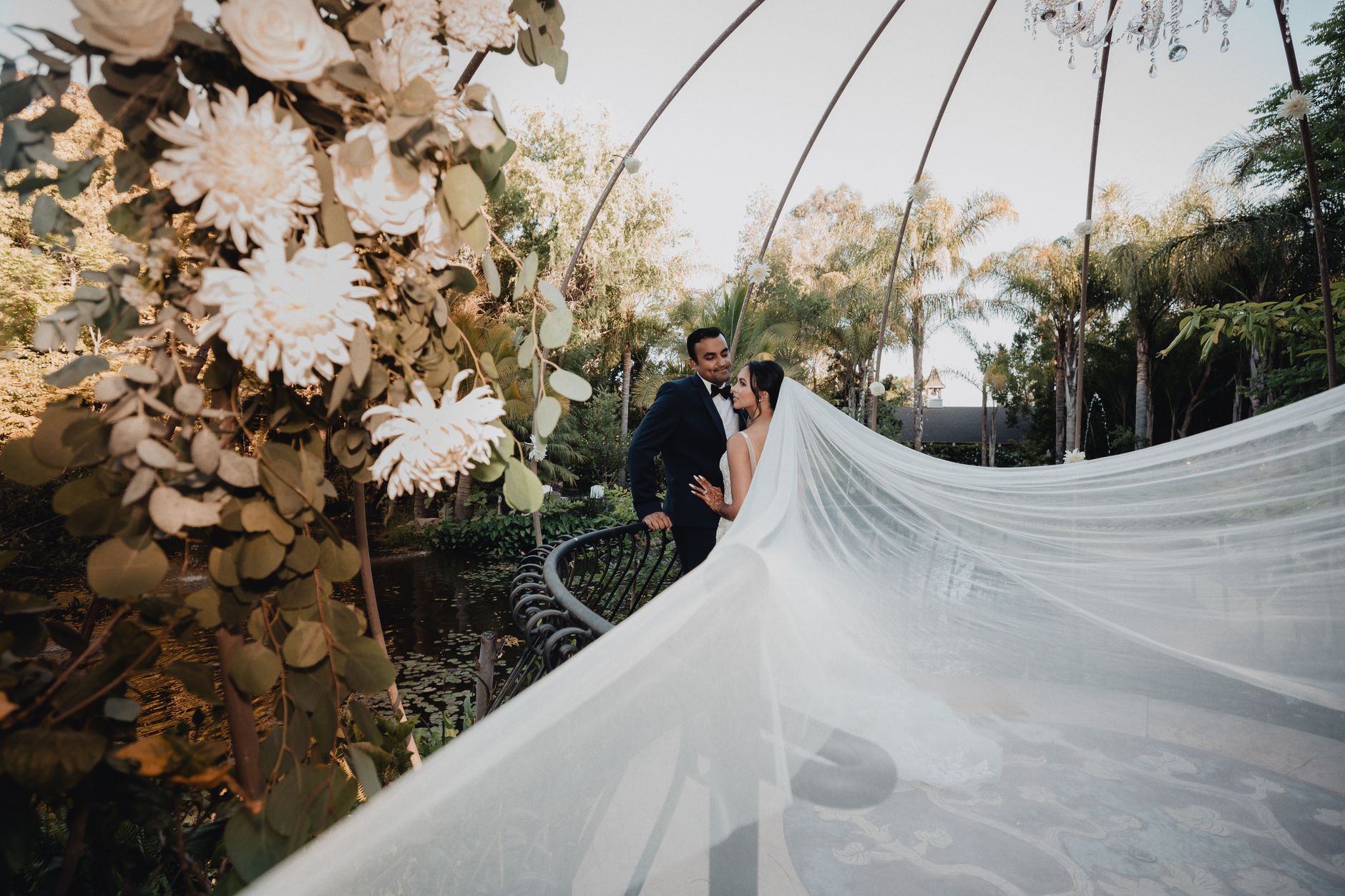
A wedding videographer at Ojai Valley Inn builds coverage around the property's distinct light — soft, warm, filtered by the Topatopa Mountains — and a multi-scene layout that includes the Topa Vista Lawn ceremony site, the Oak Terrace reception courtyard, and the chapel. The resort spans 220 acres, which means a 2-shooter video team typically plans for 10 hours of coverage to capture the ceremony, cocktail hour, and reception without missing the transitions between spaces.
Couples who book Ojai Valley Inn often choose it for the same reason a wedding videographer does — the property photographs and films as California without reading as coastal. The mountains, the oak trees, the Spanish revival architecture, and the citrus groves deliver an editorial frame that holds up in a highlight reel years later. The first decision a videographer makes is which ceremony site the couple has chosen, because Topa Vista and the Chapel require different coverage strategies.
Why Ojai Valley Inn Requires Multi-Scene Coverage Planning
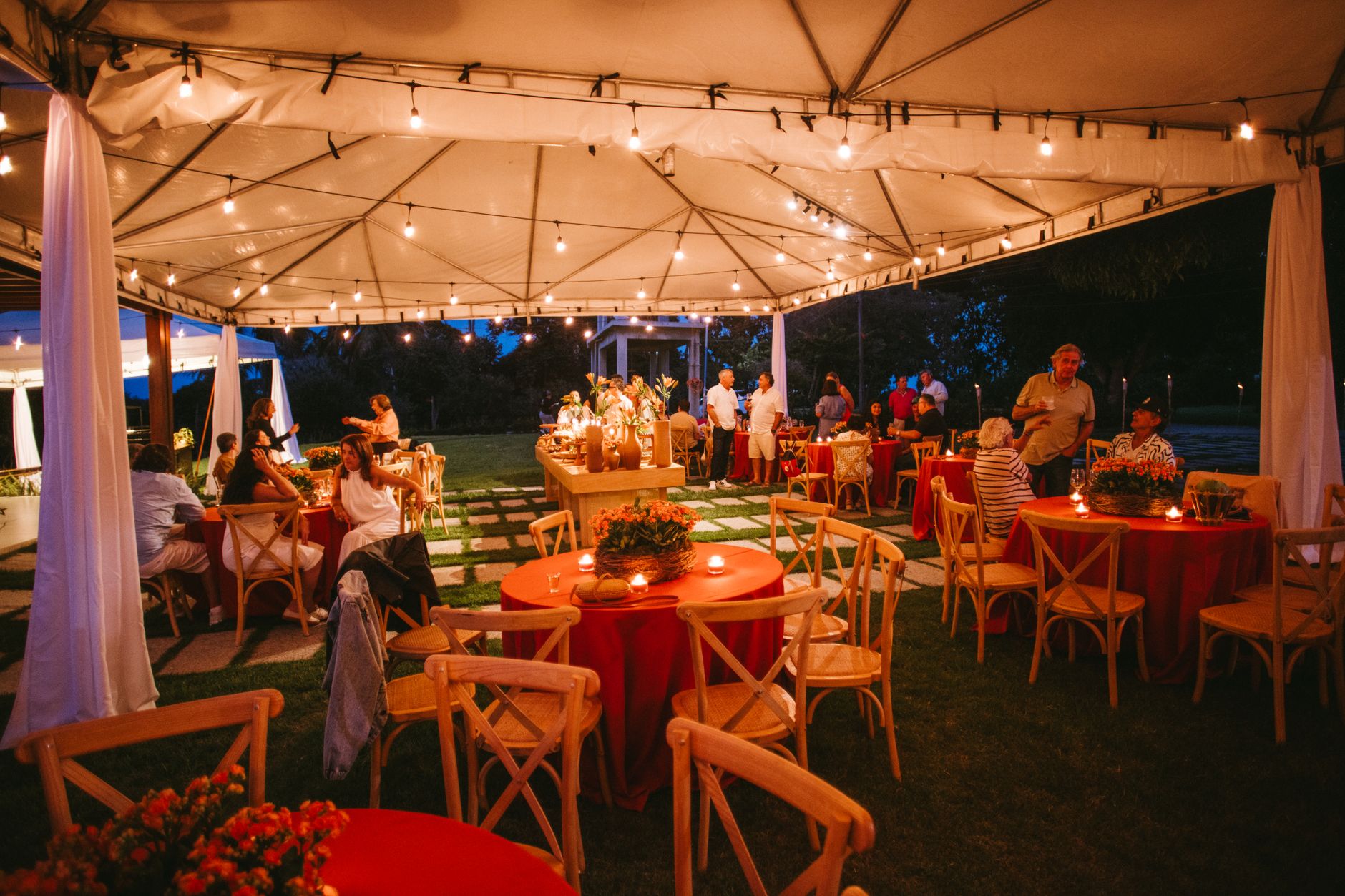
Photo by Jonathan Borba on Pexels
Most weddings at Ojai Valley Inn use at least three distinct spaces — one for the ceremony, one for cocktail hour, and one for the reception — and the distances between them mean a single-shooter video team will miss key moments during transitions. A 2-shooter team divides coverage: one stays with the couple during the first look or the pre-ceremony portraits in the olive grove, while the other captures guest arrivals and the ceremony site setup at Topa Vista.
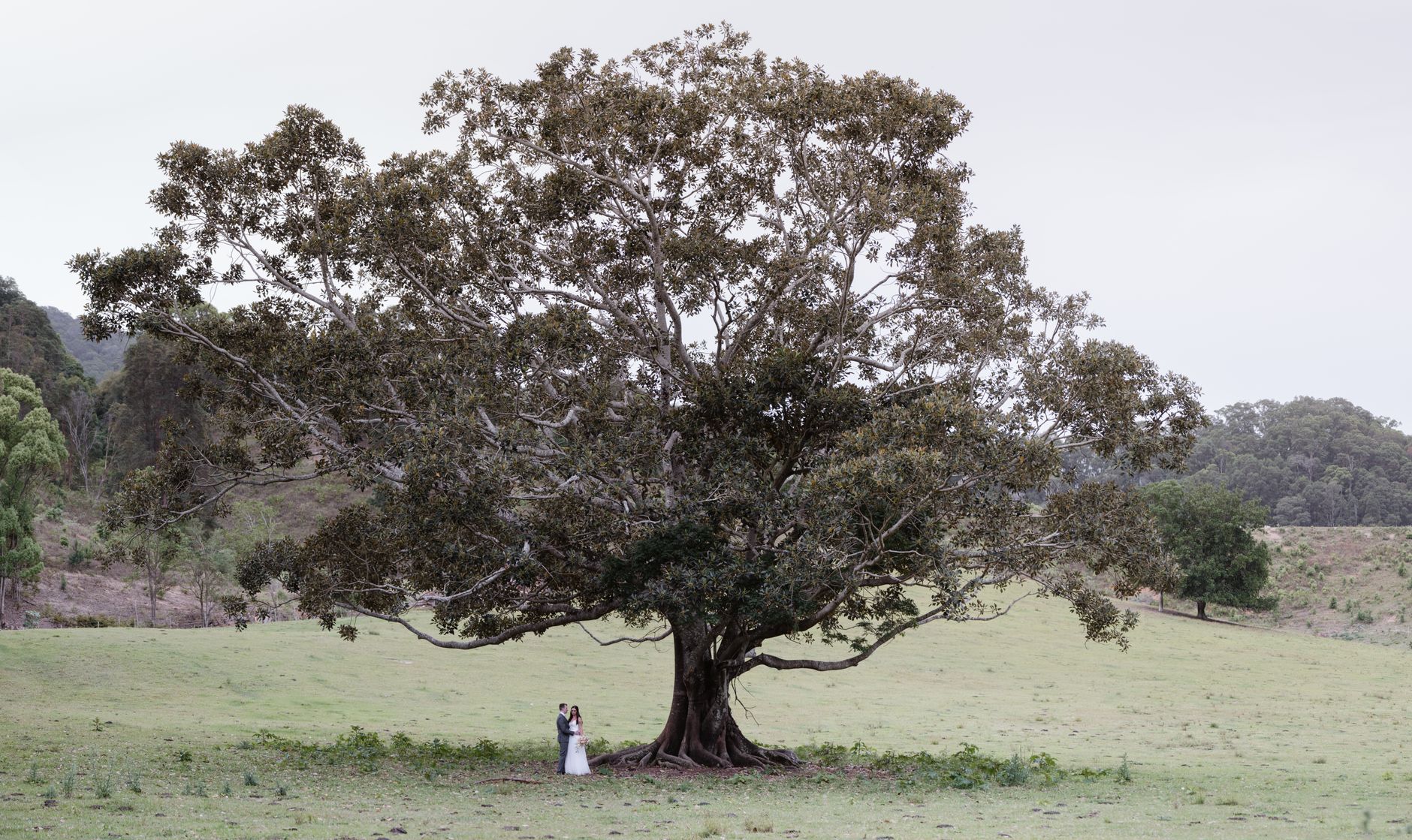
The Topa Vista Lawn sits at the western edge of the property with the Topatopa Mountains as the backdrop. Ceremonies scheduled for 4:30 PM benefit from the soft side-light that defines the Ojai Valley in late afternoon, which films warmer and more dimensional than direct overhead sun. A videographer positioning cameras for the ceremony will place one at the rear center aisle for the processional and vows, and a second on the eastern flank to capture the couple's expressions with the mountain range in frame.
After the ceremony, cocktail hour typically moves to the Artist Cottage Lawn or the Oak Terrace, both a 5-minute walk from Topa Vista. One shooter stays with the couple for formal family portraits near the chapel courtyard while the second covers cocktail-hour interactions, the signature cocktail station, and the live acoustic set that many couples book for this window. The coverage strategy ensures that when the highlight reel editor reviews footage, both the intimate couple moments and the guest energy are present in the timeline.
Topa Vista Ceremony vs Chapel Ceremony — Videographer Setup Differences
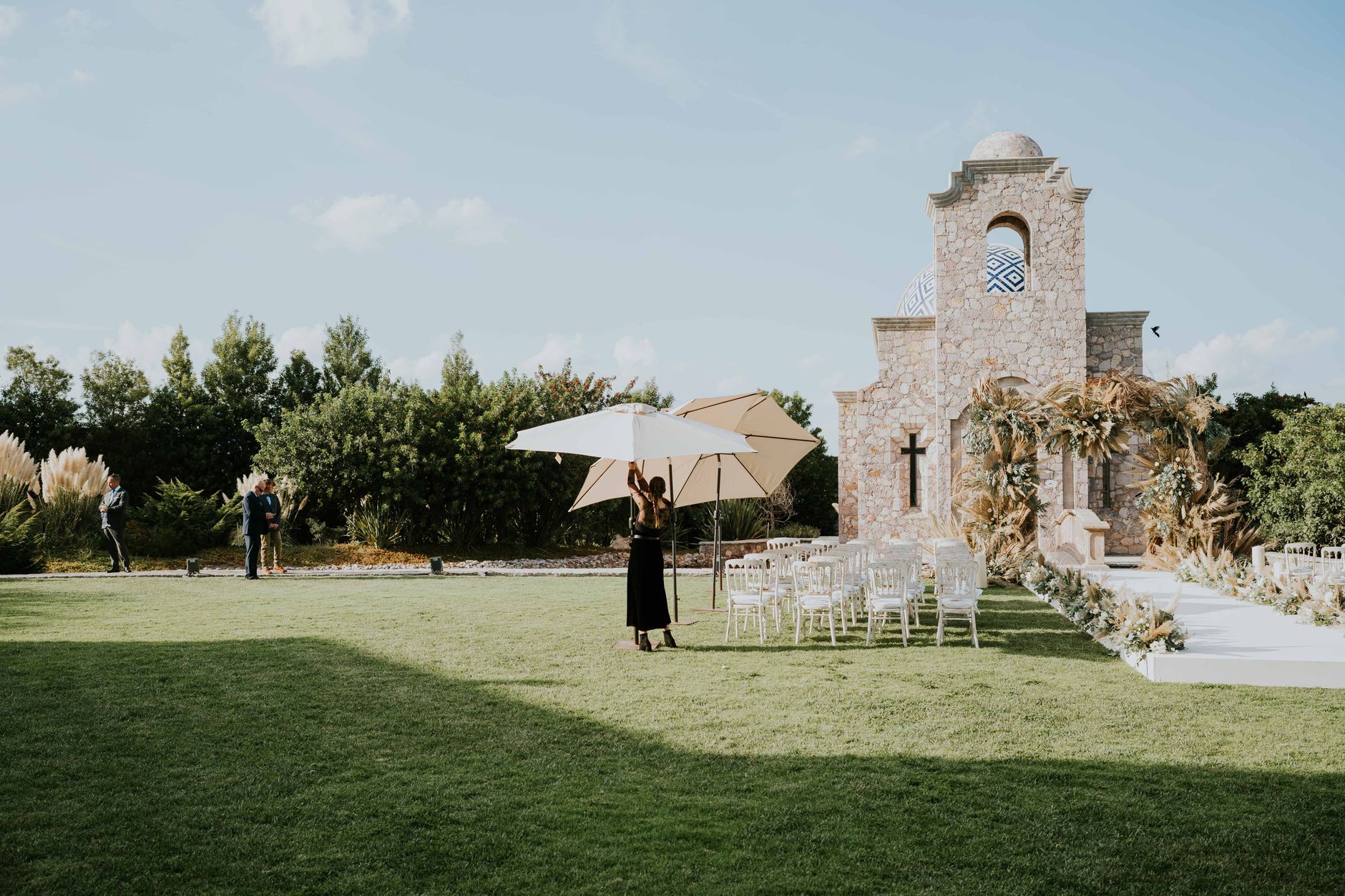
Photo by Amar Preciado on Pexels
The Topa Vista Lawn accommodates up to 250 guests in a semicircular seating arrangement with the mountains as the natural backdrop. A wedding film from this space is built around wide establishing shots that show the full mountain range and tighter close-ups during the vows that isolate the couple against the oak trees on the perimeter. The videographer's challenge is managing the 4:00–5:30 PM light, which shifts quickly as the sun moves behind the western ridge. A ceremony starting at 4:30 PM will finish in softer, bluer light than it began, and the colorist will need to balance the grade across the 30-minute ceremony timeline.
The Chapel is a small Spanish revival structure with capacity for 100 guests, and it films darker than Topa Vista because the interior relies on ambient window light and minimal chandeliers. A videographer covering a Chapel ceremony will add a discreet LED panel near the altar to lift the couple's faces without overpowering the natural warm glow from the stained glass. Audio is simpler here — the stone walls reflect sound cleanly, so two wireless lavalier mics (one on the officiant, one on the groom) plus a Zoom H6 recorder near the couple will capture the vows and readings without echo.
Couples who choose the Chapel typically plan a smaller, more intimate ceremony followed by a larger reception on the Oak Terrace or in the Maravilla Ballroom. The videographer's coverage plan adjusts to prioritize close-up reactions during the Chapel ceremony — parents' expressions, the couple's first kiss — because the space itself is too intimate for wide cinematic pans that work on the Topa Vista Lawn.
Oak Terrace Reception and Maravilla Ballroom — Documentary vs Cinematic Framing
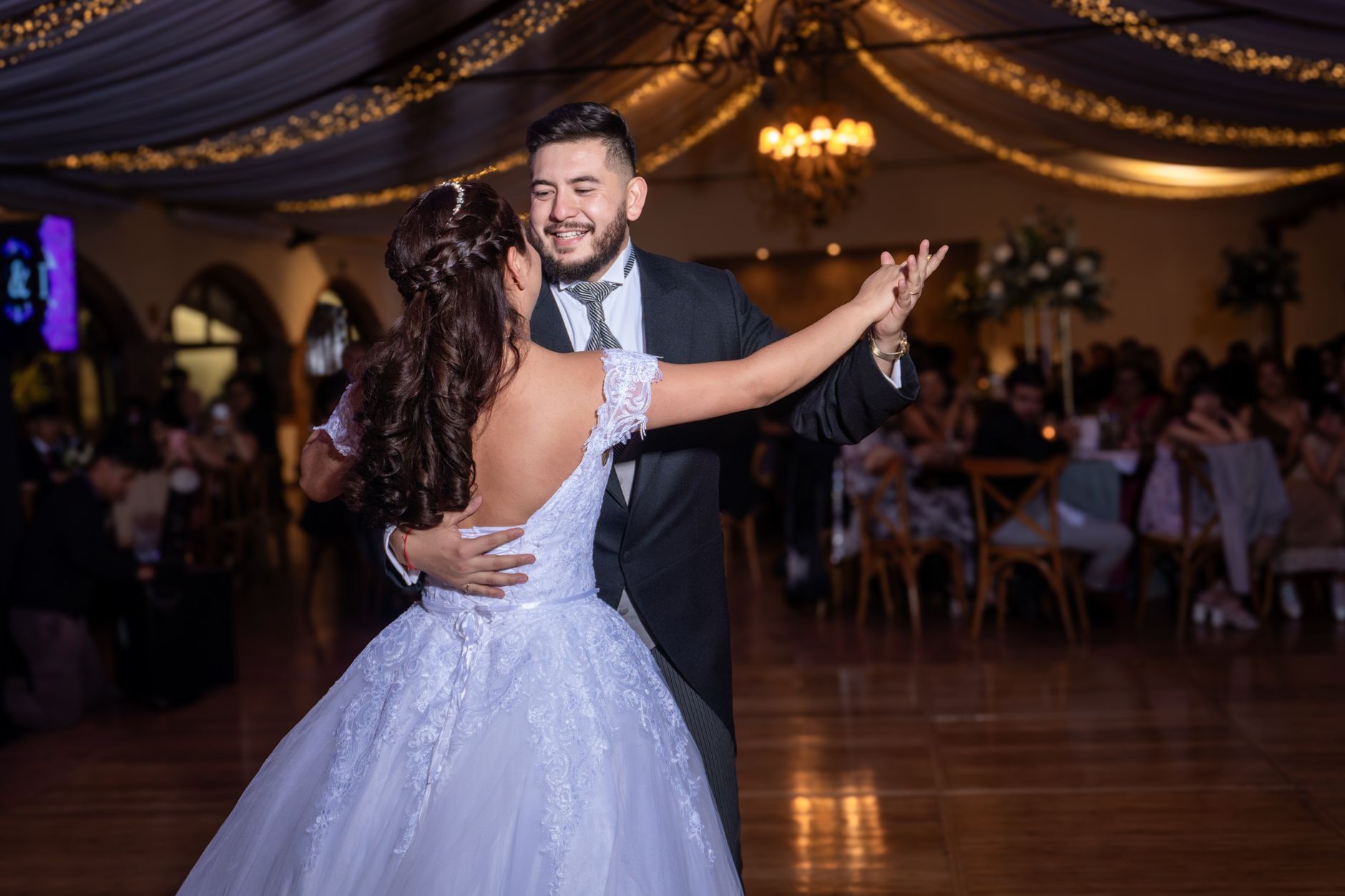
Photo by Carlos Crespo on Pexels
The Oak Terrace is an open-air courtyard under century-old oak trees strung with café lights, and it accommodates up to 200 guests for a reception. This space films best when the videographer can blend the natural twilight glow with the warm bistro lighting overhead, which happens in the 45-minute window starting 30 minutes before sunset. A first dance scheduled for 7:15 PM in late October will catch that overlap, and the footage will read as cinematic without heavy grading.
Documentary photography and video coverage at Oak Terrace focuses on guest interactions at the farm-style communal tables, the couple's sweetheart-table conversations with visiting family members, and the parent dances under the oak canopy. The videographer will also capture the couple's exit from the terrace down the stone steps toward the Maravilla lawn, a transition moment that many highlight reels use to mark the shift from reception to after-party.
The Maravilla Ballroom is the indoor alternative for larger weddings or winter events. The ballroom features floor-to-ceiling windows on the eastern wall that overlook the golf course and the mountains, which provides natural backlight during late-afternoon receptions. A videographer filming in Maravilla will position one camera near the band stage for wide coverage of the first dance and toasts, and a gimbal-mounted camera roaming the perimeter for close-up guest reactions and candid dance-floor moments.
Full-Day Coverage Timeline for a 2-Shooter Video Team
Photo by Brett Sayles on Pexels
A typical full-day wedding film at Ojai Valley Inn begins at 1:00 PM with bridal prep in one of the resort's suites or cottages and continues through the 10:00 PM reception send-off. The timeline below reflects how a 2-shooter team divides coverage across the property's multiple scenes:
- 1:00–2:30 PM — Bridal prep in the suite. Shooter A captures detail shots (dress, shoes, invitation suite, jewelry on the windowsill) and the bride getting ready with her mother and bridesmaids. Shooter B films groom prep in a separate cottage, then transitions to the ceremony site to document setup and guest arrival.
- 2:30–3:15 PM — First look in the olive grove near the spa. Shooter A captures the couple's reaction and the first embrace. Shooter B continues filming guest arrivals at Topa Vista and the string quartet soundcheck.
- 3:15–4:15 PM — Couple portraits in the olive grove, the Artist Cottage garden, and the chapel courtyard. Both shooters work this window together to capture multiple angles of each portrait scene.
- 4:30–5:00 PM — Ceremony at Topa Vista Lawn. Shooter A operates the rear-aisle camera on a tripod for processional and vows. Shooter B operates the gimbal on the eastern flank for close-ups and reactions.
- 5:00–6:30 PM — Cocktail hour at Artist Cottage Lawn. Shooter A stays with the couple for family portraits. Shooter B covers guest interactions, the cocktail station, and the live acoustic trio.
- 6:30–10:00 PM — Reception at Oak Terrace. Both shooters cover toasts, first dance, parent dances, cake cutting, and open dancing. One shooter captures the couple's private moment on the terrace overlook at sunset while the other films guest dancing under the oak trees.
The 10-hour timeline ensures that the highlight reel editor has complete coverage of every major moment plus the transitional scenes that give the final film narrative flow. Couples who add a rehearsal dinner the evening before can book a 2-day package that includes 4 hours of coverage on Friday and the full 10 hours on Saturday.
Photo + Video Combined Package Workflow at Ojai Valley Inn
Ojai Valley Inn's multi-scene layout and long guest-travel distances between ceremony and reception make the Photo + Video Combined Package the most efficient choice for editorial couples who want both mediums without coordination friction. A combined package includes a 2-shooter video team and a 2-shooter photo team working from the same timeline, cross-referencing shot lists, and staying out of each other's frames during key moments.
During the Topa Vista ceremony, the photo team positions on the western flank for side-angle coverage of the couple's faces during the vows, while the video team claims the rear aisle and the eastern flank. During the first dance at Oak Terrace, the photo team shoots from the perimeter with prime lenses wide open, while the video gimbal operator moves inside the dance circle for a slow 360° orbit. The cross-discipline coordination happens in the pre-wedding timeline call, where both teams review the couple's shot list and agree on who claims which angles for which moments.
The combined package also streamlines vendor coordination. The Oak Terrace reception setup includes café lights, floral installations on the oak-tree trunks, and a sweetheart table positioned under the largest oak. A single creative direction from the planner — "we want the ceremony filmed wide, and the reception intimate" — translates to both the photo and video teams without requiring separate briefings. The final deliverables include the wedding film (8–12 weeks post-wedding), the highlight reel (6 weeks), and the full edited photo gallery (10 weeks).
Destination Couples and Multi-Day Coverage Packages
Ojai Valley Inn draws destination couples — often from San Francisco, Seattle, and the East Coast — who book the resort for a full wedding weekend and want film coverage of the Friday welcome dinner, the Saturday wedding, and the Sunday farewell brunch. A multi-day Destination Wedding Film package includes 4 hours of coverage on Friday evening (welcome dinner at the Farmhouse or the Vista Lounge), 10 hours on Saturday (full wedding day), and 2 hours on Sunday morning (brunch on the Maravilla Lawn).
The Friday evening coverage captures the couple's entrance to the welcome dinner, the parent toasts, and the casual guest interactions on the Farmhouse patio. These scenes give the final wedding film a narrative opening that establishes the weekend's emotional arc before the ceremony day begins. The Sunday brunch coverage is typically lighter — documentary-style footage of the couple saying goodbye to family, a short interview moment where the couple reflects on the weekend, and a final wide shot of the resort as the couple walks toward their car.
Destination packages also include travel logistics planning. Ojai Valley Inn is 90 minutes from Los Angeles, and the videography team will typically drive the morning of the wedding with all gear (2 Sony FX6 bodies, 4 prime lenses, 2 gimbals, wireless audio kit, LED panel kit, and backup batteries) packed in a secure Pelican case. For multi-day shoots, the team books a room on property to avoid the daily 3-hour round-trip commute and to stay available for any last-minute coverage requests from the couple or planner.
Editorial Black-Tie Weddings vs Garden Romantic Aesthetics
Ojai Valley Inn accommodates two dominant couple aesthetics — editorial black-tie and garden romantic — and the videographer's coverage approach adjusts to match the visual tone the couple is building.
An editorial black-tie wedding at Ojai Valley Inn typically includes a Chapel ceremony, a cocktail hour on the Artist Cottage Lawn with a string quartet, and a reception in the Maravilla Ballroom with a 12-piece band and a structured four-course plated dinner. The guest count is 150–200, the bride wears a structured column gown, and the design palette is ivory, black, and greenery. The wedding film from this event is built around composed, symmetrical frames — the couple's entrance to the ballroom filmed from the balcony, the first dance captured in a slow push-in with the band in the background, the couple's exit filmed as a long steady-cam shot down the stone staircase.
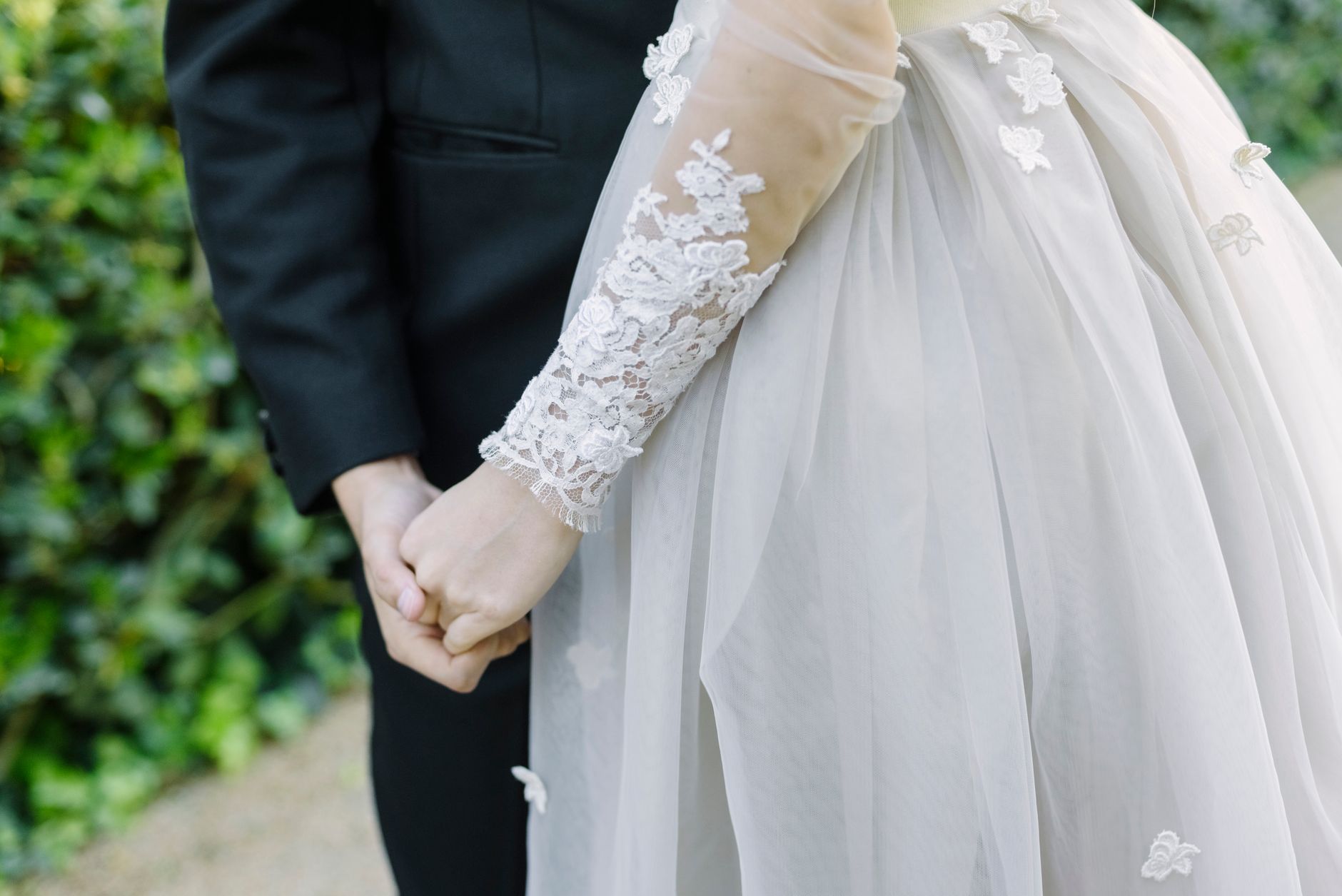
A garden romantic wedding uses the Topa Vista Lawn for the ceremony and the Oak Terrace for the reception. The bride wears a flowing A-line gown with lace sleeves, the color palette is blush and sage, and the floral design includes garden roses and jasmine vine installations on the oak trees. The guest count is 100–120, and the reception includes a family-style dinner with toasts delivered from the tables rather than from a stage. The wedding film is warmer, softer, and more movement-driven — gimbal shots through the olive grove during portraits, close-ups of the couple's hands during the vows, and documentary-style footage of children dancing barefoot under the café lights.
Both aesthetics work at Ojai Valley Inn because the property itself is neutral enough to support either direction. The videographer's job is to recognize which aesthetic the couple has chosen during the timeline-planning call and adjust the shot list, framing style, and grading palette accordingly.
Audio Strategy for Outdoor Ceremony Coverage at Topa Vista
Topa Vista is a fully outdoor ceremony site with no architectural sound reflection, which means audio capture requires redundancy. A wedding videographer covering vows at Topa Vista will use three audio sources: a wireless lavalier mic clipped to the officiant's lapel, a second wireless lav on the groom's jacket, and a Zoom H6 recorder positioned 6 feet from the couple on a low stand disguised behind a floral arrangement.
The Ojai Valley is quiet — no freeway noise, no helicopter routes, no urban hum — but the site does pick up wind rustle in the oak trees and occasional birdsong from the surrounding golf course. The lavalier on the groom captures the couple's vows and the officiant's readings with minimal ambient interference, while the Zoom H6 records a stereo ambient track that the editor can blend underneath for spatial depth.
During the processional, the string quartet is positioned on the eastern side of the aisle, and the videographer will place a fourth audio recorder (a Tascam DR-40X) near the musicians to capture a clean music bed for the ceremony entrance. In post-production, the editor syncs all four audio sources and selects the cleanest take for each moment — typically the lavalier for vows and readings, and the Zoom H6 for ambient guest reactions and the couple's first kiss.
When to Book and What the Edit Timeline Looks Like
Most couples booking Ojai Valley Inn for a wedding reserve the venue 12–18 months in advance, and they book the wedding videographer at the same time or within 60 days of the venue contract. The resort has a preferred-vendor list, but it is not exclusive, which means couples can bring an outside videography team without restrictions or fees.
After the wedding, the edit timeline for a full wedding film is 8–12 weeks. The editor receives 10 hours of raw footage from the 2-shooter team and begins by building a rough assembly of the ceremony, toasts, and first dance. The couple receives a private Vimeo link to review the rough cut and can request adjustments to music selection, scene order, or the inclusion of specific guest moments. The final color-graded, sound-mixed wedding film is delivered as a 40–60 minute feature plus a 3–5 minute highlight reel optimized for Instagram.
Couples who book the Photo + Video Combined Package receive the photo gallery first (10 weeks post-wedding) followed by the wedding film (12 weeks). The staggered delivery allows the couple to share images on social media while the film is still in post-production, and it spreads the emotional impact of reliving the wedding across two separate moments rather than overwhelming the couple with all deliverables at once.
Begin a conversation about your wedding at Ojai Valley Inn and explore how a 2-shooter video team builds coverage around the property's distinct light and multi-scene layout.