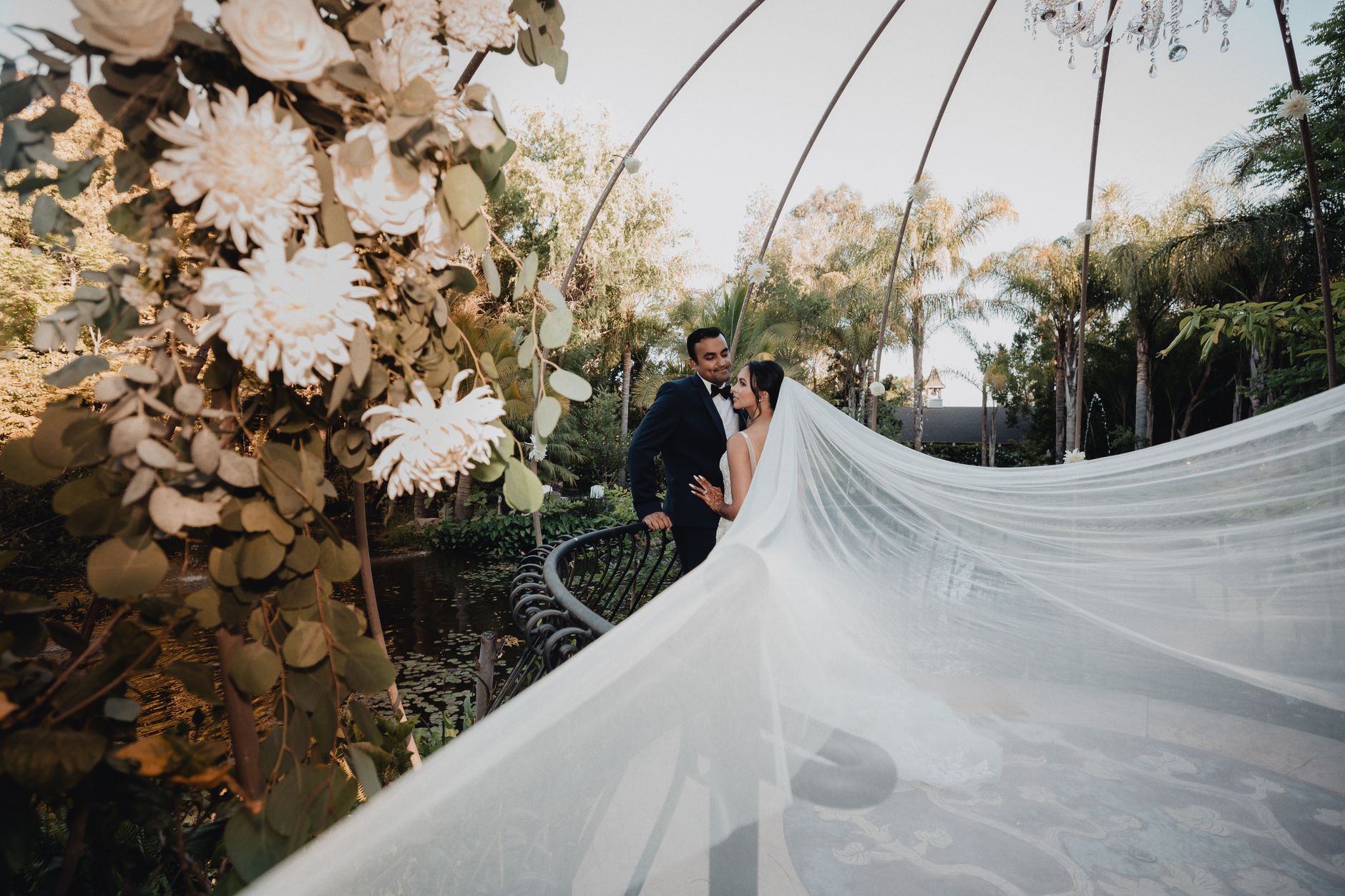
A wedding film at Cavallo Point requires a coverage plan built around the Golden Gate Bridge — the frame that anchors every ceremony on the Fort Baker lawn and the visual reason most couples book this venue in the first place. The bridge sits in constant view during the vows, and fog rolls through in unpredictable intervals, which means the videographer's coverage strategy begins with a site walk and a fog forecast, not just a timeline.
Cavallo Point sits at the north foot of the Golden Gate, on the Sausalito side of the bay, inside the historic Fort Baker parade ground. The ceremony lawn faces southwest toward the bridge. The Murray Circle reception courtyard is sheltered by eucalyptus and Monterey cypress. Between the two spaces, there's a fifteen-minute window of transitional light—after the ceremony ends and before cocktail hour formalizes—that delivers the day's best portraits, because the fog has either cleared or settled into a stable layer, and the couple is still in the emotional peak of having just been pronounced married.
We film Cavallo Point weddings as a 2-shooter video crew working in coordination with documentary photography, because the venue offers two concurrent visual stories: the wide cinematic frame of the bridge and bay, and the intimate emotional register of a couple exchanging vows in front of 80 guests on a small lawn. The Wedding Film package at Cavallo Point typically runs 10 hours of coverage—ceremony prep in the historic officer's quarters, first look on the parade ground, full ceremony and vows, cocktail hour at Murray Circle, reception toasts and first dance—with an 8-to-12-week edit turnaround for the feature-length documentary edit and the Highlight Reel.
Why Cavallo Point Films Differently Than an Indoor Napa Venue
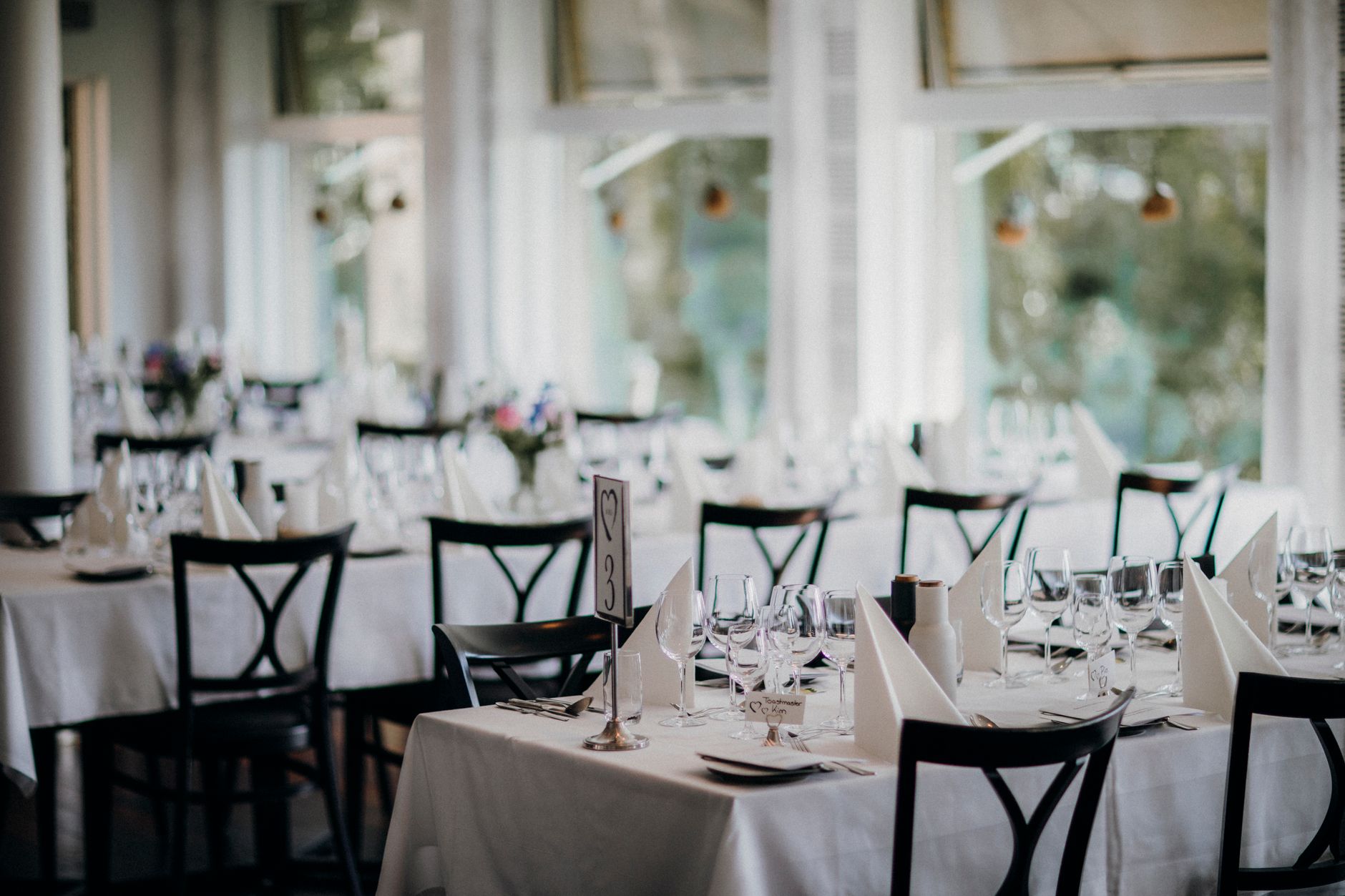
Photo by Rene Terp on Pexels
Cavallo Point is an outdoor venue with no backup chapel, which changes the cinematographer's approach to weather, light, and movement. At an estate like Auberge du Soleil or Meadowood, the ceremony can shift indoors if fog turns to drizzle. At Cavallo Point, the ceremony stays on the lawn regardless, under clear-top tents if necessary, and the film crew builds the coverage plan assuming wind, fog, and live Golden Gate Bridge marine layer as fixed elements—not obstacles, but part of the venue's visual identity.
The Fort Baker lawn ceremony area measures roughly 60 feet wide by 40 feet deep. Guests sit in chairs arranged theater-style. The couple stands at the edge of the lawn with the bridge framed behind them. A videographer's primary angle is from the rear center aisle, shooting toward the couple and bridge. The secondary angle is side-stage, capturing guest reactions and the couple in profile against the water. Audio is redundant—two lavalier mics (officiant + groom) plus a recorder on the couple's side of the aisle—because wind off the bay can overwhelm a single-mic setup, and vows are the non-negotiable anchor of the edit.
Fog changes the contrast and depth of field every twenty minutes. When the marine layer is low and stable, the bridge sits in soft diffused light, which flatters skin tones and compresses the background into a painterly wash. When fog clears entirely, the bridge becomes a high-contrast graphic element, sharp and saturated, which reads cinematic but requires the videographer to adjust exposure mid-ceremony to prevent the sky from blowing out. We meter for the couple's faces, not the bridge, and let the background fall where it falls—but that decision is made on-site, not in post.
Ceremony Timing and the 4 PM Golden Hour Window
Photo by Mathias Reding on Pexels
Cavallo Point ceremonies scheduled for 4:00 or 4:30 PM benefit from the descending golden-hour light that hits the lawn from the southwest, illuminating faces without creating harsh shadows under the nose or eyes. Ceremonies at 5:00 PM or later risk losing that frontal fill as the sun drops behind the Marin Headlands, which pushes the couple into soft backlight—beautiful for portraits, less ideal for ceremony coverage where facial expression is paramount.
The couple's first look typically happens on the parade ground or near the historic Murphy House at 3:00 PM, giving the photographer and videographer 20 minutes of portrait coverage before guest arrival. The parade ground offers a secondary bridge view with less foot traffic than the ceremony lawn, and the historic yellow clapboard buildings provide architectural contrast to the natural bay backdrop.
We recommend couples schedule the ceremony no earlier than 4:00 PM and no later than 4:45 PM. Earlier times risk full sun that's too hard; later times lose the frontal fill that separates professional ceremony footage from backlit silhouette. The fog is least predictable between 2:00 and 4:00 PM—it either burns off entirely or settles into a stable low layer by 3:30. Scheduling the ceremony at 4:15 PM gives the marine layer time to resolve, and gives the film crew certainty about which lighting scenario they're working in.
Fort Baker and Murray Circle — Two Reception Settings
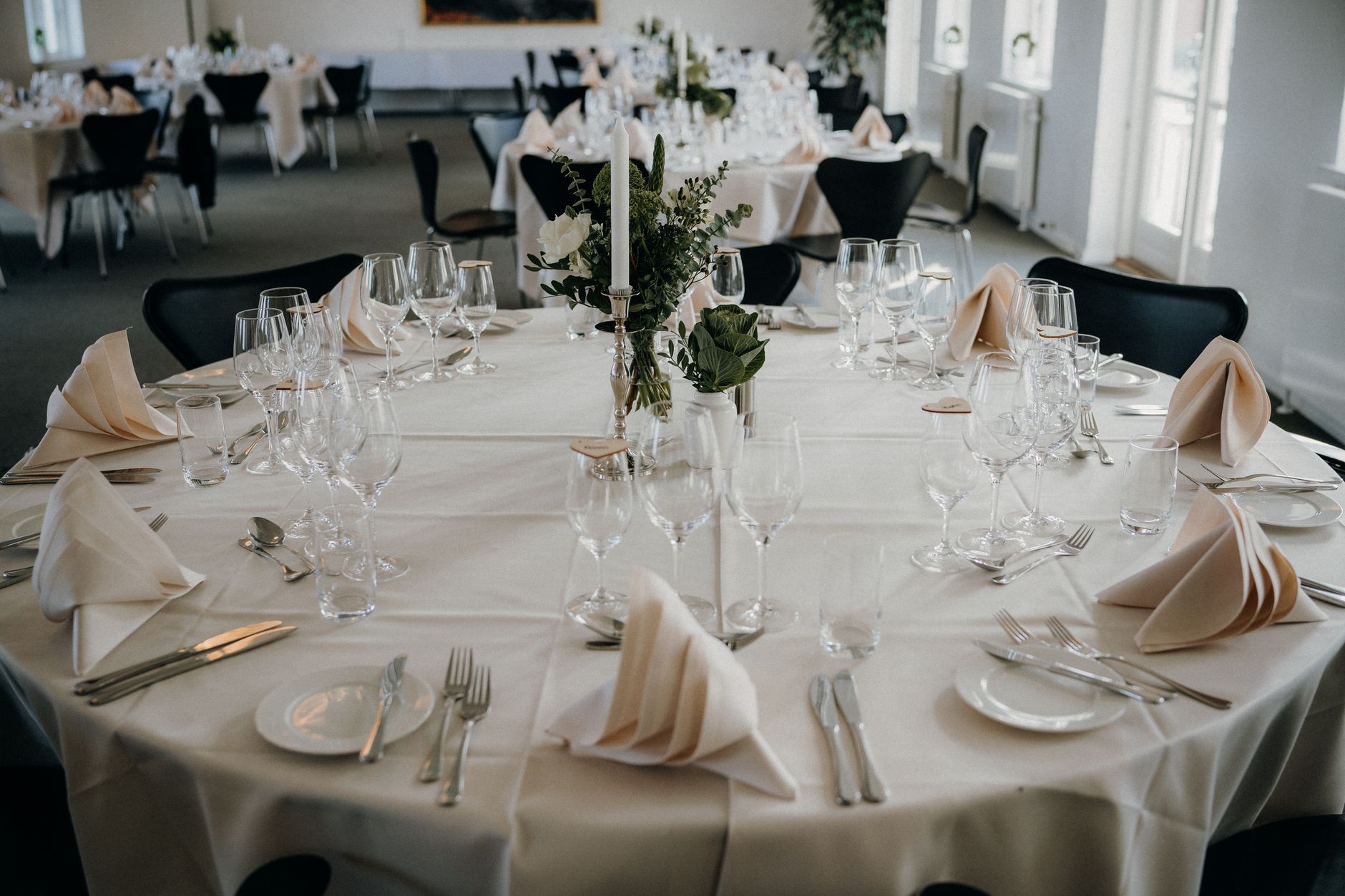
Photo by Rene Terp on Pexels
Cavallo Point offers two primary reception spaces: the Murray Circle courtyard (outdoor, sheltered by trees, 80–120 guests) and the Fort Baker Chapel (indoor, timber ceiling, 60–100 guests). Most couples we film choose Murray Circle for dinner and dancing, because the courtyard maintains visual connection to the bay and the eucalyptus canopy overhead, and because an outdoor dinner under string lights extends the editorial aesthetic established during the lawn ceremony.
The courtyard is framed by historic Fort Baker buildings on three sides, with the open side facing the parade ground. Dinner is served family-style or plated, depending on catering (we frequently see Taste Catering and Paula LeDuc at Cavallo Point weddings). First dance happens on a small wood or acrylic floor in the center of the courtyard. Parent dances follow. Toasts happen during dinner, which means the videographer needs to be positioned near the head table with a second shooter covering guest reaction across the room.
The chapel is a converted 1901 military chapel with exposed timber trusses and whitewashed walls. It works well for winter weddings or couples prioritizing an intimate indoor dinner, but it removes the Golden Gate backdrop from the reception portion of the film, which shifts the visual narrative away from place and toward people. We film both settings; the couple's choice depends on guest count, season, and whether they want the reception film to feel like an extension of the ceremony location or a tonal shift into a quieter, more enclosed environment.
Coverage Strategy — 2-Shooter Video Plus Documentary Photo
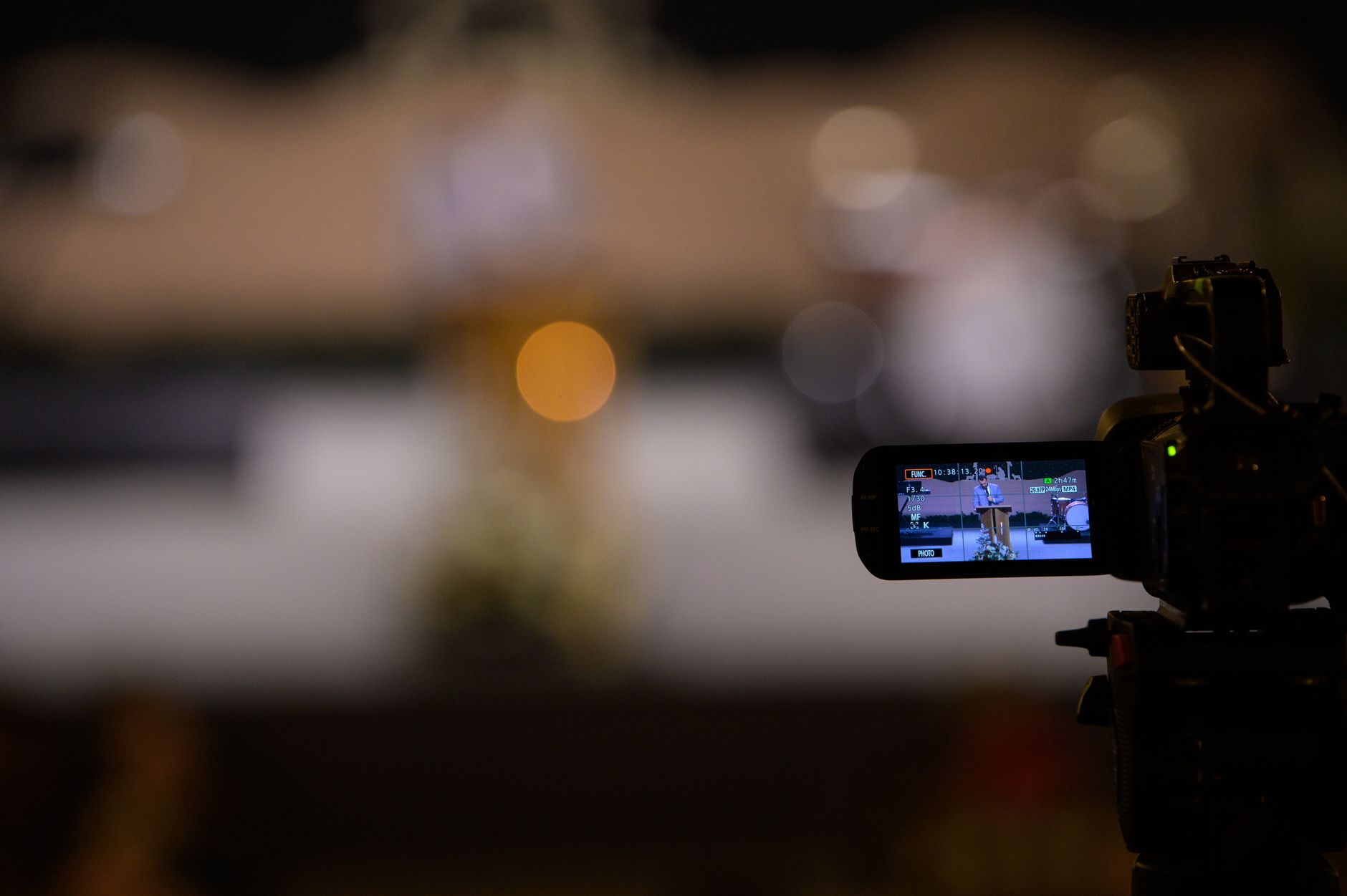
Photo by Brett Sayles on Pexels
A Cavallo Point wedding film requires 2-shooter video coverage to handle the simultaneous exterior ceremony, wide bridge establishing shots, and tight emotional close-ups. Shooter one operates on a gimbal and monopod, covering the processional, vows, and recessional from the center aisle and side angles. Shooter two is stationary on a tripod at the rear of the ceremony, locked on a wide frame that includes the couple, the officiant, and the full bridge—this is the anchor shot of the edit, the frame that places the ceremony in geographic and emotional context.
During portraits, one shooter follows the couple and photographer to the parade ground, Murphy House, and the waterfront overlook near the old Coast Guard station. The second shooter remains at the cocktail hour, capturing guest arrival, the bar setup, and ambient bay views that provide transitions in the final edit. This dual-stream approach ensures no moment is missed and that the edit has both intimate and environmental coverage.
The Photo + Video Combined Package at Cavallo Point pairs 2-shooter video with 2-shooter documentary photography, so the couple receives both a cinematic film and a complete editorial photo gallery. The two teams coordinate on portrait timing—photographer leads the couple's positioning and expression, videographer captures motion and in-between moments—so the couple is never asked to repeat a sequence separately for photo and video.
Audio Redundancy and Wind Management
Wind is the primary audio challenge at Cavallo Point. The ceremony lawn is exposed to bay wind that can gust to 15–20 mph on spring and fall afternoons, which makes omnidirectional microphones unusable and requires lavalier mics with foam windscreens or furry dead-cat covers.
We mic the officiant and the groom, and place a third recorder—either a shotgun on a boom pole or a boundary mic on the ceremony table—as a safety track. Vows are the non-negotiable moment; if wind obscures a phrase on the primary mic, we have two backups to pull from in post. Wireless transmission is reliable at Cavallo Point (no RF interference from the historic buildings), but we always record locally to the transmitter as well, so a dropout doesn't cost us the vow audio.
Readings, if the couple includes them, are miked separately. The reader gets a handheld or lavalier mic. We do not rely on the venue's PA system for ceremony audio capture—the delay and reverb make those tracks unusable in the final edit, and the couple's voices recorded direct always sound more intimate and present than PA feed.
During the reception, we use the same mic setup for toasts: lavaliers on the maid of honor and best man, with a backup shotgun aimed from the DJ or band position. The first dance is scored in post with the couple's selected song, so no live mic is required, but we do record ambient guest reaction audio, which layers into the edit under the music.
Editorial Photography Coordination
Cavallo Point is one of the Northern California venues where Documentary Photography and video work in close coordination rather than in parallel. The ceremony is short—20 minutes on average—and the portrait window between ceremony and reception is compressed to 15–20 minutes, so the photo and video teams share the same timeline and the same physical spaces.
The photographer leads during portraits. The videographer captures the couple in motion—walking across the parade ground, the bride adjusting her dress at the waterfront overlook, the groom's hand at her waist during the last portrait before sunset. These in-between moments, not the posed frames, form the connective tissue of the wedding film edit. The couple experiences this as a single coordinated portrait session, not as two separate vendors asking for two separate rounds of the same shot.
Inside the reception, the photographer covers detail shots (table settings, menu cards, the cake at Murray Circle) while the video team sets up for first dance and toasts. We do not duplicate coverage. Photo captures still compositions; video captures movement, gesture, and voice. The final deliverables—photo gallery and wedding film—complement rather than repeat, which is why most couples who book Cavallo Point with us choose the combined package rather than video alone.
Fog, Light, and the Bridge as Character
The Golden Gate Bridge is not static architecture in a Cavallo Point wedding film—it's a character that changes mood and presence depending on fog, time, and light. On a clear afternoon, the bridge is sharp, saturated International Orange, and visually dominant. When fog sits low, the bridge becomes a suggestion, a red glow through gray, and the film takes on a moodier, more atmospheric register.
We do not attempt to control or predict fog. We build the coverage plan to accommodate both scenarios. If fog is heavy during the ceremony, we shift emphasis to close-ups—the couple's hands, tears during vows, guest reactions—and use the diffused bridge in the background as environmental texture rather than a hero frame. If fog clears, we prioritize wide establishing shots that show the full bridge, the bay, and the ceremony in geographic context.
The couple's preferred aesthetic—coastal classic, editorial minimalist, or urban modern—shapes how we balance bridge coverage against intimate emotional moments. A couple planning a clean, minimalist wedding at Cavallo Point typically wants more environmental frames and fewer tight close-ups. A couple focused on documentary emotion wants vows, readings, and parent reactions prioritized over scenic beauty shots. We clarify this preference during the pre-wedding consultation, usually 4–6 weeks before the event, so the shot list aligns with the couple's vision before the day begins.
Couple Types Who Book Cavallo Point
Cavallo Point attracts three recurring couple profiles:
Bay Area locals planning a destination-feeling wedding without travel logistics—Cavallo Point reads as a resort but sits 20 minutes from downtown San Francisco, so guests can Uber or rideshare rather than book hotel blocks in Napa or Carmel.
Couples prioritizing a specific view—the Golden Gate Bridge is an iconic frame that requires no explanation in the wedding film. Grandparents, out-of-state guests, and international family instantly recognize the location, which gives the film a sense of place that a vineyard or garden estate might not carry.
Urban modern or coastal classic couples—Cavallo Point's architecture is historic military-meets-contemporary resort, which appeals to couples whose aesthetic is clean, understated, and architectural rather than romantic or garden-lush. The venue works well for couples who want their film to feel editorial and composed rather than pastoral and soft.
We also see a small but growing number of international couples—often couples based in Europe or Asia planning a California wedding and specifically seeking a San Francisco Bay Area venue that will register as unmistakably Californian in the final film.
Logistics — Travel, Timeline, and Team Coordination
Cavallo Point is located in Sausalito, across the Golden Gate Bridge from San Francisco, a 6.5-hour drive north from our Los Angeles base. We treat Cavallo Point weddings as Northern California travel coverage, which means the couple books a Destination Wedding Film package or adds travel fees to the standard wedding film package (typically $600–$900 depending on team size and whether we drive or fly into SFO).
We arrive the evening before the wedding for a site walk and to confirm ceremony and reception layout with the planner and venue coordinator. Cavallo Point's event team is experienced with film crews and provides detailed floor plans, timeline templates, and vendor load-in instructions in advance. Coordination is smooth; we rarely encounter access restrictions or unexpected layout changes on the day.
The typical Cavallo Point wedding timeline:
- 1:00 PM — crew arrival, gear setup, B-roll of venue and details
- 2:00 PM — bride and groom prep coverage in separate suites (historic officers' quarters)
- 3:00 PM — first look on parade ground, followed by 20 minutes of couple portraits
- 3:45 PM — family formal portraits with photographer, video team captures candid interaction
- 4:15 PM — ceremony on Fort Baker lawn (20 minutes)
- 4:40 PM — recessional, couple portraits at waterfront overlook (15 minutes)
- 5:00 PM — cocktail hour at Murray Circle courtyard
- 6:00 PM — reception entrance, first dance, parent dances
- 6:30 PM — dinner service, toasts
- 8:00 PM — cake cutting, open dancing
- 9:00 PM — coverage concludes (10-hour package) or continues to sparkler exit (12-hour package)
We coordinate directly with the couple's planner—frequently Alison Events, Joyful Details, or Brooke Keegan Weddings when the couple is working with a Bay Area planning team—and confirm all timing, vendor arrival, and ceremony placement one week before the event.
What the Film Includes — Deliverables and Edit Turnaround
The Cavallo Point wedding film is delivered in two formats: the feature-length documentary edit (20–45 minutes depending on package and day length) and the 3-to-5-minute Highlight Reel. The documentary edit includes full ceremony vows, readings, toasts, first dance, parent dances, and select moments from prep, portraits, and reception. The highlight reel is the cinematic distillation—opening with an environmental wide of the bridge and ceremony, moving through vows, portraits, and reception peaks, and closing on the final dance or exit.
Edit turnaround is 8–12 weeks from the wedding date. Cavallo Point films require additional color grading time because of the fog variability and mixed lighting (outdoor ceremony in natural light, indoor or tent reception with string lights and uplighting), and we layer in ambient bay audio—wind, water, seagulls—as environmental texture under the music score.
The couple receives digital delivery via a private Vimeo link (password-protected, downloadable in 4K). We also provide a curated selection of 15–20 still frames pulled from the video footage for use in thank-you cards or social media, separate from the photographer's still gallery.
Begin a Conversation About Your Cavallo Point Wedding
We film weddings at Cavallo Point as a Los Angeles-based crew traveling to Northern California for couples who want cinematic wedding film coverage built around the Golden Gate Bridge, Fort Baker's historic architecture, and the bay's coastal light.
If you're planning a wedding at Cavallo Point and want to discuss coverage strategy, timeline coordination, and how the film integrates with your photographer's workflow, reach out through the contact form on the LifeStory.Film home page. We'll schedule a consultation call to walk through your day, clarify deliverables, and confirm availability.
Planning a Napa or Sonoma wedding? See our Napa Valley & Sonoma wedding films and pricing.