A wedding videographer at Calistoga Ranch works with three distinct scenes: the lodge ceremony at 4 PM when light filters through the redwoods, the vineyard portrait window between 5:30 and 6:15 PM when the Mayacamas ridge casts long shadows across the vines, and the grove reception after dark when string lights and live oak branches frame every toast. Each scene requires its own coverage plan, and the transitions between them — the eight-minute walk from the lodge to the vineyard, the couple's quiet moment in the vineyard before the reception begins — are often the most cinematic minutes of the day.
Calistoga Ranch sits at the northern end of Napa Valley, 1,157 feet above the valley floor. The property spans 157 acres of oak woodland, with 48 free-standing lodges scattered across the hillside and a central event lawn surrounded by California live oak. The ceremony typically takes place on the upper terrace outside the Lakehouse, a timber-frame pavilion with a redwood grove as backdrop. The reception moves to the grove below, a 120-guest clearing ringed by mature oak and strung with Edison bulbs. A full-day wedding film here captures 10 hours of coverage across four distinct microclimates, each with its own light signature.
Why Calistoga Ranch Films Differently Than Auberge du Soleil or Meadowood

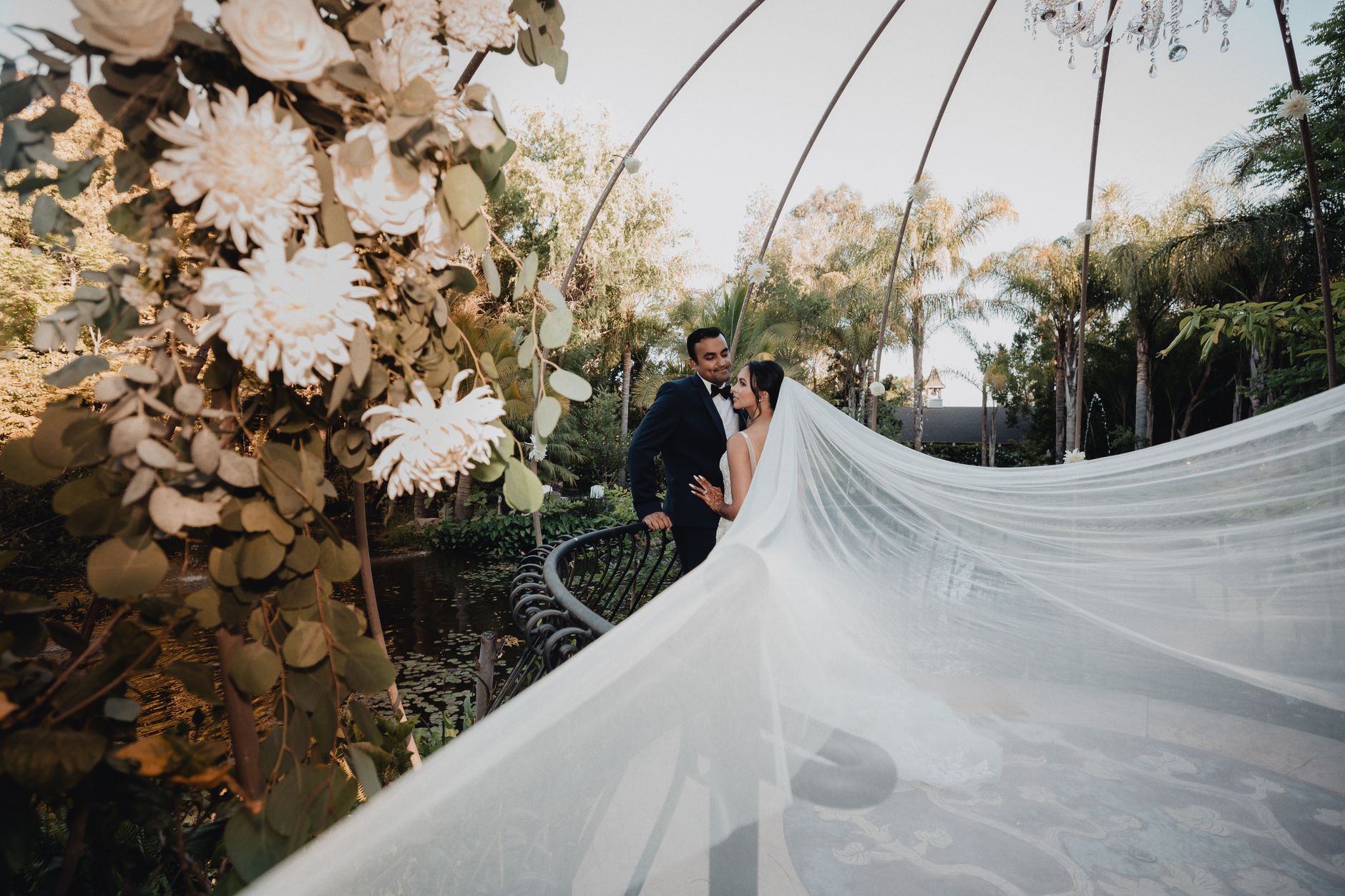
Photo by Brunxs on Pexels
Calistoga Ranch is a woodland property, not a vineyard estate. The light is dappled and directional rather than open and even. At Auberge du Soleil, a videographer can count on uninterrupted golden hour across the olive grove terrace from 5:30 to 7 PM. At Meadowood, the croquet lawn offers 360 degrees of clean horizon light. Calistoga Ranch offers neither — the redwoods block western exposure at the ceremony site, and the oak grove creates deep shadow pockets during the reception.
What Calistoga Ranch does offer is vertical depth. The property rises 400 feet from the entrance to the upper lodge terrace, and the best wedding films here use that elevation change as narrative structure. The procession down the stone path to the ceremony. The climb back up to the vineyard overlook for portraits. The descent into the grove for the reception. A 2-shooter video team positions one camera at ground level to capture the couple's movement through space, and one camera 20 feet above on the Lakehouse deck to show the full arc of the processional against the ridgeline.
Couples who choose Calistoga Ranch over Meadowood or Beaulieu Garden are typically drawn to the intimate scale — the property feels like a private estate rather than a hotel — and the woodland aesthetic. The wedding film reflects that: tight frames on hands, faces, and details rather than sweeping drone passes, and a documentary edit that emphasizes quiet moments over choreographed sequences.
Lodge Ceremony Coverage — Redwood Grove and Upper Terrace
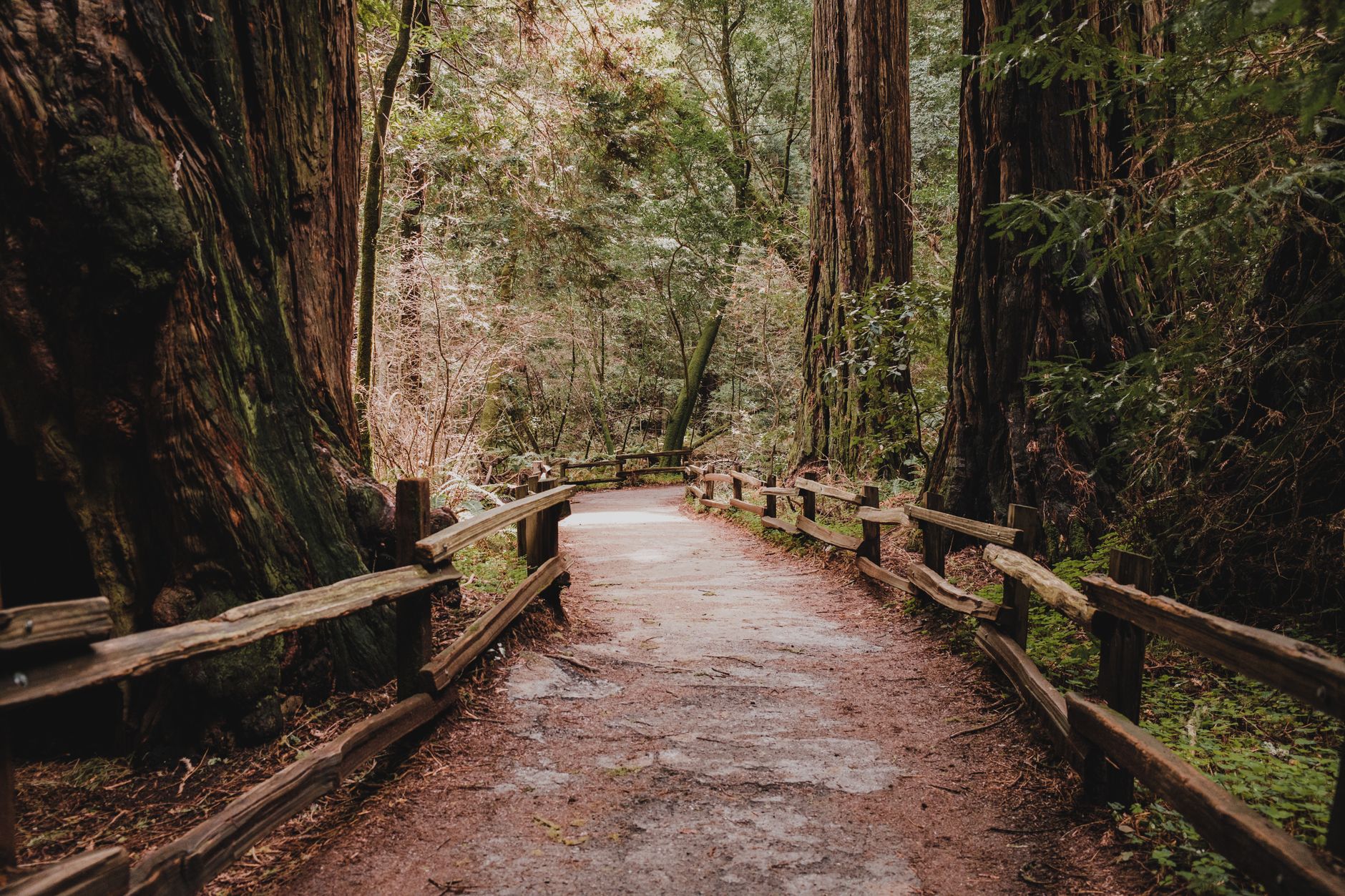
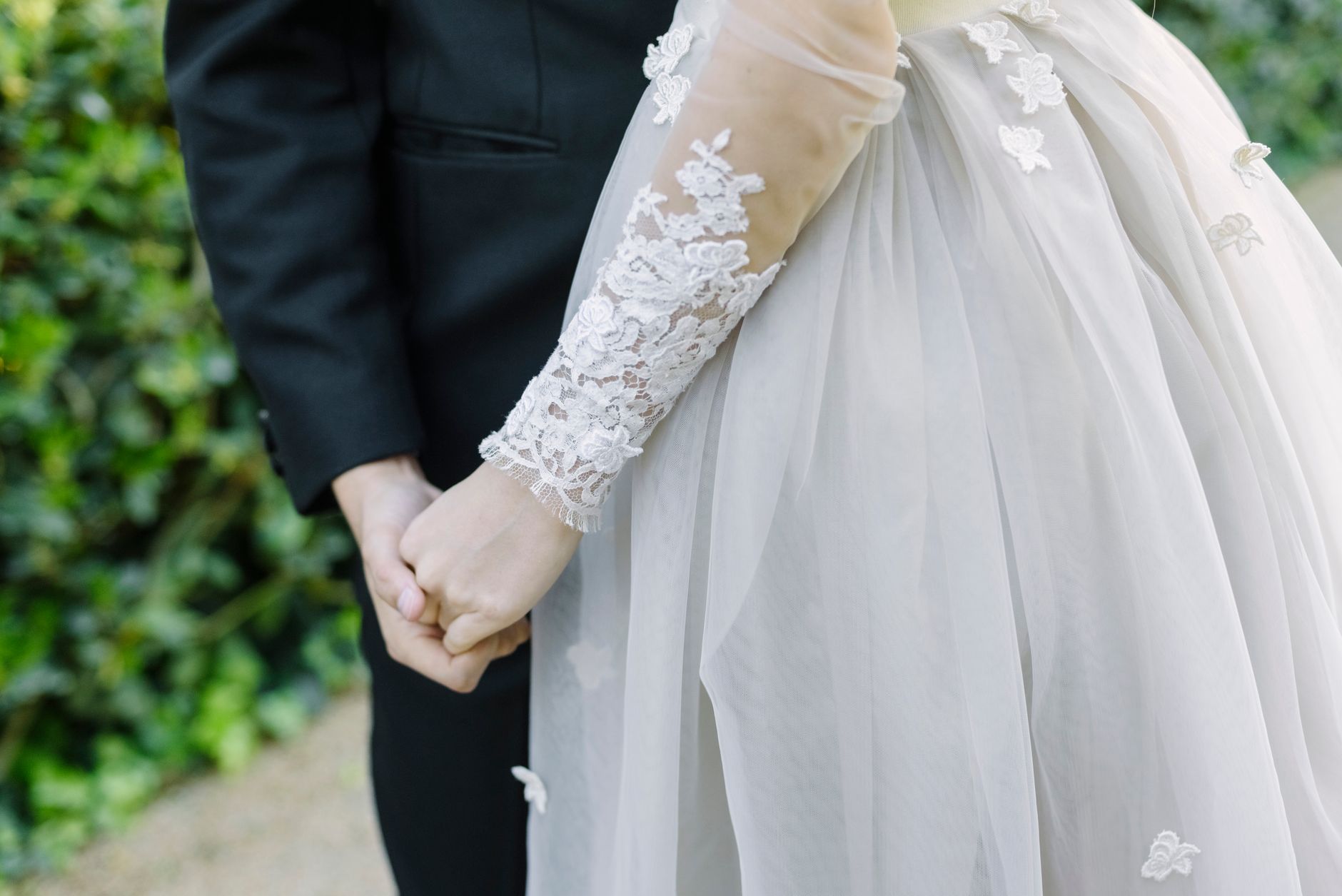
Photo by Airam Dato-on on Pexels
The ceremony at Calistoga Ranch takes place on the Lakehouse upper terrace, a 40-by-60-foot stone platform framed by coast redwoods on three sides. Guest seating faces east toward the ridgeline, with the couple standing in front of the timber pavilion. The redwood canopy blocks direct sun until 4:30 PM, which means midday ceremonies film in open shade — soft, even, and slightly cool in color temperature.
A wedding videographer shooting the ceremony uses two fixed cameras and one roaming. Camera one sits centered at the back of the aisle, 50mm lens, locked on the couple throughout the vows. Camera two positions at the front left corner of the terrace, 85mm lens, for close shots of the couple's hands, the officiant, and parent reactions in the front row. The roaming shooter moves along the perimeter during the processional and recessional, capturing the couple's entrance down the stone path and their exit back up toward the vineyard.
The most emotionally resonant moment in a Calistoga Ranch ceremony film is typically the vows. The redwood grove absorbs ambient noise — no highway hum, no event-tent echo — so the couple's voices come through clean and uncompressed on the lav mics. The videographer records dual backup audio (wireless lav on the officiant, shotgun mic on camera two) to ensure the vows are usable even if a mic fails mid-ceremony.
The ceremony runs 25 to 35 minutes. Immediately after the recessional, the couple walks up the path toward the vineyard for a 45-minute portrait window. The videographer follows, shooting documentary-style — no posing, no "look at the camera," just the couple walking, talking, and adjusting to being married. This interstitial footage — shot between 4:45 and 5:30 PM as the light shifts from open shade to directional gold — is the connective tissue that holds the wedding film together.
Vineyard Portrait Coverage — Golden Hour on the Mayacamas Slope
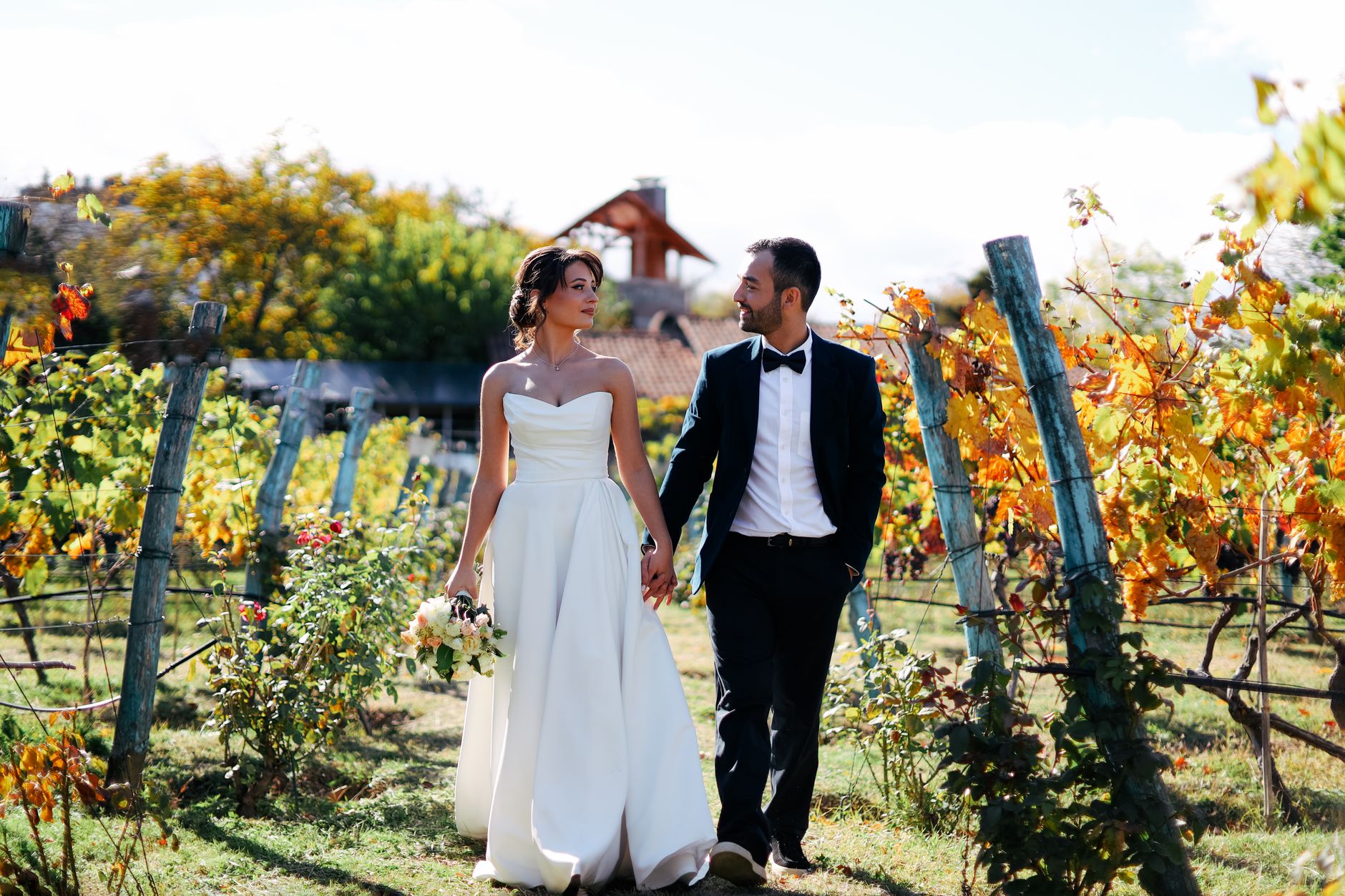
Photo by Photography Maghradze PH on Pexels
The vineyard at Calistoga Ranch is a working Cabernet Sauvignon block planted on a southwest-facing slope 200 feet above the ceremony site. The portrait window begins at 5 PM and ends at 6:15 PM, when the couple returns to the grove for cocktail hour. A 2-shooter video team spends the first 15 minutes shooting wide and medium frames as the couple walks the rows, then the last 30 minutes capturing close portraits as the sun drops behind the Mayacamas ridge.
Golden hour at Calistoga Ranch is shorter and more dramatic than at valley-floor properties. The ridge blocks the sun at 6:10 PM in June, 6:35 PM in September. Once the ridge shadow hits the vineyard, the light goes flat in under three minutes. The videographer needs to shoot the directional-light portraits — backlit, lens flare, warm skin tones — between 5:30 and 6:10 PM, then move immediately to the grove for blue-hour reception coverage.
The vineyard portrait sequence in the final wedding film runs 60 to 90 seconds. It functions as a visual reset between the ceremony and the reception — a quiet, private interval that contrasts with the crowd energy of the toasts and first dance. The edit prioritizes wide shots that show the couple in context (the vineyard rows, the ridge, the valley below) over tight close-ups, because the vineyard itself is the reason this scene exists.
Couples who book Photo + Video Combined Package coverage at Calistoga Ranch allocate 45 minutes for the vineyard portrait session. The photographer and videographer work in sequence, not simultaneously — the photographer shoots for 20 minutes while the videographer captures B-roll, then the videographer shoots movement and interaction while the photographer reloads cards and adjusts lighting. This sequencing prevents the "other photographer in the frame" problem that plagues poorly coordinated photo-video shoots.
Grove Reception Coverage — String Lights, Oak Canopy, and Toasts
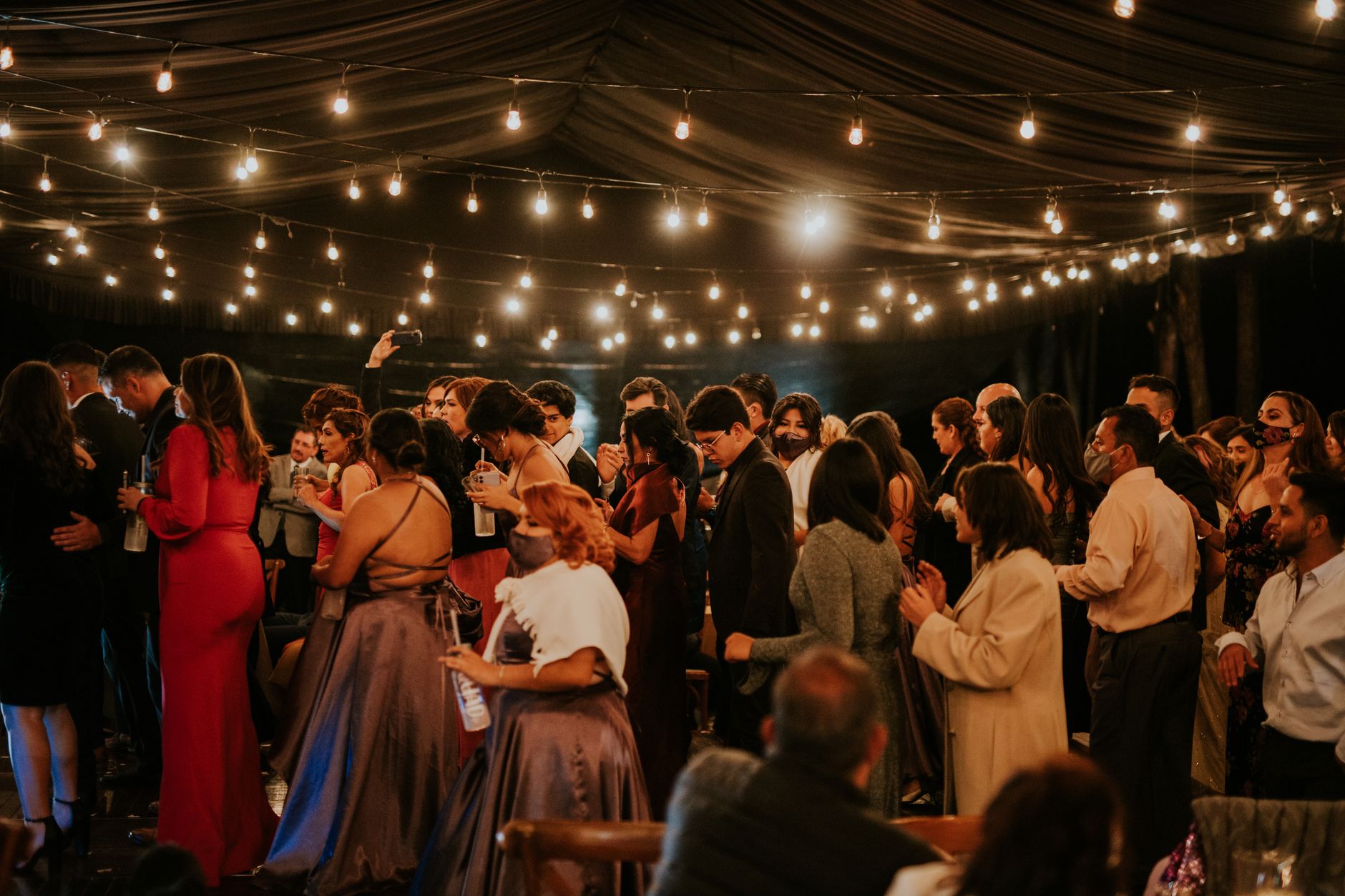
Photo by Amar Preciado on Pexels
The reception at Calistoga Ranch unfolds in the oak grove, a circular clearing 80 feet in diameter with 10 mature California live oak trees forming a natural perimeter. String lights hang in a radial pattern from the oak branches to a central pole, creating a canopy of Edison bulbs 15 feet above the dance floor. Dinner seating is round tables for 120 guests, with the couple's sweetheart table positioned at the north edge of the clearing, backed by the largest oak.
A wedding videographer covering the grove reception uses three cameras. Camera one locks on the couple's table throughout dinner, capturing toasts, reactions, and the couple's interaction. Camera two roams the perimeter, shooting guest reactions, table conversations, and environmental details (the string lights at dusk, the oak silhouette, the caterer plating in the adjacent tent). Camera three positions near the band or DJ booth for the first dance, parent dances, and open dancing.
The reception light at Calistoga Ranch shifts three times over the course of the evening. At 6:30 PM during cocktail hour, the grove is still lit by ambient dusk — soft, blue, and even. At 7:15 PM when toasts begin, the string lights turn on and become the dominant light source — warm, directional, and high-contrast. At 9 PM during open dancing, the DJ adds uplighting on the oak trunks, which creates colored washes across the clearing. The videographer adjusts white balance and ISO at each shift to keep skin tones consistent across the final edit.
The toasts at Calistoga Ranch are acoustically clean. The oak canopy absorbs reverb, so speeches recorded with a wireless lav mic on the speaker come through with minimal background noise. The videographer records toasts as multicam (one camera on the speaker, one on the couple's reaction), then edits them as intercut sequences in the final film. A typical 8-minute highlight reel includes 90 seconds of toast footage; a Full Ceremony Coverage package includes the complete speeches as a separate deliverable.
First Dance and Open Dancing — Movement in Low Light
The first dance at Calistoga Ranch happens immediately after dinner, around 8 PM. By that hour, the grove is fully dark except for the string lights overhead and any uplighting the couple has added. A wedding videographer shooting the first dance works handheld, moving around the perimeter to capture multiple angles — wide shots that show the string lights and oak canopy, medium shots from the side that emphasize the couple's silhouette, and tight close-ups of hands and faces.
Low-light video at Calistoga Ranch requires fast glass (f/1.4 or f/1.8 primes) and a camera body that performs cleanly at ISO 3200 or higher. The string lights provide enough ambient illumination for exposure, but the light is overhead and creates deep shadows under the couple's eyes and chin. The videographer uses a small on-camera LED panel at 10% output, bounced off a nearby reflector, to lift the shadows without creating a visible "lit" look in the frame.
Open dancing begins at 9 PM and continues until 11 PM. The videographer shoots the first 30 minutes of dancing in detail — guest interactions, group moments, the couple rejoining the floor after cake cutting — then scales back to B-roll coverage for the final hour. The last 60 minutes of a reception rarely contribute new narrative beats to the wedding film, so the videographer often wraps primary coverage at 10 PM unless the couple has requested full-night documentation.
A Wedding Film package at Calistoga Ranch includes 10 hours of coverage, which allows the videographer to begin shooting at the lodges during getting ready (starting at noon), continue through the ceremony and vineyard portraits, and finish after the first hour of dancing. Couples who want complete reception coverage through the last dance can extend to 12 hours for an additional fee.
Calistoga Ranch vs Meadowood vs Auberge du Soleil — Choosing Your Napa Venue
Calistoga Ranch, Meadowood, and Auberge du Soleil are the three most-filmed luxury wedding venues in Napa Valley. Each offers a distinct visual signature, and the choice shapes the final wedding film more than any other single decision.
Calistoga Ranch is a woodland property with vertical elevation changes, dappled redwood light, and an intimate oak-grove reception. The wedding film here emphasizes texture, depth, and quiet moments. Best for couples who want a documentary edit that feels grounded and private rather than sweeping and cinematic.
Meadowood is an open estate property with a croquet lawn, stone terrace, and uninterrupted golden hour. The wedding film here is expansive — wide shots, drone passes, long lens compression across the lawn. Best for couples who want editorial polish and a film that showcases the full scale of the venue.
Auberge du Soleil is a hilltop terrace property with 180-degree valley views and consistent western exposure. The wedding film here is luminous and even-toned, with golden hour lasting 90 minutes. Best for couples who prioritize classic Napa imagery — vineyards, hillsides, and warm afternoon light.
A wedding videographer who has shot all three venues knows which coverage plan to bring before arriving on site. At Calistoga Ranch, the plan is vertical movement and layered scenes. At Meadowood, the plan is open space and wide framing. At Auberge, the plan is terrace ceremony and valley-view portraits. The property dictates the edit.
Coordination with Photo Coverage — Sequencing the Vineyard Session
Most couples who book a wedding videographer at Calistoga Ranch also hire a photographer, and the vineyard portrait session is where coordination matters most. A photographer and videographer working simultaneously in the vineyard will inevitably appear in each other's frames — the photographer crouching in the foreground of the videographer's wide shot, the videographer's boom pole visible at the edge of the photographer's portrait.
The solution is time blocking. The photographer shoots portraits from 5:00 to 5:20 PM while the videographer captures environmental B-roll (the vineyard rows, the valley view, detail shots of the couple's hands and rings). At 5:20 PM, the photographer steps back and the videographer shoots movement and interaction for 15 minutes — the couple walking the rows, adjusting the veil, talking quietly. At 5:35 PM, both shooters work in parallel but from opposite ends of the vineyard block, ensuring clean sightlines.
This sequencing requires pre-day coordination. The videographer and photographer discuss the timeline during a joint call two weeks before the wedding, then walk the vineyard together during the rehearsal (if one is scheduled) to mark camera positions. On the day, the lead photographer signals transitions with a hand gesture rather than verbal cues, which keeps the audio clean for the videographer's documentary takes.
Couples who book Editorial Photography alongside video coverage at Calistoga Ranch receive a shared timeline document one week before the wedding. The document breaks the vineyard session into five-minute blocks, assigning each shooter a primary role (shooting or supporting) for each block. This level of coordination is standard for luxury Napa weddings, where the couple is paying for seamless coverage and expects both photo and video to deliver without visible workflow friction.
Edit Turnaround and Deliverables — What to Expect After the Wedding
A wedding videographer shooting at Calistoga Ranch delivers the final film 10 to 14 weeks after the wedding date. The edit process includes rough cut review at week 6, client feedback, color grading, sound mix, and final export. The standard Highlight Reel deliverable is an 8-to-10-minute film covering the full narrative arc: getting ready, ceremony, vineyard portraits, toasts, first dance, and a closing montage of reception moments.
Couples who book Full Ceremony Coverage receive three separate files: the highlight reel, the complete ceremony (25 to 35 minutes, multicam edit with synchronized audio), and the complete toasts (15 to 25 minutes, depending on the number of speakers). These files are delivered as 4K ProRes exports for archival and 1080p H.264 files optimized for web sharing.
The color grade for a Calistoga Ranch wedding film emphasizes warm midtones, preserved shadow detail, and slightly lifted blacks to account for the low-light reception footage. The vineyard portraits are graded to enhance the golden hour backlight without blowing out highlights. The grove reception is graded to keep the string lights glowing but not overexposed, with skin tones held neutral despite the mixed color temperatures.
Audio mix includes three layers: dialogue (vows, toasts, couple interaction captured on lav mics), ambient sound (guest reactions, laughter, band or DJ music), and a licensed music bed (typically two songs — one for the ceremony and vineyard sequence, one for the reception). The videographer sources music from Musicbed or Artlist, licensing tracks that match the couple's stated aesthetic preferences from the pre-wedding questionnaire.
Planning the Coverage Timeline — What to Communicate Before the Day
A couple hiring a wedding videographer at Calistoga Ranch should communicate five details during the planning call, ideally 8 to 10 weeks before the wedding:
Ceremony start time. If the ceremony begins at 4 PM, the videographer arrives at 12 PM to shoot getting ready. If the ceremony begins at 5 PM, the arrival shifts to 1 PM. The lodge-to-vineyard-to-grove sequence is time-locked to the ceremony, so that start time determines the entire coverage plan.
Vineyard portrait duration. Most couples allocate 45 minutes. Couples who want extended vineyard coverage (60 to 75 minutes) should flag that during planning, because it shifts the cocktail hour start and affects guest flow.
Reception lighting. If the couple is adding uplighting, pin spots, or colored washes to the grove, the videographer needs to know the color palette and placement two weeks in advance to plan white balance and exposure.
Photo-video coordination preference. Does the couple want the photographer and videographer to work simultaneously, or in sequence? If simultaneous, both shooters will occasionally appear in each other's frames. If in sequence, the vineyard session extends by 10 minutes.
Toast speaker list. The videographer brings one wireless lav mic for toasts. If more than 4 people are speaking, the mic needs to be passed between speakers, and the videographer needs to know the order in advance to position the audio assistant accordingly.
These five details allow the videographer to build a minute-by-minute coverage plan that accounts for Calistoga Ranch's specific layout, light signature, and logistical constraints. A venue like Calistoga Ranch — with elevation changes, multiple microclimates, and time-sensitive light windows — requires more pre-day planning than a hotel ballroom or a single-terrace estate.
Begin a Conversation About Your Calistoga Ranch Wedding
A wedding at Calistoga Ranch is built around three scenes — the redwood ceremony, the vineyard portrait window, and the oak-grove reception — and the wedding film that documents it needs to anticipate each scene's light, layout, and emotional arc before the day begins. If you are planning a Napa Valley wedding at Calistoga Ranch or another Northern California estate, start the conversation about cinematic documentary coverage at LifeStory.Film.
Planning a Napa or Sonoma wedding? See our Napa Valley & Sonoma wedding films and pricing.