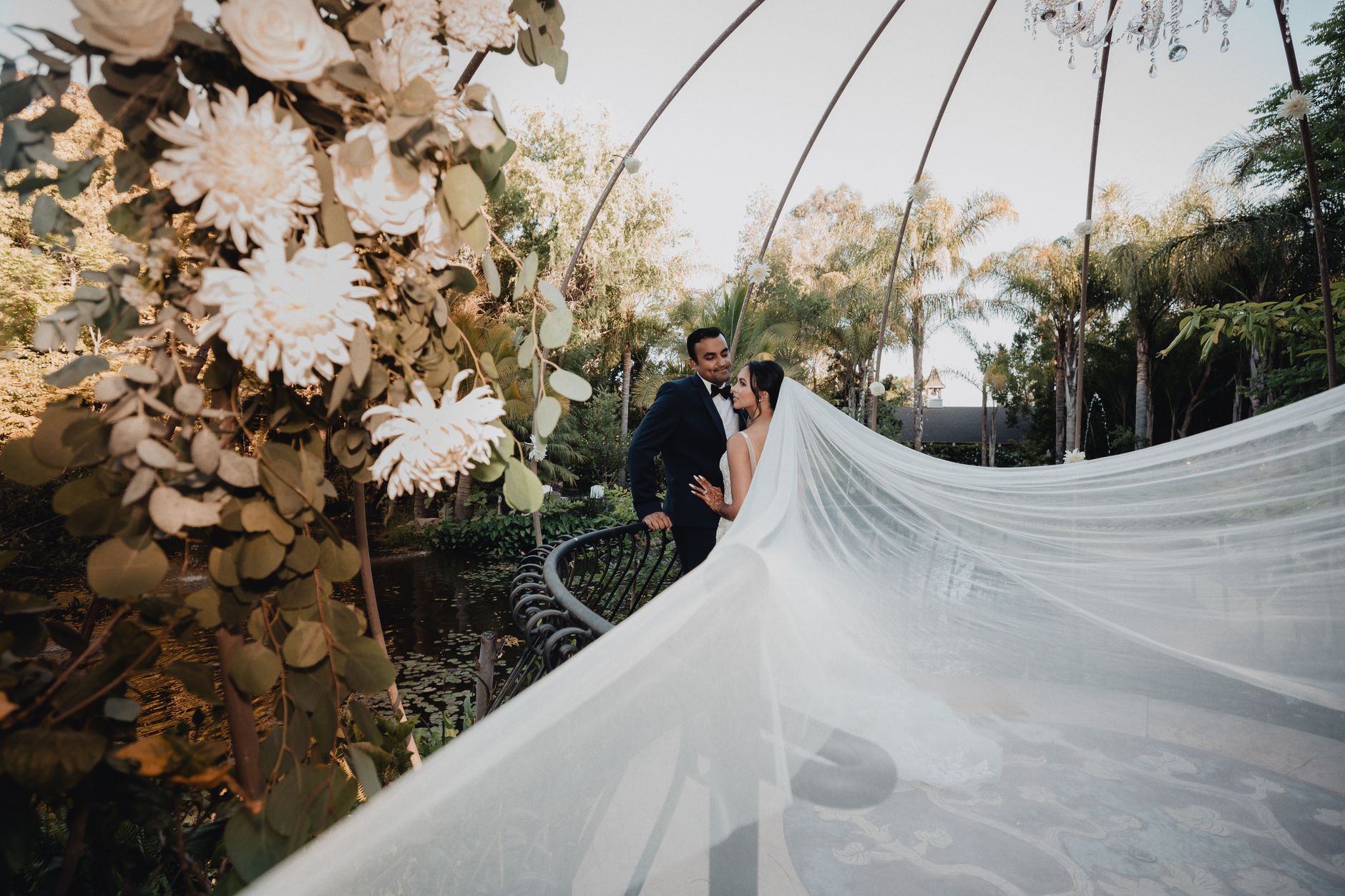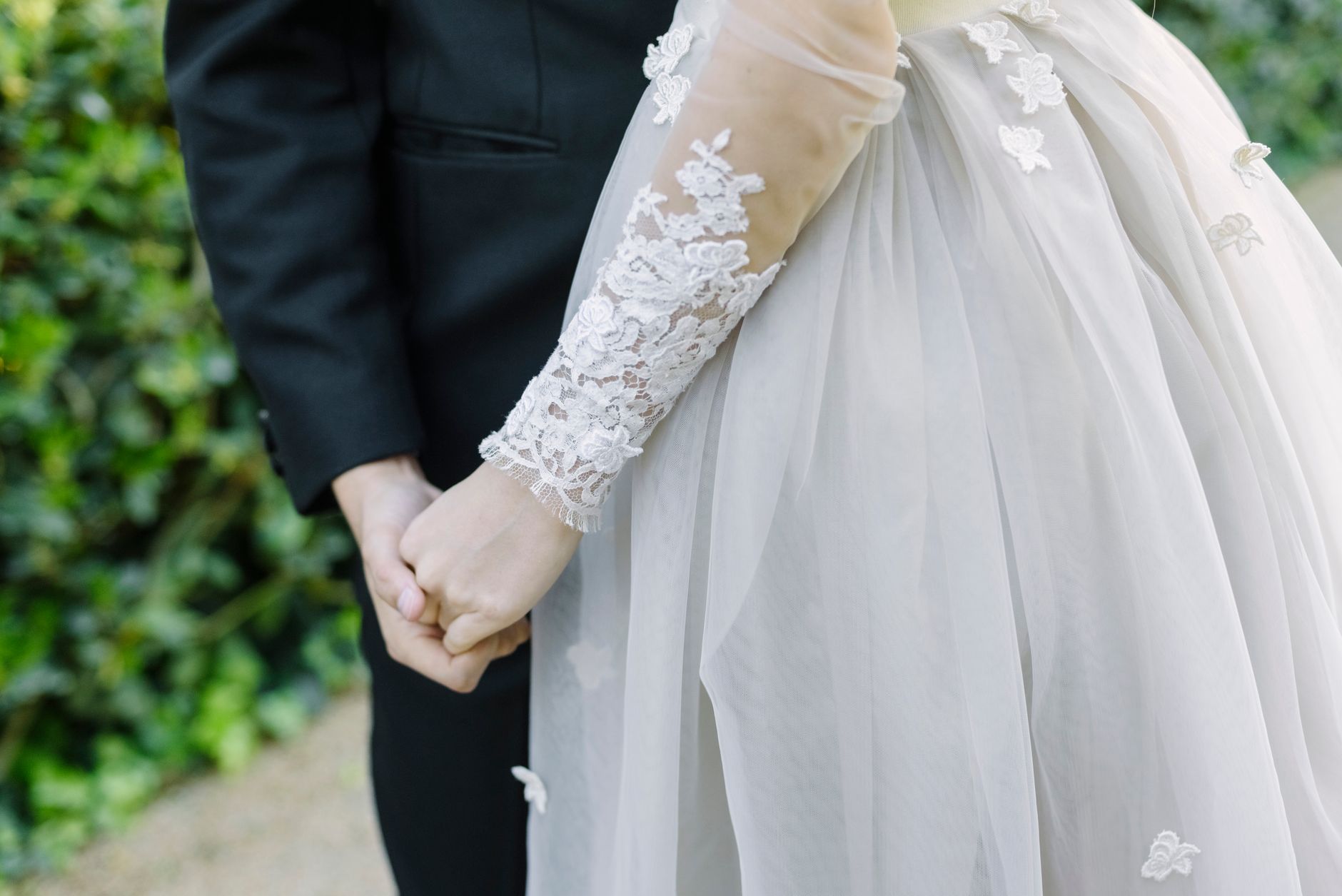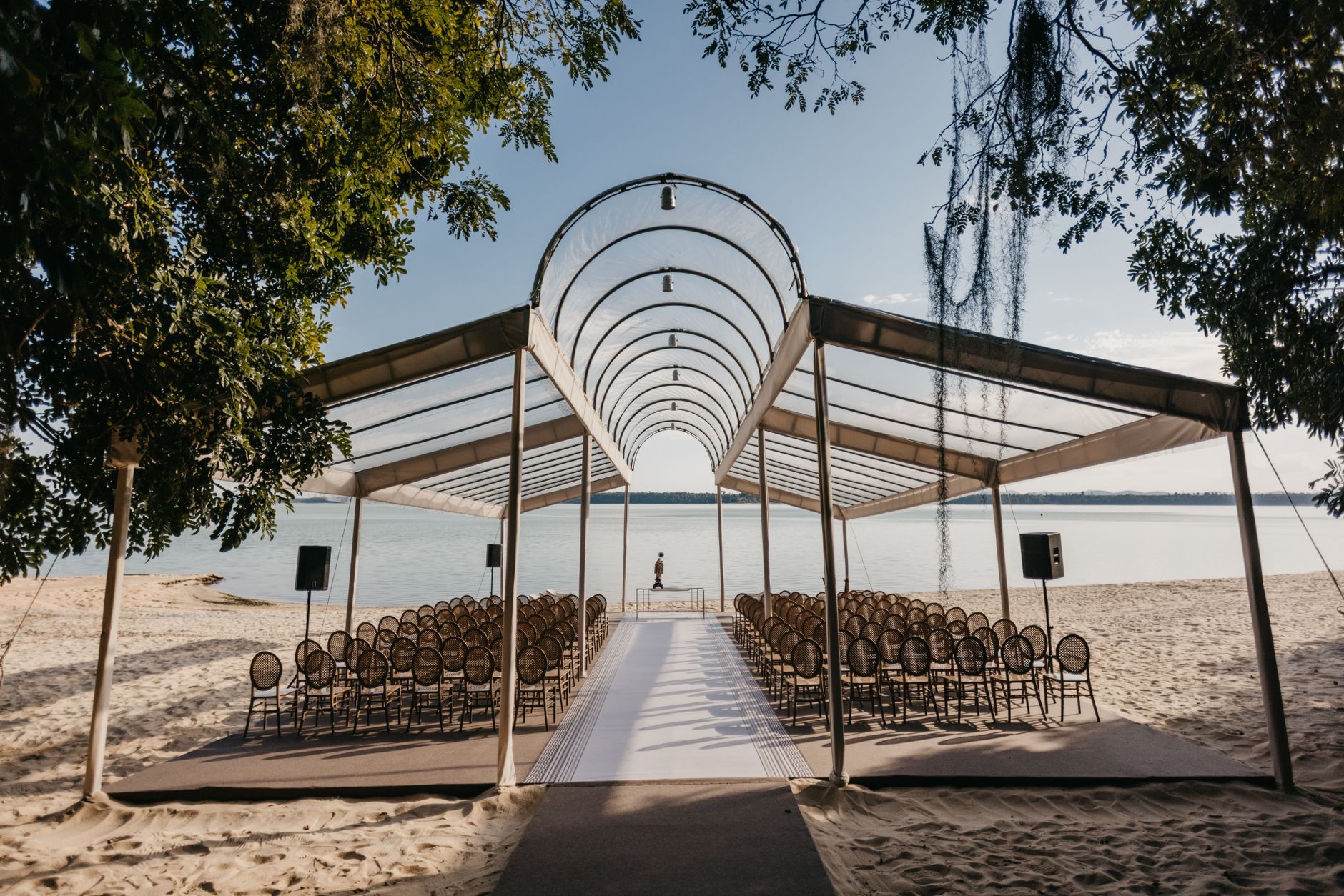
A wedding videographer at Bel-Air Bay Club shoots the ocean terrace ceremony between 4:30 and 5:30 PM, when the Pacific light is warm and lateral and the water behind the couple reads as texture rather than glare. The venue sits on a bluff in Pacific Palisades, and the light window is shorter than couples expect — after 6 PM the sun drops fast, and the terrace shifts to silhouette. A full-day wedding film here captures 10 hours of coverage across two primary scenes: the clifftop ceremony and the indoor-outdoor reception in the main dining room, both shot by a 2-shooter video team coordinated with documentary photography.
Why Bel-Air Bay Club Films Differently Than an Inland Los Angeles Venue
Photo by Lulan Studio on Pexels
Bel-Air Bay Club is a coastal venue with no backup ceremony site indoors. The ocean terrace holds 150 guests seated theater-style, and the ceremony runs directly into golden hour — which means the videographer's coverage plan starts with the sun position, not the timeline the couple prefers. At Hotel Bel-Air or Beverly Hills Hotel, a garden ceremony under tree canopy diffuses light across a two-hour window. At Bel-Air Bay Club, the window is 90 minutes, and if the ceremony starts at 3 PM in July, the couple will be backlit and squinting. The first planning conversation with the videographer anchors the ceremony time to the sunset calculator, then works backward to fix hair-and-makeup call time.
The venue's second differentiator is wind. The terrace is exposed, and afternoon onshore wind is audible on lapel mics. A 2-shooter video setup places one camera on the aisle with a shotgun mic on the officiant, and a second locked-off wide on the bluff edge to capture the full scene and the water. Audio redundancy is not optional — the primary vows track comes from dual wireless lavs on the couple, with the shotgun as backup. The wind also affects the bride's veil and any loose florals on the arch, which reads as movement in the film but requires the videographer to communicate with the planner about timing the processional to a wind lull when possible.
Coverage Plan: Ceremony Terrace and Clifftop Reception
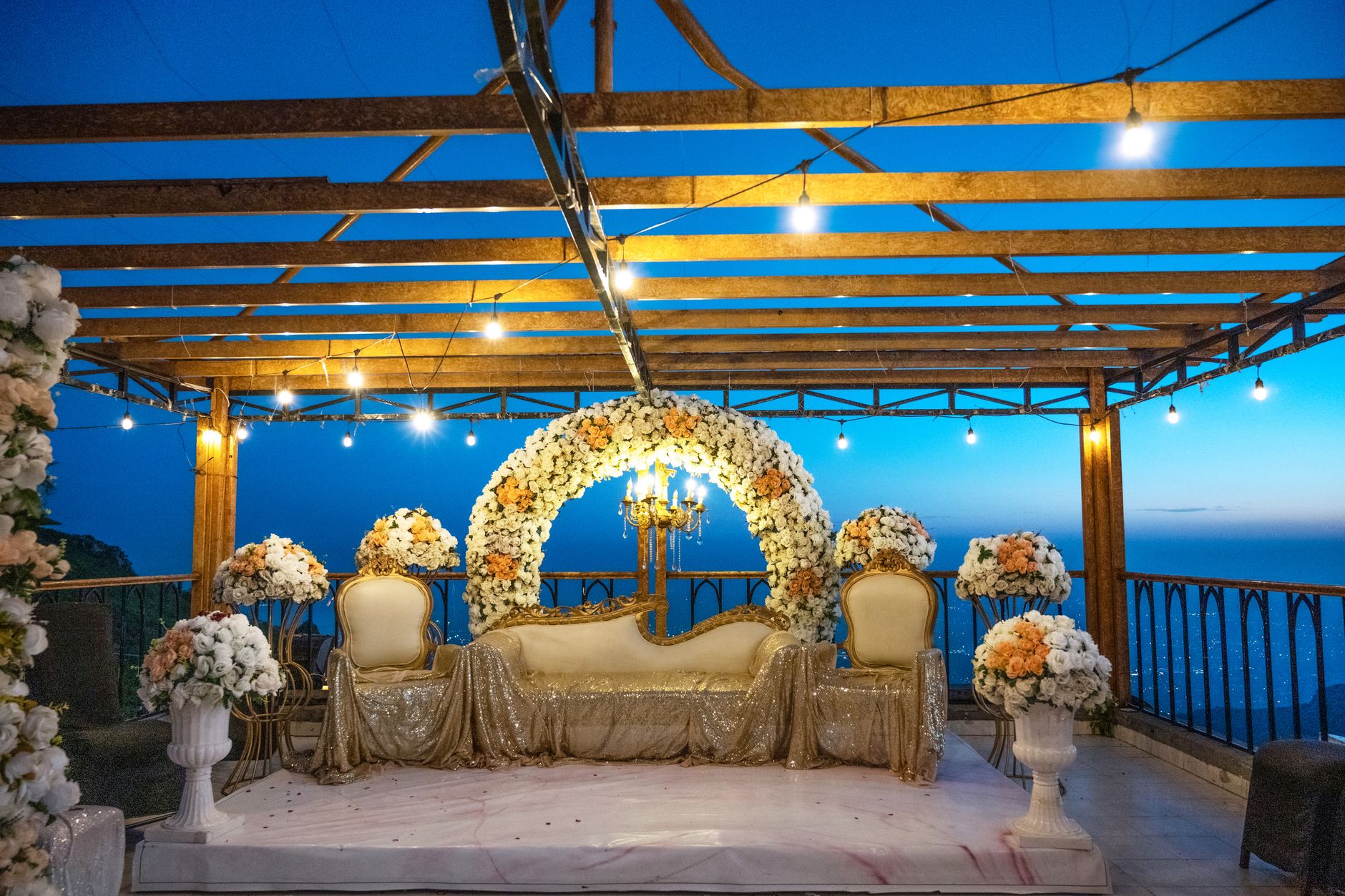
Photo by Tauseef Kazmi on Pexels
A typical 10-hour wedding film at Bel-Air Bay Club spans noon to 10 PM, covering bridal prep in the upstairs getting-ready suite, first look on the lawn near the entry, ceremony on the ocean terrace, family portraits on the bluff, and reception in the main dining room. The videographer walks the property at noon to mark three key frames: the prep-room window light (north-facing, soft all day), the first-look location (partially shaded by the eucalyptus near the valet drop), and the aisle sightline for the ceremony (shooting into the west, so the officiant and couple are backlit unless the start time is before 5 PM).
The ceremony itself runs 20–30 minutes, and the videographer shoots it as a two-camera documentary sequence: Camera A on sticks mid-aisle, 85mm lens, locked on the couple's faces and hands during vows. Camera B roaming the perimeter for reaction shots — parents in the front row, the couple's profile against the water, wide establishing frames of the full terrace with the Pacific behind. The processional and recessional are both shot handheld to follow the bride's movement and capture the spontaneous moments when she sees her parents or when the couple pauses at the end of the aisle to take in the view before walking back.
After the ceremony, the planner typically holds the couple on the terrace for 10 minutes of private portraits while guests move to cocktail hour. This is the quietest light of the day — the sun is low, the wind often drops, and the videographer shoots slow handheld sequences of the couple walking the bluff edge, standing at the railing, and sitting on the bench near the ceremony arch. These frames anchor the film's second act, the transition from ceremony to celebration.
Documentary Photography + Video Coordination
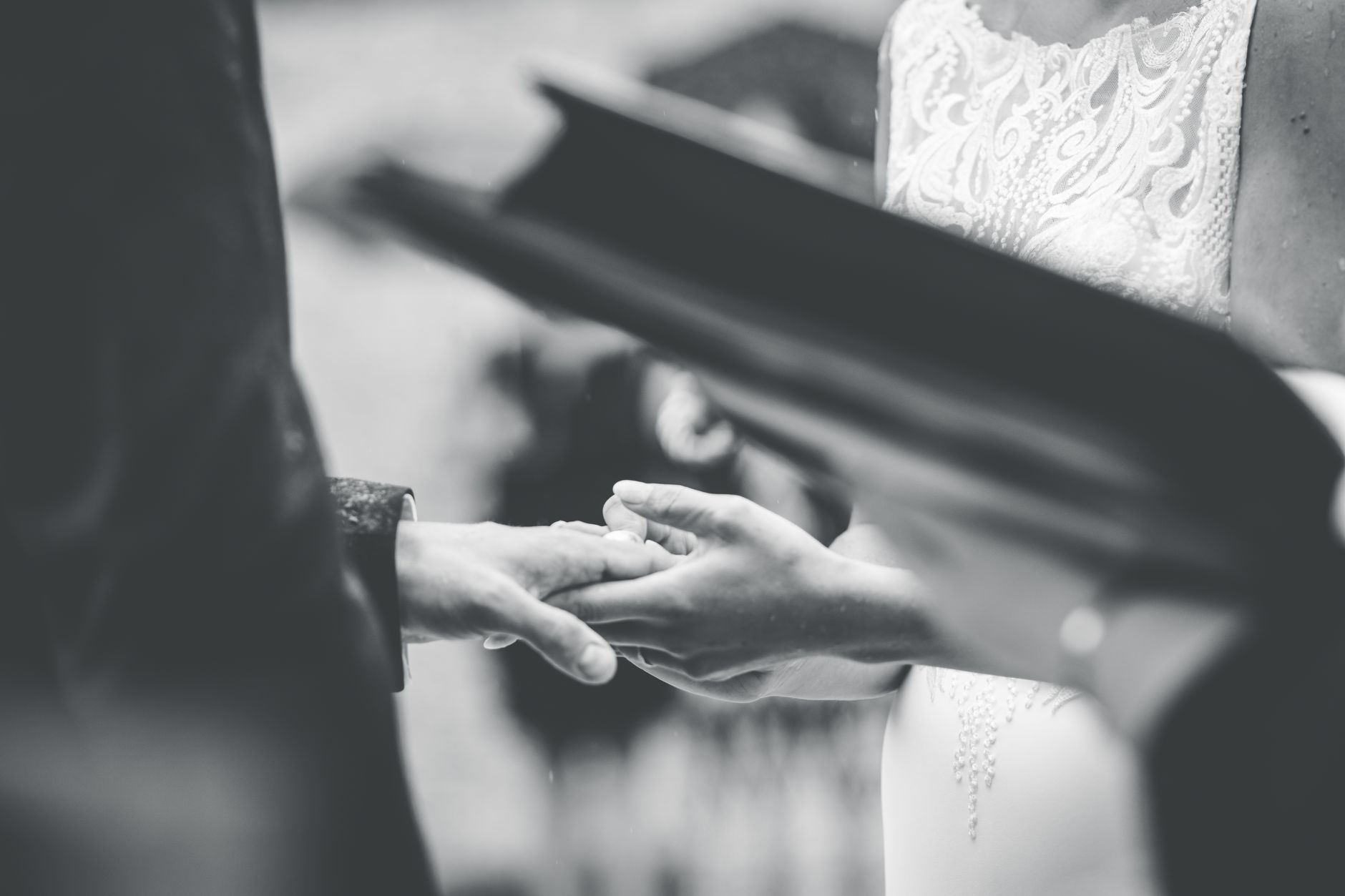
Photo by Stephen Andrews on Pexels
Most couples hiring a wedding videographer at Bel-Air Bay Club also book documentary photography, either as a photo + video combined package or as separate vendors working in tandem. The terrace is narrow — about 40 feet deep from the first row of chairs to the bluff edge — so the photographer and videographer establish a spatial division during the ceremony: video takes the aisle centerline and the perimeter, photo takes the outer edges and shoots longer lenses from the back and sides. During the recessional, the photographer moves to the bluff end to capture the couple backlit against the water, and the videographer holds the aisle to shoot the couple walking toward camera with guests standing and applauding on both sides.
The couple's private portrait window after the ceremony is shared time, and the two teams alternate rather than overlap. The videographer shoots 3–4 minutes of slow movement — the couple walking, standing still, sitting on the bench — without directing poses, letting the photographer work between takes. The goal is naturalism in both mediums, and that requires the couple to move freely rather than freeze for simultaneous coverage. A practiced team completes this sequence in 8–10 minutes, which keeps the cocktail hour on schedule and gives both vendors clean, uncluttered frames.
Light and Scene Timing at Bel-Air Bay Club
Photo by Juliano Astc on Pexels
Bel-Air Bay Club's primary asset is the ocean view, and the videographer's coverage strategy is built entirely around when that view looks best on camera. The terrace faces west, which means the water is backlit all afternoon. Front-lit water — the kind that reads as blue and textured in a film — only happens in morning light, and Bel-Air Bay Club does not permit morning ceremonies. So the videographer plans for backlit water, which requires the camera to expose for the couple's faces and let the ocean blow out to white-gold, or to expose for the water and let the couple go to silhouette. Both are intentional choices, and the experienced videographer shoots both, then selects in the edit based on the emotional beat of the scene.
The reception moves indoors to the main dining room, which has floor-to-ceiling windows overlooking the terrace and the ocean beyond. Sunset happens during dinner, and the videographer stations one camera at the window to capture the sky color shift — deep orange to pink to violet — as a time-lapse or slow dolly shot that will serve as the film's visual transition from day to night. The dining room is lit with warm overhead pendants and candlelight on the tables, and the videographer brings a small on-camera LED to lift faces during toasts without overpowering the ambient mood. The room's acoustics are live, so audio from toasts requires a mixer and two wireless handhelds for the speakers, plus a room-tone lav on the couple's table to capture their reactions.
Comparison: Ceremony Timing at 4:30 PM vs 5:30 PM
Couples booking Bel-Air Bay Club for a May–September wedding face a binary timing decision: ceremony at 4:30 PM or 5:30 PM. The difference is not subtle. A 4:30 PM ceremony places vows in warm but still-bright light, with the sun at 35–40 degrees above the horizon. The couple's faces are front-lit, the water behind them is visible and textured, and the videographer can expose normally without fighting glare. The tradeoff is that cocktail hour and dinner happen in full daylight, and the reception does not shift to evening mood until after 8 PM, which flattens the film's narrative arc if the couple wants a day-to-night edit.
A 5:30 PM ceremony places vows at golden hour, with the sun at 10–15 degrees above the horizon. The light is spectacular — low, warm, directional — but the couple is backlit, and the videographer must choose between exposing for faces (which turns the ocean into a white backdrop) or exposing for the sky and water (which silhouettes the couple). The experienced choice is to shoot both: one camera exposing for the couple's faces during vows, a second camera on the wide expiring for the full scene and the sky gradient. The highlight reel will intercut between the two, and the couple sees both their expressions and the sweep of the setting.
The second-order effect of a 5:30 PM ceremony is that the reception begins at twilight, and the transition from ceremony to dinner feels compressed. If the couple wants a leisurely cocktail hour with portrait time and a clear narrative break between ceremony and reception, 4:30 PM is the better start time. If they want the ceremony film to look like a Vogue editorial — all backlight and lens flare and golden-hour glow — then 5:30 PM is the correct choice, and the videographer builds the coverage plan accordingly.
What to Expect from a Full-Day Wedding Film at Bel-Air Bay Club
A full-day wedding film at Bel-Air Bay Club typically delivers an 8–10 minute highlight reel and a 45–60 minute full ceremony edit, with an edit turnaround of 8–12 weeks after the wedding date. The highlight reel opens on prep, moves through the first look, builds to the ceremony and vows, then accelerates through cocktail hour, toasts, first dance, and dancing. The ceremony edit is a start-to-finish documentary cut of the processional, readings, vows, ring exchange, and recessional, synchronized to the officiant's audio and the couple's vows captured on lapel mics.
The videographer delivers both films as web-optimized MP4 files and as password-protected Vimeo links for easy sharing. The couple also receives the full ceremony audio as a separate WAV file, which some couples use later for anniversary listening or for a podcast-style keepsake. Raw footage is archived but not delivered unless the couple adds a raw-footage package at the time of booking, which is uncommon for documentary-style coverage where the edit is the final product.
Couples who book a photo + video combined package receive coordinated delivery — the photographer's gallery goes live at the same time the films are delivered, so the couple can post stills and video on the same day. The combined package also includes a short teaser film (60–90 seconds) delivered within two weeks of the wedding, designed for immediate social sharing while the full edit is in post-production.
How to Book a Wedding Videographer at Bel-Air Bay Club
Booking a wedding videographer for Bel-Air Bay Club begins with a conversation about the ceremony start time, because that determines the coverage structure and the number of shooters required. For a 4:30 PM ceremony, a 2-shooter video team covers prep, ceremony, portraits, and reception across 10 hours. For a 5:30 PM ceremony with an earlier prep start, the couple may add a third shooter to cover simultaneous prep locations (bride and groom in separate suites) or to extend coverage into late-night dancing if the reception runs past 10 PM.
The next planning variable is photo-video coordination. Couples booking both typically choose either two separate vendors or a single team offering a photo + video combined package. The combined package guarantees that the photo and video teams have worked together at Bel-Air Bay Club before, which eliminates the spatial-conflict risk during the ceremony and speeds up the portrait sequence. Separate vendors require a pre-wedding coordination call between the photographer, videographer, and planner to walk through timing and positioning, which adds a layer of logistics but gives the couple more stylistic control if they prefer a specific photographer and a specific videographer who do not normally work together.
Once the team structure is set, the videographer sends a detailed timeline worksheet asking for the ceremony start time, the number of guests, the reception end time, and any special coverage requests (a parent dance, a surprise performance, a send-off with sparklers). The worksheet also asks whether the couple wants the officiant mic'd, whether they will read personal vows, and whether they want audio from the cocktail hour (live music, ambient conversation) included in the film. These inputs shape the audio mix and the final edit structure, and the earlier they are confirmed, the cleaner the shoot-day execution.
Begin a Conversation About Your Wedding at Bel-Air Bay Club
A wedding film at Bel-Air Bay Club is a study in coastal light and precise timing — the terrace ceremony in late-afternoon sun, the quiet portrait minutes on the bluff, the reception as the sky shifts from daylight to evening. If you are planning a wedding at Bel-Air Bay Club and want a film that captures the venue's best light and your most unguarded moments, we'd be glad to discuss what full-day documentary coverage looks like on your timeline.