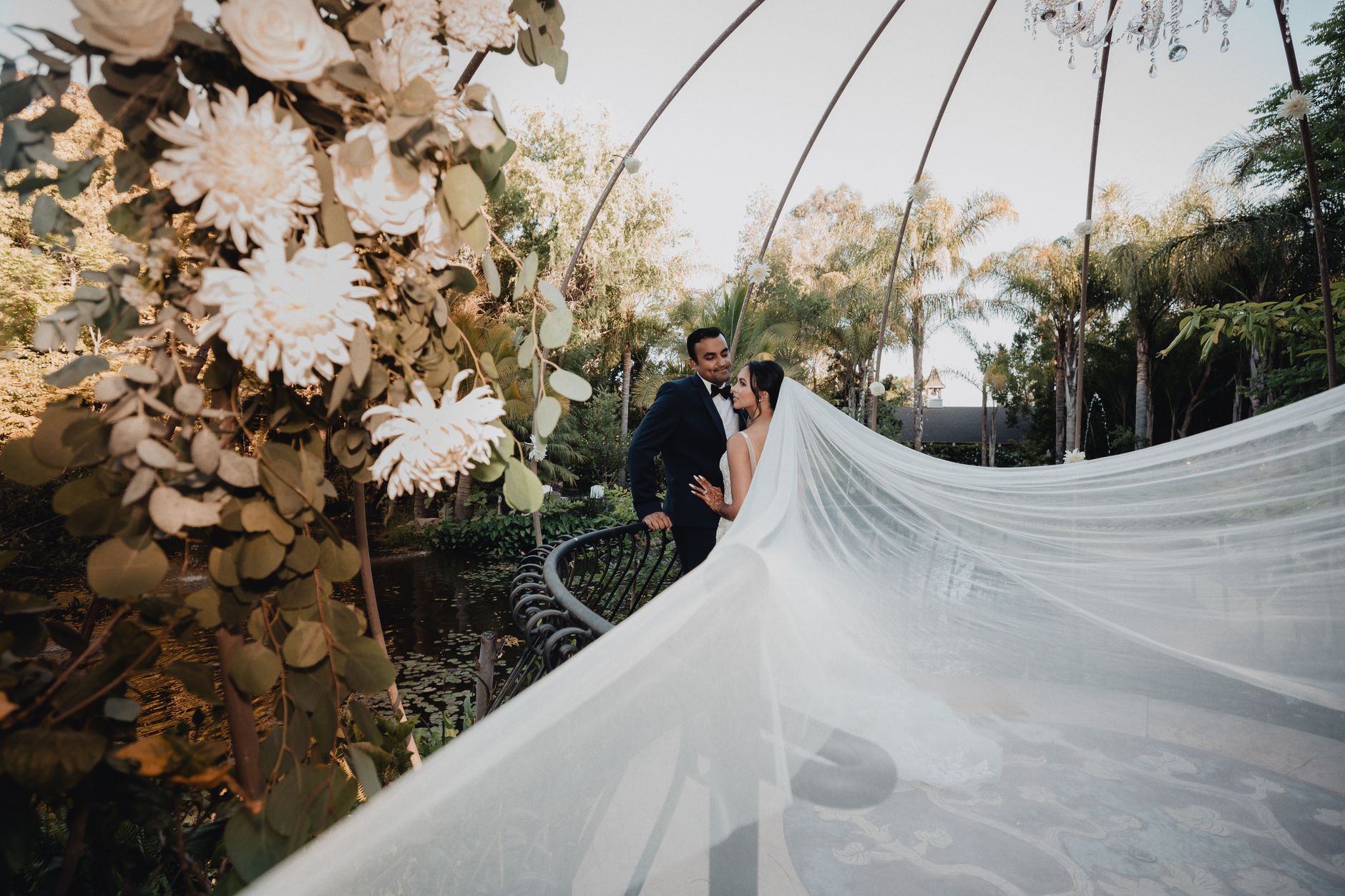
A wedding film at San Ysidro Ranch requires a 2-camera video team and 10 hours of coverage to capture the eucalyptus terrace ceremony at golden hour and the Stonehouse reception after dark. The property sits on 500 acres in the Montecito foothills, and the videographer's coverage plan is anchored by two scenes: the open-air garden ceremony in late-afternoon light, and the intimate stone-walled dinner that follows. Those two moments — one soft and green, one warm and architectural — shape the film's editorial structure before the couple says a word.
San Ysidro Ranch is a luxury resort in the hills between Santa Barbara and the Pacific, and it films differently than a coastal terrace or a hotel ballroom. The eucalyptus grove creates dappled overhead light that flatters skin tones and moves with the breeze. The Stonehouse interior is candlelit and close, which means the videographer relies on available light and a second shooter positioned near the fireplace to catch toasts and parent reactions. A wedding film here is not a single continuous narrative — it is a sequence of distinct vignettes, each anchored to a specific location on the property, and each requiring its own lighting and movement strategy.
Why San Ysidro Ranch Films Differently Than a Hotel Ballroom
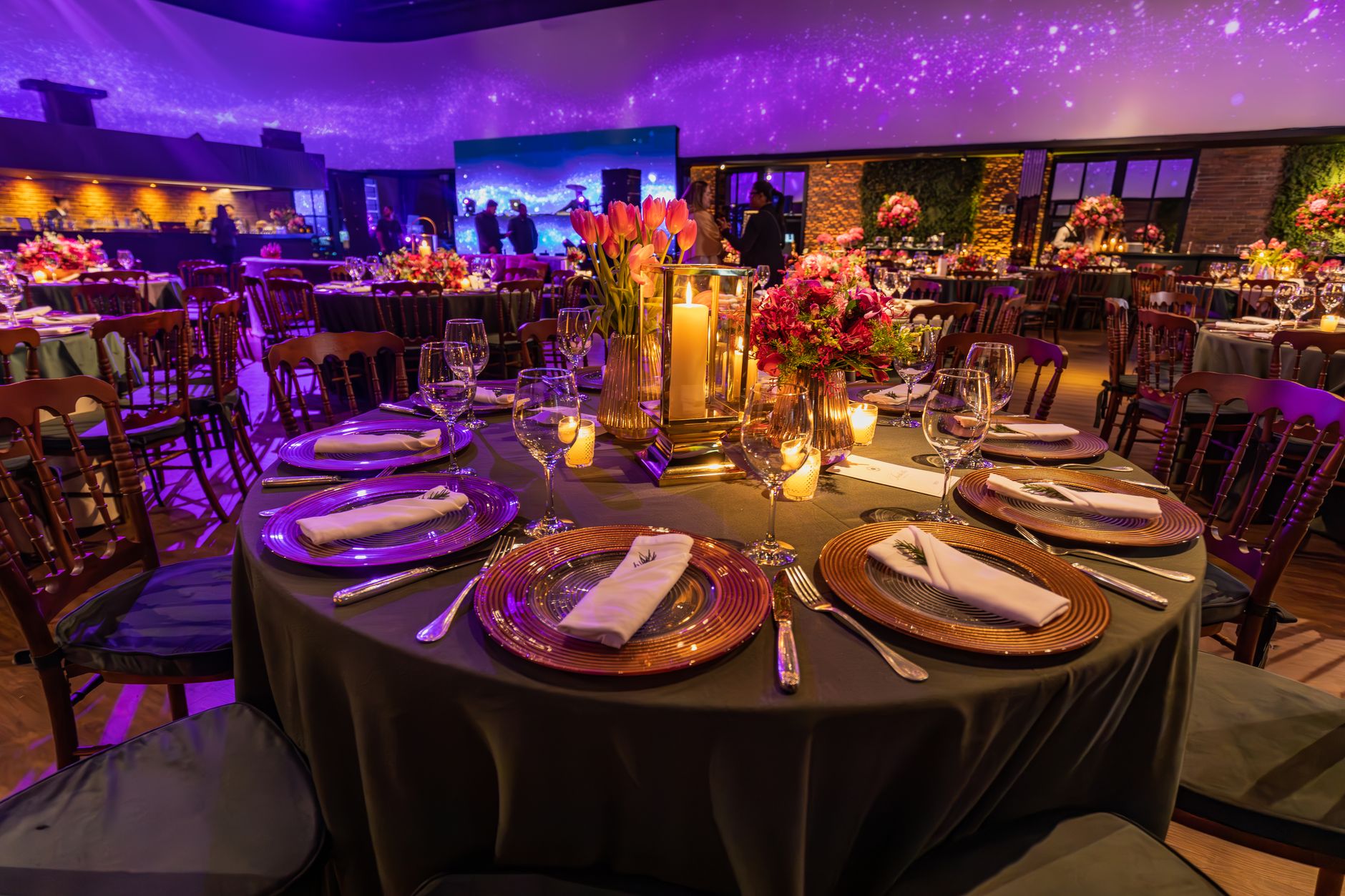
Photo by Matheus Bertelli on Pexels
San Ysidro Ranch spreads across garden terraces, stone courtyards, private cottages, and the Stonehouse Restaurant, and most couples hold the ceremony outdoors on the eucalyptus-shaded lawn near the Jacaranda cottage, then move guests to the Stonehouse for dinner. The videographer cannot rely on a single static camera position — the ceremony, cocktail hour, portraits, and reception each happen in a different microclimate, and the coverage plan must account for the walk between them.
The eucalyptus terrace ceremony is framed by mature trees that create a natural canopy, and the best light falls between 4:30 and 6:00 PM, when the sun is low enough to filter through the branches but not so low that it backlights the couple into silhouette. A 2-shooter video team places one camera on the aisle for the processional and a second camera behind the officiant to capture the couple's faces during the vows. The tree canopy means the videographer cannot use harsh overhead fill light — the film relies on the soft green-gold ambient light that defines the property.
After the ceremony, couples typically move to the Upper Garden or the Wine Cellar for cocktail hour, and the portrait session happens in one of three locations: the rose garden near the chapel, the private vineyard behind the Hacienda, or the eucalyptus grove itself. The videographer follows the couple through this sequence, capturing 15–20 minutes of natural movement — walking hand-in-hand through the garden, pausing at the stone fountain, stealing a private moment on the cottage porch. These portrait interludes become the quiet center of the wedding film, the scenes that separate the ceremony from the reception and give the couple room to breathe.
Scene Coverage: Eucalyptus Terrace, Stonehouse, and the Cottage Grounds
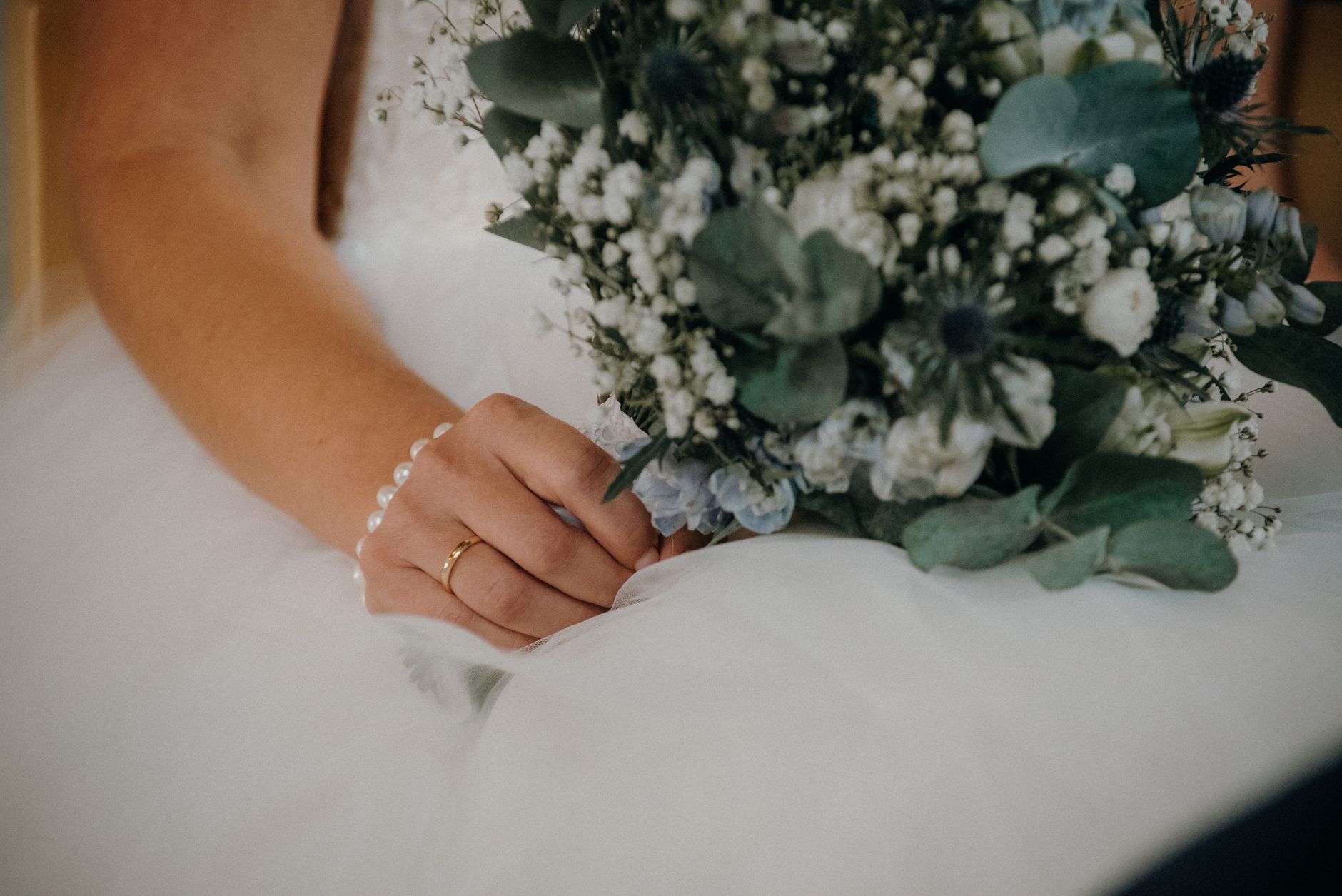
Photo by Rene Terp on Pexels
San Ysidro Ranch offers multiple ceremony and reception sites, and the videographer's coverage plan depends on which combination the couple selects. The most common configuration is the eucalyptus terrace ceremony followed by a Stonehouse dinner, but some couples hold both ceremony and reception outdoors on the Upper Garden lawn, and others choose the intimate Wine Cellar for a seated dinner of 40 or fewer guests.
Eucalyptus Terrace Ceremony (4:30–6:00 PM): The terrace sits under a canopy of mature eucalyptus trees, and the ceremony is typically framed with the Montecito hillside in the background. The videographer positions one camera on the aisle to capture the processional, the couple's entrance, and the recessional, and a second camera behind the officiant to capture close-up reactions during the vows and ring exchange. The dappled light shifts as the sun moves, so the videographer monitors exposure continuously and adjusts white balance to preserve the green-gold color temperature that defines the space. A third stationary camera — optional in the Photo + Video Combined Package — can be placed on the far side of the aisle to capture wide establishing shots of the full guest count and the surrounding garden.
Stonehouse Reception (7:00 PM–11:00 PM): The Stonehouse is a candlelit stone cottage with exposed beams, a working fireplace, and floor-to-ceiling windows that open onto the garden. Dinner is served family-style at long wooden tables, and the videographer relies on available light — candles, Edison bulbs, and the fireplace glow — rather than adding video lights that would flatten the mood. One camera is positioned near the fireplace to capture toasts, and a second roaming camera moves through the room to catch parent reactions, the couple's private glances, and the last dance near the windows. The stone walls absorb sound, so the videographer places a wireless microphone on the toastmaster and a second lav mic on the couple's table to capture conversation and laughter.
Portrait Interlude (6:15–6:45 PM): Between the ceremony and reception, the couple walks through the rose garden, the private vineyard, or the eucalyptus grove for 20–30 minutes of cinematic portrait coverage. The videographer follows at a distance, capturing natural movement — the bride adjusting her veil in the garden mirror, the couple pausing at the stone fountain, a quiet moment on the cottage porch. These scenes become the emotional center of the Wedding Film, the interludes that separate the public ceremony from the intimate reception and allow the couple to be alone together before the evening begins.
Documentary vs Cinematic Wedding Film at San Ysidro Ranch
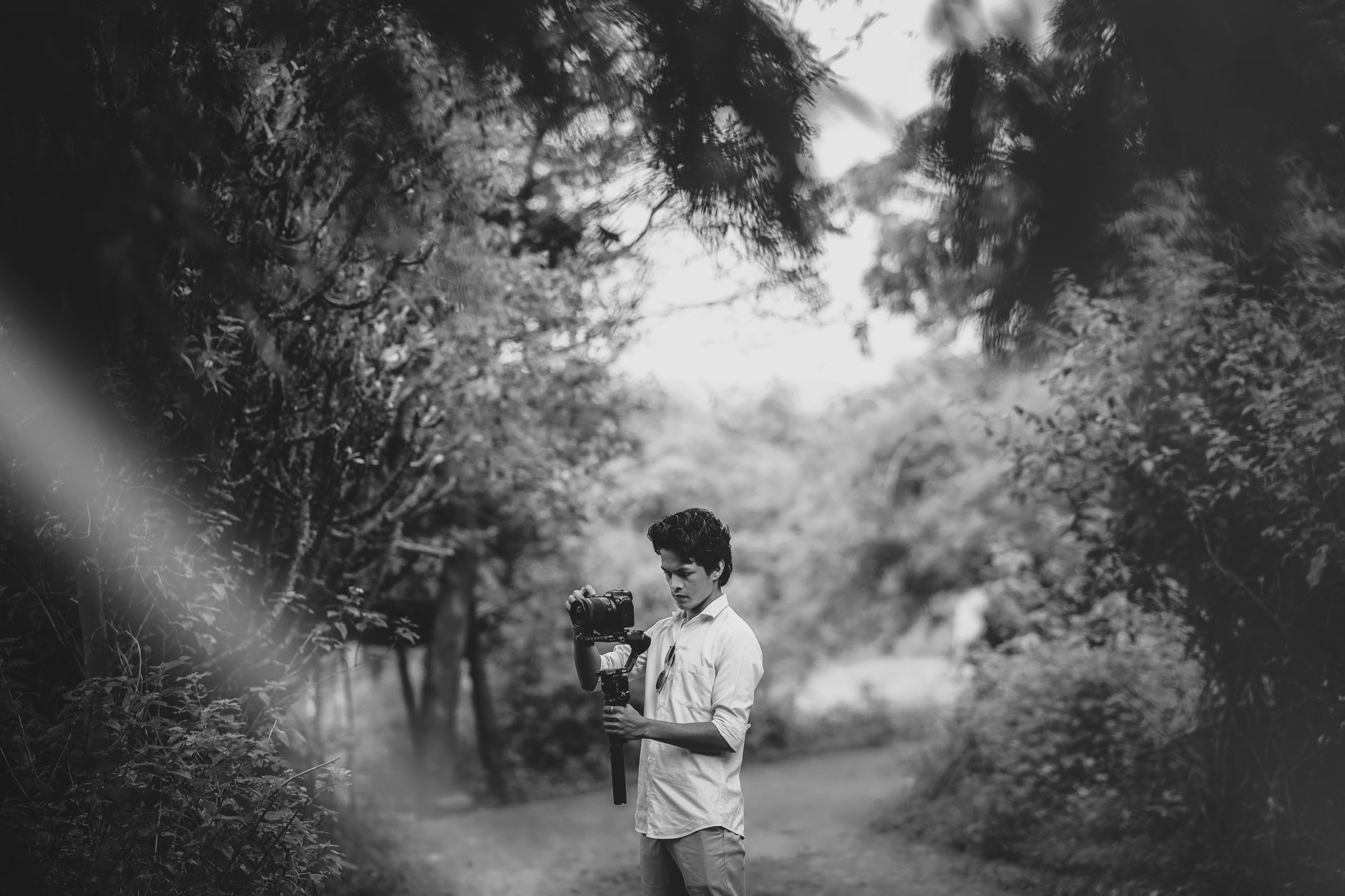
Photo by Yash Limaje on Pexels
San Ysidro Ranch attracts couples who care about how their wedding film looks, not just what it documents, and the choice between documentary and cinematic coverage shapes the final edit. A documentary film captures the day as it unfolds — unscripted, chronological, with long vows and full speeches preserved in sequence. A cinematic film is an editorial distillation — the best 8–12 minutes of the day, scored to music, shaped into a narrative arc that foregrounds emotion and movement over spoken word.
At San Ysidro Ranch, most couples choose a cinematic Highlight Reel paired with Full Ceremony Coverage as a separate deliverable. The highlight reel is the film they share with friends and watch on anniversaries — scored, color-graded, built around the eucalyptus ceremony and the Stonehouse first dance. The full ceremony coverage is the archival record — the complete vows, unedited, delivered as a standalone file. This two-film structure allows the couple to have both a cinematic keepsake and a documentary archive without forcing the videographer to compromise on pacing or tone in either.
For couples planning a multi-day celebration — a welcome dinner at the Stonehouse on Friday, the ceremony on Saturday, and a farewell brunch on Sunday — the videographer can extend coverage across all three events, capturing the full arc of the weekend in a single long-form film. This approach works especially well for destination weddings where out-of-town guests gather for more than one meal, and the wedding itself is the centerpiece of a three-day reunion.
Photo and Video Coordination at a Garden Estate
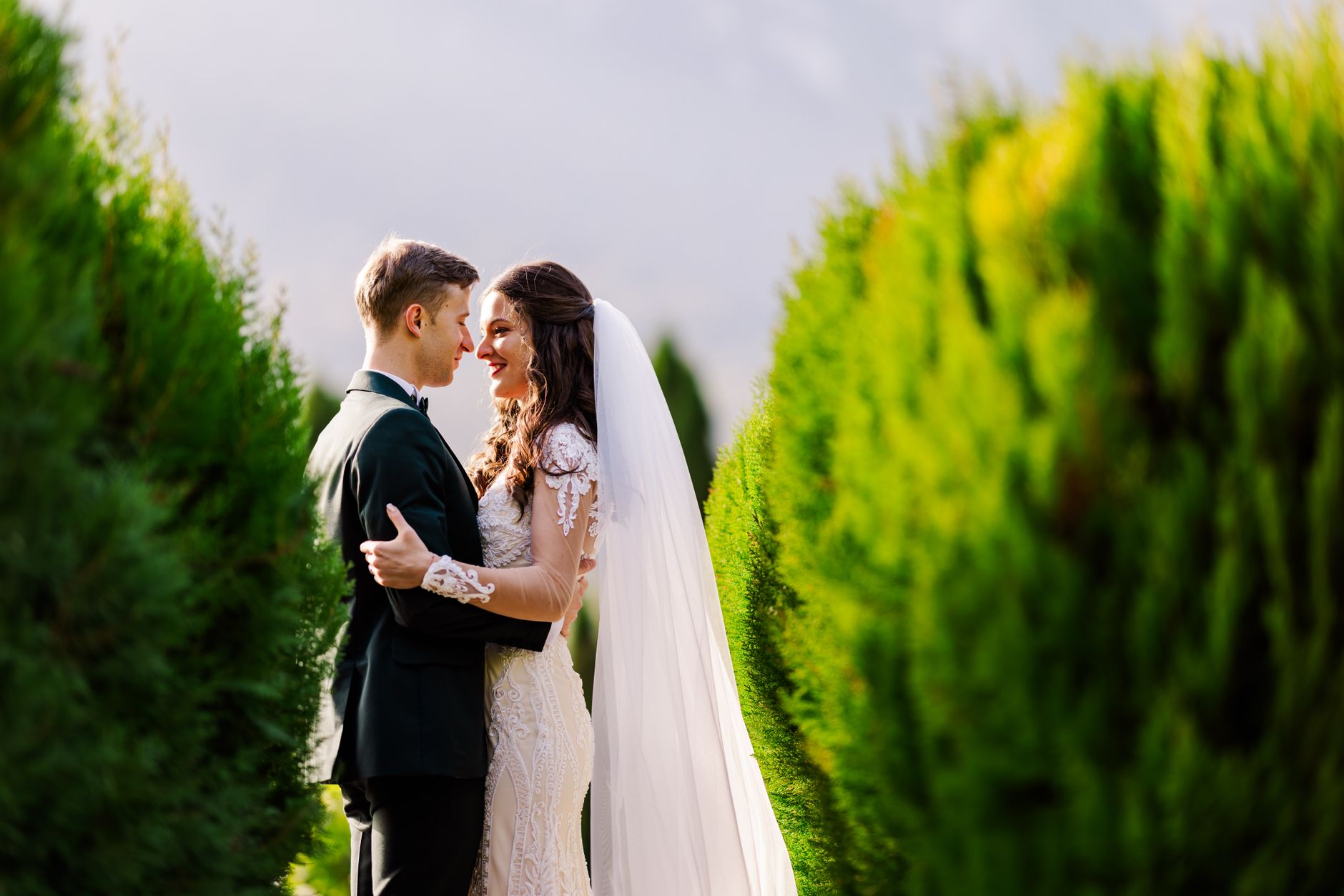
Photo by Marius Pavel on Pexels
San Ysidro Ranch is a garden estate, and the timeline must account for the fact that the ceremony, portraits, and reception happen in different locations — each requiring a walk of 3–5 minutes. The videographer and photographer coordinate on three critical windows: the pre-ceremony detail coverage, the post-ceremony portrait session, and the reception entrance.
Pre-ceremony details (2:00–3:30 PM): The photographer arrives first to capture flat-lay details — invitations, rings, the bride's dress hanging in the cottage window — while the videographer films the bride getting ready in one of the private suites. The videographer uses a gimbal and available window light to capture movement — the bride stepping into her dress, her mother fastening the necklace, the first look with her father on the cottage porch. The photographer and videographer do not duplicate each other's shots; the photographer focuses on still composition, and the videographer captures the moments between the poses.
Portrait session (6:15–6:45 PM): After the ceremony, the couple and the creative team walk to the rose garden or the vineyard for portraits. The photographer directs the couple into specific compositions — standing under the eucalyptus arbor, walking along the stone wall — and the videographer follows at a distance, capturing the movement between poses rather than the poses themselves. This division of labor allows the photographer to work quickly without worrying about stepping into the videographer's frame, and it ensures the wedding film shows the couple in motion rather than frozen in static portraits.
Reception entrance and first dance (7:30–8:00 PM): The videographer stages the reception entrance as a single continuous shot — the couple walking from the garden into the Stonehouse, guests applauding, the transition directly into the first dance. This sequence requires the photographer to hold back for 60–90 seconds while the videographer captures the movement, then step in for the formal first-dance portraits once the dance floor is open. Coordination here is critical — a poorly timed camera flash can ruin the videographer's exposure during the low-light reception entrance.
When to Book a Videographer for San Ysidro Ranch
San Ysidro Ranch enforces a preferred-vendor list for most categories, but videography and photography are open to outside creatives as long as the couple secures the venue date first. The typical booking timeline is 10–14 months before the wedding date, and couples who book earlier have more flexibility in selecting coverage hours and add-on services like an Engagement Film or a Save-the-Date Film shot on the property during the planning months.
San Ysidro Ranch allows only one wedding per day, so the videographer does not face the scheduling conflicts common at hotel ballrooms or multi-event venues. The property is available for coverage from noon until midnight, and the videographer's 10-hour window typically runs 2:00 PM to midnight, capturing getting-ready, ceremony, portraits, dinner, toasts, and dancing. Couples who want sunrise or late-night coverage — a morning-after brunch on the terrace, or a post-reception bonfire near the vineyard — can extend hours as an add-on, but the standard 10-hour package covers the full arc of a single-day celebration.
For couples planning a destination wedding at San Ysidro Ranch who live outside California, the videographer travels from Los Angeles and can coordinate a pre-wedding site visit during the planning months. This visit allows the couple to walk the property with the creative team, confirm the ceremony and reception locations, and test the light at different times of day. The site visit is optional but recommended for couples who have not seen the property in person or who want to stage a Save-the-Date Film on the grounds six months before the wedding.
Couple Aesthetic: Garden Romantic and Coastal Classic
San Ysidro Ranch attracts two primary couple archetypes: the garden romantic and the coastal classic. The garden romantic chooses the property for the eucalyptus grove, the rose garden, and the private-estate feel — they want a wedding that looks like a secret garden dinner party, not a resort ballroom event. The coastal classic chooses San Ysidro Ranch for its proximity to Santa Barbara and the Pacific, and they pair the property's soft green aesthetic with clean white florals, linen table settings, and a muted color palette that foregrounds the natural landscape.
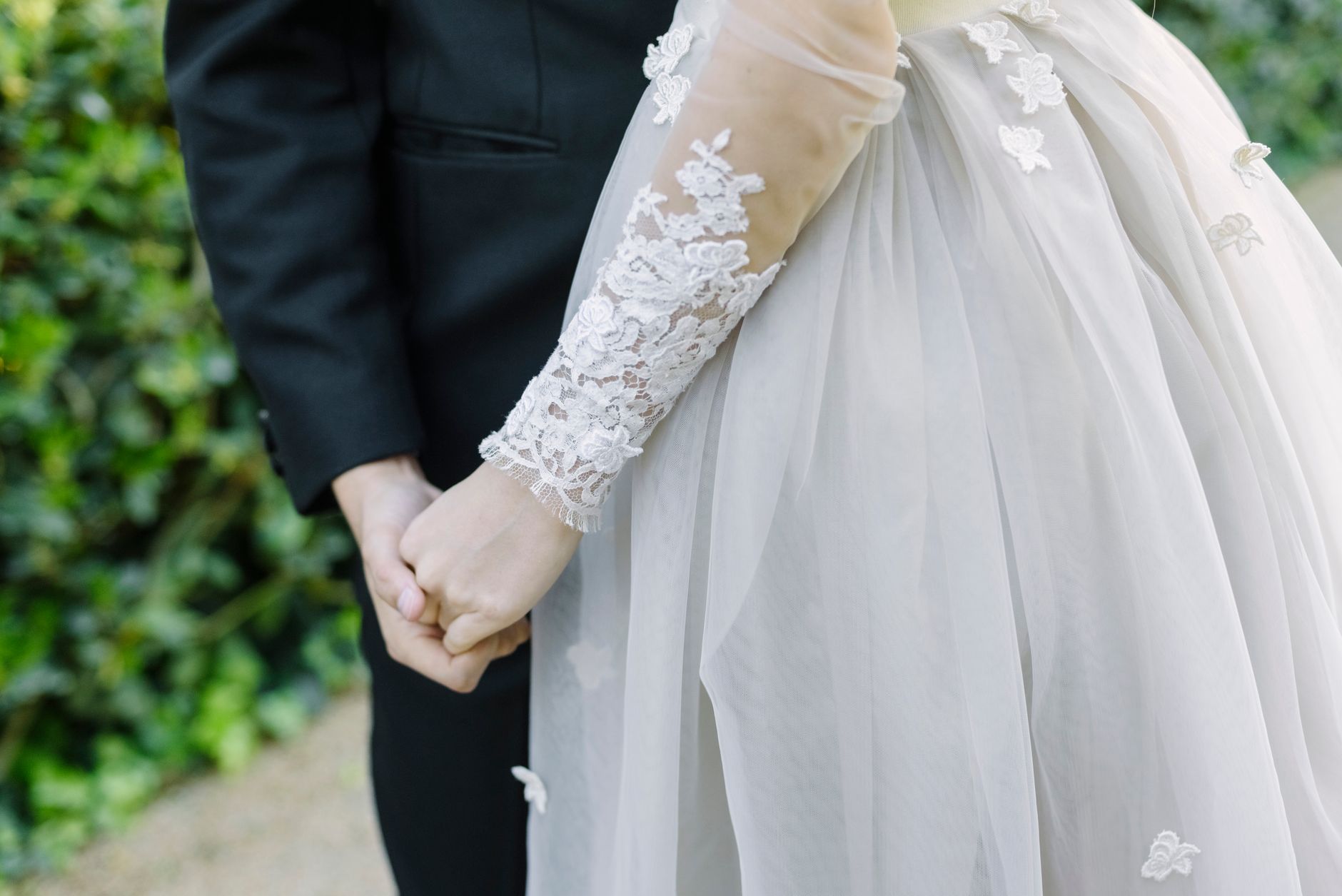
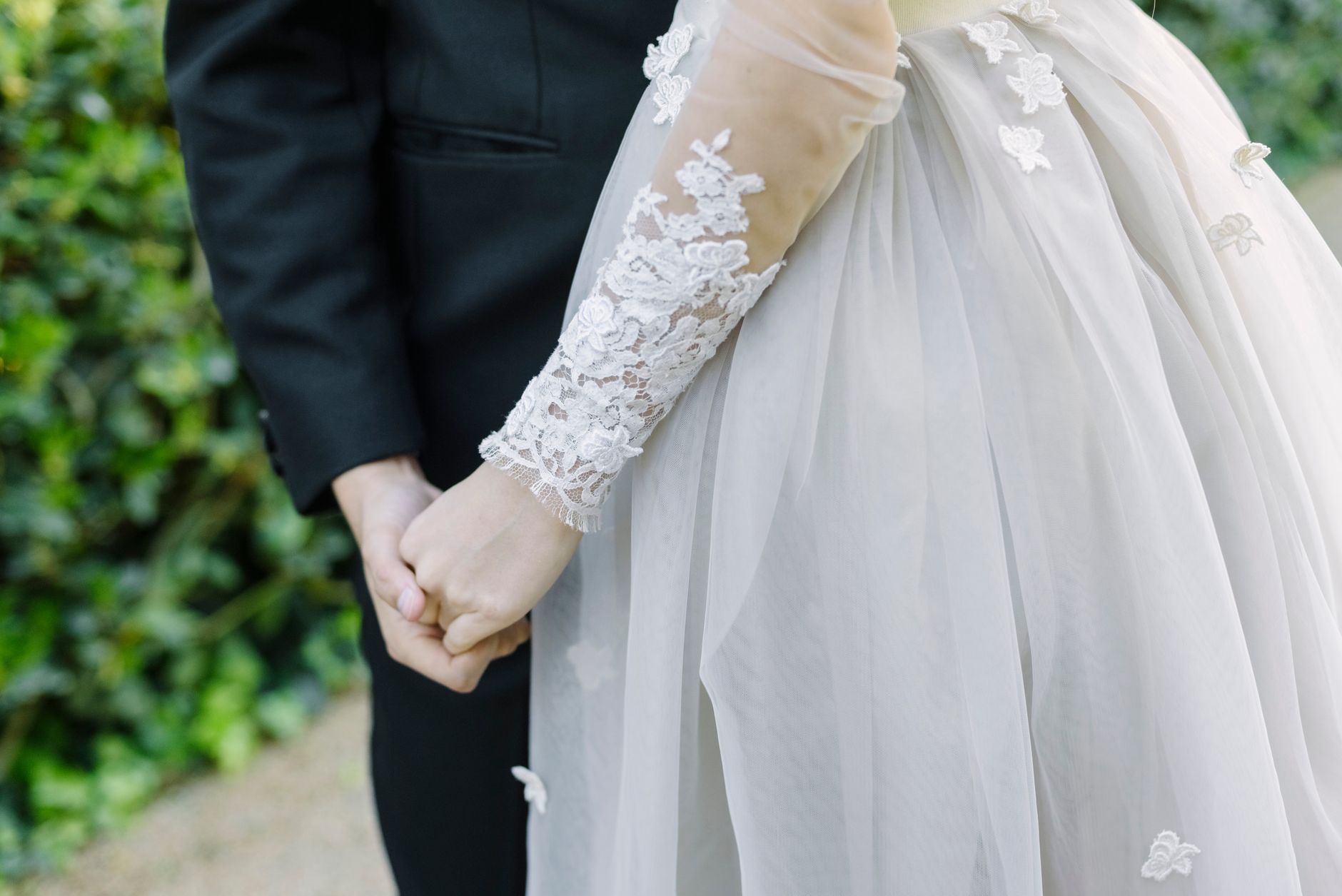
Both archetypes favor Editorial Photography over traditional posed portraits, and both expect the videographer to work unobtrusively — capturing moments as they happen rather than staging them. The garden romantic wants a film that feels like a Kinfolk editorial, with long quiet shots of the couple walking through the vineyard and close-ups of hands, fabric, and natural texture. The coastal classic wants a film that feels like a Vogue Weddings feature, with clean compositions, restrained movement, and a focus on the couple's faces and the architecture of the space.
What the Wedding Film Deliverable Includes
A wedding film at San Ysidro Ranch is delivered 8–12 weeks after the wedding date, and the standard deliverable is a cinematic highlight reel running 8–12 minutes, color-graded and scored to licensed music. The film opens on the pre-ceremony details — the bride getting ready in the cottage, the groom walking through the garden — then moves to the eucalyptus ceremony, the portrait session, and the Stonehouse reception. The edit foregrounds emotional moments — the first look, the vows, a parent's reaction during the toast, the last dance — rather than documenting every minute of the day in chronological order.
Couples who book Full Ceremony Coverage receive a second film: the complete ceremony from processional to recessional, unedited and unscored, delivered as a standalone file. This ceremony film runs 20–40 minutes depending on the length of the vows and readings, and it serves as the archival record — the one the couple watches with family years later when they want to hear the full text of the vows or relive the officiant's opening words.
Couples who book the Photo + Video Combined Package receive both the wedding film and a gallery of 400–600 edited photographs, delivered on the same timeline. The combined package includes a 2-shooter video team and a 2-shooter photo team working in coordination throughout the day, and the final deliverables are sequenced together — the film and the photo gallery tell the same story, shot from complementary angles, edited with the same color grade.
Begin a Conversation About Your Wedding at San Ysidro Ranch
If you are planning a wedding at San Ysidro Ranch and you want a film that foregrounds the eucalyptus light, the Stonehouse architecture, and the quiet moments between the ceremony and the reception, begin a conversation about coverage at lifestory.film. We work with couples planning garden romantic and coastal classic celebrations across Southern California, and we travel for destination weddings at luxury estates in Montecito, Napa Valley, and beyond.